Category Archives: Uncategorized

Information -Salmonella outbreak traced to hazelnuts from Oregon farm

Food Safety News kswfoodworld salmonella

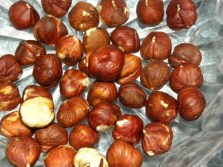
Oregon officials are warning consumers to check their homes for hazelnuts from the Schmidt Farm and Nursery farm stand and to immediately discard them because they have been named the cause of a Salmonella outbreak.

The warning Friday from the Oregon Health Authority Public Health Division reported five people have been confirmed in the outbreak of Salmonella Typhimurium. They were all infected with the same strain of the pathogen, which was also found in hazelnuts from the Schmidt Farm and Nursery farm stand on highway southwest of McMinnville, OR.

USA -Sliced deli meats served at Dion’s restaurants prompt health alert – Listeria monocytogenes

Outbreak News Today kswfoodworld Listeria monocytogenes

The U.S. Department of Agriculture’s Food Safety and Inspection Service (FSIS) is issuing a public health alert due to concerns that assorted sliced deli meat products served to customers at Dion’s restaurants may be contaminated with Listeria monocytogenes. The assorted sliced deli meats were produced by Peter DeFries Corporation, an Albuquerque, N.M. establishment.

The sliced roast beef, ham, pastrami, and turkey items were produced between Dec. 14, 2016 and Dec. 29, 2016, however product may have been available in restaurant locations through January 4, 2017.

These items were distributed to Dion’s restaurant locations in Colorado, New Mexico, and Texas. The sliced deli meat products are used on pizzas, salads, and open-faced sandwiches for customers at Dion’s restaurants.

India -20 girl students taken ill due to ‘food poisoning’

The Hindu

Owing to its bad smell, some students avoided the food and got their dinner from outside.

About 25 girl students of the Sri Seshachala College in Puttur, pursuing their B.Ed course, were taken ill on Thursday and were rushed to a private hospital. The students alleged that they were served stale food the previous night.

Information -Bailey & Scott’s Diagnostic Microbiology. Edition No. 14

Research and Markets

Bailey & Scott’s Diagnostic Microbiology. Edition No. 14

Perfect your lab skills with the gold standard in microbiology! Serving as both the #1 bench reference for practicing microbiologists and as a favourite text for students in clinical laboratory science programs, Bailey & Scott’s Diagnostic Microbiology, 14th Edition covers all the topical information and critical thinking practice you need for effective laboratory testing. This new edition also features hundreds step-by-step procedures, updated visuals, new case studies, and new material on the latest trends and equipment in clinical microbiology – including automation, automated streaking, MALDI-TOF, and incubator microscopes. It’s everything you need to get quality lab results in class and in clinical practice!

USA -Florida reports 10 Vibrio vulnificus deaths in 2016

Outbreak News Today

During the past eight years, Florida has seen an average of just under ten fatalities annually due to infection with the bacterium, Vibrio vulnificus, and in 2016, the Florida Department of Health reported 10 deaths.

Breakdown by county is as follows: Santa Rosa (2) and one each in Broward, Citrus, Hernando, Lake, Palm Beach, Pinellas, Putnam and Sarasota counties. Health department data doesn’t distinguish between foodborne and wound infection cases.

Health officials saw 46 cases in 2016, which is the highest number of cases reported in the past eight years. Duval County reported the most cases at 4.

UK -FINGER SICKENIN’ Family suffer food poisoning after being served ‘undercooked KFC chicken meal’

The Sun Campylobacter kswfoodworld

A FAMILY say they were left with food poisoning after KFC served them raw and bloodied chicken.

Susan Hamm bought a 10-piece family feast from the takeaway – but woke up the next morning with stomach pains, cramps and diarrhoea.

Research -Salmonellosis in Australia

Poultry Med kswfoodworld Salmonella

Salmonellosis is a significant cause of foodborne gastroenteritis in Australia, and rates of illness have increased over recent years. A new research estimates the contribution of different animal reservoirs to illness due to Salmonella spp. in South Australia between 2000 and 2010. 35% (95% CrI: 20-49) of sporadic cases were attributed to chicken meat and 37% (95% CrI: 23-53) of sporadic cases to eggs. Of outbreak-related cases, 33% (95% CrI: 20-62) were attributed to chicken meat and 59% (95% CrI: 29-75) to eggs. Analysis of source-related parameters showed higher risk of illness from contaminated eggs than from contaminated chicken meat, suggesting that consumption and handling practices potentially play a bigger role in illness due to eggs, considering low Salmonella prevalence on eggs. These results strengthen the evidence that eggs and chicken meat are important vehicles for salmonellosis in South Australia.


Research – Hot weather not to blame for salmonella on egg farms

Science Daily EGGS

New research conducted by the University of Adelaide shows there is no greater risk of Salmonella contamination in the production of free range eggs in Australia due to hot summer weather, compared with other seasons.

Despite a higher number of cases of Salmonella poisoning from eggs and egg products during the hot summer months, researchers at the University’s School of Animal and Veterinary Sciences say the egg production process itself is not to blame for the increase in cases.

The findings are further evidence that the hygiene around egg handling in the supply chain and in household and restaurant kitchens is critical to reducing food poisoning from eggs.

Researchers conducted a study of four Australian commercial free range egg farms, with the results now published online ahead of print in the journal Applied and Environmental Microbiology.

“Eggs and egg products have been associated with an increased risk of Salmonella contamination. Because the use of free range eggs by consumers is on the rise, we felt it was important to better understand the risk factors at the production stage,” says lead author Associate Professor Kapil Chousalkar, from the School of Animal and Veterinary Sciences at the University’s Roseworthy campus.

“Birds raised in the free range production system could potentially be exposed to weather extremes, and the free range environment is not as easily controlled as in cage egg production. Therefore, it has been assumed that hot weather has a role to play in the potential contamination of eggs at the site of free range egg production.

“Our results show that the types and levels of Salmonella found in and around free range egg farms, and on the eggs themselves, is highly variable, often dependant on the specific husbandry and management practices employed by each farm.

“However, we found that there was no direct association between hot weather and increased prevalence of Salmonella at the production stage, even when data was collected in the hottest month of February,” Associate Professor Chousalkar says.

“This helps to reinforce a simple health safety message: that it’s important for people to wash their hands before and after handling eggs, whether at home, in a restaurant, or while working in the supply chain.”

The bacteria Salmonella Typhimurium — the most common cause of Salmonella poisoning from eggs and egg products in Australia — was the second highest type of Salmonella found at free range egg production farms. The most prevalent, Salmonella Mbandaka, is generally not associated with egg or egg product-related food poisoning cases in Australia.

As well as renewing calls for people to practice good hand hygiene when using eggs, Associate Professor Chousalkar says there is a need for nationwide standards and uniform practices on the surveillance of egg contamination and safety.

“Currently, each of the states has their own food safety and surveillance programs. Because of its implications for public health, we believe the incidence of Salmonella contamination needs to be monitored in a standard way across all farms,” he says.


Story Source:

Materials provided by University of Adelaide. Note: Content may be edited for style and length.


Journal Reference:

  1. V. C. Gole, R. Woodhouse, C. Caraguel, T. Moyle, J.-L. Rault, M. Sexton, K. Chousalkar. Dynamics of Salmonella shedding and welfare of hens in free range egg production systems. Applied and Environmental Microbiology, 2016; AEM.03313-16 DOI: 10.1128/AEM.03313-

RASFF Alert -STEC E.coli – Deer Sausage

kswfoodworld rasff

RASFF – shigatoxin-producing Escherichia coli in deer sausage from Austria in Austria

RASFF Alerts – Histamine -Canned Tuna – Anchovy Paste

kswfoodworld rasff

RASFF – histamine (236,6 mg/kg – ppm) in canned tuna from Vietnam in Greece

RASFF – histamine (up to 1252 mg/kg – ppm) in anchovy paste from Italy in Italy