Category Archives: Uncategorized

Australia – King Island Fresh Milk and Cream – E.coli

FSANZ

BJ & VS Brewster, trading as King Island Fresh Milk Products is conducting a recall of the above products. These products have been available for sale at Small independent supermarkets, Bakeries, Cafes and King Island Hospital in TAS.
Problem: The recall is due to Microbial (E. coli) contamination
Food safety hazard: Food products contaminated with (E. coli) may cause illness if consumed.
What to do: Any consumers concerned about their health should seek medical advice. And should return the products to the place of purchase for a full refund.
 
For further information please contact:
 

King Island Fresh Milk Products

kifreshmilk@outlook.com


Canada – Yoso brand Soygo Fermented Cultured Soy Products recalled due to Listeria monocytogenes

CFIA

Recall details

Ottawa, April 12, 2017 – Flamaglo Foods Ltd. is recalling Yoso brand soygo fermented cultured soy products from the marketplace due to possible Listeria monocytogenes contamination. Consumers should not consume the recalled products described below.

Recalled products

Brand Name Common Name Size Code(s) on Product UPC
Yoso Soygo Fermented Cultured Soy – Plain 440 g 17 MA 19 d5 8 34914 00231 3
Yoso Soygo Fermented Cultured Soy – Raspberry 440 g 17 MA 19 d5 8 34914 00235 1
Yoso Soygo Fermented Cultured Soy – Vanilla 440 g 17 MA 19 d5 8 34914 00234 4
Yoso Soygo Fermented Cultured Soy – Blueberry 440 g 17 MA 19 d5 8 34914 00232 0


USA – Boston E. coli Outbreak Sickens 7 and Shutters Chicken and Rice Guys

O157Food Poisoning Journal

Megan Woolhouse of the Boston Globe reported tonight that an E. coli outbreak had shuttered three locations of the Chicken & Rice Guys, as well as its fleet of Middle Eastern food trucks, Boston health inspectors said Tuesday.

The department confirmed seven cases of E. coli stemming from the Chicken & Rice Guys Allston location, which supplies food to the chain’s other outposts. The problems led to the temporary suspension of its operating license.

The company’s four food trucks, which rotate locations around Greater Boston, were taken off the road Tuesday afternoon.

Research – Legionella bacteria’s escape route revealed

legionellacScience Daily

The precise mechanism used by Legionella bacteria to escape the body’s defences has been unpicked in intricate detail and is described for the first time in the journal eLife.

The study reveals a potential new therapeutic approach to tackle infection by Legionella pneumophila, which is a common cause of community and hospital-acquired pneumonia and causes death in almost a third of cases.

USA – Lakeside Foods, Inc. Recalls Season’s Choice Frozen Sweet Peas Because of Possible Health Risk – Listeria monocytogenes

FDA

Lakeside Foods, Inc. of Manitowoc, WI is voluntarily recalling 1,568 packages of 16 ounce Season’s Choice Brand Frozen Peas packed for Aldi, Inc. distributed in 7 states because it has the potential to be contaminated with Listeria monocytogenes, an organism which can cause serious and sometimes fatal infections in young children, frail or elderly people, and others with weakened immune systems. Although healthy individuals may suffer only short-term symptoms such as high fever, severe headache, stiffness, nausea, abdominal pain and diarrhea, Listeria infection can cause miscarriages and stillbirths among pregnant women.

Product was distributed to only Aldi Stores in Iowa, Illinois, Ohio, West Virginia, Kentucky, Florida, Wisconsin and is sold at retail stores in these states. The affected product was distributed in poly bags under the following label codes:

Season’s Choice Sweet Peas, Net Weight 16 oz (1 LB) 454 g UPC code 041498164294
Code: DC27063 PLAA6206 BEST BY 09 2018
DC27063 BNAD7266 BEST BY 09 2018
DC37063 BNAD7266 BEST BY 09 2018
DC47063 BNAD7266 BEST BY 09 2018
DC57063 BNAD7266 BEST BY 09 2018
DC57063 BNAF6236 BEST BY 09 2018

No other Lakeside Foods or Aldi products are affected by this voluntary recall.

All of the suspected packages have been removed from store shelves. The company has not received any complaints in relation to this product and is not aware of any illnesses associated with the product.

The recall was a result of product being tested at retail by the State of Florida which had tested positive for Listeria monocytogenes. The company has ceased distribution of the product.

Consumers who have purchased this specific lot code should discard it immediately or return it to their local store for a full refund.

Consumer with questions may contact the company at 1-800-466-3834, Monday-Friday 8 AM – 3PM.

Canada – Updated Food Recall Warning – Wholesome Farms brand Sundae Cup products recalled due to Listeria monocytogenes

CFIA

Ottawa, April 11, 2017 – The food recall warning issued on April 4, 2017 has been updated to include additional product information. This additional information was identified during the Canadian Food Inspection Agency’s (CFIA) food safety investigation.

Central Smith Creamery is recalling Wholesome Farms brand Sundae Cup products from the marketplace due to possible Listeria monocytogenes contamination. Consumers should not consume the recalled products described below. Food service institutions, such as hospitals and nursing homes, should not serve or use the recalled products described below.

Recalled products

Brand Name Common Name Size Code(s) on Product UPC
Wholesome Farms Vanilla Sundae Cup 115 ml 03301 None
Wholesome Farms Vanilla Ice Cream Sundae Cup (case) 48 x 115 ml 7382200017033019
2/2/17
00074865915427
Wholesome Farms Sugar-Free Light Vanilla Ice Cream Sundae Cup 115 ml 03301 None
Wholesome Farms Sugar-Free Light Vanilla Sundae Cup (case) 48 x 115 ml 7382200023032013
2/1/17
10074865932551
Wholesome Farms Butterscotch Sundae Cup 115 ml 03302 None
Wholesome Farms Butterscotch Ice Cream Sundae Cup (case) 48 x 115 ml 7382200020033020
2/2/17
00074865915403
Wholesome Farms Orange Sherbet Sundae Cup 115 ml 03303 None
Wholesome Farms Orange Sherbet Sundae Cup (case) 48 x 115 ml 7382200021033036
2/2/17
00074865915434
Wholesome Farms Lime Sherbet Sundae Cup 115 ml 03304 None
Wholesome Farms Lime Sherbet Sundae Cup (case) 48 x 115 ml 7382200022033042
2/2/17
00074865915090
Wholesome Farms Chocolate Sundae Cup 115 ml 03305 None
Wholesome Farms Chocolate Ice Cream Sundae Cup (case) 48 x 115 ml 7382200019033055
2/2/17
00074865915410

Japan – Infant botulism claims 6-month-old Tokyo boy who was fed honey

Japan Times

A 6-month-old boy in Adachi Ward, Tokyo, died late last month of infant botulism after his family fed him honey, according to the metropolitan government.

Metropolitan officials said it was the first death caused by infant botulism in Japan since 1986, when the government began compiling such statistics.

The officials warned that babies younger than 1 should not be given honey.

They said the Adachi boy died March 30. He developed a cough on Feb. 16, and was taken to a hospital by ambulance on Feb. 20 after going into convulsions and suffering respiratory failure. He was diagnosed Feb. 28 as having infant botulism.

Research – New Insights on How Pathogens Escape Immune System

Food Poisoning Bulletin Salmonella kswfoodworld

A new study at the University of Cologne is trying to decode how the pathogen Salmonella enterica escapes the immune system. And they found a mechanism the bacteria uses.

There were 13,822 reported cases of Salmonella typhimurium in Germany in 2015. In healthy people, most recover without any treatment from antibiotics, but those who are considered “high risk” can suffer serious illness and even death. Those patients include the elderly, the very young, pregnant women, people with chronic illnesses such as diabetes, and those with immune deficiencies

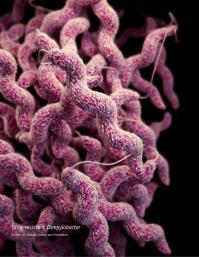
Sweden – Sweden continues to reports high levels of Campylobacter

Outbreak News Today

campy2

CDC Photo


Since late summer 2016, Sweden has had a sharp increase in the number of cases of campylobacter, where the primary cause has been the Swedish produced fresh chicken.

The number of people getting sick from campylobacter remains at a high level in Sweden, according to Folkhalsomyndigheten (computer translated). The measures the chicken industry has to make a significant impact to date.

In February, a major chicken producer announced an issue in a washing plant of a slaughterhouse, which has been rectified.

The Public Health Agency’s statistics on the number of people who become ill after being infected in Sweden shows at levels remained above normal, suggesting that it was not just washing plant that caused the outbreak.

Information USA -CDC – IFSAC Strategic Food Safety Plan 2017 – 2021

CDC

The IFSAC Strategic Plan[PDF – 12 pages](https://www.cdc.gov/foodsafety/pdfs/ifsac-strategic-plan-2017-2021.pdf) outlines goals and objectives for the five-year time period from 2017 through 2021.

Objectives

  1. Enhance the collection and quality of relevant source data
  2. Enhance the use of existing regulatory and foodborne illness surveillance data sources
  3. Incorporate genomic data and other novel data sources
  4. Explore ways to address key gaps in data quality, methods and models
  5. Develop new analytic approaches and models to maximize use of already available data
  6. Expand the availability of technical and scientific expertise through collaboration with internal and external partners
  7. Enhance relationships and engagement with both internal and external groups
  8. Improve the synthesis, interpretation and dissemination of analytical findings for multiple audiences

Priority Pathogens

IFSAC identified four priority pathogens as the initial focus of projects:

  1. Salmonella(https://www.cdc.gov/salmonella/index.html)
  2. E. coli (https://www.cdc.gov/ecoli/index.html)O157:H7(https://www.cdc.gov/ecoli/index.html)
  3. Listeria monocytogenes (https://www.cdc.gov/listeria/index.html)(Lm)(https://www.cdc.gov/listeria/index.html)
  4. Campylobacter(https://www.cdc.gov/foodsafety/diseases/campylobacter/)

Previous IFSAC Strategic Plans

The above strategic plan represents an update to IFSAC’s 2012-2016 Strategic Plan[PDF – 16 pages](https://www.cdc.gov/foodsafety/pdfs/ifsac-strategic-plan-508c.pdf).