Category Archives: Uncategorized

Research – Norovirus GII.P16/GII.2–Associated Gastroenteritis, China, 2016

CDC Food Borne Illness - Norovirus -CDC Photo

During October–December 2016, the number of norovirus outbreaks in China increased sharply from the same period during the previous 4 years. We identified a recombinant norovirus strain, GII.P16-GII.2, as the cause of 44 (79%) of the 56 outbreaks, signaling that this strain could replace the predominant GII.4 viruses.

Canada – Updated Food Recall Warning – Various brands of pie and tart shells recalled due to E. coli O121

CFIA

This food recall warning is issued to include products associated with recent flour recalls. This additional information was identified during the Canadian Food Inspection Agency’s (CFIA) food safety investigation.

Harlan Bakeries – Edmonton is recalling various brands of pie and tart shells due to possible E. coli O121 contamination. Consumers should not consume the recalled products described below.

Recalled products

Brand Name Common Name Size Code(s) on Product UPC
No Name Sweetened Tart shells 570 g Best before dates:
2017 DE 21
2017 DE 23
0 60383 10429 0
Great Value Deep Dish Pie Shells 380 g Best before date:
2017 DE 23
6 28915 08589 1
Great Value Tart Shells 570 g Best before date:
2017 DE 22
6 28915 08591 4

Australia – Creative Gourmet Frozen Mixed Berries 300g – Hepatitis A

FSANZ

Entyce Food Ingredients Pty Ltd is conducting a precautionary recall of the above product. The product has been available for sale at IGA, Foodworks, Foodland, SPAR, Supabarn and other independent retailers via Metcash distribution nationally.

Problem: The recall is due to potential Hepatitis A virus contamination.
Food safety hazard: Food products contaminated with Hepatitis A virus may cause illness if consumed.
What to do: Any consumers concerned about their health should seek medical advice and should return the product to the place of purchase for a full refund.
For further information please contact:
Entyce Food Ingredients Pty Ltd
1800532001


USA – Salmonella outbreak prompts closure of Rochester restaurant

Outbreak News Today

The Oakland County Health Division is investigating 15 cases of Salmonella Saintpaul, a specific strain of salmonella. Cases have also been identified in other Michigan counties, as well as Ohio and Illinois.

Philippines – Manila area prison outbreak update: Shigella identified as cause

Outbreak News Today

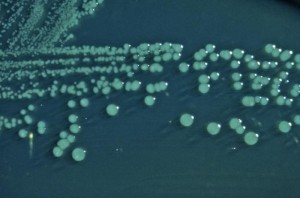
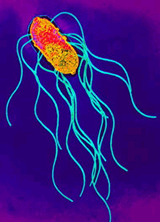
As news on the inmate outbreak at the New Bilibid Prison in Muntinlupa City, National Capital Region (NCR) continues to be released, a new Phil Star report (computer translated) notes that the culprit is the etiology of bacillary dysentery, Shigella sp.

Shigella image/CDC
Shigella image/CDC

The outbreak that has sickened more than 1200 inmates, hospitalized hundreds and killed two with underlying medical conditions, was previously thought to be due to cholera.

Research – Impact of Mannanase-Producing Bacillus spp. on the Accuracy of the 3M Petrifilm Aerobic Count Method

Journal of Food Protection

Consistent deviations of the 3M Petrifilm aerobic counts (AC) from the standard pour plate aerobic plate count (APC) were observed with dehydrated onion and garlic products. A large study was designed to determine the relationship of these two methods and the root cause for the deviations. A total of 3,800 dehydrated onion and garlic samples were analyzed by both the Petrifilm AC and the standard pour plate APC method. Large spreader-like liquefied areas were observed on numerous Petrifilm plates. These liquefied areas made enumeration inaccurate. “Liquefier” microorganisms from Petrifilm plates were isolated and identified to species level by 16S rRNA and gyrB gene sequencing. Enzyme diffusion assay was performed to determine potential enzymatic degradation of guar gum, the gelling agent used in Petrifilm plates. The results indicated that the correlation between Petrifilm AC and standard APC is relatively low. Paired t test results suggested that the Petrifilm AC method produced significantly different results compared with standard APC. The discrepancies were attributable at least partly to a liquefier organism that hydrolyzed guar gum, leading to liquefaction. Liquefaction of Petrifilm plates seems to have two effects on accuracy: (i) liquefied areas may allow motile organisms to move and multiply in the liquefied area during the incubation period, yielding more than one colony from one cell and, as a result, leading to overestimation of the microbial load and (ii) the blurred areas obscure other colonies, leading to potential underestimation. The liquefier organism was identified as Bacillus amyloliquefaciens, a potent mannanase producer and heat-resistant spore former. Enzyme diffusion assay confirmed that mannanase contained in the cell-free supernatant of B. amyloliquefaciens can hydrolyze the 1,4-β-mannopyranosyl bond, the backbone of guar gum. This is the first report of the role of B. amyloliquefaciens in the liquefaction of Petrifilm plates and its negative impact on accuracy.

Hong Kong – Food Alert – A kind of prepackaged fruit juice imported from Japan with possible presence of mould

CFS logo

<!–

–>

Issue Date 2017-06-05
Source of Information Centre for Food Safety (CFS)
Food Product Prepackaged fruit juice
Name of Importer
Product name and Description Product name: Apple & Grape Fruit Juice
Brand: Muji
Packing: 10 pieces per pack; 70 millilitres per piece
Country of origin: Japan
Product code: 4547315816125
Reason For Issuing Alert

– The CFS, through its routine Food Incident Surveillance System, noted an announcement by the Agri-Food & Veterinary Authority of Singapore that Muji (Singapore) has recalled a kind of apple and grape fruit juice imported from Japan due to the suspicion of mould found in some of the product.
Action Taken by the Centre for Food Safety

– Upon learning of the incident, the CFS immediately followed up with Muji (Hong Kong) Company Limited. According to information provided by the company, it had imported 9 000 packs of the affected product and some of them were put on sale at its outlets. The company had already removed from shelves and stopped sale of all the affected products earlier, and initiated a recall.

– The CFS will continue to closely monitor the situation and take appropriate follow-up actions.

Advice to the Trade

– Stop using or selling the affected products immediately should they still possess them.
Advice to Consumers
– Stop consuming the affected product and seek medical treatment if they feel unwell after consuming the product concerned.
Further Information The CFS press release

– Members of the public may call the company’s hotline at 2694 9309 during office hours for enquiries about the recall.

Hong Kong – Food Alert – A kind of cheese with truffle suspected to be contaminated with Listeria monocytogenes

CFS logo

<!–

–>

Issue Date 2017-06-05
Source of Information Rapid Alert System for Food and Feed (RASFF) of the European Commission
Food Product A kind of cheese with truffle
Name of Importer
Product name and Description A kind of cheese with truffle manufactured in the Netherlands, distributed to two of the retail outlets of a local importer, The Dutch Limited, and three city’super supermarkets for sale in loose packs with sticker “the dutch cheese and more”
Reason For Issuing Alert

-The Centre for Food Safety (CFS) received a notification from the RASFF that a kind of cheese with truffle manufactured in the Netherlands was suspected to have been contaminated with Listeria monocytogenes and the affected product is being recalled.

-According to the information provided by the RASFF, a small volume of the affected product has been imported into Hong Kong by a local importer, The Dutch Limited.

-Listeria monocytogenes can be easily destroyed by cooking but can survive and multiply at refrigerator temperature. Most healthy individuals do not develop symptoms or only have mild symptoms like fever, muscle pain, headache, nausea, vomiting or diarrhoea when infected. However, severe complications such as septicemia, meningitis or even death may occur in newborns, elderly and those with a weaker immune system. Although infected pregnant women may just experience mild symptoms generally, the infection of Listeria monocytogenes may cause miscarriage, infant death, preterm birth, or severe infection in the newborns.

Action Taken by the Centre for Food Safety

-Upon learning of the incident, the CFS has immediately contacted the importer concerned for follow-up. According to the information provided by the importer, a total of about 84 kilograms of the above affected product had been imported into Hong Kong. The importer and the supermarkets concerned have removed from shelves and stopped sale of the affected product according to the CFS’ instructions. The importer is also recalling the affected product.

-The CFS will alert the trade to the incident and will continue to closely monitor the case and take appropriate follow-up action.

-Investigation is ongoing.

Advice to the Trade

-Stop using or selling the product concerned immediately if possessing it.
Advice to Consumers
-Not to consume the affected product.
Further Information The CFS press release

-Members of the public may call the importer’s hotline at 3543 0081 during office hours for enquiries about the recall.

USA – CDC fowl warning: Hundreds sickened by backyard flocks

Food Safety News Salmonella kswfoodworld

More than a third of the 372 people infected with Salmonella from backyard flocks so far this year are children younger than 5 years old, with the Centers for Disease Control and Prevention reporting eight separate outbreaks across 47 states.

backyard flock Salmonella graphic June 2017“These outbreaks are expected to continue for the next several months,” according to a public warning issued Thursday by the CDC. “Many people continue to purchase live poultry and continue to be exposed to Salmonella germs as they tend to their backyard flocks. Some of these birds can have a long life expectancy.”

RASFF Alert – Mycotoxin – T-2 – HT-2 – Organic Oat Flour

kswfoodworld rasff

RASFF – T-2 toxin and HT-2 toxin (1400 µg/kg – ppb) in organic oat flour from Poland in Denmark

Further Information