Category Archives: Uncategorized

Information – Legionnaires’ Disease

CDC Vital Signs vitalsigns-download-factsheet-285px

Legionnaires’ disease (LD) is a serious, and often deadly, lung infection (pneumonia). People usually get it by breathing in water droplets containing Legionella germs. People can also get it if contaminated water accidentally goes into the lungs while drinking. Many people being treated at health care facilities, including long-term care facilities and hospitals, have conditions that put them at greater risk of getting sick and dying from LD. Legionella grows best in buildings with large water systems that are not managed effectively. CDC outbreak investigations show that effective water management programs—actions that reduce the risk of Legionella growing and spreading in building water systems—can help prevent problems that lead to LD. Health care facility leaders* should be aware that LD is a risk in their facility and that they can take action to prevent infections.

Health care facility leaders can

  • Build a team focused on keeping their facility’s water safe.
  • Create and use a water management program to limit Legionella and other waterborne germs from growing and spreading. cdc.gov/legionella/WMPtoolkit
  • Work with healthcare providers to identify LD cases early and determine if the cases may be associated with a health care facility.
  • Report LD cases to local public health authorities quickly and work with them to investigate and prevent additional cases.

*Leaders may include infection control practitioners, facility managers, hospital administrators, quality assurance staff, or others.

USA – San Diego Hepatitis A outbreak: 53 cases in May

Outbreak News Today

In an update on the hepatitis A outbreak in San Diego County, CA, health officials reported an addition 53 cases in May, bringing the total to 133. Of the total, 80 percent required hospitalization for their illness and three died.

Research – Study Shows Presence Antibiotic-Resistant Bacteria in Ready-to-Eat Foods

Food Ingredient First

06 Jun 2017 — Research presented recently at the ASM Microbe 2017 meeting in California, has shown that antibiotic-resistant bacteria are present in many ready-to-eat foods such as fresh produce and dairy products and may serve as a source of human exposure to antibiotic-resistant bacteria.

Research – FDA Investigates Findings of Hepatitis A Linked to Frozen Tuna

FDA

The U.S. Food and Drug Administration (FDA) and the Centers for Disease Control and Prevention (CDC), are assisting state and local officials in assessing the risk of hepatitis A virus exposure from contaminated frozen tuna sourced from Sustainable Seafood Company, Vietnam, and Santa Cruz Seafood Inc., Philippines. If unvaccinated consumers have consumed the recalled product within the last two weeks, post-exposure prophylaxis may help prevent hepatitis A virus infection.

Update

Prior to FDA’s announcement, Hilo Fish Company alerted its customers and distribution partners directly to let them know about the company’s voluntary recall of certain tuna products on May 18. The FDA received records from the company or its distribution partners indicating that they sold frozen tuna to the establishments listed on the FDA’s website. The FDA is working with Hilo and other distributors to ensure that the companies remove product from the market. The table containing the names of establishments have been updated.

It is the responsibility of the Hilo Fish Company to notify its customers about the voluntary recall. It is also the responsibility of any company that received a recall notice from Hilo Fish Company to notify its customers. The establishments identified on the FDA’s website should have received a notice from Hilo Fish Company or their direct supplier. If they have not, they should reach out to their suppliers for more information. Any company that has questions about the voluntary recall or has affected product and did not receive notice should contact the FDA at 1-800-SAFEFOOD.

Research – Microbial Survey of Pennsylvania Surface Water Used for Irrigating Produce Crops.

NCBI kswfoodworld Salmonella

Recent produce-associated foodborne illness outbreaks have been attributed to contaminated irrigation water. This study examined microbial levels in Pennsylvania surface waters used for irrigation, relationships between microbial indicator organisms and water physicochemical characteristics, and the potential use of indicators for predicting the presence of human pathogens. A total of 153 samples taken from surface water sources used for irrigation in southeastern Pennsylvania were collected from 39 farms over a 2-year period. Samples were analyzed for six microbial indicator organisms (aerobic plate count, Enterobacteriaceae, coliform, fecal coliforms, Escherichia coli, and enterococci), two human pathogens (Salmonella and E. coli O157), and seven physical and environmental characteristics (pH, conductivity, turbidity, air and water temperature, and sampling day and 3-day-accumulated precipitation levels). Indicator populations were highly variable and not predicted by water and environmental characteristics. Only five samples were confirmed positive for Salmonella, and no E. coli O157 was detected in any samples. Predictive relationships between microbial indicators and the occurrence of pathogens could therefore not be determined.

USA – Global Garlic expands cheese recall because of Listeria

Food Safety News

A Miami company has expanded its recall of cheese that may be contaminated with Listeria monocytogenes, some of which does not expire until mid-September.

In the expansion of its recall, which was initiated May 17, Global Garlic Inc. added “Queso Fresco/Whole Milk” and “Queso Fresco x LB(Barra)/Whole Milk Cheese” on May 30, but the expansion notice was not posted on the Food and Drug Administration website until June 5.

The recalled cheeses “were distributed nationwide in Florida, Illinois, Kentucky, North Carolina, Louisiana and South Carolina,” according to the expanded recall notice. A brand name was not provided in the recall notice.

USA – Creation Gardens Inc. Recalls Ground Beef and Beef Primal Cut Products Due to Possible E. coli O157:H7 Contamination

FSIS USDA

WASHINGTON, June 5, 2017 – Creation Gardens, Inc., a Louisville, Ky., establishment, is recalling approximately 22,832 pounds of raw ground beef and beef primal cut products that may be contaminated with E. coli O157:H7, the U.S. Department of Agriculture’s Food Safety and Inspection Service (FSIS) announced today.

The raw ground beef and beef primal cut products items were produced on May 31, June 1 and June 2, 2017. The following products are subject to recall: [View Labels (PDF only)]

  • 2, 20-lb. packages of “BEEF-GROUND COARSE 80/20” with product code 00297.
  • 48, 4-oz. packages of “BEEF-PATTIES ANGUS 4-1” with product code 00263.
  • 48, 4-oz. packages of “BEEF-PATTIES ANGUS 4-1” with product code 11062.
  • 24, 10-oz. packages of “BEEF-PATTIES BLACK HAWK” with product code 97675.
  • 1, 60-lb. package of “BEEF-GROUND 80/20 W/SALT CK” with product code 00239.
  • 62, 60-lb. cases of “BEEF-GROUND BULK 80/20 W/SALT” with product code 00291.
  • 30, 6-oz. packages of “BEEF-PATTIES BLACK HAWK” with product code 97673.
  • 30, 6-oz. packages of “BEEF-PATTIES STRIP-SHORT RIB” with product code 32100.
  • 1, 30-lb. packages of “BEEF-RIBEYE EXPORT BLACK HAWK” with product code 79684.
  • 24, 8-oz. packages of “BEEF-PATTIES BRISK-SHORT RIB” with product code 00274.
  • 30, 6-oz. packages of “BEEF-SIRLOIN C/C BLACK HAWK” with product code 00496.
  • 1 Case of “BFRESH-BEEF SLIDER 15-2 0Z” with product code 02374.
  • 30, 6-oz. packages of “BEEF, PATTIES 75/25 6 0Z STK PAC” with product code 00249.
  • 24, 10-oz. packages of “BEEF, PATTIES 75/25 10 0Z STK PA” with product code 00248.
  • 1, 10-lb. package of “BEEF-GROUND 80/20 HOUSE BRAND” with product code 00300.
  • 24, 7-oz. packages of “BEEF-PATTIES 100% NATURAL ANGU” with product code 00286.
  • 8, 8-oz. packages of “BFRESH-PATTIES BRISK/ SHORT RIB” with product code 02309.
  • 24, 7-oz. packages of “BEEF-PATTIES BLACK HAWK” with product code 77749.
  • 30, 6-oz. packages of “BEEF-SIRLOIN C/C BLACK HAWK” with product code 00496.
  • 24, 10-oz. packages of “BEEF-PATTIES BRISK-SHORT RIB” with product code 99943.
  • 1, 15-lb. package of “BEEF-RIBEYE LIPON BLACK HAWK” with product code 05471.
  • 24, 8-oz. packages of “BEEF-PATTIES ANGUS 2-1” with product code 00258.
  • 30, 5.3-oz. packages of “BEEF-PATTIES ANGUS 3-1” with product code 00261.
  • 1, 10-lb. package of “GROUND, BEEF 75/25 10#;” with product code 00232.
  • 1, 30-lb. package of “BEEF-RIBEYE EXPORT BLACK HAWK;” product code 79684.
  • 24, 8-oz. packages of “BEEF, PATTIES 75/25 2-1 STK PAC;” product code 00240.
  • 4, 10-lbs. packages of “BEEF-GROUND 80/20 HOUSE BRAND;” product code 00299.

The products subject to recall bear establishment number “EST. 7914” inside the USDA mark of inspection. These items were shipped to food service locations in Indiana, Kentucky, Ohio and Tennessee.

The problem was discovered on June 5, 2017 when plant management notified FSIS in-plant inspection personnel of two positives for E. coli O157:H7 test results.

E. coli O157:H7 is a potentially deadly bacterium that can cause dehydration, bloody diarrhea and abdominal cramps 2–8 days (3–4 days, on average) after exposure the organism. While most people recover within a week, some develop a type of kidney failure called hemolytic uremic syndrome (HUS). This condition can occur among persons of any age but is most common in children under 5-years old and older adults. It is marked by easy bruising, pallor, and decreased urine output. Persons who experience these symptoms should seek emergency medical care immediately.

Research – Ongoing haemolytic uraemic syndrome (HUS) outbreak caused by sorbitol-fermenting (SF) Shiga toxin-producing Escherichia coli (STEC) O157, Germany, December 2016 to May 2017

Eurosurveillance

O157

Image CDC


We report an ongoing, protracted and geographically dispersed outbreak of haemolytic uraemic syndrome (HUS) and gastroenteritis in Germany, involving 30 cases since December 2016. The outbreak was caused by the sorbitol-fermenting immotile variant of Shiga toxin-producing (STEC) Escherichia coli O157. Molecular typing revealed close relatedness between isolates from 14 cases. One HUS patient died. Results of a case–control study suggest packaged minced meat as the most likely food vehicle. Food safety investigations are on-going.

Research – A clade of Listeria monocytogenes serotype 4b variant strains linked to recent listeriosis outbreaks associated with produce from a defined geographic region in the US

PLOS One

Abstract

Four listeriosis incidences/outbreaks, spanning 19 months, have been linked to Listeria monocytogenes serotype 4b variant (4bV) strains. Three of these incidents can be linked to a defined geographical region, while the fourth is likely to be linked. In this study, whole genome sequencing (WGS) of strains from these incidents was used for genomic comparisons using two approached. The first was JSpecies tetramer, which analyzed tetranucleotide frequency to assess relatedness. The second, the CFSAN SNP Pipeline, was used to perform WGS SNP analyses against three different reference genomes to evaluate relatedness by SNP distances. In each case, unrelated strains were included as controls. The analyses showed that strains from these incidents form a highly related clade with SNP differences of ≤101 within the clade and >9000 against other strains. Multi-Virulence-Locus Sequence Typing, a third standardized approach for evaluation relatedness, was used to assess the genetic drift in six conserved, known virulence loci and showed a different clustering pattern indicating possible differences in selection pressure experienced by these genes. These data suggest a high degree of relatedness among these 4bV strains linked to a defined geographic region and also highlight the possibility of alterations related to adaptation and virulence.

Research – Norovirus GII.17 as Major Epidemic Strain in Italy, Winter 2015–16

CDC Norwalk_Caspid

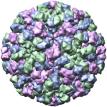
In winter 2015–16, norovirus GII.17 Kawasaki 2014 emerged as a cause of sporadic gastroenteritis in children in Italy. Median patient age was higher for those with GII.17 than GII.4 infection (55 vs. 24 months), suggesting increased circulation of variant Kawasaki 2014 among children and limited cross-protection for older children.