Category Archives: Uncategorized

Research – Outbreaks Attributed to Pork in the USA 1998-2015

Cambridge Core 120px-Sow_with_piglet

Outbreaks attributed to pork in the United States, 1998–2015

Each year in the United States, an estimated 525 000 infections, 2900 hospitalizations, and 82 deaths are attributed to consumption of pork. We analyzed the epidemiology of outbreaks attributed to pork in the United States reported to the Centers for Disease Control and Prevention (CDC) 1998–2015. During that period, 288 outbreaks were attributed to pork, resulting in 6372 illnesses, 443 hospitalizations, and four deaths. The frequency of outbreaks attributed to pork decreased by 37% during this period, consistent with a decline in total foodborne outbreaks. However, outbreaks attributed to pork increased by 73% in 2015 (19 outbreaks) compared with the previous 3 years (average of 11 outbreaks per year), without a similar increase in total foodborne outbreaks. Most (>99%) of these outbreaks occurred among people exposed in the same state. The most frequent etiology shifted from Staphylococcus aureus toxin during 1998–2001 (19%) to Salmonella during 2012–2015 (46%). Outbreaks associated with ham decreased from eight outbreaks per year during 1998–2001, to one per year during 2012–2015 (P < 0·01). Additional efforts are necessary to reduce outbreaks and sporadic illnesses associated with pork products.
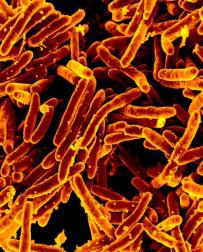
Research – Insight into the Secret Lives of Bacteria

News Medical Net 


Research provides new insights into secret life of bacteria

Bacteria with synthetic genetic “switches” show that antibiotics work differently than we thought

Bacterial infections are the number one cause of death in hospital patients in the United States, and antibiotic-resistant bacteria are on the rise, causing tens of thousands of deaths every year. Understanding exactly how antibiotics work (or don’t work) is crucial for developing alternative treatment strategies, not only to target new “superbugs,” but also to make existing drugs more effective against their targets. Using synthetic biology techniques, a team of researchers at the Wyss Institute at Harvard University has discovered that bacteria respond to antibiotics very differently – exactly the opposite, in fact – inside the body versus on a petri dish, suggesting that some of our current assumptions about antibiotics may be incorrect.

RASFF Alerts – Salmonella – Frozen Chicken Breast – Vanilla Powder – Sesame Seeds – Poultry Meat

kswfoodworld rasff

RASFF – Salmonella (presence) in frozen chicken breasts from Brazil in Germany

RASFF-Bacillus cereus (89000 CFU/g) and Salmonella enterica ser. Durban (presence /25g) in vanilla powder from Madagascar in Finland

RASFF-Salmonella (presence /25g) in frozen salted chicken half breasts from Brazil in the Netherlands

RASFF-Salmonella enterica ser. Leeuwarden (presence /25g) in sesame seeds from Nigeria in Greece

RASFF-Salmonella (presence /25g) in frozen salted chicken half breasts from Brazil in the Netherlands

RASFF-Salmonella (presence (2 out of the 5 samples) /25g) in frozen poultry meat preparations from Thailand in the UK

RASFF-Salmonella (presence /25g) in frozen salted chicken breast fillets from Brazil in the UK

RASFF-Salmonella (presence /25g) in poultry meat preparation from Thailand in Belgium

RASFF-Salmonella enterica ser. Enteritidis (presence /25g) in frozen raw chicken breast fillets from Thailand, via the Netherlands in Ireland

RASFF-Salmonella (present /25g) in frozen poultry meat preparations from Thailand in Belgium

RASFF Alert – Aflatoxin – Pistachio Nuts

kswfoodworld rasff

RASFF-aflatoxins (B1 = 26.2; Tot. = 29.95 µg/kg – ppb) in pistachio nuts from the United States in Belgium

RASFF Alert – Moulds – Corn Kernels

kswfoodworld rasff

RASFF – corn kernels from Hungary infested with moulds in Italy

RASFF Alert- Ochratoxin A – Raisins

kswfoodworld rasff

RASFF-ochratoxin A (16.6 µg/kg – ppb) in raisins from Turkey in Germany


RASFF Alert – Bacillus cereus -Vanilla Powder

kswfoodworld rasff

RASFF – Bacillus cereus (89000 CFU/g) and Salmonella enterica ser. Durban (presence /25g) in vanilla powder from Madagascar in Finland

RASFF Alert – Listeria monocytogenes – Taleggio Cheese

kswfoodworld rasff

RASFF – Listeria monocytogenes (presence /25g) in taleggio cheese from Italy in Italy

RASFF Alert – Animal Feed – Salmonella – Rapeseed Meal

kswfoodworld rasff

RASFF – Salmonella enterica ser. Tennessee (present /25g) in rapeseed meal from Germany in Finland

Information – Burden of Salmonellosis, Campylobacteriosis and Listeriosis: 2012 – 2020

Eurosurveillance

Burden of Salmonellosis, Campylobacteriosis and Listeriosis: a time series analysis, Belgium, 2012 to 2020

Salmonellosis, campylobacteriosis and listeriosis are food-borne diseases. We estimated and forecasted the number of cases of these three diseases in Belgium from 2012 to 2020, and calculated the corresponding number of disability-adjusted life years (DALYs). The salmonellosis time series was fitted with a Bai and Perron two-breakpoint model, while a dynamic linear model was used for campylobacteriosis and a Poisson autoregressive model for listeriosis. The average monthly number of cases of salmonellosis was 264 (standard deviation (SD): 86) in 2012 and predicted to be 212 (SD: 87) in 2020; campylobacteriosis case numbers were 633 (SD: 81) and 1,081 (SD: 311); listeriosis case numbers were 5 (SD: 2) in 2012 and 6 (SD: 3) in 2014. After applying correction factors, the estimated DALYs for salmonellosis were 102 (95% uncertainty interval (UI): 8–376) in 2012 and predicted to be 82 (95% UI: 6–310) in 2020; campylobacteriosis DALYs were 1,019 (95% UI: 137–3,181) and 1,736 (95% UI: 178–5,874); listeriosis DALYs were 208 (95% UI: 192–226) in 2012 and 252 (95% UI: 200–307) in 2014. New actions are needed to reduce the risk of food-borne infection with Campylobacter spp. because campylobacteriosis incidence may almost double through 2020.