Category Archives: Uncategorized

Research – Molecular characterisation of human Shiga toxin-producing Escherichia coli O26 strains: results of an outbreak investigation, Romania, February to August 2016

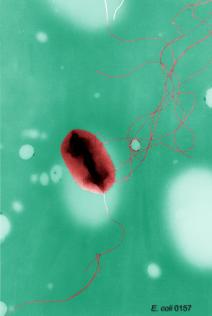
Eurosurveillance O157

The role of Shiga toxin-producing (STEC) in outbreaks of food-borne illnesses is well recognised [1]. According to surveillance studies, STEC of serotype O157:H7 are those most often associated with epidemics of STEC infections worldwide [2–4] and most likely to cause severe infections with systemic complications such as haemolytic uremic syndrome (HUS) [5]. Nonetheless, STEC belonging to non-O157 serogroups raised public health concern in many countries by displaying the same pathogenic potential as O157:H7 [6–8]. Among them, STEC O26 poses a significant threat to human health in terms of illness severity and the risk of causing outbreaks. This serogroup is considered emerging in Europe and in the last decade, it was reported as the most frequent non-O157 STEC serogroup in human sporadic cases of infection, including those developing HUS [9]. Severe outbreaks of STEC O26 infection have been reported both in community [6] and childcare settings [10]. In 2013, the emergence of a highly virulent clone of STEC O26 strongly associated with HUS in Europe was described in the scientific literature [11].

At the beginning of 2016, Romania alerted the European Centre for Disease Prevention and Control (ECDC) of an unprecedented rise in haemolytic uremic syndrome (HUS) cases in the paediatric population. It reported on 15 children aged between 5 and 38 months who were diagnosed with HUS, some of whom progressed to HUS after bloody or non-bloody diarrhoea. Cases were linked to STEC O26 infection by serology and most resided in one of the southern districts [12]. Food consumption history of cases suggested that dairy products from a local producer were among the foodstuff potentially implicated in the outbreak as the source or vehicle of infection, but this suspicion was not confirmed microbiologically. Soon after the description of the first cases in Romania, Italy reported one HUS case with epidemiological link to Romania through the Early Warning and Response System (EWRS) of the European Union, suggesting that a multi-country outbreak of STEC infections was ongoing [13].
Research – Impact of Cooking Procedures and Storage Practices at Home on Consumer Exposure to Listeria Monocytogenes and Salmonella Due to the Consumption of Pork Meat

Wiley Online Library 


The objective of this research was to analyze the impact of different cooking procedures (i.e., gas hob and traditional static oven) and levels of cooking (i.e., rare, medium, and well-done) on inactivation of Listeria monocytogenes and Salmonella in pork loin chops. Moreover, the consumer’s exposure to both microorganisms after simulation of meat leftover storage at home was assessed. The results showed that well-done cooking in a static oven was the only treatment able to inactivate the tested pathogens. The other cooking combinations allowed to reach in the product temperatures always ≥73.6 °C, decreasing both pathogens between 6 log10 cfu/g and 7 log10 cfu/g. However, according to simulation results, the few cells surviving cooking treatments can multiply during storage by consumers up to 1 log10 cfu/g, with probabilities of 0.059 (gas hob) and 0.035 (static oven) for L. monocytogenes and 0.049 (gas hob) and 0.031 (static oven) for Salmonella. The key factors affecting consumer exposure in relation to storage practices were probability of pathogen occurrence after cooking, doneness degree, time of storage, and time of storage at room temperature. The results of this study can be combined with prevalence data and dose–response models in risk assessment models and included in guidelines for consumers on practices to be followed to manage cooking of pork meat at home.

Research – Enteropathogenic Escherichia coli O80:H2 in Young Calves with Diarrhea, Belgium

CDC  ecoli

Serogroup O80 was detected in 40% of 104 enteropathogenic Escherichia coli isolates from calves with diarrhea from 42 farms in Belgium during 2008‒2015. These isolates harbored the eae-ξ and fliCH2 genes, similar to the O80 attaching-effacing Shigatoxigenic E. coli isolates found in humans in France. This strain might be emerging.

Research – Vaccines against Shigella and enterotoxigenic Escherichia coli: A summary of the 2016 VASE Conference

Science Direct

PATH hosted the inaugural Vaccines Against Shigella and Enterotoxigenic Escherichia coli (VASE) Conference in Washington, DC in June 2016, bringing together experts from around the world for a highly collaborative forum to discuss progress in the development of new enteric vaccines. Diarrheal disease and long-term sequelae caused by infections with the bacterial pathogens Shigella and enterotoxigenic E. coli (ETEC) pose a significant public health burden in low-income communities. There are currently no licensed vaccines against these pathogens, and the global health community has recently prioritized their development. The 2016 VASE Conference aimed to accelerate communication and progress among those working in the enteric vaccine field to make Shigella and ETEC vaccines a reality as quickly as possible. Research presented in oral and poster presentations at the VASE Conference covered a range of topics, including: the global burden of disease and public health case for Shigella and ETEC vaccines; current vaccine candidates in development; immunology and host responses to the pathogens; and the rationale for and status of combined Shigella-ETEC vaccine candidates. This article reviews key points and highlighted research presented in each of the plenary conference sessions and poster presentations at the 2016 conference. Planning for the 2018 VASE Conference is underway and will likely provide an important platform for sharing the latest updates on Shigella and ETEC vaccine research efforts and maintaining the momentum for accelerating this work. It is also expected that the VASE Conference will continue to provide a unique opportunity for those in the enteric vaccine field to share ideas, make connections, and create workable plans to make Shigella and ETEC vaccines a reality. (Updates available at: www.vaseconference.org.)

Research – Antibiotic resistance: An unexpected chronology

PoutryMed

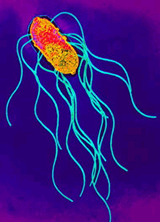
A new study by French scientists suggests the rise of ampicillin resistance in a strain of Salmonella may have begun before the antibiotic was ever used in humans.
Ampicillin, the first semi-synthetic penicillin active against Enterobacteriaceae, was released onto the market in 1961. The first outbreaks of disease caused by ampicillin-resistant strains of Salmonella enterica serotype Typhimurium were identified in the UK in 1962 and 1964.
In this study, whole-genome sequencing study, we analysed 288 S enterica serotype Typhimurium isolates collected between 1911 and 1969 from 31 countries on four continents and from various sources including human beings, animals, feed, and food.
Hence, molecular analysis suggests that the ampicillin resistance gene (blaTEM-1) emerged in Salmonella, several years before the antibiotic was released onto the pharmaceutical market. The findings also indicate that a possible cause was the common practice of adding low doses of narrow-spectrum penicillin G (also known as benzylpenicillin) to animal feed in the 1950s and 60s.
These findings suggest that antibiotic residues in farming environments such as soil, waste water, and manure may have a much greater impact on the spread of resistance than previously thought.
The researchers found various ampicillin-resistance genes in 11 isolates (3.8%) from human samples. Importantly, the blaTEM-1 gene was found on plasmids in three isolates taken from humans in France and Tunisia in 1959 and 1960.
In further analyses, the authors confirm that ampicillin resistance genes can be successfully transferred between wild type S. Typhimurium strains after exposure to relatively low levels of penicillin G, similar to those found in the livestock environment during the fifties-seventies.

RASFF Alerts – Aflatoxin – Dried Figs – Pistachios – Almond – Whole Red Chilli Peppers

kswfoodworld rasff

RASFF-aflatoxins (B1 = 43.93; Tot. = 66.65 µg/kg – ppb) in dried figs from Turkey in Italy

RASFF-aflatoxins (B1 = 13.04; Tot. = 21.40 µg/kg – ppb) in dried figs from Turkey in Italy

RASFF-aflatoxins (B1 = 343; Tot. = 375 µg/kg – ppb) in pistachio kernels from Iran, via the United Kingdom in Switzerland

RASFF-aflatoxins (B1 = 70; Tot. = 80 / B1 = 135; Tot. = 145 µg/kg – ppb) in almonds without shell from the United States in Spain

RASFF-aflatoxins (B1 = 25.3; Tot. = 62.3 µg/kg – ppb) and ochratoxin A (41.1 µg/kg – ppb) in dried figs from Italy in Germany

RASFF-aflatoxins (B1 = 27.0; Tot. = 28.6 µg/kg – ppb) in dried whole red chilli peppers from Sri Lanka in Cyprus

RASFF-aflatoxins (B1 = 19; Tot. = 27 µg/kg – ppb) in dried figs from Turkey in Slovenia

RASFF-aflatoxins (Tot. = 19 µg/kg – ppb) in diced and dried figs from Turkey in Sweden

RASFF-aflatoxins (B1 = 107.1; Tot. = 123.3 µg/kg – ppb) in pistachio nuts from Iran in Lithuania

RASFF-aflatoxins (B1 = 13.8; Tot. = 14.4 µg/item) in dried figs from Turkey in France

RASFF-aflatoxins (Tot. = 17.6 µg/kg – ppb) in dried figs from Turkey in Portugal

RASFF-aflatoxins (B1 = 22.6; Tot. = 25.7 / B1 = 18.6; Tot. = 19.9 µg/kg – ppb) in shelled pistachios from Turkey in Italy

RASFF Alerts – Enterobacteriaceae – Sliced Cooked Ham

kswfoodworld rasff

RASFF-Listeria monocytogenes (<100 CFU/g), Staphylococcus aureus (200 CFU/g), too high count of Enterobacteriaceae (1500 CFU/g) and aerobic plate count too high (80000000 CFU/g) for sliced cooked ham from Switzerland, processed in Italy in Switzerland

RASFF Alert – Staphylococcus aureus – Sliced Cooked Ham

kswfoodworld rasff

RASFF-Listeria monocytogenes (<100 CFU/g), Staphylococcus aureus (200 CFU/g), too high count of Enterobacteriaceae (1500 CFU/g) and aerobic plate count too high (80000000 CFU/g) for sliced cooked ham from Switzerland, processed in Italy in Switzerland

RASFF Alerts – Listeria monocytogenes – Chilled Bacon – Tuna Salads/Chilled Crab – Sliced Cooked Ham

kswfoodworld rasff

RASFF-Listeria monocytogenes (present /25g) in chilled bacon from Slovakia in Slovakia

RASFF-Listeria monocytogenes (present /25g) in chilled crab and tuna salads from Belgium in Belgium

RASFF-Listeria monocytogenes (<100 CFU/g), Staphylococcus aureus (200 CFU/g), too high count of Enterobacteriaceae (1500 CFU/g) and aerobic plate count too high (80000000 CFU/g) for sliced cooked ham from Switzerland, processed in Italy in Switzerland

RASFF Alert – Histamine – Fish Sauce

kswfoodworld rasff

RASFF-histamine (639 mg/kg – ppm) in fish sauce from Vietnam in Germany