Category Archives: Uncategorized

Information – Four Pathogens Cause Nearly 2 Million Foodborne Illness Cases a Year

Food Safety Tech

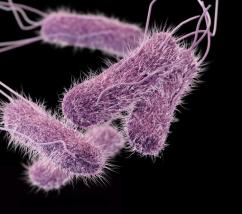
The CDC estimates that Salmonella, E. coli O157, Listeria monocytogenes and Campylobacter cause 1.9 million cases of foodborne illness in the United States. A report just released from the Interagency Food Safety Analytics Collaboration (IFSAC) analyzed data from more than 1000 foodborne disease outbreaks involving these pathogens from1998 through 2013.

The report found the following:

  • Salmonella illnesses came from a wide variety of foods (more than 75% came from the seven food categories of seeded vegetables, eggs, chicken, other produce, pork, beef and fruit.
  • More than 75% of E.coli O157 illnesses were linked to vegetable row crops, like leaf greens, and beef.
  • More than 75% of Listeria monocytogenes illnesses came from fruits and dairy products.
  • More than 80% of non-dairy Campylobacter illnesses were linked to chicken, other seafood (i.e., shellfish), seeded vegetables, vegetable row crops, and other meat and poultry (i.e., lamb or duck).

A copy of the report, “Foodborne illness source attribution estimates for 2013 for Salmonella, Escherichia coli O157, Listeria monocytogenes, and Campylobacter using multi-year outbreak surveillance data, United States”, is available on the CDC’s website.
UK -Never rinse your turkey under the tap, put dishcloths in the dishwasher and wash hands after handling veg: Six tips for an illness-free Christmas

DailyMail Online

Preparing for Christmas takes so much time and energy that the last thing you want is to fall ill. Unfortunately, a whirlwind of festive meals, yuletide parties and endless visitors only increases our chances of picking up a bug. We asked the experts to list the top Christmas hygiene hazards and how you can avoid them . . .

USA – Jack Brown Produce Recalls Apples for Possible Listeria Monocytogenes Contamination

Food Poisoning Bulletin

Jack Brown Produce of Michigan is recalling Gala, Fuji, Honeycrisp, and Golden Delicious Apples processed and shipped by Nyblad Orchards because they may be contaminated with Listeria monocytogenes bacteria. No illnesses have been reported to date in connection with this issue.

The apples were shipped on December 11, 2017 through December 16, 2017. They were distributed at retail stores in Michigan, Georgia, Missouri, Indiana and Ohio. The product at issue consists of the following types of apples sold or distributed by Jack Brown Produce, Inc. under the brand name “Apple Ridge.”

The following apples are recalled: Honeycrisp apples in two-pound clear plastic bags; Gala, Fuji, and Golden Delicious apples in 3-pound clear plastic bags; Fuji and Gala apples in 5-pound red-netted mesh bags; and Gala, Fuji and Honeycrisp apples that were tray-packed/individually sold. These numbers are printed on the bag label and/or bag-closure clip: Fuji: NOI 163, 165, 167, 169, 174; Honeycrisp: NOI 159, 160, 173; Golden Delicious: NOI 168; and Gala: NOI 164, 166 on either the product labels and/or bag-closure clip.

Routine sampling at Nyblad Orchards revealed that the finished product contained Listeria monocytogenes. Jack Brown has ceased the distribution of any more product processed at Nyblad Orchards while the problem is investigated.

If you bought any of these apples, do not eat them, even if you are planning to cook them. Throw them away in a sealed container in a secure garbage can, or take them back to the store where you bought them for a full refund.

Research – Efficacy of Lactic Acid, Lactic Acid–Acetic Acid Blends, and Peracetic Acid To Reduce Salmonella on Chicken Parts under Simulated Commercial Processing Conditions

Journal of Food Protection

The poultry processing industry has been undergoing a series of changes as it modifies processing practices to comply with new performance standards for chicken parts and comminuted poultry products. The regulatory approach encourages the use of intervention strategies to prevent and control foodborne pathogens in poultry products and thus improve food safety and protect human health. The present studies were conducted to evaluate the efficacy of antimicrobial interventions for reducing Salmonella on inoculated chicken parts under simulated commercial processing conditions. Chicken pieces were inoculated by immersion in a five-strain Salmonella cocktail at 6 log CFU/mL and then treated with organic acids and oxidizing agents on a commercial rinsing conveyor belt. The efficacy of spraying with six different treatments (sterile water, lactic acid, acetic acid, buffered lactic acid, acetic acid in combination with lactic acid, and peracetic acid) at two concentrations was evaluated on skin-on and skin-off chicken thighs at three application temperatures. Skinless chicken breasts were used to evaluate the antimicrobial efficacy of lactic acid and peracetic acid. The color stability of treated and untreated chicken parts was assessed after the acid interventions. The lactic acid and buffered lactic acid treatments produced the greatest reductions in Salmonella counts. Significant differences between the control and water treatments were identified for 5.11% lactic acid and 5.85% buffered lactic acid in both skin-on and skin-off chicken thighs. No significant effect of treatment temperature for skin-on chicken thighs was found. Lactic acid and peracetic acid were effective agents for eluting Salmonella cells attached to chicken breasts.

USA – Dairy recalls eggnog for Salmonella; sell-by dates increase risks

Food Safety News 


Arruda’s Dairy Farms of Tiverton, RI, is recalling eggnog that has sell-by dates well into 2018 because a sample was found to be contaminated with Salmonella.

The recall was announced Monday after routine testing, according to WPRI-TV Channel 12. The owners of Arruda’s Dairy Farms have suspended production of the eggnog while they and the Rhode Island Department of Health continue to investigate the source of the Salmonella.

USA – State says ceasing Brucella vaccinations could reduce illnesses

Food Safety News

Somewhat mixed messages are coming from health and agriculture officials in Pennsylvania in relation to antibiotic-resistant Brucella infections traced to unpasteurized, raw milk.

The Pennsylvania Department of Agriculture sent raw milk producers an alert about “several cases of brucellosis in humans” and suggested they stop vaccinating their cattle for Brucella.

The letter, provided to Food Safety News on Monday by state officials, specifically references a Nov. 21 notice from the federal Centers for Disease Control and Prevention that warned the public about Brucella infections traced to raw milk.

Europe – The European Union summary report on trends and sources of zoonoses, zoonotic agents and food-borne outbreaks in 2016

ECDC

This report of the European Food Safety Authority and the European Centre for Disease Prevention and Control presents the results of the zoonoses monitoring activities carried out in 2016 in 37 European countries (28 Member States (MS) and nine non-MS).

Campylobacteriosis was the most commonly reported zoonosis and the increasing European Union (EU) trend for confirmed human cases since 2008 stabilised during 2012–2016. The number of human listeriosis confirmed cases further increased in 2016, despite the fact that Listeria seldom exceeds the EU food safety limit in ready-to-eat foods. The decreasing EU trend for confirmed yersiniosis cases since 2008 stabilised during 2012–2016, and also the number of confirmed Shiga toxin-producing Escherichia coli (STEC) infections in humans was stable. In total, 4,786 food-borne outbreaks, including waterborne outbreaks, were reported.

Salmonella was the most commonly detected causative agent – with one out of six outbreaks due to S. Enteritidis – followed by other bacteria, bacterial toxins and viruses. Salmonella in eggs continued to represent the highest risk agent/food combination.

The report further summarises trends and sources for bovine tuberculosis, brucellosis, trichinellosis, echinococcosis, toxoplasmosis, rabies, Q fever, West Nile fever and tularaemia.

Canada – E. coli O157 Outbreak in Canada Linked to Romaine Lettuce Grows; One Person Has Died

Food Poisoning Bulletin Eurofins Food Testing UK

The E. coli O157 outbreak in Canada that is linked to romaine lettuce has grown. Nine more people are sick, Ontario and Nova Scotia have been added to the case count, and one person has died. There are now 30 people sick in five provinces.

There are no product recalls linked to these illness at this time. Romaine lettuce has been identified as the product that has caused this outbreak. The investigation is ongoing and Public Health Agency of Canada will update the outbreak on a regular basis.

The case count by province is: Ontario, (6), Quebec (5), New Brunswick (5), Nova Scotia (1), and Newfoundland and Labrador (13). People got sick in November and December 2017. Twelve people have been hospitalized in this E. coli O157 outbreak. The patient age range is between 4 and 80 years of age.

USA – More Workers with Hepatitis A

Food Poisoning Bulletin

A food handler who worked at the Huddle House in Dexter, Missouri has been diagnosed with hepatitis A. The restaurant is investigating along with the Missouri Department of Health and Senior Services and Stoddard County Health Center.

I was wondering that if a national survey in the USA or UK was undertaken what percentage of food handlers would have Hepatitis A?

USA – Another virus sickens 332 cruise passengers with vomiting, diarrhea

NY Post

PORT EVERGLADES, Fla. — More than 300 passengers on a cruise ship that docked at Port Everglades fell ill with a stomach virus.


Almost 200 passengers aboard one of the world’s largest cruise…

The Naples Daily News reports that the Royal Caribbean Cruises Limited’s ship Independence docked Saturday in Florida reported 332 cases of gastro-intestinal illness among the 5,547 guests.

It was the second time in less than a month that illness hit passengers on one of the cruise line’s vessels.

The 5-night cruise was interrupted for those passengers, who had symptoms including vomiting and diarrhea. One passenger, Victoria Nolan, described people throwing up in elevators.Cruise line spokesman Owen Torres told the paper that the ill passengers only represented about 6-percent of the total, and that the illnesses were short-lived.