Category Archives: Uncategorized

Research – Salmonella may have caused a massive Aztec epidemic, study finds

Barf Blog

Rebecca Hersher of NPR reports that in 1545, people in the Mexican highlands starting dying in enormous numbers. People infected with the disease bled and vomited before they died. Many had red spots on their skin.

It was one of the most devastating epidemics in human history. The 1545 outbreak, and a second wave in 1576, killed an estimated 7 million to 17 million people and contributed to the destruction of the Aztec Empire.

But identifying the pathogen responsible for the carnage has been difficult for scientists because infectious diseases leave behind very little archaeological evidence.

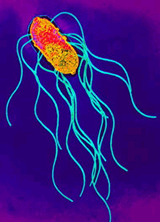
In the end, they found evidence of the deadly Salmonella enterica Paratyphi C bacteria.

Research – Fate of Salmonella enterica and Enterohemorrhagic Escherichia coli Cells Artificially Internalized into Vegetable Seeds during Germination

AEM ASM ORG

Vegetable seeds contaminated with bacterial pathogens have been linked to fresh-produce-associated outbreaks of gastrointestinal infections. This study was undertaken to observe the physiological behavior of Salmonella enterica and enterohemorrhagic Escherichia coli (EHEC) cells artificially internalized into vegetable seeds during the germination process. Surface-decontaminated seeds of alfalfa, fenugreek, lettuce, and tomato were vacuum-infiltrated with four individual strains of Salmonella or EHEC. Contaminated seeds were germinated at 25°C for 9 days, and different sprout/seedling tissues were microbiologically analyzed every other day. The internalization of Salmonella and EHEC cells into vegetable seeds was confirmed by the absence of pathogens in seed-rinsing water and the presence of pathogens in seed homogenates after postinternalization seed surface decontamination. Results show that 317 (62%) and 343 (67%) of the 512 collected sprout/seedling tissue samples were positive for Salmonella and EHEC, respectively. The average Salmonella populations were significantly larger (P < 0.05) than the EHEC populations. Significantly larger Salmonella populations were recovered from the cotyledon and seed coat tissues, followed by the root tissues, but the mean EHEC populations from all sampled tissue sections were statistically similar, except in pregerminated seeds. Three Salmonella and two EHEC strains had significantly larger cell populations on sprout/seedling tissues than other strains used in the study. Salmonella and EHEC populations from fenugreek and alfalfa tissues were significantly larger than those from tomato and lettuce tissues. The study showed the fate of internalized human pathogens on germinating vegetable seeds and sprout/seedling tissues and emphasized the importance of using pathogen-free seeds for sprout production.

IMPORTANCE The internalization of microorganisms into vegetable seeds could occur naturally and represents a possible pathway of vegetable seed contamination by human pathogens. The present study investigated the ability of two important bacterial pathogens, Salmonella and enterohemorrhagic Escherichia coli (EHEC), when artificially internalized into vegetable seeds, to grow and disseminate along vegetable sprouts/seedlings during germination. The data from the study revealed that the pathogen cells artificially internalized into vegetable seeds caused the contamination of different tissues of sprouts/seedlings and that pathogen growth on germinating seeds is bacterial species and vegetable seed-type dependent. These results further stress the necessity of using pathogen-free vegetable seeds for edible sprout production.

South Africa – Listeriosis outbreak’s getting worse

News24

The Listeriosis outbreak is causing widespread panic and leaving death in its wake. And yet The National Institute for Communicable Diseases is yet to determine the source of the food-borne Listeriosis outbreak that has reached 748 laboratory-confirmed cases.

On Friday the institute said 67 people had been confirmed dead from the outbreak gripping the country which surfaced early last month and affects all nine provinces.

This week, Health Minister, Aaron Motsoaledi, gave a situational update of the outbreak, revealing that since the last briefing held in December, cases rose from 527 in December to 748 by Friday.


Research – How much bacteria lives on a pedestrian crossing button?

The Journal

EVERY DAY ACROSS the country, the button on a pedestrian crossing could be pressed by dozens of people.

Seeing as people’s hands are often not the cleanest, something people are conscious of now with the current flu outbreak, are germs being transferred to the button?

A BT Young Scientist project by students from Castleknock Community College in Dublin found there is a significant amount of bacteria there – but that doesn’t mean you should be avoiding them at all costs.


USA – El Toro Restaurant Norovirus Outbreak Tops 423

Food Poison Journal Norovirus Food Safety kswfoodworld

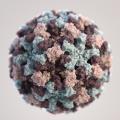
Tacoma-Pierce County Health Department has identified new cases of norovirus, bringing the total number from the outbreak at two El Toro Restaurants to 434. The Tacoma location, 5716 N. 26th St., has 423 cases. The restaurant in University Place, 3820 Bridgeport Way W., has 11. Both restaurants closed for a thorough cleaning and sanitizing, a Health Department requirement for outbreaks like this. Reports from people who say they got sick after dining at the restaurants have slowed down.“Norovirus is highly contagious and is more common in cold weather months,” said Katie Lott, food and community safety program manager. “The best thing people can do to protect themselves and keep the virus from spreading is wash their hands frequently and stay home when they’re sick,” she said

USA – Rare Salmonella Strain Found in Evershing Frozen Shredded Coconut While Investigating Illness

Food Poisoning Bulletin 


A rare strain of Salmonella was found in Evershing International frozen coconut by the Massachusetts Department of Health and led to a nationwide recall. Officials were investigating a single case of Salmonella food poisoning.

USA – Recall of Ice Cream Bars for Possible Listeria Monocytogenes Contamination Expands

Food Poisoning Bulletin 


The recall of Fieldbrook Foods ice cream bars for possible Listeria monocytogenes contamination has expanded to include another product. The previously announced voluntary recall of all orange cream bars and chocolate coated vanilla ice cream bars that were produced in 2017 on the company’s Hoyer 1 Line at its Dunkirk, NY plant (plant code 362677) also includes 28,751 cases of Sundae Shoppe Raspberry Cream Bars that were included with Orange Cream Bars in ALDI seasonal split-case purchases.

These cases were shipped between March and August 2017. You can see all of the stores where these products were sold, along with the brand name of the recalled products, at the FDA web site. The recalled products have production dates of January 1, 2017 to December 31, 2017 and a “best by” date of January 1, 2018 to December 31, 2018. The Hood and Kemps products may show a “best by” date of July 1, 2018 to June 30, 2019. Fieldbrook Foods is working with each of these retailers to recall the affected products.

No illnesses have been reported to date in connection with this problem, but listeriosis, the illness caused by this pathogenic bacteria, may not appear for 70 days. Industry testing found the bacteria in a few ice cream bar samples.

Russia – Food Poisoning Hospitalises Dozens In Russian Far East – Salmonella

Radio Liberty

Dozens of people have been stricken with salmonella after eating at a cafe in the capital of Russia’s Far Eastern region of Buryatia.

The region’s Health Ministry told RFE/RL on January 13 that 57 people, including an unspecified number of children, are being treated and all are expected to recover in the next few days.

All of the patients reported eating at the Shulen Do cafe between January 8 and January 11.

After the outbreak, the cafe was inspected and closed down when numerous violations were allegedly uncovered.

Canada – Correction – Updated Food Recall Warning – Imperial Caviar & Seafood / VIP Caviar Club brands Golden Whitefish Roe / Whitefish Roe recalled due to potential presence of dangerous bacteria – Clostridium botulinum

CFIA

Ottawa, January 12, 2018 – The food recall warning issued on January 11, 2018 has been amended to correctly identify the affected product. The corrections for this product are marked by an asterisk (*) below.

Imperial Caviar & Seafood is recalling Imperial Caviar & Seafood / VIP Caviar Club brand Golden Whitefish Roe / Whitefish Roe from the marketplace because it may permit the growth of Clostridium botulinum. Consumers should not consume the recalled product described below.

Affected products

Brand Name Common Name Size Code(s) on Product UPC
Outer package:
Imperial Caviar & Seafood*
Outer package:
Golden Whitefish Roe*
50 g Outer package:
151218*
Outer package:
1 86866 00012 2*
Inner package:
VIP Caviar Club*
Inner package:
Whitefish Roe
50 g Inner package:
34917
BB-15-DEC-2018
Inner package:
None*


Singapore – 14 Northland Secondary School students taken to hospital for food poisoning.

Channel News Asia

SINGAPORE: Fourteen students of Northland Secondary School in Yishun were taken to hospital on Thursday (Jan 11) after suffering from vomiting and stomach pains.

The Singapore Civil Defence Force said it received a call for assistance at about 12.10pm, adding that the students were taken to KK Women’s and Children’s Hospital and National University Hospital.

Responding to queries from Channel NewsAsia on Friday, school principal Mdm Tan Siew Woon said that most of the students were diagnosed with stomach infection.

Eight of them were discharged by Thursday evening, while the rest were admitted for observation.