Category Archives: Uncategorized

Turkey – Turkey launches criminal case over mass poisoning during opposition party’s congress

Trend News Agency

Turkey has launched a criminal case over mass food poisoning during a congress of the opposition Republican People’s Party (CHP), the Turkish media reported Feb. 6 quoting the party’s spokesperson Bulent Tezcan.

He said that on Feb. 5, the party appealed to Ankara Chief Public Prosecutor’s Office in connection with the incident.

On Feb. 4, mass food poisoning was recorded during the 36th Congress of CHP, as a result of which about 100 people were hospitalized.

The condition of 14 victims was assessed as serious, and on Feb. 6, all the hospitalized were discharged from the hospital.

Uzbekistan – 36 people hospitalized with food poisoning in Namangan region

UZdaily

Tashkent, Uzbekistan (UzDaily.com) — A group of citizens of Uzbekistan applied to the Department of Infectious Diseases of medical association of Kasansay district (Namangan region) on 5 February with symptoms of food poisoning, the press service of the Ministry of Health of Uzbekistan said.

According to the Ministry of Health, 36 people were hospitalized with suspicion of acute gastroenteritis and food poisoning. Patients received qualified medical care. Patients are in satisfactory condition

Patients associate a poor state of health with the use of meat products, bought from an unknown person in the central dehkan market on 4 February.

The Ministry of Health said that the Kasansay medical institute is provided with a sufficient number of medicines, infusion solutions, disposable syringes and systems, the department noted.

Employees of the Ministry of Health were sent to Kasansay district to study the epidemic situation.


South Korea – 1,200 security guards withdrawn from Pyeongchang Winter Olympics after Norovirus outbreak

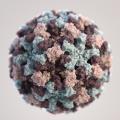
Scroll In Norovirus Food Safety kswfoodworld

More than 1,200 security guards have been withdrawn from the Pyeongchang Winter Olympics because of a norovirus outbreak, organisers said on Monday. Out of the group, 41 suffered a sudden onset of vomiting and diarrhoea on Sunday. They were transferred to hospital and most were diagnosed with a norovirus infection.

Norovirus is highly contagious and can also be spread through food or water contamination.
“The 1,200-odd people were pulled out from their duties,” an official of the Pyeongchang Olympic Organizing Committee was quoted as saying by AFP. “They were replaced by some 900 military soldiers. Health authorities were investigating the origin of the virus,” he said.

The security guards, all employees from a security company, had been accommodated at a youth training centre in Pyeongchang, separate from the athletes’ village.

Research – Study shines new light on how Salmonella ‘die’ at low temperatures

Science Daily

The most economical way to kill bacteria that cause common food-borne illnesses — mostly caused by Salmonella enterica — is heat, but, the mechanisms that kill Salmonella at lower temperatures were not fully understood until now, according to a team of researchers.

Bacteria can develop ways to cope with heat shock, so it is important to develop a complete understanding of how heat kills them, the researchers said.

Using droplet-based electrical sensors she developed while a doctoral student at Purdue University, Aida Ebrahimi, assistant professor of electrical engineering, Penn State, determined that mild heat stress at temperatures around 120 degrees Fahrenheit damages the bacteria’s cell wall without rupturing them.

“We had a hypothesis that the Salmonella bacterium might die due to leakage of the cell wall,” Ebrahimi said. “If you heat them, the lipids that make up the cell wall vibrate. As the cell wall weakens, it can allow small molecules to leak out. Because these small molecules are mostly ionic, we expected a change of the electrical conductance.”

In order to prove their hypothesis, the team developed a sensor that was sensitive to the changes in electrical conductance of the growth medium. As the bacteria’s cell wall lost integrity, charged molecules were ejected from the cells into the solution containing the bacteria, and consequently the electrical conductivity of the solution changed.

The researchers conducted multiple experiments using both wild-type and heat-resistant Salmonella bacteria and correlated the electrical results with fluorescence measurement and standard microbiology protocols. The modified bacteria required higher energy to make the cell membranes permeable enough to leak small molecules. The team also studied heating time and heating method, either a slower ramp-up of heat or a sudden pulse of heat, and found that pulsed heat was more effective at killing bacteria.

The authors of the paper appearing in the current issue of in Biophysical Journal then developed an analytical model based on their experiments that correlated membrane damage, cytoplasmic leakage and cell death. By better understanding the mechanisms of bacterial death at elevated temperatures, these findings can potentially improve food safety strategies and provide more efficient ways to deactivate bacteria using shorter duration of heating at lower temperatures.

“We know how high temperatures kill bacteria,” Ebrahimi said. “But we wanted to find out why Salmonella died at lower temperatures. There are benefits to using lower temperatures, such as saving energy and retaining better nutritional quality, compared to food heated to high temperatures. But more importantly, bacteria can develop resistance to heat shock, so it is important to know how they respond to heat shock.”

Ebrahimi’s coauthors on the paper, “Analyzing Thermal Stability of Cell Membrane of Salmonella using Time-Multiplexed Impedance Sensing,” are Lazlo Csonka and Muhammad Alam, Purdue University.

The National Science Foundation and a Bilsland Fellowship Award supported this work.

Story Source:

Materials provided by Penn State. Original written by Walt Mills. Note: Content may be edited for style and length.

Research – Botulism in France, 2013-2016

Barf Blog

Human botulism is a rare but severe neurological disease which is submitted to the French Public Health. The biological diagnosis is performed by the National Reference Center of Anaerobic Bacteria and Botulism (CNR), Institut Pasteur, Paris.

This study carries the status of human botulism in France During the 2013-2016 period based on the epidemiological data of Public Health France and the biological investigation of CNR. episodes

Thirty-nine of confirmed botulism and 3 suspected episodes involving 68 and 4 persons, respectively were Identified: 6 Type A episodes (10 cases), 26 type B episodes (47 boxes), type 2 F episodes (5 cases), and 5 undetermined type episodes (6 boxes). The source of botulism was foodborne in 36 outbreaks (66 cases) and 6 cases were infant botulism. All type A and F botulism cases were severe forms


Research – Five years of data show bacteria-related food recalls increasing – USA

Food Safety Recalls

Food Recalls

Food Safety News

For five years the Stericycle Recall Index has been tracking product recalls in the United States. With numbers for the fourth quarter of 2017 in, the food and beverage category shows the largest increase in recalls since 2012.

“The food and beverage industry experienced the most dramatic spike in units recalled over the past five years,” according to the report released today.

“Food products recalled by the U.S. Food and Drug Administration skyrocketed 92.7 percent since 2012, and recalled pounds regulated by the U.S. Department of Agriculture, which largely oversees meat production, jumped 83.4 percent in the same period.”

Report Link


USA – Warwick Stop & Shop in RI Recalls Deli Sliced Meat and Cheese for Possible Listeria Contamination

Food Poisoning Bulletin

The Warwick Stop and Shop is issuing a consumer alert on deli sliced meat and cheese for possible Listeria monocytogenes contamination, according to the Rhode Island Department of Health. All deli sliced meats and cheese that was sold at that facility between January 18 and February 2, 2018 is recalled.

Anyone who bought deli sliced meat and cheese at this particular store between that time period should discard those products and bring their receipts to the Stop & Shop for full refunds. The deli is temporarily closed while it is being cleaned; the rest of the store is open.

The notice is dated February 4, 2018. There have been no confirmed illnesses that are associated with this problem to date.

Spain – Lactalis – Second baby hit by Salmonella from Lactalis milk in Spain

Medical Express

A baby who drank milk produced by the French dairy giant Lactalis has been diagnosed with salmonella in the Spanish Basque country, taking the number of cases in the country this year to two, authorities said Saturday.

A second case of an infant affected by an infection with Agona” was detected at the Basurto University Hospital in Bilbao, the Department of Health of the Basque regional government said in a statement.

Lactalis has been engulfed in scandal since December when authorities ordered a massive international recall of the baby milk which made at least 38 ill in France and Spain.


Finland – 400 sick: Now the water is chlorinated in Nousis, Finland

Barf Blog

About 400 people in Nousis, Finland — a town of 4,800 — fell as a result of contaminated drinking water.

The municipality’s health authorities state that the situation was worst 23-27 January when more than 50 cases were recorded every day. The number of new cases has decreased steadily.

Last weekend, a ban on drinking water was introduced.

In tests taken by people who have fallen ill after drinking the municipality’s water pipeline, at least noro, sapo and astroviruses have been found.

Some of the patients had had two different viruses.

Individual cases of ETEC and EHEC bacteria and of the bacterium Plesiomonas shigelloides were also found in the patient samples.

USA – CDC Infographic- Investigating Outbreaks

CDC Infographic

image of infographic