Category Archives: Uncategorized

USA – News Release Olli Salumeria Americana Firm Recalls Ready-To-Eat Meat Products due to Possible Listeria Contamination

FSIS USDA USDA

WASHINGTON, March 2, 2018 – Olli Salumeria Americana, an Oceanside, Calif. establishment, is recalling approximately 3,946 pounds of ready-to-eat meat products that may be adulterated with Listeria monocytogenes, the U.S. Department of Agriculture’s Food Safety and Inspection Service (FSIS) announced today.

The not heat treated, shelf stable, ready-to-eat meat items were packaged on January 19, 2018. The following products are subject to recall: [View Labels (PDF only)]

  • 6 oz. packages of “Gusto NAPOLI APPLEWOOD-SMOKED SALAME” containing lot code 1000012821.
  • 6 oz. packages of “Gusto CHORIZO SMOKED PAPRIKA” containing lot code 1000012812.
  • 6 oz. packages of “Gusto SOPRESSATA BLACK PEPPERCORN SALAME” containing lot code 1000012811.
  • 6 oz. packages of “Gusto TOSCANO FENNEL POLLEN SALAME” containing lot code 1000012805.
  • 6 oz. packages of “Gusto PEPPERONI CLASSICALLY AMERICAN” containing lot code 1000012804.
  • 175 gram packages of “OLLI MOLISANA PEPPER + GARLIC SALAMI” containing lot code 1000012808.
  • 175 gram packages of “OLLI NAPOLI APPLEWOOD-SMOKED SALAMI” containing lot code 1000012810.
  • 175 gram packages of “OLLI CALABRESE SPICY SALAMI” containing lot code 1000012807.

The products subject to recall bear establishment number “M-45334” inside the USDA mark of inspection. These items were shipped to retail locations nationwide and exported to Canada.

The problem was discovered when the Canadian Food Inspection Agency (CFIA) performed routine Listeria monocytogenes sampling. There have been no confirmed reports of adverse reactions due to consumption of these products.

USA – Don’t kiss your guinea pigs; cute pets linked to Salmonella outbreak

Barf Blog Two_adult_Guinea_Pigs_(Cavia_porcellus)

Add the popular classroom pet, the guinea pig, to the list of kid-infecting-pathogen-factories with chicks, turtles, hedgehogs and puppies.

CDC reports today that whole genome sequencing has linked 9 cases of Salmonella Enteriditis to the furry rodents.

CDC began investigating in December 2017 when CDC PulseNet identified a cluster of three Salmonella Enteritidis infections that whole genome sequencing showed were closely related genetically.

A review of the PulseNet database identified six more closely related illnesses dating back to 2015. These illnesses were added to the outbreak case count. Nine people infected with the outbreak strain of Salmonella Enteritidis have been reported from eight states.Illnesses started on dates ranging from July 17, 2015 to December 15, 2017.
One person was hospitalized, and no deaths were reported.

France – Hepatitis A surveillance in France, 2006-2015

Barf Blog

A surveillance has been carried out by mandatory reporting (DO) since November 2005, with the objective of detecting clustered cases in order to quickly take control measures, and estimating reporting incidence rates. The results of the analysis of cases reported during the first ten years of surveillance (2006-2015) are presented.

In French

Report

USA – Petfood – Tucker’s Pork-Bison Formula Raw Frozen Dog Food – Salmonella

Petful

Maker: Raw Basics, LLC
Cause: Potential for salmonella
Announcement: FDA report dated March 6, 2018
What was recalled: 5 lb. boxes of Tucker’s Pork-Bison Formula raw frozen dog food with UPC #072635520017, Lot #27717 and best by date of April 17, 2019

A single lot (540 pounds) of this raw frozen dog food is being recalled following a positive test for salmonella by the Nebraska Department of Agriculture. The affected products were distributed in Minnesota, Georgia, Kansas and Pennsylvania.

The company, Raw Basics, LLC of Pleasant Prairie, Wisconsin, says it “tests all batches of products for all pathogens in a hold and release program before releasing for shipping.”

This is the 14th brand of dog food to be recalled so far this year, a dizzyingly high number for a period of just over 2 months’ time.

Canada – Tarini Brothers Meat and Fish Market recalling various Smoked Rainbow Trout products due to potential presence of Clostridium botulinum

WDG Public Health

Tarini Brothers Meat and Fish Market is recalling certain Smoked Rainbow Trout products because they may permit the growth of Clostridium botulinum. To get up-to-date information about the recall, visit the CFIA website.

You should not eat the recalled products described below.

Affected products

  • Smoked Rainbow Trout
  • Cajun Smoked Rainbow Trout
  • LP (lemon pepper) Smoked Rainbow Trout
  • Dill Smoked Rainbow Trout

If you purchased this product

If you find any of the affected products, throw them out or return them to the store. Food contaminated with Clostridium botulinum may not look or smell spoiled but can still make you sick.

Symptoms of Clostridium botulinum infection

Symptoms can include:

  • Nausea
  • Vomiting
  • Fatigue
  • Dizziness
  • Blurred or double vision
  • Dry mouth
  • Respiratory failure
  • Paralysis
  • Severe cases of illness can result in death

South Africa – Listeriosis scare: Woolworths pulls 32 cold meat products in widespread retailer recall

Fin24

Cape Town – Retail companies wasted very little time on Monday pulling Enterprise Foods’ polony and vienna products from the shelves following parent company Tiger Brands’ recall of the products in an effort to contain the public’s risk to listeriosis.

Minister of Health Aaron Motsoaledi announced on Sunday that the source of the latest outbreak of listeriosis was traced back to an Enterprise Foods facility in Polokwane Limpopo Province.

Woolworths acknowledged to Fin24 that Enterprise Food supplies meats for the products it was recalling, necessitating that some of the house brand products be pulled from the shelves or taken back for a refund.

Botswana – Botswana recalls food products over deadly listeriosis outbreak in S/Africa

Journal Du Cameroun

Botswana on Monday recalled food from its supermarkets that were imported from a bologna-making factory in the South African city of Polokwane after reports surfaced that it is the source of the deadly listeriosis outbreak in the neighbouring country.The disease has so far killed more 180 people and affected 915 others in South Africa.

Botswana’s Ministry of Health spokesperson Doreen Motshegwa said the main source of listeriosis outbreak in South Africa has been traced to Enterprise Food Production Factory and Rainbow Chicken Limited.

She said the affected items include sausages and other products from both factories.

“The Ministry of Health and Wellness also confirms that some of these products are imported from South Africa and are also part of the local distribution and retail supply chain,” said Motshegwa.


Brazil – Labs covered-up Salmonella-positive results: New arrests in Brazil rotten meat scandal

Barf Blog

Brazilian police made new arrests Monday in a probe into a tainted meat scandal that first erupted last year — this time targeting laboratories accused of covering up salmonella in products from food giant BRF.

“The investigation showed that five laboratories and the company’s analysis departments falsified results” shown to health inspectors, the federal police said in a statement.

Agriculture Ministry representative Alexandre Campos da Silva said the department received 410 notifications of salmonella presence from 12 countries that imported the meat in question last year — 80 per cent of which were in the EU.

Monday’s operation — the third since the scandal was uncovered — involved 270 police officers and 21 health agents across five Brazilian states.

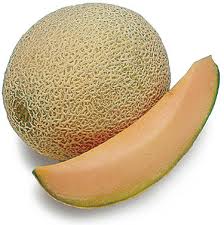
Hong Kong – A batch of Australian rockmelons suspected to be contaminated with Listeria monocytogenes

CFS catalopue

Issue Date 6.3.2018
Source of Information Food Standards Australia New Zealand (FSANZ)
Food Product A batch of rockmelons produced in New South Wales, Australia
Product Name and Description A batch of rockmelons produced in New South Wales, Australia imported by local importers, Wing Kee Produce Limited, ETAK International Ltd., Wing Hong Woo and Ming Kee Chan Co., Ltd., between 1 January and 28 February, 2018
Reason For Issuing Alert
  • The Centre for Food Safety (CFS), through its Food Incident Surveillance System, noted a notice issued by FSANZ that a batch of rockmelons produced in New South Wales, Australia might have been contaminated with Listeria monocytogenes and are being recalled.
  • According to the information provided by the Australian authorities, four local importers have imported the affected product into Hong Kong.
  • The four importers confirmed that the affected product was already sold out. They have initiated a recall according to the CFS’ advice.
  • Listeria monocytogenes can be easily destroyed by cooking but can survive and multiply at refrigerator temperature. Most healthy individuals do not develop symptoms or only have mild symptoms like fever, muscle pain, headache, nausea, vomiting or diarrhoea when infected. However, severe complications such as septicaemia, meningitis or even death may occur in newborns, the elderly and those with a weaker immune system. Although infected pregnant women may just experience mild symptoms generally, the infection of Listeria monocytogenes may cause miscarriage, infant death, preterm birth, or severe infection in newborns.
Action Taken by the Centre for Food Safety
  • The CFS contacted FSANZ for follow up. According to the information provided by the Australian authorities, four local importers have imported the affected product into Hong Kong.
  • The CFS contacted the four importers and all of them confirmed that they had imported the affected product which was already sold out. The importers have initiated a recall according to the CFS’ advice.
  • The CFS has not received any reports about listeriosis caused by consumption of rockmelons in the past two months.
  • The CFS’ follow-up on the case continues.  The CFS will continue to closely monitor the case and take appropriate follow-up action. Investigation is ongoing.
Advice to the Trade
  • Stop using or selling the affected product immediately if possessing it.
Advice to Consumers
  • Wash and scrub the surface of the whole rockmelon with a clean produce brush under clean running water before cutting it for consumption.
  • For enquiries, call the hotlines of the importers concerned during office hours:
    • Wing Kee Produce Limited at 2796 3111;
    • ETAK International Ltd. at 2487 3800;
    • Wing Hong Woo at 2376 2484; and
    • Ming Kee Chan Co., Ltd. at 2517 2686.
Further Information The CFS press release


Research – Cross-Contamination and Biofilm Formation by Salmonella enterica Serovar Enteritidis on Various Cutting Boards

Mary Ann Liebert

Cross-contamination is one of the main factors related to foodborne outbreaks. This study aimed to analyze the cross-contamination process of Salmonella enterica serovar Enteritidis from poultry to cucumbers, on various cutting board surfaces (plastic, wood, and glass) before and after washing and in the presence and absence of biofilm. Thus, 10 strains of Salmonella Enteritidis were used to test cross-contamination from poultry to the cutting boards and from thereon to cucumbers. Moreover, these strains were evaluated as to their capacity to form biofilm on hydrophobic (wood and plastic) and hydrophilic materials (glass). We recovered the 10 isolates from all unwashed boards and from all cucumbers that had contacted them. After washing, the recovery ranged from 10% to 100%, depending on the board material. In the presence of biofilm, the recovery of salmonellae was 100%, even after washing. Biofilm formation occurred more on wood (60%) and plastic (40%) than glass (10%) boards, demonstrating that bacteria adhered more to a hydrophobic material. It was concluded that the cutting boards represent a critical point in cross-contamination, particularly in the presence of biofilm. Salmonella Enteritidis was able to form a biofilm on these three types of cutting boards but glass showed the least formation.