Category Archives: Uncategorized

The European Union Summary Report on Trends and Sources of Zoonoses, Zoonotic Agents and Food-borne Outbreaks in 2012

EFSA efsa

The European Food Safety Authority and the European Centre for Disease Prevention and Control analysed information submitted by 27 European Union Member States on the occurrence of zoonoses and food-borne outbreaks in 2012. Campylobacteriosis was the most commonly reported zoonosis, with 214,268 confirmed human cases. The occurrence of Campylobacter continued to be high in broiler meat at EU level. The decreasing trend in confirmed salmonellosis cases in humans continued with a total of 91,034 cases reported in 2012. Most Member States met their Salmonella reduction targets for poultry. In foodstuffs, Salmonella was most often detected in meat and products thereof. The number of confirmed human listeriosis cases increased to 1,642. Listeria was seldom detected above the legal safety limit from ready-to-eat foods. A total of 5,671 confirmed verocytotoxigenic Escherichia coli (VTEC) infections were reported. VTEC was also reported from food and animals. The number of human tuberculosis cases due to Mycobacterium bovis was 125 cases, and 328 cases of brucellosis in humans were reported. The prevalence of bovine tuberculosis in cattle increased, and the prevalence of brucellosis in cattle, sheep or goats decreased. Trichinella caused 301 human cases and was mainly detected in wildlife. One domestically acquired human case and one imported human case of rabies were reported. The number of rabies cases in animals increased compared with 2011. A total of 643 confirmed human cases of Q fever were reported. Almost all reporting Member States found Coxiella burnetii (Q fever) positive cattle, sheep or goats. A total of 232 cases of West Nile fever in humans were reported. Nine Member States reported West Nile virus findings in solipeds. Most of the 5,363 reported food-borne outbreaks were caused by Salmonella, bacterial toxins, viruses and Campylobacter, and the main food sources were eggs, mixed foods and fish and fishery products.
Netherlands – Salami Recall – STEC E.coli

NL Timesecoli

 Salami with E.coli pulled from shelves

The Italian company, Fiorucci, pulled 4,230 packages of 80 gram Salame Milano off the shelves in the Netherlands because they may be contaminated with E.coli. Albert Heijn is the only Dutch supermarket carrying the product.

The bacterium E.coli VTEC was found during a check by Campofrío Food Group.

Canada- Recall Smoked Beef Jerky Products – Possible Micro Risk

CFIA

Crown Star Food Distributors Ltd. and Wallace & Carey Ltd., are recalling various Tillamook Country Smoker brand beef  jerky products from the marketplace because they are believed to pose a risk. Consumers should not consume the recalled products described below.

The recall was initiated by Tillamook Country Smoker, Bay City, OR, USA. The manufacturer used some of the beef products which were recalled by Rancho Feeding Corporation, Petalama, California, USA on February 8, 2014 “because it processed diseased and unsound animals and carried out these activities without the benefit or full benefit of federal inspection”. Therefore, these products are considered unsound, unwholesome or otherwise unfit for human consumption.


Research – Is Rainwater Microbiologically Safe?

Applied Environmental Microbiology Water

The possible health risks associated with the consumption of harvested rainwater remains one of the major obstacles hampering  its large-scale implementation in water limited countries such as South Africa. Rainwater tank samples collected on eight occasions during the low- and high-rainfall periods (March to August 2012) in Kleinmond, South Africa, were monitored for the presence of virulence genes associated with Escherichia coli. The identity of presumptive E. coli isolates in rainwater samples collected from 10 domestic rainwater harvesting (DRWH) tanks throughout the sampling period  was confirmed through universal 16S rRNA PCR with subsequent sequencing and phylogenetic analysis. Species-specific primers  were also used to routinely screen for the virulent genes, aggR, stx, eae, and ipaH found in enteroaggregative E. coli (EAEC), enterohemorrhagic E. coli (EHEC), enteropathogenic E. coli (EPEC), and enteroinvasive E. coli, respectively, in the rainwater samples. Of the 92 E. coli strains isolated from the rainwater using culture based techniques, 6% were presumptively positively identified as E. coli O157:H7 using 16S rRNA. Furthermore, virulent pathogenic E. coli genes were detected in 3% (EPEC and EHEC) and 16% (EAEC) of the 80 rainwater samples collected during the sampling period  from the 10 DRWH tanks. This study thus contributes valuable information to the limited data available regarding the ongoing prevalence of virulent pathotypes of E. coli in harvested rainwater during a longitudinal study in a high-population-density, periurban setting.

Research – Information Sheets – Campylobacter in Pate

BarfBlog

The concept behind food safety infosheets is to take recent foodborne illness media coverage, and relevant evidence, and provide it to food handlers in a nice package. At first, they were text heavy, boring and weren’t very good. After a couple of years of refinement food safety infosheets turned into tool resulting in measured changes in practices.

Info Sheet Link – Campylobacter in Pate Outbreak

Europe – Various Companies Recall Roquefort Cheeses – E.coli

Midi Libre

The cheese was sold under a dozen brands. . The Aveyron producer asking consumers not to touch and relate in store.

 Roquefort of Protected Designation of Origin (PDO) sold under a dozen brands (La Petite Cave, Monoprix Gourmet Pasture …) is withdrawn from sale due to the detection of E. coli bacteria on a product, the company announced Friday Gabriel Coulet.

The products have been marketed under the brands Black Spade, La Petite Cave, GAR, Heritage Gourmand, Auchan, Featured, Pastures, Rocabret, Monoprix Gourmet, Cora, House and The Gourmet Cheese, explains the producer in a statement.

The cheeses were sold in stores Atac, Auchan, Brake, Carrefour, Cora, Intermarché, Leclerc, Match, Metro, Monoprix and U system as lot numbers 120406152, 120406156, 120406157, 120406159, 120406160, 120406164, 120406165.

No illness has been reported

USA- Texas Restaurant Closes – Emploees With Norovirus

News 12Eurofins

Grayson County Health department officials say La Mesa Mexican Restaurant in Sherman closed their doors today to sanitize their facility after six employees contracted Norovirus.


Australia – 50 Sick – Salmonella Outbreak at a Cafe

The Age

At least 50 people have fallen ill with Salmonella food poisoning after  eating at a cafe at Torquay. Bottle of Milk will remain closed while further testing of food and equipment  is carried out.

Director of Infectious Diseases at Geelong Hospital Doctor Eugene Asson said  at least five people have been admitted to hospital.

He’s urging anyone with symptoms to see their doctor.


Australia – Cheese Recall – Listeria monocytogenes

FSANZFSANZ3

Grand Foods Pty Ltd has recalled various soft and hard cheese products and one
butter product from small independent supermarkets and Middle Eastern specialty stores in VIC only, due to Listeria monocytogenes contamination.
Listeria monocytogenes may cause illness in pregnant women and their
unborn babies, the elderly and people with low immune systems. Consumers should not eat these products and should return them to the place of purchase for a full refund. Consumers concerned about their health should seek medical advice.

Research – Oregano Oil – Cure for Norovirus?

Science Dailyoregano

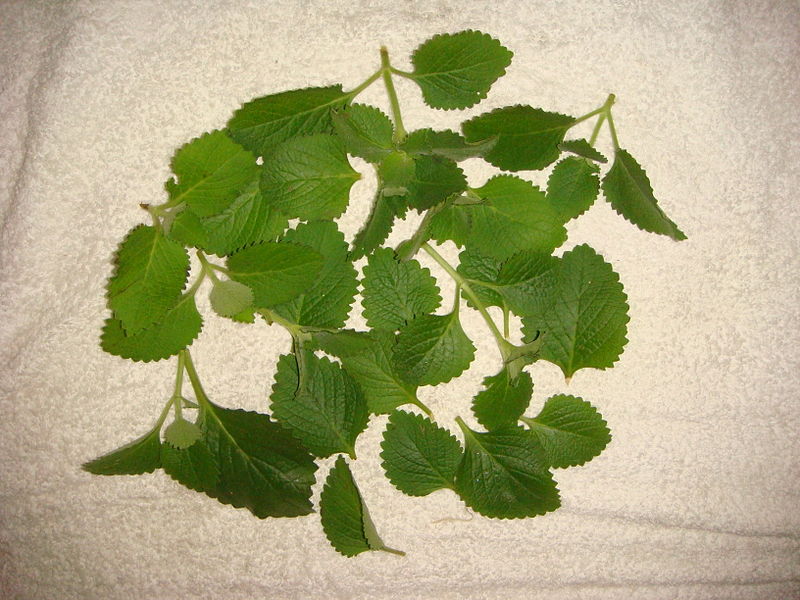
Scientists have found that carvacrol — the substance in oregano oil that gives the pizza herb its distinctive warm, aromatic smell and flavour — is effective against norovirus, causing the breakdown of the virus’ tough outer coat. The research is published today (12 February) in the Society for Applied Microbiology’s Journal of Applied Microbiology.