Category Archives: Uncategorized

USA – Illegally Manufactured Cheese – 100 Salmonella Cases

Food PoisoningJournal

Illinois Department of Public Health (IDPH) Director Dr. LaMar Hasbrouck is warning people about the dangers of consuming illegally manufactured cheeses. Health officials are reporting around 100 cases of salmonellosis in 13 counties believed to be linked to consumption of an illegally manufactured Mexican-style cheese. A sample of the cheese obtained from the home of a person who became ill tested positive for Salmonella. IDPH is working with local health departments to identify the manufacturer of the contaminated cheese.

Europe Research- Scientific Opinion on the risk posed by pathogens in food of non-animal origin. Part 2 (Salmonella and Norovirus in leafy greens eaten raw as salads)

EFSA Eurofins Food Testing UK

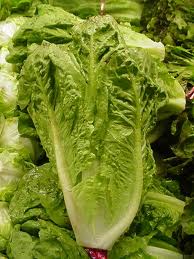
Leafy greens eaten raw as salads are minimally processed and widely consumed foods. Risk factors for leafy greens contamination by Salmonella spp. and Norovirus were considered in the context of the whole food chain including agricultural production and processing. Available estimates of the prevalence of these pathogens (together with the use of Escherichia coli as an indicator organism) in leafy greens were evaluated. Specific mitigation options relating to contamination of leafy greens were considered and qualitatively assessed. It was concluded that each farm environment represents a unique combination of numerous characteristics that can influence occurrence and persistence of pathogens in leafy greens production. Appropriate implementation of food safety management systems, including Good Agricultural Practices (GAP), Good Hygiene Practices (GHP) and Good Manufacturing Practices (GMP), should be primary objectives of leafy green producers. The relevance of microbiological criteria applicable to production, processing and at retail/catering were considered. The current legal framework does not include microbiological criteria applicable at primary production which will validate and verify GAP and GHP. It is proposed to define a criterion at primary production of leafy greens which is designated as Hygiene Criterion, and E. coli was identified as suitable for this purpose. A Process Hygiene Criterion for E. coli in leafy green packaging plants or fresh cutting plantswas considered andwill also give an indication of the degree to which GAP, GHP, GMP or HACCP programs have been implemented. A Food Safety Criterion for Salmonella in leafy greens could be used as a tool to communicate to producers and processors that Salmonella should not be present in the product. Studies on the prevalence and infectivity of Norovirus are limited, and quantitative data on viral load are scarce making establishment of microbiological criteria for Norovirus on leafy greens difficult.

© European Food Safety Authority, 2014

Europe – Antimicrobial resistance remains commonly detected in bacteria in humans, animals and food: EFSA -ECDC report

EFSA efsa

Bacteria most frequently causing food-borne infections, such as Salmonella and Campylobacter, show significant resistance to common antimicrobials, according to the EFSA-ECDC European Union Summary Report on antimicrobial resistance in zoonotic and indicator bacteria from humans, animals and food in 2012. Data show that combined resistance (co-resistance) to critically important antimicrobials remains low. While this means that treatment options for serious infections with these zoonotic bacteria are available in most cases, the fact that antimicrobial resistance was commonly detected is cause for concern.

USA – CDC – Salmonella Surveillance Data

Food Safety News

For the first time, the U.S. Centers for Disease Control and Prevention (CDC) is providing online surveillance data gathered over more than 40 years on 32 Salmonella isolates from people, animals and other sources.

CDC Link


USA – FDA Recall – Cheese Spread – Listeria monocyotgenes

FDA FDA

Oscars Smokehouse Inc. of Warrensburg, New York is recalling eleven (11) of its 7-oz. “CHEESE SPREADS” varieties marked with 3 digit lot numbers ranging from” 719-959” because they have the potential to be contaminated with Listeria monocytogenes:

-JALAPENO PEPPER CHEDDAR SPREAD, NET WT 7 OZS.
-CHEDDAR SPREAD & BLUE CHEESE, NET WT 7 OZS.
-CHAMPAGNE CHEDDAR SPREAD, NET WT 7 OZS.
-GARLIC CHEDDAR SPREAD, NET WT 7 OZS.
-PORT WINE CHEDDAR SPREAD, NET WT 7 OZS. -TANGY HORSERADISH CHEDDAR SPREAD, NET WT 7 OZS.
-PLAIN CHEDDAR SPREAD, NET WT 7 OZS.
-“MORE THAN” CHEDDAR SPREAD, NET WT 7 OZS.
-HICKORY SMOKED CHEDDAR SPREAD, NET WT 7 OZS.
-BACON & HORSERADISH CHEDDAR SPREAD, NET WT 7 OZS.
-BACON CHEDDAR SPREAD, NET WT 7 OZS.

RASFF Alert – STEC – Beef- E.coli – Clams – Jack Fruit – Mussels – Enterobacteriaceae – Ice Cream

Food Testing - Eurofins

RASFF -shigatoxin-producing Escherichia coli in chilled beef meat from Argentina in Germany

RASFF– shigatoxin-producing Escherichia coli in chilled boneless beef (Bos taurus) from Brazil in Germany

RASFF– too high count of Escherichia coli (330 MPN/100g) in chilled clams (Tapes semidecussatus) from Italy

RASFF-high count of Escherichia coli (790 CFU/g) in peeled jack fruit from Thailand in Ireland

RASFF -too high count of Escherichia coli (1700 MPN/100g) in organic mussels (Mytilus edulis) from Ireland in France

RASFF – high count of Enterobacteriaceae in ice cream from the former Yugoslav Republic of Macedonia in Croatia

RASFF Alert – Norovirus – Oysters – Frozen Raspberries

RASFF-Logo

RASFF -norovirus (detected) in oysters (Crassostrea gigas) from France in Denmark

RASFF – norovirus (presence of GII) in frozen raspberries from China in the Netherlands

RASFF Alert – Listeria monocytogenes – Raw Milk Cheese – Cheese – Butter

RASFF-Logo

RASFF – Listeria monocytogenes (10 CFU/100g) in raw milk cheese from France in France

RASFF – Listeria monocytogenes (16000; 31000 CFU/g) and Listeria spp (1000000; 197000 CFU/g) in farmhouse cheese with red culture from Germany in Germany

RASFF – Listeria monocytogenes (presence /25g) in butter from Poland in Poland

RASFF Alert – Botulinum Toxin – Vegatable Soup – ASP – Clams – Histamine- Tuna

RASFF-Logo

RASFF -botulinum toxin in vegetable soup from Italy in Italy

RASFF -Amnesic Shellfish Poisoning (ASP) toxins (70.5 mg/kg – ppm) in clams from France in France

RASFF – histamine (between 25 and 833 mg/kg – ppm) in chilled tuna (Thunnus albacares) from India in Italy

RASFF Alerts -Salmonella – Turkey – Chicken – Kebab – Mushrooms – Wild Boar Sausage

RASFF-Logo

RASFF -Salmonella Hadar (presence /25g) in frozen turkey meat preparation from Brazil in the Netherlands

RASFF -Salmonella enteritidis (presence /25g) in chilled / frozen chicken meat processed in Poland from chickens farmed in Slovakia.

RASFF -Salmonella enteritidis in frozen chicken kebab from Poland

RASFF-Salmonella spp. (presence /25g) in dried sliced (Mu err) mushrooms from Vietnam in Germany

RASFF -Salmonella in wild boar sausages from Italy