Category Archives: Uncategorized

Research – New Research Shows how Pathogenic E. coli O157:H7 Binds to Fresh Vegetables

Science Codex Ecoli Istock

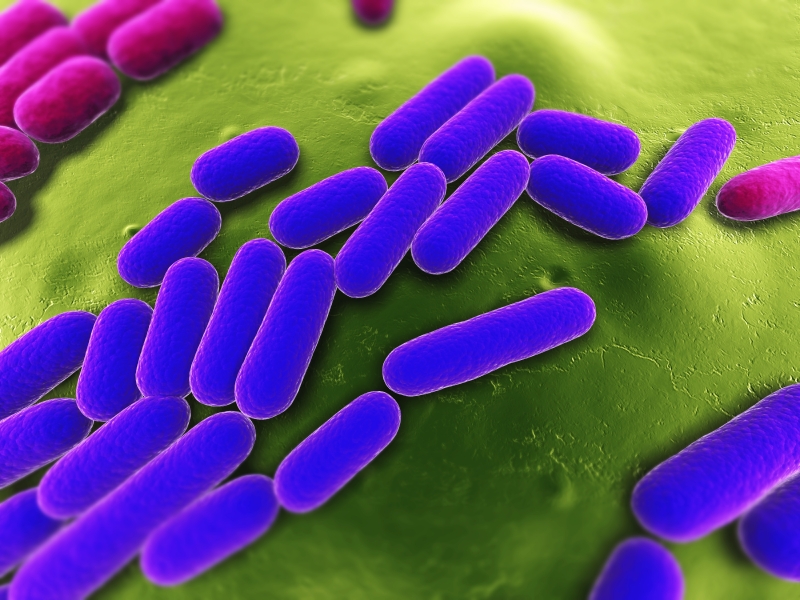
Food-poisoning outbreaks linked to disease-causing strains of the bacterium Escherichia coli are normally associated with tainted meat products. However, between 20-30% of these are caused by people eating contaminated vegetables, as was seen in the 2011 outbreak in Europe that caused 53 deaths. Research presented today at the Society for General Microbiology’s Annual Meeting in Liverpool shows that the disease-causing E. coli O157:H7 interacts directly with plant cells, allowing it to anchor to the surface of a plant, where it can multiply.

Researchers from the James Hutton Institute in Scotland have identified that E. coli O157:H7 uses whip-link structures on its surface known as flagella – typically used for bacterial motility – to penetrate the plant cell walls. The team showed that purified flagella were able to directly interact with lipid molecules found in the membranes of plant cells. E. coli bacteria lacking flagella were unable to bind to the plant cells.


Research – Chronobacter – Possible reservoir and routes of transmission of Cronobacter (Enterobacter sakazakii) via wheat flour

Science Direct

Contamination of food products is a major route of transmission for opportunistic foodborne pathogen. Cronobacter spp. (formerly Enterobacter sakazakii) are an important group of emerging opportunistic foodborne pathogens that may cause rare but severe systemic infection such as neonatal meningitis, septicemia, and enterocolitis in neonates. Here, we tried to investigate the possible natural reservoir and routes of transmission of this pathogen. Samples of food (N = 141) were screened for the presence of the bacterium, and 34 isolates of Cronobacter spp. were collected in total. Of the initial of 108 samples including infant formulas, dry milk powder, milk and milk related beverages, cereal (products), chocolate and candy, miscellaneous food products, 12% were positive for Cronobacter spp., with the highest percentage (69.3%) coming from cereal products. Further investigation indicated that 100% of 13 wheat flours, 5 of 8 (62.5%) wheat kernel samples, 100% of 5 different brands of dry noodles, and 3 of 7 (42.9%) deep-frozen dumpling samples contained Cronobacter spp. Biochemical analysis (ID32E strips) of the 34 isolates resulted in 11 different biogroups based on the utilization of 8 substrates. In addition, pulsed field gel electrophoresis (PFGE) demonstrated extremely high genetic diversity as 24 unique PFGE profiles were revealed among the 25 isolates acquired mainly from wheat flour or related products. We therefore conclude that wheat flour is one likely reservoir and/or transmission route for Cronobacter spp., and special care should be taken while preparing infant foods or formulas in order to avoid cross-contamination from this source.

Research Articles – Listeria – Mustard Anti-Microbial – Anti-Microbial Resistance – Growth Model

Journal of Food Science

The antimicrobial activities of oriental mustard extract alone or combined with malic acid and EDTA were investigated against Salmonella spp. or Listeria monocytogenes at different temperatures. Five strain Salmonella or L. monocytogenes cocktails were separately inoculated in Brain Heart Infusion broth containing 0.5% (w/v) aqueous oriental mustard extract and incubated at 4 °C to 21 °C for 21 d. For inhibitor combination tests, Salmonella Typhimurium 02:8423 and L. monocytogenes 2–243 were individually inoculated in Mueller Hinton broth containing the mustard extract with either or both 0.2% (w/v) malic acid and 0.2% (w/v) EDTA and incubated at 10 °C or 21 °C for 10 to 14 d. Mustard extract inhibited growth of the L. monocytogenes cocktail at 4 °C up to 21 d (2.3 log10 CFU/mL inhibition) or at 10 °C for 7 d (2.4 log10 CFU/mL inhibition). Salmonella spp. viability was slightly, but significantly reduced by mustard extract at 4 °C by 21 d. Although hydrolysis of sinigrin in mustard extract by both pathogens was 2 to 6 times higher at 21 °C than at 4 °C to 10 °C, mustard was not inhibitory at 21 °C, perhaps because of the instability of its hydrolysis product (allyl isothiocyanate). At 21 °C, additive inhibitory effects of mustard extract with EDTA or malic acid led to undetectable levels of S. Typhimurium and L. monocytogenes by 7 d and 10 d, respectively. At 10 °C, S. Typhimurium was similarly susceptible, but combinations of antimicrobials were not more inhibitory to L. monocytogenes than the individual agents.

Science Direct

Listeria monocytogenes is an important foodborne pathogen. The aims of this study were to determine genetic relatedness of L. monocytogenes isolated from ready-to-eat (RTE) foods in Malaysia. L. monocytogenes isolates from RTE foods were characterized by multiplex-PCR serotyping, REP-PCR, BOX-PCR, RAPD, PFGE, virulotyping and antibiotyping. Of the 32 L. monocytogenes isolates analyzed, 21 (65.6%) were assigned to serogroup “1/2a, 3a”, seven (21.9%) serogroup “1/2c, 3c”, and four (12.5%) serogroup “4b, 4d, 4e”. All the L. monocytogenes harbored inlA, inlB, inlC and inlJ virulence genes. More than half (53%) L. monocytogenes isolates were resistant to penicillin G, followed by tetracycline (15.6%), amoxicillin-clavulanic acid (12.5%), vancomycin (9.4%) erythromycin (6.3%), clindamycin, streptomycin, kanamycin, and chloramphenicol (each 3.1%). REP-PCR, BOX-PCR, RAPD and PFGE generated 28 (D = 0.992), 31 (D = 0.998), 32 (D = 1), and 20 (D = 0.916) patterns, respectively. These results indicate that L. monocytogenes isolates from RTE food were heterogeneous. There was no correlation between antibiograms and serogroups or pulsotypes or PCR-typing and/or sources of isolates. Since different subtyping methods often give different discriminatory powers, the use of more than one subtyping approach is necessary in providing a more accurate picture of the genetic diversity of L. monocytogenes. In conclusion, L. monocytogenes isolates from RTE possess the internalin genes and are genetically diverse. Furthermore, the occurrence of resistant isolates belonging to epidemiologically important serogroups “1/2a, 3a” and “4b, 4d, 4e” in RTE foods is a matter of public health concern.

Science Direct

This study was performed to develop a predictive growth model of Listeria monocytogenes to ensure the safety of raw pork. The pork samples were inoculated with a cocktail of two L. monocytogenes strains ATCC 15313 and L13-2 isolated from pork and were stored at 5, 15, and 25 °C. Results were evaluated using the MicroFit program. To develop primary models, the Baranyi, modified Gompertz, and Logistic model equations were applied to the observed data. The mathematically predicted growth rate parameters were evaluated using the coefficient of determination (R2), bias factor (Bf), accuracy factor (Af), and mean square error (MSE). The Baranyi model, which showed an R2 of 0.998 and MSE of 0.006, was more suitable than the modified Gompertz and Logistic models. In validation study of secondary model, it appeared that MSE’s of specific growth rate (SGR) and lag time (LT) were relatively accurate and suitable for modeling the growth of L. monocytogenes. These values indicated that the developed models were acceptable for expressing the growth of microorganisms on raw pork, which can be applied to ensure the safety of meats and to establish standards for avoiding microbial contamination.

Research Articles – Antibacterial Soaps – Chlorine Solutions – Marinades

Newswise

Newly published research shows that the use of antibacterial soaps can reduce the spread of harmful bacteria – that often leads to foodborne illness – more effectively than using non-antibacterial soaps.

The research, published in the peer-reviewed Journal of Food Protection (Vol. 77, No. 4, 2014, pp. 574-582), used new laboratory data, together with simulation techniques, to compare the ability of non-antibacterial and antibacterial products to reduce the risk of the infectious disease shigellosis, which is often spread during food preparation

Journal of Food Science

Chlorinated water and electrolyzed oxidizing (EO) water solutions were made to compare the free chlorine stability and microbicidal efficacy of chlorine-containing solutions with different properties. Reduction of Escherichia coli O157:H7 was greatest in fresh samples (approximately 9.0 log CFU/mL reduction). Chlorine loss in “aged” samples (samples left in open bottles) was greatest (approximately 40 mg/L free chlorine loss in 24 h) in low pH (approximately 2.5) and high chloride (Cl−) concentrations (greater than 150 mg/L). Reduction of E. coli O157:H7 was also negatively impacted (<1.0 log CFU/mL reduction) in aged samples with a low pH and high Cl−. Higher pH values (approximately 6.0) did not appear to have a significant effect on free chlorine loss or numbers of surviving microbial cells when fresh and aged samples were compared. This study found chloride levels in the chlorinated and EO water solutions had a reduced effect on both free chlorine stability and its microbicidal efficacy in the low pH solutions. Greater concentrations of chloride in pH 2.5 samples resulted in decreased free chlorine stability and lower microbicidal efficacy.

Poultry Science

Marination using various ingredients has been widely used to improve microbial safety and quality of chicken products at retail markets. The objective of this study was to investigate the effects of commercial marinade seasoning and cultured sugar/vinegar blend on Campylobacter jejuni and Salmonella Typhimurium populations during refrigerated storage. In addition, their effects on the texture of precooked chicken breasts during frozen and refrigerated storage was investigated. Chicken breasts inoculated with 4.5 to 5.0 log cfu/g of C. jejuni and Salmonella Typhimurium were treated with 3% cultured sugar/vinegar blend with and without 0.6% polish rub seasoning containing 32% herb content. Breasts were then vacuum-packaged and stored at 4 and 10°C. Survival and growth curves were fitted to the Baranyi equation to determine survival and growth kinetics of C. jejuni and Salmonella Typhimurium. In addition, the vacuum-packaged precooked chicken breasts with different marination treatments were subjected to 3 freeze-thaw cycles and shear force was measured. At 4°C, the populations of C. jejuni and Salmonella Typhimurium decreased, regardless of treatment group during storage. The greatest survival for C. jejuni was observed in untreated chicken breasts. At 10°C, the growth of Salmonella Typhimurium was completely prevented in precooked chicken breasts treated with 3% cultured sugar/vinegar blend, regardless of the presence of 0.6% seasoning. The 3% cultured sugar/vinegar blend also improved the tenderness of frozen chicken breasts and refrigerated, ready-to-eat chicken breast. Therefore, a natural blend of cultured sugar and vinegar can be used as antimicrobial and texture-modifying agents for poultry meat and poultry products.

Research – Phytochemical Profiles and Antimicrobial Activity of Aromatic Malaysian Herb Extracts against Food-Borne Pathogenic and Food Spoilage Microorganisms

Journal of Food Science iStock_000012710183Small

Preliminary phytochemical and flavonoid compounds of aqueous and ethanolic extracts of 6 aromatic Malaysian herbs were screened and quantified using Reverse-Phase High Performance Liquid Chromatography (RP-HPLC). The herbal extracts were tested for their antimicrobial activity against 10 food-borne pathogenic and food spoilage microorganisms using disk diffusion assay. The minimum inhibitory concentration (MIC) and minimum bactericidal concentration (MBC)/minimum fungicidal concentration (MFC) of herbal extracts were determined. In the phytochemical screening process, both aqueous and ethanolic extracts of P. hydropiper exhibited presence of all 7 tested phytochemical compounds. Among all herbal extracts, the aqueous P. hydropiper and E. elatior extracts demonstrated the highest antibacterial activity against 7 tested Gram-positive and Gram-negative bacteria with diameter ranging from 7.0 to 18.5 mm and 6.5 to 19 mm, respectively. The MIC values for aqueous and ethanolic extracts ranged from 18.75 to 175 mg/mL and 0.391 to 200 mg/mL, respectively while the MBC/MFC values for aqueous and ethanolic extracts ranged from 25 to 200 mg/mL and 3.125 to 50 mg/mL, respectively. Major types of bioactive compounds in aqueous P. hydropiper and E. elatior extracts were identified using RP-HPLC instrument. Flavonoids found in these plants were epi-catechin, quercetin, and kaempferol. The ability of aqueous Persicaria hydropiper (L.) H. Gross and Etlingera elatior (Jack) R.M. Sm. extracts to inhibit the growth of bacteria is an indication of its broad spectrum antimicrobial potential. Hence these herbal extracts may be used as natural preservative to improve the safety and shelf-life of food and pharmaceutical products.

Practical Application

The main practical application of this study was to determine the antimicrobial activity of selected aromatic Malaysian herbs and quantified the phytochemical compounds especially flavonoids that contribute to the antimicrobial activity. The results of this study will provide and develop potential functional ingredients which will be applied in food and pharmaceutical industry.

Vietnam – Horse Blood Pudding – E.coli and Staphylococcus

TalkVietnam Staphylococcus

22 people in the northern mountainous province of Lao Cai were poisoned after eating horse-blood pudding due to presence of Staphylococci and E.coli.

Test result of horse blood pudding showed that Staphylococci and E.coli are present in the dish which is reported to be popular with Hmong and other ethnic farming people in the mountains

RASFF Alerts – STEC E.coli – Beef – Lamb – Histamine – Tuna

RASFF-Logo

RASFF -Shigatoxin-producing Escherichia coli in frozen beef (Bos taurus) from Brazil in the Netherlands

RASFF -Shigatoxin-producing Escherichia coli (presence /25g) in chilled lamb (Ovis aries) from New Zealand in Italy

RASFF -Histamine (2000 mg/kg – ppm) in chilled tuna fillet from French Polynesia in France

RASFF Alerts – Salmonella – Chicken – Turkey Kebab

RASFF-Logo

RASFF-Salmonella spp. (presence /25g) in fresh chicken fillet from the Netherlands in Sweden

RASFF-Foodborne outbreak suspected to be caused by and Salmonella Stanley (1,4,5,12:d:1,2 /25g) in frozen turkey kebab from Hungary, with raw material from Austria, Germany and Hungary in Austria

RASFF-Salmonella spp. (in 1 out of 5 samples /25g) in chilled poultry meat from the Czech Republic in Poland

RASFF-Salmonella spp. (presence /25g) in frozen salted chicken breast halves from Brazilin the UK

RASFF-Salmonella enteritidis (presence /25g) in fresh / frozen poultry meat from Poland in Poland

RASFF Alerts – Virus – Hepatitis A – Berry Cake – Mixed Berries – Norovirus -Clams

RASFF-Logo

RASFF -Foodborne outbreak suspected (hepatitis A virus) to be caused by berry mix buttermilk cake from Germany in Norway

RASFF -Hepatitis A virus (presence /25g) in mixed frozen berries from Poland and Bulgaria, via Belgium in France

RASFF -Norovirus (in 2 out of 5 samples) in frozen cooked whole white clams (Meretrix lyrata) from Vietnam in Spain

RASFF Alerts – Listeria monocytogenes- Pork – Smoked Trout – Bacon -Cheese-Smoked Salmon

RASFF-Logo

RASFF -Listeria monocytogenes (3100 CFU/g) in cooked head of pork from Italy in Italy

RASFF-Listeria monocytogenes (15000 CFU/g) in smoked trout fillets from Denmark in the Netherlands

RASFF -Listeria monocytogenes (presence /25g) in bacon from Italy in Italy

RASFF-Listeria monocytogenes (< 100 CFU/g) in cheese from France in France

RASFF-Listeria monocytogenes (< 1000 CFU/g) in smoked salmon from France in France