Category Archives: Uncategorized

Research – Listeria monocytogenes – Pet Foods – RTE Ham

Mary Ann Leibert

The Veterinary Laboratory Investigation and Response Network (Vet-LIRN), in collaboration with the Food Emergency Response Network (FERN) and its Microbiology Cooperative Agreement Program (MCAP) laboratories, conducted a study to evaluate the prevalence of selected microbial organisms in various types of pet foods. The goal of this blinded study was to help the Center for Veterinary Medicine prioritize potential future pet food–testing efforts. The study also increased the FERN laboratories’ screening capabilities for foodborne pathogens in animal feed matrices, since such pathogens may also be a significant health risk to consumers who come into contact with pet foods. Six U.S. Food and Drug Administration FERN MCAP laboratories analyzed approximately 1056 samples over 2 years. Laboratories tested for Salmonella, Listeria, Escherichia coli O157:H7 enterohemorrhagic E. coli, and Shiga toxin–producing strains of E. coli (STEC). Dry and semimoist dog and cat foods purchased from local stores were tested during Phase 1. Raw dog and cat foods, exotic animal feed, and jerky-type treats purchased through the Internet were tested in Phase 2. Of the 480 dry and semimoist samples, only 2 tested positive: 1 for Salmonella and 1 for Listeria greyii. However, of the 576 samples analyzed during Phase 2, 66 samples were positive for Listeria (32 of those were Listeria monocytogenes) and 15 samples positive for Salmonella. These pathogens were isolated from raw foods and jerky-type treats, not the exotic animal dry feeds. This study showed that raw pet foods may harbor food safety pathogens, such as Listeria monocytogenes and Salmonella. Consumers should handle these products carefully, being mindful of the potential risks to human and animal health.

Mary Ann Leibert

Ready-to-eat (RTE) meat and poultry products manufactured with natural or organic methods are at greater risk for Listeria monocytogenes growth, if contaminated, than their conventional counterparts due to the required absence of preservatives and antimicrobials. Thus, the objective of this study was to investigate the use of commercially available natural antimicrobials and postlethality interventions in the control of L. monocytogenes growth and recovery on a RTE ham product. Antimicrobials evaluated were cranberry powder (90MX), vinegar (DV), and vinegar/lemon juice concentrate (LV1X). Postlethality interventions studied were high hydrostatic pressure at 400 (HHP400) or 600 (HHP600) MPa, lauric arginate (LAE), octanoic acid (OA), and postpackaging thermal treatment (PPTT). Parameters evaluated through 98 days of storage at 4±1°C were residual nitrite concentrations, pH, aw, and viable L. monocytogenes on modified Oxford (MOX) media. On day 1, OA, 90MX, DV, and LV1X yielded lower residual nitrite concentrations than the control, whereas HHP400, HHP600, and LAE did not. LAE, HHP400, and OA reduced L. monocytogenes population compared to the control after 1 day of storage by 2.38, 2.21, and 1.73 log10 colony-forming units per gram, respectively. PPTT did not achieve a significant reduction in L. monocytogenes populations. L. monocytogenes recovered and grew in all postlethality intervention treatments except HHP600. 90MX did not inhibit the growth of L. monocytogenes, while DV and LV1X did. Results of this study demonstrate the bactericidal properties of HHP, OA, and LAE and the bacteriostatic potential of natural antimicrobial ingredients such as DV and LV1X against L. monocytogenes.
USA – E.coli O157 Outbreak – Minced Meat

E.coli Blog E.coli O157:H7

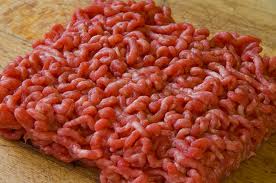
The Michigan Departments of Community Health (MDCH) and Agriculture and Rural Development (MDARD) along with local health departments in Kent, Livingston, Oakland, Ottawa, and Washtenaw counties are investigating a cluster of recent illnesses due to the bacteria E. coli O157:H7.

Five confirmed Shiga-toxin producing E. coli O157 illnesses have been reported in adults between 20-41 years of age with symptom onset dates from April 22 – May 1. Three individuals have been hospitalized. None of the ill individuals have developed hemolytic uremic syndrome (HUS), a severe complication of E. coli O157 infection, and no deaths have been reported.


Research – Multistate Outbreak of Escherichia coli O157:H7 Associated with Bagged Salad

Mary Ann Leibert

Shiga toxin–producing Escherichia coli O157:H7 (STEC O157) is the most commonly identified serotype of STEC in the United States. An estimated 63,000 STEC O157 infections occur annually. Infection typically results in diarrhea, bloody stool, abdominal cramps, and, in some cases, hemolytic uremic syndrome. Recent outbreaks of STEC O157 have increasingly been associated with consumption of leafy greens such as lettuce and spinach. We investigated an outbreak of STEC O157 associated with the consumption of bagged salad with cases clustered in various institutional settings. A case–control study was conducted among cases from selected schools with controls matched by school and grade. Seventeen cases from three U.S. states were identified. The median age of cases was 23 years (range: 3–88) and 13 (76%) were female. Six cases were hospitalized and two died. Onset dates ranged from April 29 to May 12, 2012. The matched case–control analysis identified a single significant food service exposure: consumption of lettuce provided by a school cafeteria (median odds ratio=9.4, 95% confidence interval: 1.4–∞, p=0.0469). The implicated bagged salad product was traced back to a single production facility. Implicated growing areas were scheduled for heightened inspection for the upcoming growing season. A combination of analytical epidemiologic studies among subclusters of cases, surveillance, and traceback implicated bagged salad in this outbreak investigation.


USA – FDA – Pet Food – Listeria monocytogenes

FDA

Bravo is recalling select lots and product(s) of Bravo Pet Food because they have the potential to be contaminated with Listeria monocytogenes.

Listeria monocytogenes is an organism which can cause serious and sometimes fatal infections in young children, frail or elderly people, and others with weakened immune systems. Although healthy individuals may suffer only short-term symptoms such as high fever, severe headache, stiffness, nausea, abdominal pain and diarrhea, Listeria infection can cause miscarriages and stillbirths among pregnant women.

However, healthy cats and dogs rarely become sick from Listeria. Animals ill with Listeria will display symptoms similar to the ones listed above for humans. People who have concerns about whether their pet has Listeria should contact their veterinarian.

The recalled product was distributed nationwide to distributors, retail stores, internet retailers and directly to consumers. The product can be identified by the batch ID code (best used by date) printed on the side of the plastic tube or on a label on the box

RASFF Alerts – Listeria monocytogenes – Smoked Salmon – Bacillus cereus – Seet Peppers – Salmonella – Tabbouleh – E.coli – Jackfruit

RASFF-Logo

RASFF-Listeria monocytogenes (between 4100 and 6700 CFU/g) in smoked wild salmon from Poland in Italy

RASFF -Bacillus cereus (between 3.4x10E6 and 5x10E6 CFU/g) in sweet peppers from Spain in France

RASFF -Salmonella spp. (present /25g) in chicken and almond tabbouleh from Belgium in France

RASFF -Too high count of Escherichia coli (1100; 1500; >3000 CFU/g) in ready-to-eat jackfruits from Thailand in the UK

RASFF Alert – Norovirus – Clams

RASFF-Logo

RASFF – norovirus (genogroup G II) in chilled clams (Ruditapes decussatus) from Tunisia in Italy

RASFF Alerts – Aflatoxin – Groundnuts

RASFF-Logo

RASFF – aflatoxins (B1 = 4; Tot. = 4.6 µg/kg – ppb) in groundnut kernels from India in Greece

RASFF – aflatoxins (B1 = 63.7; Tot. = 75.1 / B1 = 107.4; Tot. = 125.8 µg/kg – ppb) in groundnuts in shell from Egypt in Italy

RASFF Alert – Animal Feed – Aflatoxins – Corn

RASFF-Logo

RASFF – Aflatoxins (B1 = 69.28 µg/kg – ppb) in corn from India in Spain

USA – FDA – Updated – Klebsiella pneumoniae – Yoghurt

FDA Klebsiella_pneumoniae_01

Organic yogurt maker Stonyfield is extending its voluntary recall of YoBaby Peach/Pear yogurt in 4 oz. 6-pack cups with the code date June 05 2014 (UPC 052159701161).

The recall now includes an additional 1,344 6-packs shipped to 271 more stores, mostly Safeway and Fred Meyer stores, in the following states: Oregon, Washington, Montana, Idaho, Alaska, and Northern California. The list of potentially affected stores can be found at Stonyfield.com/recall.

Like the 188 6-packs recalled in the Mid-Atlantic and Southeast on April 25th, there is a possibility that some of these yogurts may be contaminated with the coliform Klebsiella pneumoniae (see below footnote regarding the health risk associated with the organism).

The majority of these cases were pulled from store shelves. However, there is a possibility that a small number were purchased. Stonyfield has not received any notification of illness from consumers directly related to this product. If you have purchased a 6-pack of YoBaby Peach/Pear yogurt cups with the code date June 05 2014, please return it to your store for a full refund.

Consumers with questions should contact Stonyfield Consumer Relations at 1-800-PRO-COWS or email at crelations@Stonyfield.com.

This recall is being made with the knowledge of the Food and Drug Administration.

Canada – Updated Recall – Veal and Beef – E.coli O157

Food Poisoning Bulletin CIFA

The Canadian Food Inspection Agency (CFIA) and Groupe Colabor are updating the recall of ground veal for E. coli O157:NM to include ground beef products. These products were identified during the CFIA’s food safety investigation. No illnesses have been reported to date.

The newly recalled products include Viandes Lauzon Extra Lean Ground Beef in 2 x 2.5 kg. packages. The code on the product is 30/04/14, and Item # 33345. Also recalled is Viandes Lauzon Lean Ground Beef in 2 x 2.5 kg packages, with code 30/04/14 and Item # 33355. Finally, Viandes Lauzon Medium Ground Beef is recalled, in 2 x 2.5 kg. packages. The Item number is 33318.

The products were sold in Quebec to hotel, restaurants, and institutions such as daycares and healthcare facilities. You can see photos of the product labels at the CFIA web site.

If you purchased this product, return it to the place of purchase for a refund. Foods contaminated with E. coli O157 bacteria will not look, taste, or smell spoiled. But this pathogenic bacteria can cause nausea, vomiting, abdominal cramps, and watery and bloody diarrhea. Some who are sickened with this bacteria can develop hemolytic uremic syndrome and have permanent kidney damage.