Category Archives: Uncategorized

Research – CDC -Safer Food Saves Lives

CDC myco

Contaminated food sent to several states can make people sick with the same germ. These multistate outbreaks cause serious illness, and more of these outbreaks are being found. Multistate outbreaks caused 56% of deaths in all reported foodborne outbreaks, although they accounted for just 3% of all such outbreaks from 2010 to 2014. Foods that cause multistate outbreaks are contaminated before they reach a restaurant or home kitchen. Investigating these outbreaks often reveals problems on the farm, in processing or in distribution that resulted in contaminated food. Lessons learned from these outbreaks are helping make food safer. To protect the public’s health, government at all levels and food industries need to work together to stop outbreaks and keep them from happening in the first place.


Canada – CFIA – Recall Update -Sprouted chia seed powder recalled due to possible Salmonella contamination

CFIA

The food recall warning issued on November 4, 2015 has been updated to include additional product information. This additional information was identified during the Canadian Food Inspection Agency’s (CFIA) food safety investigation.

Everspring Farms Ltd. is voluntarily recalling Back 2 the Garden brand and Now Real Food brand sprouted chia seed powder from the marketplace due to possible Salmonella contamination. Consumers should not consume the recalled product described below.

The following products have been sold nationally as well as through internet sales.

Recalled products

Brand Name Common Name Size Code(s) on Product UPC
Back 2 the Garden Organic Sprouted Chia Seed Powder 200 g Lot #EVCHO150430-08 BB/MA JUN-2016,
Lot #EVCHO150608-03 BB/MA AUG-2016,
Lot #EVCHO150715-04 BB/MA SEP-2016 and
Lot #EVCHO150715-012 BB/MA OCT-2016
6 27843 15900 1
Now Real Food “Sprouted” Milled Chia Seed 227 g EVCHO150715-010
BB/MA SEP-2016
7 33739 92070 6


USA – Recalled Ground Beef – E.coli O157 Recall – Retail Distribution List

Food Poisoning Bulletin

On November 1, 2015, All American Meats of Nebraska recalled 167,427 pounds of ground beef products that may have been contaminated with E. coli O157:H7 bacteria. No illnesses have been reported in connection with the consumption of these products, at least as of that date.

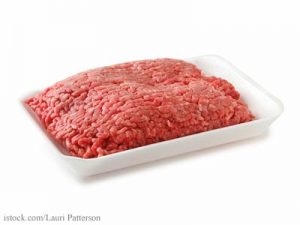
Ground Beef in White Container -Photographed on Hasselblad H3D-39mb CameraThe USDA has released the distribution list of where those products were sold. The products all have the establishment number “EST. 20420” inside the USDA mark of inspection. The ground beef was sold nationwide. A positive E. coli O157:H7 test was received on October 30, 2015 and traced back to that establishment.

The retail distribution list for those products has been released

USA – Petfood – Cat Food – Mould

Food Poisoning Bulletin

Halo, Purely for Pets is voluntarily recalling its Spot’s Stew Sensitive Cat Turkey kibble because of consumer reports of mold in the product. Some pets can eat mold without any adverse side effects, but others can experience digestive issues. If your cat has been ill after eating this product, see your veterinarian.

USA – CDPH Updated Warning Seafood – Domoic Acid

Food Safety News

The California Department of Public Health (CDPH) is updating its warning to consumers regarding certain seafood species caught along the California coastline which may contain high levels of domoic acid. There have been no reported illnesses associated with this event.

Advisories continue to be in place for:

  • Consumers to avoid eating recreationally and commercially caught Dungeness and Rock crabs caught in waters between the Oregon border and the southern Santa Barbara County line due to the persistent dangerous levels of domoic acid in these species.
  • Consumers to avoid eating recreationally harvested bivalve shellfish (mussels and clams) from Humboldt or Del Norte counties. The white meat (adductor muscle) of scallops caught in these areas may be consumed, but the viscera (internal organs) should be discarded.

USA – Chipotle E.coli Update

E.coli Blog

Fifty ill people have been reported from Washington (31) and Oregon (19). Fourteen people have been hospitalized in Washington (10) and Oregon (4). There have been no reports of hemolytic uremic syndrome (HUS) and no deaths.

Thirty-three isolates from ill people in Washington (22) and Oregon (11) have been uploaded to the CDC PulseNet database. All 33 people were infected with STEC O26 that has the same DNA fingerprint. Additionally, as reported on November 6, a search of the PulseNet database identified one person in Minnesota infected with STEC O26 that has the same DNA fingerprint. This ill person did not eat at a Chipotle Mexican Grill in the week before illness onset. Minnesota’s investigation is ongoing. The illness does not appear to be related to the outbreak in Washington and Oregon linked to Chipotle Mexican Grill locations in those states. Whole genome sequencing, an advanced laboratory technique, is being used to give investigators more information about the DNA fingerprint of the pathogen causing illnesses in Washington, Oregon, and Minnesota.

CDC and state and local public health partners are continuing laboratory surveillance through PulseNet to identify additional ill persons and to interview them. Updates will be provided when more information is available.

USA – Hepatitis A – McDonalds Employee

Food Poisoning Journal

The Seneca County Health Department has confirmed a case of Hepatitis A in a food service worker employed at the McDonalds located at 2500 Mound Rd. Waterloo, NY. Public health officials are stressing there is a low risk of contracting illness, however, individuals who have not been previously vaccinated for Hepatitis A and who consumed food/drink from McDonalds on the following dates should consider treatment.

Food Poisoning Journal

Mike Hibbard of the Finger Lakes Times reports that if there was any question about how seriously people are taking a confirmed case of hepatitis A in a McDonald’s worker, it was answered by a drive to Mynderse Academy on Saturday afternoon.

Parking lots at the school were full and a long line snaked out of a school entrance as hundreds — if not thousands — of people flocked to the school for a vaccine clinic.

Research – Influence of temperature on alkali stress adaptation in Listeria monocytogenes – Modelling the combined effects of salt, sorbic acid and nisin on the probability of growth of Clostridium sporogenes in a controlled environment (nutrient broth)

Science Direct

Listeria monocytogenes cells may induce alkali stress adaptation when exposed to sublethal concentrations of alkaline cleaners and sanitizers that may be frequently used in the food processing environment. In the present study, the effect of temperature on the induction and the stability of such alkali stress adaptation in L. monocytogenes were investigated. Our results demonstrate that temperature plays a critical role in the induction of alkali stress adaptation in L. monocytogenes under sublethal alkaline conditions. Pre-exposure to pH 9.0 tryptic soy broth supplemented with 0.6% yeast extract (TSB-YE) at 37 °C induced pronounced alkali stress adaptation whereas sublethal alkaline pre-exposure at 4 °C failed to induce any alkali stress adaptation. Furthermore, this pattern of alkali stress adaptation in L. monocytogenes was not dependent on the length of pre-exposure time, the concentration of sublethal alkali, the types of alkaline agents and the growth phases of cells. In addition, alkali stress adaptation induced at 37 °C was completely reversed in pH 7.2 TSB-YE within 2 h at 37 °C or within 4 h at 22 °C. However, once it was induced at a higher temperature, alkali stress adaptation in L. monocytogenes remained stable at 4 °C for at least 4 h. Our findings suggest that even though cold temperatures do not induce alkali stress adapted phenotypes, but it can maintain the previously acquired alkali stress adaptation much longer in L. monocytogenes.

Science Direct

The safe preservation of new generation foods (high moisture, low salt, high pH and shelf stable under ambient conditions) is microbiologically challenging. The growth of Clostridium botulinum in low acid foods is a hazard for consumers. In this study the combined effect of salt (sodium chloride) (0–4% w/v), potassium sorbate (0–4% w/v) and nisin (0–300 ppm) at two different pHs (5.5 and 7) on the probability of growth of Clostridium sporogenes spores, as a non-toxigenic surrogate of C. botulinum, was evaluated in nutrient broth. Nutrient broth was used as it can easily and accurately be adjusted and controlled in terms of composition, and allows more rapid growth than is observed in food. The aims of this study were to develop probability of growth models in which the logit is expressed as a function of the concentrations of the selected preservatives. The developed models fit the data adequately. The c-values models were close to 1, indicating good predictive power. This indicates the performance of models would be satisfactory. The results of this study indicated that salt, potassium sorbate and nisin had significant inhibitory effects on the growth of C. sporogenes in high moisture (>95%) and high pH conditions (pH > 4.5). Combinations of the selected preservatives were more effective than any of them individually. The inhibitory effects of all three preservatives in the current study were pH dependent. Less stringent combinations of preservative concentrations were required experimentally to stop growth at pH 5.5 compared with pH 7.

Research – Anglo-Saxon remedy kills hospital superbug MRSA

New Scientist

Take cropleek and garlic, of both equal quantities, pound them well together… take wine and bullocks gall, mix with the leek… let it stand nine days in the brass vessel…

So goes a thousand-year-old Anglo-Saxon recipe to vanquish a stye, an infected eyelash follicle.

The medieval medics might have been on to something. A modern-day recreation of this remedy seems to alleviate infections caused by the bacteria that are usually responsible for styes. The work might ultimately help create drugs for hard-to-treat skin infections.

The project was born when Freya Harrison, a microbiologist at the University of Nottingham, UK, got talking to Christina Lee, an Anglo-Saxon scholar. They decided to test a recipe from an Old English medical compendium called Bald’s Leechbook, housed in the British Library.

The potion was tested on scraps of skin taken from mice infected with methicillin-resistant Staphylococcus aureus. This is an antibiotic-resistant version of the bacteria that causes styes, more commonly known as the hospital superbug MRSA. The potion killed 90 per cent of the bacteria. Vancomycin, the antibiotic generally used for MRSA, killed about the same proportion when it was added to the skin scraps.

Research – Exploring vulnerabilities of the Cryptosporidium parasite

Science Daily

Cryptosporidium parvum is a gastrointestinal parasite that can cause moderate to severe diarrhea in children and adults, and deadly opportunistic infection in AIDS patients. Because C. parvum is resistant to chlorine disinfectant treatment, it frequently causes water-borne outbreaks around the world. A new study provides a detailed analysis of a C. parvum protein that is central to glycolysis — the only pathway by which the parasite can generate energy — and identifies it as a potential drug target.