Monthly Archives: May 2017

Research – Fecal shedding of S. enteritidis by laying hens housed in enriched colony cages at different stocking densities

Poultry Med Salmonella Campylobacter

A recent study in Frontiers in Veterinary Science found that the overall frequency of positive fecal cultures was significantly greater from conventional cages than from enriched colony cages (at the lower stocking density). Likewise, the frequency of S. Enteritidis isolation from feces from conventional cages was significantly greater than from enriched colony cages (at the higher hen stocking density). Moreover, the frequency of S. Enteritidis fecal recovery from enriched colony cages at the higher hen stocking was significantly greater than from similar cages at the lower stocking density. These results suggest that stocking density can affect S. Enteritidis intestinal colonization and fecal shedding in laying hens.
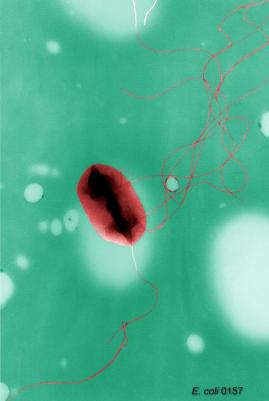
USA – Health Alert for Imported Veal Products for E. coli O103 Expanded

Food Poisoning Bulletin

O157

Image CDC


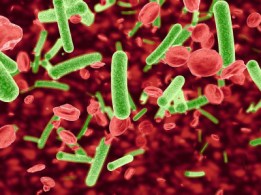
The USDA is expanding the public health alert issued on May 16, 2017 to include additional products and production dates. About 1,631 pounds of raw veal imported from the Netherlands may be contaminated with Non-O157 Shiga toxin-producing E. coli O103.

The raw boneless veal products were produced at Establishment 9EG, EKRO B.V., Netherlands. The product was derived from calves that were slaughtered on March 8, 2017 and March 9, 2017, and further processed and packaged on March 9, 2017 and March 13, 2017. FSIS learned that an additional 90 pounds of product were implicated from Establishment 9EG, EKRO B.V., Netherlands which tested positive for Non-O157 Shiga toxin-producing Escherichia coli (STEC) O103. The product was derived from calves that were slaughtered on April 11, 2017 through April 13, 2017, and further processed and packaged on April 14, 2017 through April 18, 2017.

You can see the long list of recalled products along with the shipping marks at the USDA web site. They include Bone-In Veal rack Chop, Bone-in Veal Chuck, BOne-Less Veal StripLoin Eye, among others. These products were shipped to restaurants and grocery stores in Michigan, California, Florida, and Massachusetts. The problem was discovered when an FSIS sample of the imported raw intact veal products tested positive for the pathogenic bacteria. There have been no confirmed reports of illnesses due to consumption of these products.

USDA – Cheese Sauce Impounded after Valley Oak Food and Fuel Botulism Outbreak

Food Poisoning Bulletin Clost

The botulism outbreak at Valley Oak Food and Fuel in Walnut Grove, California may have caused a death. At least one lawsuit has been filed, and all of the patients in this outbreak have been hospitalized. Inspection reports stated that cheese sauce was impounded by a California Department of Public Health Officer.

According to UPI, Martin Galindo, a 37-year-old father from San Francisco, died on May 18, 2017 from botulism poisoning. A GoFundMe page has been set up on his behalf. KGO-TV said he contracted the illness from nacho cheese sauce bought at Valley Oak Food and Fuel. The Sacramento Health and Human Services Department has not confirmed that botulism caused the man’s death or that Mr. Galindo ate food from Valley Oak Food and Fuel.

USA – Correctional Industries Airway Heights Food Operations Recalls Frozen Meat and Poultry Products Due to Water Contamination

FSIS-USDA

WASHINGTON, May 20, 2017 – Correctional Industries Airway Heights Food Operations, an Airway Heights, Wash. establishment, is recalling approximately 319,000 pounds of frozen meat and poultry products due to water contamination, the U.S. Department of Agriculture’s Food Safety and Inspection Service (FSIS) announced today. The products were produced using water that contained chemical levels above what is considered safe to drink.

The meat and poultry items were produced and packed on various dates from April 1, 2017 through May 15, 2017.

Canada – Rogers flour sold by Costco in Canada linked to new outbreak

Food Safety News

Another E. coli O121 outbreak traced to flour, this time Rogers brand, has sickened at least six people in British Columbia where public health officials are urging consumers to check their homes for the implicated flour.

As of Friday evening neither the company, Rogers Foods Ltd. of Armstrong, British Columbia, nor the Canadian Food Inspection Agency (CFIA) had posted a recall of the flour. The six people became sick from February through April.

“A sample of flour from one of the ill people was tested by the (British Columbia Center for Disease Control) BCCDC Public Health Laboratory. The flour was positive for the same strain of E. coli O121 as seen in all the illnesses,” according to the public warning from the BCCDC.

Research – Study Finds Warmer Ocean Waters Linked to Domoic Acid Production

Food Poisoning Bulletin Vibrio

The National Oceanic and Atmospheric Administration released information about a study that showed the risk of domoic acid shellfish poisoning is increasing because of warmer West Coast ocean conditions. These conditions are supporting the increase of the marine algae that produce that toxin. Domoic acid found in shellfish can cause serious and fatal food poisoning.

Research – On the Rocks: Microbiological Quality and Microbial Diversity of Packaged Ice in Southern California

Journal of Food Protection mrsa

Ice is defined as a food and is frequently used in direct contact with food and beverages. Packaged ice is commercially produced and can be easily found in grocery and convenience stores. However, the quality and safety of packaged ice products is not consistent. The Packaged Ice Quality Control Standards manual (PIQCS) published by the International Packaged Ice Association provides the quality and processing standards for packaged ice produced by its members. Packaged ice produced on the premise of stores (on-site packaged ice) is not required to be in compliance with these standards. In this study, packaged ice produced by manufacturing plants or by in-store bagger (ISB) machines and on-site packaged ice were compared for their microbiological quality and microbial diversity. Our results revealed that 19% of the 120 on-site packaged ice samples did not meet the PIQCS microbial limit of 500 CFU/mL (or g) and also the absence of coliforms and Escherichia coli. Staphylococci were found in 34% of the on-site packaged ice samples, most likely through contamination from the packaging workers. None of the ISB and manufactured packaged ice samples had unacceptable microbial levels, and all were devoid of staphylococci. Salmonella was absent in all samples analyzed in this study. Microbial community analysis of ice based on 16S/18S rRNA targeted sequencing revealed a much higher microbial diversity and abundance in the on-site packaged ice than in the ISB ice. Proteobacteria, especially Alphaproteobacteria and Betaproteobacteria, were the dominant bacterial groups in all samples tested. Most of these bacteria were oligotrophic; however, a few opportunistic or potential pathogens were found at low levels in the on-site packaged ice but not in the ISB packaged ice. The types of microbes identified may provide information needed to investigate potential sources of contamination. Our data also suggest a need for enforcement of processing standards during the on-site packaging of ice.

USA – Cryptosporidium: Outbreaks linked to swimming pools double since 2014

Outbreak News Today kswfoodworld

Outbreaks of a parasitic infection linked to swimming pools and water playgrounds are increasingly being reported to CDC, with twice as many outbreaks in 2016 as in 2014.

At least 32 outbreaks caused by Cryptosporidium, or Crypto linked to swimming pools or water playgrounds in the United States were reported in 2016, compared with 16 outbreaks in 2014, according to preliminary data published today in CDC’s Morbidity and Mortality Weekly Report. The parasite can spread when people swallow something that has come into contact with the feces (poop) of a sick person, such as pool water contaminated with diarrhea.

In comparison, 20 Crypto outbreaks linked to swimming were reported in 2011, 16 in 2012, and 13 in 2013. It is not clear whether the number of outbreaks has increased or whether better surveillance and laboratory methods are leading to better outbreak detection.

Israel – Health Ministry warns of Salmonella outbreak

The Times of Israel

Israelis informed of safety measures to prevent spread of bacteria from eggs.

The Health Ministry on Wednesday announced a recent rise in salmonella poisoning in Israel and in 14 European countries.

The ministry advised households to keep all raw food away from cooked food, at temperatures of up to 5ºC (41ºF), but says eggs can be kept — for up to 21 days — at below 20ºC (68ºF).

It also advised against reusing egg boxes, as schools and kindergartens often do, because they, too, can carry salmonella.

It warned that washing eggs can cause the bacteria to pass through the shell into the egg.

RASFF Alerts – Aflatoxin -Peanuts – Dried Figs – Kerala Mixture – Rice – Roasted Watermelon Seeds – Pistachios – Groundnuts -Spice Mixture -Raw Red Rice -Tortilla Chips

kswfoodworld rasff

RASFF – aflatoxins (B1 = 2.8 / B1 = 3.4 µg/kg – ppb) in peanuts in shell from China in Spain

RASFF-aflatoxins (B1 = 20.2; Tot. = 28.5 / B1 = 12.8; Tot. = 12.8 µg/kg – ppb) in dried figs from Turkey in Spain

RASFF-aflatoxins (B1 = 13; Tot. = 17 µg/kg – ppb) in kerala mixture from India in Switzerland

RASFF-aflatoxins (B1 = 16; Tot. = 17 µg/kg – ppb) in rice from India in Switzerland

RASFF-aflatoxins (B1 = 15.8; Tot. = 18.5 µg/kg – ppb) in roasted watermelon seeds (Egusi) from Turkey in Germany

RASFF-aflatoxins (B1 = 67.71; Tot. = 127.83 µg/kg – ppb) in organic salted roasted pistachios from Spain, via France in Luxembourg

RASFF-aflatoxins (B1 = 10.2; Tot. = 11.5 µg/kg – ppb) in pistachios in shell from Iran in Germany

RASFF-aflatoxins (B1 = 9.5; Tot. = 10 µg/kg – ppb) in pistachios in shell from the United States in Germany

RASFF-aflatoxins (B1 = 8.6; Tot. = 10.8 µg/kg – ppb) in roasted groundnuts in shell from China in France

RASFF-aflatoxins (B1 = 9.4; Tot. = 10 µg/kg – ppb) in pistachios in shell from Iran in Germany

RASFF-aflatoxins (B1 = 6.1; Tot. = 15.7 µg/kg – ppb) in spice mixture from Ethiopia in Sweden

RASFF-aflatoxins (B1 = 3 µg/kg – ppb) in red raw rice from Sri Lanka in Switzerland

RASFF-aflatoxins (B1 = 3 µg/kg – ppb) in tortilla chips from Spain, produced in Belgium in Switzerland

RASFF-aflatoxins (B1 = 8.8; Tot. = 11 µg/kg – ppb) in shelled groundnuts from China in Portugal