Monthly Archives: May 2017

Guam – Jalapeño chips recalled due to possible Salmonella

Pacific Daily News Salmonella kswfoodworld

Residents are advised to not eat two jalapeño-flavored chips because they might potentially have salmonella.

The Guam Department of Public Health and Social Services, in coordination with the U.S. Food & Drug Administration, in a news release said Jalapeño Flavored Lay’s Kettle Cooked potato chips and Jalapeño Flavored Miss Vickie’s Kettle Cooked potato chips have been recalled.

The FDA has concluded the potato chips may have been contaminated with salmonella, the release stated. While no salmonella was found in the seasoning, the company decided to recall the products out of an abundance of caution.

USA – Maple Leaf Foods, Inc. Recalls Quiche Products Distributed Without Benefit of Import Inspection

FSIS USDA

WASHINGTON, May 3, 2017 – Maple Leaf Foods, Inc., headquartered in Ontario, Canada, is recalling approximately 24,768 pounds of Ready-to-Eat (RTE) fully-cooked quiche products that were not presented for re-inspection upon entry to the United States, the U.S. Department of Agriculture’s Food Safety and Inspection Service (FSIS) announced today. Without the benefit of full inspection, a possibility of adverse health consequences exists.

The products subject to recall were produced and packaged on Feb. 8, 2017, and are listed as follows: [View Labels (PDF Only)]

  • 24-oz. individually-packaged plastic clam-shell containers of frozen “SCHNEIDERS LORRAINE HAM & CHEESE Quiche” with package code “62000 8096 9” on the individual retail containers.
  • 24-oz. individually-packaged plastic clam-shell containers of frozen “H.E.B. Chef Prepared Foods Ham & Cheese Quiche” with package code “41220 63400 9” on the individual retail containers.

The products subject to recall do not bear the USDA federal mark of inspection, but bear establishment number “Canada 277.” The products were shipped to distribution centers in Indiana and Oklahoma for further distribution to retail stores nationwide.

On May 1, 2017, Maple Leaf Foods, Inc., inquired about a shipment of products that were exported to the U.S. The following day, FSIS confirmed that there was a failure to present shipment and the products were already in commerce without receiving FSIS re-inspection upon entry into the United States.

There have been no confirmed reports of adverse reactions or illnesses due to consumption of these products. Anyone concerned about a reaction or illness should contact a healthcare provider.

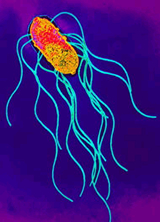
 

USA – Jimmy John’s Food Poisoning Outbreak in Wisconsin – E.coli

Food Poisoning Bulletin

Jimmy John’s restaurants have been linked to outbreaks of E. coli food poisoning in the past. Now an outbreak of norovirus has been linked to the Jimmy John’s restaurant at 3910 Schofield Avenue in Weston, Wisconsin, according to the Marathon County Health Department in Wausau, Wisconsin.

USA – Tropical Fish Recalls Poke Due to Hepatitis A Risk

Food Poisoning Journal

The Hawaii State Department of Health (DOH) has been notified of imported frozen raw tuna or ahi cubes distributed by Tropic Fish Hawaii, LLC on Oahu that tested positive for hepatitis A.

The product, imported from Indonesia, was used to prepare poke sold between April 27 and May 1 by food establishments on Oahu.

The Department of Health says Tropic Fish Hawaii discovered 200 tainted 15-pound cases of frozen ahi cubes; 140 of those cases were recovered and never got sold.

The imported frozen fish was used to prepare poke or food served or sold at:

  • Times Supermarket and Shima’s
    • Aiea
    • Kailua
    • Kaneohe
    • Kunia
    • Liliha
    • Mililani
    • Waipahu
    • Waimanalo
  • GP Hawaiian Food Catering
  • Crab Shack Kapolei (also known as Maile Sunset Bar & Grill in Kapolei)
  • Aloha Sushi at 3131 N. Nimitz Highway
  • ABC Store at 205 Lewers Street

According to the DOH, people who ate poke from the affected food establishments should get a vaccine or immune globulin within 14 days and monitor their health for symptoms for up to 50 days after exposure.

Research – Quantification of Transfer of Salmonella from Citrus Fruits to Peel, Edible Portion, and Gloved Hands during Hand Peeling

Journal of Food Protection Salmonella

Although studies have quantified bacterial transfer between hands and various materials, cross-contamination between the surface of fresh citrus fruit and the edible portions during hand peeling has not been reported. This study quantifies transfer of Salmonella to the edible portion of citrus fruit from a contaminated peel during hand peeling. Citrus fruits used for this study were Citrus sinensis (sweet orange) cultivars ‘Valencia’ and ‘Navel’, Citrus unshiu (Satsuma mandarins), Citrus reticulata × Citrus paradisi (‘Minneola’ tangelo or ‘Honeybell’), and C. paradisi (grapefruit) cultivar ‘Marsh’. An avirulent Salmonella Typhimurium LT2 (ATCC 700720) resistant to rifampin was used for all experiments. The inoculum containing approximately 9 log CFU/mL (50 μL) was spot inoculated onto the equator, stem, or styler of each fruit and allowed to dry for 24 h. Six volunteers put on single-use latex gloves and peeled inoculated fruit. Peel, edible fruit portion, and gloves were collected and enumerated separately. Three replicates of the study were performed in which each volunteer peeled two inoculated fruit of each variety (n = 36 fruit per variety). Cross-contamination from contaminated surface of citrus fruits to edible portion or gloved hands during peeling was affected by inoculation sites. Average Salmonella transfer to the edible portion ranged from 0.16% (Valencia inoculated at the equator) to 5.41% (navel inoculated at the stem). Average Salmonella transfer to gloved hands ranged from 0.41% (grapefruit inoculated at the stem) to 8.97% (navel inoculated at the stem). Most Salmonella remained on the peel of citrus fruits. The average level of Salmonella remaining on the peel ranged from 5.37% (Minneola inoculated at the equator) to 66.3% (Satsuma inoculated at the styler). When grapefruit was inoculated, the Salmonella that remained on the peel showed a bimodal pattern in which some individuals left almost all Salmonella on the peel, while others left substantially less.

Research – Zapping bacteria with sanitizers made of paper

Phys.org myco

A Rutgers-led team has invented an inexpensive, effective way to kill bacteria and sanitize surfaces with devices made of paper.

“Paper is an ancient material, but it has unique attributes for new, high-tech applications,” said Aaron Mazzeo, an assistant professor in Rutgers’ Department of Mechanical and Aerospace Engineering. “We found that by applying high voltage to stacked sheets of metallized paper, we were able to generate plasma, which is a combination of heat, ultraviolet radiation and ozone that kill microbes.”

The researchers detail their invention in a study published online today in the Proceedings of the National Academy of Sciences. A video detailing the work is also available on YouTube.

In the future, paper-based sanitizers may be suitable for clothing that sterilizes itself, devices that sanitize laboratory equipment and smart bandages to heal wounds, among other uses, the study says. The motivation for this study was to create that might contain the spread of infectious diseases, such as the devastating 2014 outbreak of Ebola in West Africa.

Read more at: https://phys.org/news/2017-05-zapping-bacteria-sanitizers-paper.html#jCp

UK – Scotland – Cheese maker wins right to see E coli case evidence

The Times

The Scottish cheese company accused of causing the death of a three-year-old child through E.coli poisoning last summer has won the right to see the evidence linking it to the outbreak.

In a case before the Court of Session in Edinburgh, Errington Cheese was granted a petition to be given the data used by Food Standards Scotland and Health Protection Scotland to suggest a link between Dunsyre Blue cheese and the outbreak last summer, which affected more than 20 people and led to the child’s death.

Research – Raw Milk Products Cause 840 Times More Illness Than Pasteurized Milk

Food Poisoning Bulletin Raw Milk Food Safety KSW Foodworld

According to the Center for Disease Control and Prevention’s (CDC) Emerging Infectious Diseases report for June 2017, unpasteurized milk products cause 840 times more illness and 45 times more hospitalizations than pasteurized milk products. Only about 3.2% of the population consume raw milk, and 1.6% of consumers eat raw cheese, but those products cause 96% of the illnesses linked to contaminated dairy products in this country. The number of states that allow raw milk sales increased to 30 in 2011, from 21 in 2004.

Canada – Pezzetta brand Montasio DOP cheese recalled due to Listeria monocytogenes

CFIA CIFA

Ottawa, May 2, 2017 – Industry is recalling Pezzetta brand Montasio DOP cheese from the marketplace due to possible Listeria monocytogenes contamination. Consumers should not consume the recalled product described below.

The recalled product was sold from the following retail locations from March 24 to May 1, 2017, inclusive.

Ontario: Del Fresh Foods, 6923 Steeles Avenue West, Unit 43-44, Etobicoke, ON

Quebec: Importation Berchicci Ltée, 6205 Boulevard Couture, Saint-Léonard, QC

Please note that some product packages may not bear the same brand or product name as described below, or a brand at all. Also, this product may have been sold clerk-served from deli counters with or without a label. Consumers who are unsure if they have purchased the affected product are advised to contact the retailers above.

Recalled products

Brand Name Common Name Size Code(s) on Product UPC
Pezzetta Montasio DOP Cheese Variable Sold from March 24 to May 1, 2017, inclusive Variable


USA – Pork Rinds with Salmonella Recalled

Food Poisoning Journal

Pork Rinds & Snacks, LLC, a Spartanburg, S.C. establishment, is recalling approximately 7,629 pounds of pork skin products that may be contaminated with Salmonella, the U.S. Department of Agriculture’s Food Safety and Inspection Service (FSIS) announced today.

The ready-to-eat pork skin items were produced on various dates between Sept. 27, 2016 and Dec. 13, 2016.