Monthly Archives: February 2017

Research -Development and Validation of a Cultural Method for the Detection and Isolation of Salmonella in Cloves

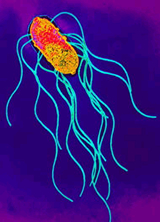
Food Protection Journal Salmonella kswfoodworld

Detection of Salmonella in some spices, such as cloves, remains a challenge due to their inherent antimicrobial properties. The purpose of this study was to develop an effective detection method for Salmonella from spices using cloves as a model. Two clove varieties, Ceylon and Madagascar, were used in the study. Cloves were inoculated with Salmonella enterica subsp. enterica serotypes Montevideo, Typhimurium, or Weltevreden at about 1, 3, or 6 log CFU/25 g. Two test portion sizes, 10 and 25 g, were compared. After adding Trypticase soy broth (TSB) to the weighed cloves for preenrichment, three preenrichment methods were compared: cloves were left in the TSB for 24 h during preenrichment (PreE1), or the cloves-TSB mixture was shaken vigorously for 30 s (PreE2) or 60 s (PreE3), and the decanted material was transferred to a new bag for 24 h of preenrichment. The rest of the procedures were carried out according to the U.S. Food and Drug Administration Bacteriological Analytical Manual (BAM). At the low inoculation level (<1 log CFU/25 g), the detection rate was low across the three preenrichment methods, with the highest for PreE3 and lowest for PreE1. At the medium and high inoculation levels (3 and 6 log CFU/25 g), all samples from PreE2 and PreE3 were positive for Salmonella, whereas PreE1 produced only 12 positive samples from the 48 samples at the medium inoculation level and 38 positive samples from the 48 samples at the high inoculation level. Therefore, PreE3 with 25 g of cloves per sample was more effective than the other two tested methods. This newly designed method was then validated by comparing with the BAM method in six trials, with each trial consisting of 40 test samples. The results showed that PreE3 detected Salmonella from 88 of 120 inoculated test samples compared with only 31 positive from 120 test samples with the BAM method. Thus, our newly designed method PreE3

Research -Characterization and Virulence Potential of Serogroup O113 Shiga Toxin–Producing Escherichia coli Strains Isolated from Beef and Cattle in the United States

O157 KSWFOODWORLDFood Protection Journal


Shiga toxin–producing Escherichia coli (STEC) of serotype O113:H21 have caused severe diseases but are unusual in that they do not produce the intimin protein required for adherence to intestinal epithelial cells. Strains of serogroup O113 are one of the most common STEC found in ground beef and beef products in the United States, but their virulence potential is unknown. We used a microarray to characterize 65 O113 strains isolated in the United States from ground beef, beef trim, cattle feces, and fresh spinach. Most were O113:H21 strains, but there were also nine strains of O113:H4 serotype. Although strains within the same serotype had similar profiles for the genes that were tested on the array, the profiles were distinct between the two serotypes, and the strains belonged to different clonal groups. Analysis by clustered regularly interspaced short palindromic repeat analysis showed that O113:H4 strains are conserved genetically, but the O113:H21 strains showed considerable polymorphism and genetic diversity. In comparison to the O113:H21 strains from Australia that were implicated in severe disease, the U.S. isolates showed similar genetic profiles to the known pathogens from Australia, suggesting that these may also have the potential to cause infections.


Research -Microbiological Safety of Animal Wastes Processed by Physical Heat Treatment: An Alternative To Eliminate Human Pathogens in Biological Soil Amendments as Recommended by the Food Safety Modernization Act

Food Protection Journal


Animal wastes have high nutritional value as biological soil amendments of animal origin for plant cultivation in sustainable agriculture; however, they can be sources of some human pathogens. Although composting is an effective way to reduce pathogen levels in animal wastes, pathogens may still survive under certain conditions and persist in the composted products, which potentially could lead to fresh produce contamination. According to the U.S. Food and Drug Administration Food Safety Modernization Act, alternative treatments are recommended for reducing or eliminating human pathogens in raw animal manure. Physical heat treatments can be considered an effective method to inactivate pathogens in animal wastes. However, microbial inactivation in animal wastes can be affected by many factors, such as composition of animal wastes, type and physiological stage of the tested microorganism, and heat source. Following some current processing guidelines for physical heat treatments may not be adequate for completely eliminating pathogens from animal wastes. Therefore, this article primarily reviews the microbiological safety and economic value of physically heat-treated animal wastes as biological soil amendments.


Research -Presence and Antimicrobial Resistance of Escherichia coli in Ready-to-Eat Foods in Shaanxi, China

Food Protection Journal ecoli


The aim of this study was to determine the presence and characteristics of Escherichia coli in ready-to-eat (RTE) foods. A total of 300 RTE foods samples were collected in Shaanxi Province, People’s Republic of China: 50 samples of cooked meat, 165 samples of vegetable salad, 50 samples of cold noodles, and 35 samples of salted boiled peanuts. All samples were collected during summer (in July to October) 2011 and 2012 and surveyed for the presence of E. coli. E. coli isolates recovered were classified by phylogenetic typing using a PCR assay. The presence of Shiga toxin genes 1 (stx1) and 2 (stx2) was determined for these E. coli isolates by PCR, and all isolates were analyzed for antimicrobial susceptibility and the presence of class 1 integrons. Overall, 267 (89.0%) RTE food samples were positive for E. coli: 49 cold noodle, 46 cooked meat, 150 salad vegetable, and 22 salted boiled peanut samples. Of the 267 E. coli isolates, 73.0% belong to phylogenetic group A, 12.4% to group B1, 6.4% to group B2, and 8.2% to group D. All isolates were negative for both Shiga toxin genes. Among the isolates, 74.2% were resistant to at least one antimicrobial agent, and 17.6% were resistant to three or more antimicrobial agents. Resistance to ampicillin (75.6% of isolates) and tetracycline (73.1% of isolates) was most frequently detected; 26.2% of E. coli isolates and 68.8% of multidrug-resistant E. coli isolates were positive for class 1 integrons. All isolates were sensitive to amikacin. Our findings indicate that RTE foods in Shaanxi were commonly contaminated with antibiotic-resistant E. coli, which may pose a risk for consumer health and for transmission of antibiotic resistance. Future research is warranted to track the contamination sources and develop appropriate steps that should be taken by government, industry, and retailers to reduce microbial contamination in RTE foods.


Uganda -Over 40 pupils admitted over suspected food poisoning

New Vision

At least 40 pupils of His Mercy Christian primary school in Buwaya sub county, Mayuge district were rushed to Pancrass medical centre over suspected food poisoning.The pupils who were in critical condition were rushed to the health facility on Monday.Sinani Mbubu, the school head teacher said that the children developed stomach upsets and begun vomiting Sunday night.“At around 9:00 pm, the pupils started feeling abdominal pains and then vomited,” Mbubu said adding that when their condition worsened, the pupils were rushed to the health facility for further medication.Pancrass Onyango, a medical officer at the health facility said the children suffered from food poisoning.

Vietnam – Food poisoning in northern Vietnam leaves six dead

Famagusta Gazette

total of six people were killed and over 10 others were hospitalized for alleged food poisoning in Vietnam’s northern Lai Chau province, according to local authorities on Tuesday.

Initial information from Lai Chau people’s committee showed that after attending a funeral and having meals in Ma Ly Chai commune, Phong Tho district in Lai Chau, six people were dead and over 10 others were hospitalized.

Ha Trung Dung, deputy chief of Emergency unit of Lai Chau provincial general hospital said on Tuesday that three patients were admitted into his unit at late hours of Monday.

Among the three, two are now in stable condition while one in critical condition.

The cause of the incident was under investigation, said VNA, adding that all the victims belonged to Ha Nhi ethnic minority’s group.

USA/Canada -The FDA is issuing this recall notice from the Canadian Food Inspection Agency to alert U.S. consumers who may have purchased these products in Canada not to eat or serve them. The products under recall were manufactured specifically for the Canadian marketplace. – Updated Food Recall Warning – PC Organics brand baby food pouches recalled due to potential presence of dangerous bacteria – Clostridium botulinum

ClostFDA

The food recall warning issued on February 3, 2017 has been updated to include additional products. This additional information was identified during the Canadian Food Inspection Agency’s (CFIA) food safety investigation.

Loblaw Companies Limited is recalling PC Organics brand baby food pouches from the marketplace because they may permit the growth of Clostridium botulinum. A manufacturing error resulted in excess water in the product, which under certain circumstances could support the growth of Clostridium Botulinum and pose a health risk to consumers. Consumers should not consume the recalled products described below.

The products were sold at the following locations up to and including February 8, 2017.

Ontario: Fortinos, Loblaws, No Frills, Real Canadian Superstore, Real Canadian Wholesale Club, valu-mart, Your Independent Grocer, Zehrs, Shoppers Drug Mart, and affiliated independent stores

Atlantic: Atlantic Superstore, Dominion, Cash&Carry, Real Canadian Wholesale Club, Your Independent Grocer, Shoppers Drug Mart, and affiliated independent stores

Québec: Club entrepôt, Maxi, Maxi & Cie, Presto, Provigo, Provigo le Marché, AXEP, Pharmaprix, and Intermarché

West: Extra Foods, Loblaws City Market, No Frills, Real Canadian Superstore, Real Canadian Wholesale Club, Your Independent Grocer, Shoppers Drug Mart, and affiliated independent stores


Recalled Products

Brand Name

Common Name

Size

Code(s) on Product

UPC

PC Organics

Apple, Blueberry & Green Pea strained baby food 128 mL All codes 0 60383 06292 7

PC Organics

Apple Crisp Muffin flavour puree snack 128 mL All codes 0 60383 13730 4

PC Organics

Apple, Carrot, Apricot & Millet strained baby Food 128 mL All codes 0 60383 06996

PC Organics

Banana, Sweet Potato & Blueberry strained baby food 128 mL All codes 0 60383 05362

PC Organics

Apple strained baby food 128 mL All codes 0 60383 02840 4

PC Organics

Apple, Banana & Blueberry with Yogurt strained baby food 128 mL All codes 0 60383 04491

PC Organics

Apple, Banana & Strawberry with Yogurt strained baby food 128 mL All codes 0 60383 04488

PC Organics

Apple Cherry strained baby food 128 mL All codes 0 60383 02843

PC Organics

Sweet Potato, Apple and Mango strained baby food 128 mL All codes 0 60383 06294

PC Organics

Peach Maple Cobbler Flavour puree snack 128 mL All codes 0 60383 13732 8

PC Organics

Banana Apple & Carrot strained baby food 128 mL All codes 0 60383 05363

PC Organics

Pumpkin, Apple, Peach & Buckwheat strained baby food 128 mL All codes 0 60383 06995

PC Organics

Prune, Apple, Butternut Squash & Quinoa strained baby food 128 mL All codes 0 60383 06994

PC Organics

Pear strained baby food 128 mL All codes 0 60383 02842

PC Organics

Mango, Apple, Carrot & Peach strained baby food 128 mL All codes 0 60383 05369

PC Organics

Blackberry Cobbler Flavour puree snack 128 mL All codes 0 60383 13731 1

PC Organics

Banana & Kiwi strained baby food 128 mL All codes 0 60383 02846 6

PC Organics

Mango strained baby food 128 mL All codes 0 60383 02841 1

PC Organics

Banana & Raspberry strained baby food 128 mL All codes 0 60383 05480 9

PC Organics

Banana, Apple, Apricot & Rice strained baby food 128 mL All codes 0 60383 05368

PC Organics

Banana Bread Flavour puree snack 128 mL All codes 0 60383 13589 8

PC Organics

Pear, Apple and Broccoli strained baby food 128 mL All codes 0 60383 06291

PC Organics

Sweet Potato, Banana & Apricot strained baby food 128 mL All codes 0 60383 05366

PC Organics

Tropical Twist Smoothie with Greek Yogurt puree snack 128 mL All codes 0 60383 15430 1

PC Organics

Banana, Mango & Apple with Yogurt strained baby food 128 mL All codes 0 60383 04489

PC Organics

Orange Twist Smoothie with Greek Yogurt puree snack 128 mL All codes 0 60383 15431 8

PC Organics

Prunes strained baby food 128 mL All codes 0 60383 16963 3

PC Organics

Apple, Banana & Strawberry with Yogurt strained baby food 6×128 mL All codes 0 60383 18427 8

PC Organics

Sweet Potato, Apple and Mango strained baby food 6×128 mL All codes 0 60383 18429 2

PC Organics

Banana Apple & Carrot strained baby food 6×128 mL All codes 0 60383 18428 5

PC Organics

Mango strained baby food 6×128 mL All codes 0 60383 18430 8

PC Organics

Pear, Apple and Broccoli strained baby food 6×128 mL All codes 0 60383 18426 1

What you should do

If you think you became sick from consuming a recalled product, call your doctor.

Check to see if you have recalled products in your home. Recalled products should be thrown out or returned to the store where they were purchased.

Food contaminated with Clostridium botulinum toxin may not look or smell spoiled but can still make you sick. Symptoms can include nausea, vomiting, fatigue, dizziness, blurred or double vision, dry mouth, respiratory failure and paralysis. In severe cases of illness, people may die.

Background

This recall was triggered by a consumer complaint. The CFIA is verifying that industry is removing recalled products from the marketplace.

Related recalls

2017-02-03 – PC Organics brand Apple, Blueberry & Green Pea strained baby food recalled due to potential presence of dangerous bacteriadisclaimer icon
More information

Loblaw Companies Ltd.: Customer Inquiries: 1-888-495-5111 or customerservice@presidentschoice.ca

For more information, consumers and industry can contact the CFIA by filling out the online feedback formdisclaimer icon.

USA -Veggie Noodle Co. Recalls Butternut Spirals Due to Possible Health Risknocytogenes

FDA

Veggie Noodle Co. of Austin, Texas is voluntarily recalling a limited quantity of Butternut Spirals due to possible contamination with Listeria monocytogenes.

The recalled product was distributed to Whole Foods Markets and other retailers in Illinois, Indiana, Iowa, Michigan, Minnesota, Missouri, Nebraska, Ohio and Wisconsin.  The recalled product is packaged in a 10.7oz clear plastic container, has the UPC Code 852287006059 and has an “Enjoy By” date of February 23, 2017 (located on the side of the packaging). Products with other “Enjoy By” dates are not affected. Sold in refrigerated sections of the grocery store. The potential contamination of the Butternut Spirals was found as a result of routine product testing and the recall was initiated by Veggie Noodle Co. out of an abundance of caution.

There are no reported illnesses associated with this recall to date.

Consumers who have purchased the recalled Veggie Noodle Co. Butternut Spirals are urged not to consume it, and either discard the product or return it to the store where it was purchased for a full refund.  For more information about the recall, consumers may contact Veggie Noodle Co. at 512-200-3337 x500 (available 8 am-5pm CST, M-F) or email at info@veggienoodleco.com.

USA -Guggisberg Cheese, Inc. Recalls Various Colby Type Cheeses due to Possible Listeria Monocytogenes Contamination

kswfoodworld Listeria monocytogenesFDA

Out of an abundance of caution and with an emphasis on its customers’ wellness and safety, Guggisberg Cheese Inc. is recalling various types of Colby type cheeses and sizes due to a potential contamination of Listeria monocytogenes.

The affected products were manufactured both by Guggisberg Cheese, Inc. and by Deutsch Kase Haus, LLC under the Guggisberg label. No illnesses have been reported to date.


Research – Norovirus tablet vaccine shows positive results in Phase 1 study

EurofinsOutbreak Today

Vaxart, Inc., a clinical-stage biotechnology company developing oral recombinant vaccines that are administered by tablet rather than by injection, announced Tuesday that its norovirus tablet vaccine met the primary and secondary endpoints for safety and immunogenicity in a Phase 1 clinical trial.