Monthly Archives: January 2017

Hong Kong -Consumers urged not to consume a batch of pork rillettes suspected to be contaminated with Listeria monocytogenes

CFS

The Centre for Food Safety (CFS) of the Food and Environmental Hygiene Department today (January 27) urged the public not to consume a batch of pork rillettes imported from France as the product was suspected to be contaminated with Listeria monocytogenes. The trade should also stop using or selling the product concerned immediately should they possess them.

A spokesman for the CFS said, “The CFS received a notification from the concerned French authorities that a batch of pork rillettes manufactured by Charcuterie Bordelaise, a French manufacturer, was suspected to be contaminated with Listeria monocytogenes and the manufacturer initiated a recall of the affected product. According to information provided by the concerned French authorities, a local importer Classic Fine Foods (Hong Kong) Limited had imported the affected product into Hong Kong.”

Product details are as follows:

Product name: Rillettes pur porc
Lot number: 17009044
Use-by date: February 7, 2017

The spokesman said that upon learning of the incident, the CFS immediately followed up with the importer concerned. According to information provided by the importer, it had imported 2.37 kilograms of the above-mentioned product. All the product has been sold out with no remaining stock. The importer has initiated a recall. Members of the public may call the company’s hotline at 2612 2066 during office hours for enquiries about the recall. The CFS is also tracing the distribution of the affected product.

“Listeria monocytogenes can be easily destroyed by cooking but can survive and multiply at refrigerator temperatures. Most healthy individuals do not develop symptoms or only have mild symptoms like fever, muscle pain, headache, nausea, vomiting or diarrhoea when infected. However, severe complications such as septicaemia, meningitis or even death may occur in newborns, the elderly and those with a weaker immune system. Although infected pregnant women may just experience mild symptoms generally, the infection of Listeria monocytogenes may cause miscarriage, infant death, preterm birth or severe infection in newborns,” the spokesman said.

The spokesman urged consumers who have bought the affected product not to consume it. The trade should also stop using or selling the product concerned immediately.

The CFS will alert the trade, continue to closely monitor the situation and take appropriate follow-up action. Investigation is ongoing.

Ends/Friday, January 27, 2017

 

UK -Curry lovers to receive huge payout after horrific food poisoning following a charity spice festival – Salmonella

MSN

Dozens of curry lovers are to share a £400,000 payout after horrific food poisoning .

They were among 400 people hit by diarrhoea, abdominal pain, vomiting and other problems following a charity spice festival.

About 50 who took part in a group action against the organisers are to receive settlements ranging from £1,200 to £29,000. Raw curry leaves used in chutney were contaminated by several bacteria which led to 29 confirmed cases of salmonella , an investigation by Public Health England and Newcastle City Council found.

Information -Qatar – Food safety tests soon in private labs

The Peninsula Qatar

Private laboratories will soon be allowed to conduct food safety tests in Qatar. Currently tests on food for human consumption are done by the Central Food laboratory under the Ministry of Public Health.

As part of ensuring the highest level of safety of both imported and local food, the central lab is set to adopt a number of new procedures, including a ‘Halal Laboratory’ system. With stringent quality controls, there is just less than 0.01% probability of inconsumable food entering the country, according to an expert.

“We will allow private laboratories to conduct human food tests, in the future. There are many who wish to open these private labs,” said Wasan Al Baker, Director of Food Safety and Environmental Health at the Ministry of Public Health (MoPH).

The food safety department had raised the issue to the Joint Human Food Control Committee which in turn adopted the proposed mechanism for the adoption of these laboratories in its meeting held on December 14, 2016.

“Presence of private food testing laboratories will greatly benefit importers by allowing them to conduct tests on samples of food that they want to import. It will help to ensure their compliance with the required specifications and standards before they start importing large shipments of such food. in case of a facility violates food regulations, an action will be taken to prevent it from happening again,” she said during an interview with Qatar News Agency.

India -Food poisoning: 30 children in hospital

Times of India

THRISSUR: In a suspected case of food poisoning, around 30 children were admitted to the Chalakudy taluk hospital on Sunday evening.
The children who showed symptoms like vomiting and stomach ache were taken to hospital following which most of them reported consuming the ice cream at a local temple

Research -Antibiotics make E.coli grow FASTER than if the bug were left alone

Mail Online

  • E.coli bacteria growth is stimulated by antibiotics, a study claims
  • Treating the bacteria with antibiotics multiplied them up to three times larger
  • When the drugs were taken away, the changes to the E.coli were not undone
  • Experts say bacteria can quickly rearrange their DNA to stop drugs from working


Research -Mycotoxin Contamination of Rice in China

MouldWIley Online

Mycotoxin contamination in rice is generally lower than in other cereals such as corn or wheat. However, over 65% of the population in China consumes rice as a staple food. Due to the diversity of the climate across China, the southern region is characterized by high temperatures and humidities, especially in rainy season. Such conditions are optimal for the growth of fungi. The accumulative and transferrable characteristics of fungi mycotoxins pose a great potential threat as confirmed by high incidences of liver cancer in the Yangtze delta region. Major mycotoxins identified in China are aflatoxins and ochratoxin A, as well as fumonisins. The contents of aflatoxin B1 (AFB1) in rice are varied among different provinces and regions and generally less than 5 μg/kg. Although high incidences of positive aflatoxins samples have widely been detected, few samples were detected as exceeding the national’s maximum residue limit (10 μg/kg). Limited information is available on risk assessment of human health hazards of mycotoxins in rice, children should be paid more attention to due to their having the highest mycotoxins exposure level, although the risks are generally at low levels from rice. Mycotoxins are mainly distributed in the outer layer of the paddy rice (also called rough rice, referring to whole rice grain with the hulls), and the AFB1 content in bran is 8.4 times greater than that in brown rice (hulled rice). Further investigation should focus on isolation and identification of mycotoxins-producing fungal strains, especially unknown mycotoxigenic fungal strains determination. Infection resistant rice breeding of mycotoxigenic fungal species may be a fundamental approach to guaranteeing rice safety in China

Research -Microbiological quality of raw vegetables and ready to eat products sold in Abidjan (Côte d’Ivoire) markets

African Journal of Microbiological Research cherry-tomato-pristine-variety

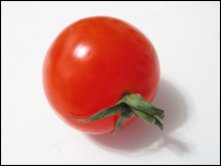
Vegetables are usually consumed raw. This implied best hygienic conditions from the harvest to the processing because of the gastro-enteritis that they could provoke. This study was conducted with the aim to appreciate microbiological quality of raw tomatoes, endives and ready-to-eat products sold in markets. Samples were taken randomly in two markets of Abidjan. A microbiological analysis was done in order to identify and enumerate faecal coliforms, Escherichia coli, Enterococcus and Pseudomonas. A decontamination treatment based on washing samples with running water and sodium hypochlorite solution I° chlorymetric was also applied to tomatoes and endives. The results indicated that, for tomatoes and endives, the average load was 1.5.104 CFU/g of Enterococcus, 1.3.103 CFU/g of Pseudomonas and 1.7.102 CFU/g of faecal coliforms. In ready-to-eat products, the load was 9.3.101 CFU/g for Enterococcus, l.03.101 CFU/g for Pseudomonas and 9.9.101 CFU/g for faecal coliforms. The disinfection with a sodium hypochlorite solution l° chlorymetric reduced Enterococcus and faecal coliforms load to 98% and Pseudomonas load to 97% as compared to the washing with running water in which Enterococcus was only reduced to 80%, faecal coliforms to78% and Pseudomonas to 73%. Escherichia coli were isolated in 28 samples as follow: 15 stumps from endives (54%), 10 stumps from tomatoes (36%) and 3 stumps from ready-to-eat products (10%). Results showed that before consumption, vegetables need to be washed, cleaned and disinfected. This will avoid sanitary hazard.

Australia -Cause of food poisoning outbreak at Moreland Meals on Wheels identified

3AW693

A food poisoning outbreak at the Meals on Wheels service run by City of Moreland has been confirmed.

As revealed by Neil Mitchell, it’s been found the common link between 14 cases of salmonella from late last year was that they had received Meals on Wheels.

The council has done a clean-up and the food service is continuing to operate as usual.

No further cases of illness have been identified.

Japan -Over 700 fall to suspected food poisoning

Nippon TV

Over 700 kids and teachers in western Japan are showing symptoms of suspected food poisoning.

Research -China: mcr-1 gene found in a number of E. coli strains

ecoliOutbreak News Today

The mcr-1 gene–a gene that makes bacteria resistant to colistin, an antibiotic of last resort, and that is transferrable between bacteria–has been found in a wide variety of strains of Escherichia coli in China following widespread use of colistin in agriculture.

As China prepares to introduce the drug for the first time in human medicine, two new studies published in The Lancet Infectious Diseases provide evidence of how widely the mcr-1 gene has spread to bacteria in clinical settings, including to a minority already resistant to the carbapenem class of antibiotics, and highlight the need for caution and careful prescribing when the country introduces colistin.