Monthly Archives: November 2016

Hong Kong -Food poisoning hits 12 diners at Chicago Grill in Hong Kong

Barf Blog

A Thanksgiving dinner at Dan Ryan’s Chicago Grill restaurant in Tsim Sha Tsui, Hong Kong, turned into an upsetting evening for at least 12 guests who reported symptoms of food poisoning and were sent to the doctor last Thursday.

The diners, aged two to 44, suffered abdominal pain, vomiting, diarrhea, and fever, after eating the US-stye restaurant’s Thanksgiving dinner set, which included grilled turkey, apple pie and pumpkin pie, Apple Daily reports.

They were sent home after their condition stabilized. None of the patients required hospitalization, the report said.

Hong Kong -Food Alert – Prepackaged hummus products imported from the United States suspected to be contaminated with Listeria monocytogenes

CFS logo

<!–

–>

Issue Date 2016-11-30
Source of Information US Food and Drug Administration
Food Product Prepackaged hummus products
Name of Importer
Product name and Description (1) Product name: Classic Hummus with Pretzels
Brand: Sabra
Barcode: 40822011952
Net weight: 4.56 ounces per pack
Best-before date: December 26, 2016

(2) Product name: Roasted Garlic Hummus with Pretzels
Brand: Sabra
Barcode: 40822011990
Net weight: 4.56 ounces per pack
Best-before date: December 21, 2016

Reason For Issuing Alert

– The Centre for Food Safety (CFS), through its routine Food Incident Surveillance System, noted an announcement by the US Food and Drug Administration that certain kinds of prepackaged hummus products produced by Sabra Dipping Co LLC, a US manufacturer, were suspected to be contaminated with Listeria monocytogenes. The manufacturer had initiated a recall of the affected products.
Action Taken by the Centre for Food Safety

– Upon learning of the incident, the CFS immediately contacted the US authorities over the incident and followed up with major importers in Hong Kong.

– The CFS’ investigation found that Park’nShop (HK) Limited had imported two kinds of the affected products into Hong Kong. According to information provided by the importer concerned, it had imported 120 packs of each of the above affected products, which were only on sale in its chain of supermarkets. The importer has already voluntarily stopped sale of and removed from shelves the affected products, and initiated a recall.

– The CFS will alert the trade, continue to closely monitor the situation and take appropriate follow-up action. Investigation is ongoing.

Advice to the Trade

– The trade should stop using or selling the products concerned immediately should they still possess them.
Advice to Consumers
– Consumer should stop consuming the affected products.

– Members of the public may call the company’s hotline at 2606 8658 for enquiries during office hours about the recall.

Further Information The CFS press release

Centre for Food Safety
Food and Environmental Hygiene Department
2016-11-30

UK -Deadly bacteria on chickens now resistant to antibiotics in half of cases

The Telegraph campy2

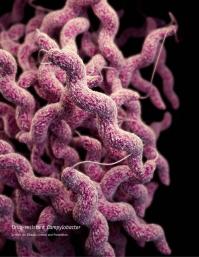
Half the strains of a deadly food poisoning bug, which is common in supermarket chicken, are now resistant to the most effective antibiotics, a new report from the Food Standards Agency (FSA) has warned.

The campylobacter bacteria kills around 100 people in Britain each year and is responsible for around 280,000 cases of food poisoning annually.

Currently infections are treated with antibiotics known as fluoroquinolones, of which ciprofloaxin and nalidixic are the most common. But half of all strains found in poultry by the FSA are now resistant to both of the drugs, which means it man no longer be possible to treat some patients.


USA -Honokohau residents on boil water notice over E. coli threat

Herald Courier

HONOLULU (AP) — The Department of Water Supply is warning customers in Maui’s Honokohau area to boil water before consumption because of possible E. coli contamination.

KHON-TV reports (http://bit.ly/2gfz6Vf ) that customers are advised to boil drinking water for at least one minute or use bottled water for drinking, brushing teeth and food preparation. Officials say boiled or bottled water should be used until further notice.

USA -Possible foodborne illness strikes Northern California family

Food Safety News

Three people are dead and five others are being treated for “probable food-borne (illness) symptoms, according to Contra Costa County health officials. The eight victims share the same residence and all attended the Thanksgiving dinner at the Antioch, CA American Legion Post.

At a Monday evening press conference, health officials said they are still in the early stages of the investigation. At this point there is no evidence that anyone except the family members got sick.

For that reason, the incident is not yet being treated as an outbreak of foodborne illness.

Research -Salmonella on Turkey Skin

CAES

According to the 2013 USDA Food Safety and Inspection Service (FSIS) data, Salmonella prevalence in ground turkey is 15%, which is about six times higher than that on turkey carcasses (2.3%). Identifying potential sources and predictors of Salmonella in ground turkey is therefore important to the turkey industry for controlling and preventing contamination, and releasing ground turkey into commerce.

For ground turkey production, various types of turkey meat, along with skin as a source of fat, are used. It is well known that Salmonella is present on turkey skin. Therefore, skin can serve as a route of Salmonella entry to ground products. Since characteristics of skin on various parts of turkey carcasses are different, we expect variation in Salmonella contamination levels, depending on the part. Common skin parts used as sources of fat in ground turkey production include those from drumsticks, thighs, and wings.

In our previous research work, prevalence and mean numbers of Salmonella on turkey neck skin were 42% and 2.5 log MPN/sample, respectively. Although, neck skin is not currently used in ground turkey production, it may serve as a source of cross contamination with Salmonella. The goal of this study was to determine the prevalence and numbers of Salmonella on skin of turkey drumsticks, thighs, and wings collected at post-chill in a commercial turkey processing plant.

Twenty turkey flocks expected to be highly contaminated with Salmonella based on results of boot-sock tests were selected for the study. From each flock, fifteen carcasses were collected at the exit of the chiller. A drumstick, thigh, and wing from the right half of each carcass was removed and individually placed in sterile bags. Skin from each sample was combined with 300 ml of buffered peptone water and stomached for 2 minutes. A 3-tube, 3-dilution Most Probable Number (MPN) method was used to quantify Salmonella. Primary enrichment and delayed second enrichment were done to recover injured Salmonella.

To date, skin samples from 13 flocks have been analyzed. There was a significant difference (P ≤ 0.05) in Salmonella prevalence in skin of drumsticks (13.3%), thighs (16.4%), and wings (23.6%). The mean numbers of Salmonella/g of skin were 0.22 MPN/g (drumstick), 0.18 MPN/g (thigh), and 0.36 MPN/g (wing). However, these means were not significantly different (P > 0.05).

Based on preliminary results, turkey wing skin is more frequently contaminated with Salmonella than are thigh and drumstick skins. If this continues to be the case through completion of the study, processors may want to reduce the use of wing skin in ground turkey production in an attempt to reduce the number of Salmonella in the final product.

Research -Modelling Survival of Salmonella at Low aw

CAES

The presence of Salmonella in shelf stable foods with low aw has been a recurring problem for the food industry for decades, resulting in numerous disease outbreaks and product recalls. Salmonella survives in these products for months or even years. Its survival at low aw is influenced by temperature and product formulation.

Research has focused on determining how formulations of foods such as peanut spreads, powdered infant formula, and chocolate influence survival of Salmonella but, because different formulations usually impose more than one extrinsic factor affecting cell viability, conclusions concerning survival cannot be readily generalized. We have insufficient quantitative information defining the impact of specific components in low-aw foods on survival of Salmonella.

The ultimate goal of the research reported here is to develop models for predicting survival of Salmonella in low-aw foods as affected by aw, temperature, and food composition. Such models could aid in the development of safer product formulations and more accurate risk assessments.

We have completed modeling two compositional factors, i.e., water mobility and salt content. The model covers aw 0.19 to 0.54 and 25 to 80 °C for water mobility, and 70 to 80 °C for salt content up to 17%. Our approach was to use a model system based on whey protein that has been modified to change one compositional factor at a time.

We found that neither salt content nor water mobility influence survival independent of the effects of aw and temperature. Inactivation rates increase as aw and temperature increase. In addition, because of a tailing effect, inactivation deviates from log-linear kinetics as temperature increases. As a result, data fit better to the nonlinear Weibull model as compared to the log-linear model.

A predictive model based on aw and temperature was validated using market-purchased low-aw foods. The model provided good predictions for the survival of Salmonella in low-fat foods such as wheat flour and powdered milk (12% discrepancy value and -3% bias), but predictions were not accurate for foods with a higher fat content such as 12% fat cocoa powder and 12% fat peanut meal (50% discrepancy value and -9% bias). When only fat-free foods were included in the validation model, 88% of the predictions were in the fail-safe range.

This model can be accessed on Combase. We are presently modifying the model to account for fat and sugar content.

Research -Survival of Salmonella on Dried Fruits

CAES

Dried fruits have historically not been considered as likely vehicles of foodborne pathogens. However, documented presence of pathogens in dried fruits and recent evidence showing that Salmonella can survive on dried fruits for at least 3 months have raised interest in learning more about survival during long-term storage.

The purpose of this study was to (1) determine the ability of Salmonella to survive on dried fruits as affected by conditions used to culture cells before inoculation, method of inoculation, and storage temperature after inoculation and (2) determine if Salmonella can survive and grow in aqueous homogenates of dried fruits.

Five serotypes of Salmonella enterica were acid adapted by growing in tryptic soy broth supplemented with 1% glucose (TSBG). Dried cranberries (aw 0.47, pH 2.52), date paste (aw 0.69, pH 5.08), raisins (aw 0.46, pH 4.08), and strawberries (aw 0.21, pH 3.32) were mist- or dry-inoculated with the five-serotype mixture, followed by drying to the original aw. In addition, cells cultured on tryptic soy agar supplemented with 1% glucose (TSAG) were used to mist-inoculate date paste.

Inoculated fruits were stored at 4ºC and 25°C and analyzed for Salmonella at 1-week to 2-month intervals for up to 8 months. Changes in populations of Salmonella in 10% and 50% aqueous homogenates of dried fruits stored at 4ºC and 25ºC were monitored over a 12-week period.

Salmonella (initial population, 6.57 – 7.01 log CFU/g) survived on mist-inoculated cranberries, date paste, raisins, and strawberries stored at 25°C for 21, 84, 21, and 42 days, respectively. The pathogen survived at 4°C on cranberries, date paste, and raisins for at least 242 days (8 months) and on strawberries for at least 182 days (6 months). Compared to cells grown in TSBG, cells grown on TSAG survived longer in date paste. This supports previous observations showing that Salmonella grown on solid media has increased resistance to subsequent stresses compared to cells grown in broth. At an initial population of 2.18 – 3.35 log CFU/g of dry-inoculated fruits, Salmonella survived on cranberries and date paste for at least 242 days and raisins and strawberries for at least 182 days at 4ºC. Inactivation was more rapid at 25ºC, regardless of the method of inoculation.

At an initial population of 2.76 log CFU/ml, Salmonella did not grow in 10% (aw 0.997±0.002) and 50% (aw 0.958±0.003), cranberry, date paste, raisin, and strawberry homogenates stored at 4°C. Inactivation was more rapid in cranberry and strawberry homogenates than in date paste and raisin homogenates. The pathogen decreased to 0.86 CFU/ml of 10% date paste homogenate held at 4ºC for 70 days and was not detected (<1 CFU/ml) at 84 days; in 10% raisin homogenate held at 4ºC, the pathogen decreased to 0.36 log CFU/ml at 49 days and was not detected at 70 days. Salmonella increased by 2.5 log CFU/g in 10% date paste and raisin homogenates held at 25°C for 2 and 6 days, respectively, followed by rapid inactivation. Growth did not occur in 10% cranberry and strawberry homogenates held at 25ºC.

Results of this study suggest the need to treat dried fruits that may be post-process contaminated with Salmonella with a lethal treatment before eating out-of-hand or using as ingredients in ready-to-eat foods. The ability of Salmonella to grow in dilute aqueous homogenates of date paste and raisins emphasizes the importance of minimizing contact of these and perhaps other dried fruits with high-moisture environments during handling and storage.


UK -Natures Menu recalls its ‘Country Hunter 80% Farm Reared Turkey with Wholesome Fruit and Veg’ frozen pet food because of the presence of salmonella

FSA

Natures Menu is recalling its ‘Country Hunter 80% Farm Reared Turkey with Wholesome Fruit and Veg’ frozen pet food, because the product contains Salmonella. Salmonella is a bacterium that can cause food poisoning.

The FSA is issuing this product recall notice because we are responsible for animal feed regulations and their enforcement through local authorities.

Risk

The presence of salmonella in the product listed below. Salmonella is a bacterium that can cause food poisoning in humans. The product could therefore carry a potential risk through direct handling or indirectly for example from food contact surfaces. In humans, symptoms caused by salmonella usually include fever, diarrhoea and abdominal cramps.

Product details

Product: Country Hunter 80% Farm Reared Turkey with Wholesome Fruit and Veg (frozen pet food)

Brand: Natures Menu

Pack size: 1kg

Batch code: 13122017

‘Use by’ date: 13 December 2017

Action taken by the company

Natures Menu is recalling the affected product from its customers. Product recall notices will be sent to all businesses that sell the product, explaining to customers the reason for recall and the actions they can take if they have bought the affected product.

No other Natures Menu products are known to be affected.

Advice to consumers

When handling and serving raw foods for pets it is always advised to clean utensils and feeding bowls thoroughly. If you have bought the above product and wish to return it, please contact Natures Menu on their free phone number 0800 0183770 or by email at customerservices@naturesmenu.co.uk where you will be given a full refund and Natures Menu will arrange to collect the product.

About product recalls and withdrawals

If there is a problem with a food product that means it should not be sold, then it might be ‘withdrawn’ (taken off the shelves) or ‘recalled’ (when customers are asked to return the product). The FSA issues Product Withdrawal Information Notices and Product Recall Information Notices to let consumers and local authorities know about problems associated with food. In some cases, a ‘Food Alert for Action’ is issued. This provides local authorities with details of specific action to be taken on behalf of consumers.

Get food alerts

Subscribe to FSA email alerts Subscribe to get alerts by email or SMS text

Ref: PRIN 66/2016

Canada – Compliments brand Broccoli Slaw recalled due to Listeria monocytogenes

CFIA

Recall details

Ottawa, November 28, 2016 – Sobeys Inc. is recalling Compliments brand Broccoli Slaw from the marketplace due to possible Listeria monocytogenes contamination. Consumers should not consume the recalled product described below.

Recalled products

Brand Name Common Name Size Code(s) on Product UPC
Compliments Broccoli Slaw 340 g Best Before 16 NO 25 0 68820 10422 3