Monthly Archives: July 2015

Research – Flies and Pathogenic Bacteria

7th Space Interactive fly

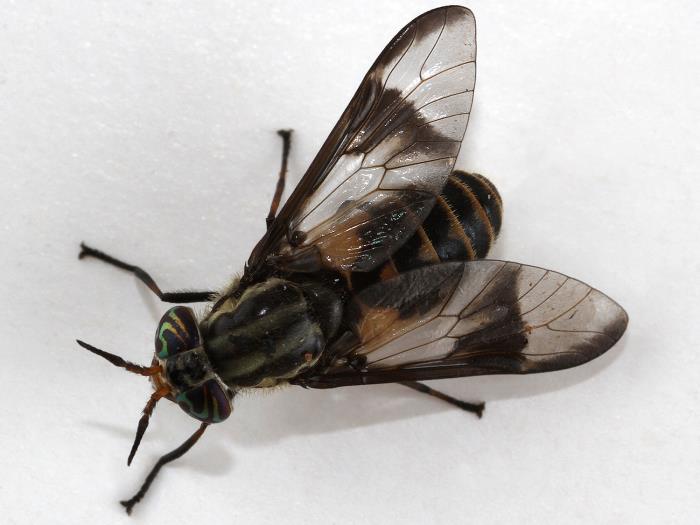
The mechanical transmission of pathogenic bacteria by synanthropic filth flies is widely recognized. While many studies report the fate and the temporospatial distribution of ingested foodborne bacteria by filth flies, there is little evidence about the transmission dynamics of ingested foodborne bacteria by adult house flies (Musca domestica) to their progeny.

In this study, we fed parental house fly adults with food contaminated with low, medium, and high concentrations of Salmonella enterica, Cronobacter sakazakii, Escherichia coli O157:H7, and Listeria monocytogenes and evaluated the probability of transmission of these pathogens to house fly eggs and the surface and the alimentary canal of their first filial (F 1 ) generation adults.

Results: All foodborne pathogens were present in samples containing pooled house fly eggs. The probability of transmission was higher after parental house flies ingested food containing medium bacterial loads.

Cronobacter sakazakii was 16, 6, and 3 times more likely to be transmitted to house fly eggs than S. enterica, E.

coli O157:H7, and L. monocytogenes, respectively.

Research – USA – Large Outbreak of Botulism Associated with a Church Potluck Meal — Ohio, 2015

CDC

On April 21, 2015, the Fairfield Medical Center (FMC) and Fairfield Department of Health contacted the Ohio Department of Health (ODH) about a patient suspected of having botulism in Fairfield County, Ohio. Botulism is a severe, potentially fatal neuroparalytic illness.* A single case is a public health emergency, because it can signal an outbreak (1). Within 2 hours of health department notification, four more patients with similar clinical features arrived at FMC’s emergency department. Later that afternoon, one patient died of respiratory failure shortly after arriving at the emergency department. All affected persons had eaten at the same widely attended church potluck meal on April 19. CDC’s Strategic National Stockpile sent 50 doses of botulinum antitoxin to Ohio. FMC, the Fairfield Department of Health, ODH, and CDC rapidly responded to confirm the diagnosis, identify and treat additional patients, and determine the source.

A confirmed case of botulism was defined as clinically compatible illness in a person who ate food from the potluck meal and had 1) laboratory-confirmed botulism or 2) two or more signs of botulism or one sign and two or more symptoms of botulism. A probable case was a compatible illness that did not meet the confirmed case definition in a person who ate food from the potluck meal.

Among 77 persons who consumed potluck food, 25 (33%) met the confirmed case definition, and four (5%) met the probable case definition. The median age of patients was 64 years (range = 9–87 years); 17 (59%) were female. Among 26 (90%) patients who reported onset dates, illness began a median of 2 days after the potluck (range = 1–6 days).

Twenty-seven of the 29 patients initially went to FMC. Twenty-two (76%) patients were transferred from FMC to six hospitals in the Columbus metropolitan area approximately 30 miles away; these transfers required substantial and rapid coordination. Twenty-five (86%) patients received botulinum antitoxin, and 11 (38%) required endotracheal intubation and mechanical ventilation; no other patients died. Within 1 week of the first patient’s arrival at the emergency department, 16 patients (55%) had been discharged. Among 19 cases that were laboratory-confirmed, serum and stool specimens were positive for botulinum neurotoxin type A or Clostridium botulinum type A.

Research – USDA – E. coli Gets a Boost from Lettuce Disease

USDA Eurofins Food Testing UK

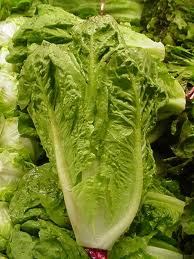
Escherichia coli O157:H7, a bacterium that causes foodborne illness in humans, is more likely to contaminate lettuce when downy mildew is already present, according to U.S. Department of Agriculture (USDA) scientists.

Downy mildew, a lettuce disease caused by the fungus-like water mold Bremia lactucae, is one of the biggest problems that lettuce growers must deal with.

But microbiologist Maria Brandl, with the USDA Agricultural Research Service’s (ARS) Produce Safety and Microbiology Research Unit in Albany, California, has been investigating why so many E. coli O157:H7 outbreaks can be traced back to lettuce fields when E. coli O157:H7 sources are as diverse as undercooked beef, sprouts, raw dairy, shelled walnuts, fruits and vegetables. ARS is USDA’s chief in-house research agency.

Lettuce leaves are actually a harsh place for microbes to survive. But the epidemiological evidence is indisputable about how often lettuce is the source of E. coli O157:H7 contamination.

USA – Prison E.coli Outbreak

E.coli Blog

USA – Shigella Increase

Shigella Blog shigella

The San Joaquin County Public Health Services has seen an increase in the number of cases of Shigella in the county this year. So far, 66 people have come down with the bacteria-caused disease. Historically, the county only sees about 10 case of the disease per year.

USA – New York – Legionella Outbreak

NYC Health Department Legionella_Plate_01

Health Department Investigating Outbreak of Legionnaires’ Disease in the South Bronx 31 cases of Legionnaires’ disease have been reported since July 10 New Yorkers with respiratory symptoms, such as fever, cough, chills and muscle aches, are advised to promptly seek medical attention

USA -Salmonella illness outbreak appears to be linked to pork

Washington State

State health officials are working with state and local partners to investigate several cases and clusters of Salmonella infections that appear to be linked to eating pork. The ongoing investigation of at least 56 cases in eight counties around the state includes food served at a variety of events.

Disease investigators continue to explore several sources from farm to table, and are focused on an apparent link to pork consumption or contamination from raw pork. Salmonellosis, the illness caused by infection with Salmonella, can cause severe and even bloody diarrhea, fever, chills, abdominal discomfort, and vomiting. Serious bloodstream infections may also occur.

As of July 23, the 56 cases include residents of King (44), Snohomish (4), Mason (2), Thurston (2), Pierce (1), Grays Harbor (1), Yakima (1), and Clark (1) counties. Five of the cases were hospitalized; no deaths have been reported. All were infected with the same strain of Salmonella bacteria. The disease investigation shows a potential exposure source for several cases was whole roasted pigs, cooked and served at private events. The source of contamination remains under investigation by state and local health officials and federal partners.

The outbreaks are a reminder of the importance of proper food care, handling, preparation, and cooking to prevent illness. State health officials recommend these food safety strategies broadly, and specifically advise against eating raw or undercooked pork.

Following food safety guidance can help prevent food-borne illness. Health officials warn consumers who handle and/or eat pork to cook the meat to a safe internal temperature, using a meat thermometer; whole cuts of pork should be cooked to 145 degrees. Meat thermometers should be placed in the thickest part of the meat, avoiding bone, fat, and cartilage.

All meats and fish should be cooked to a safe internal temperature, using a food thermometer; guidance can be found on the Department of Health website. Other food safety tips include washing hands thoroughly with soap and water before and after preparing food, especially raw meats. To avoid cross-contamination, don’t place cooked food on a plate that previously held raw meat of any kind.

It’s also important to sanitize cutting boards, knives, and countertops that come into contact with raw meat by using a solution of bleach water (1 teaspoon bleach per gallon of water) or antibacterial cleaner.

USA – Cyclospora Outbreak Updates

Food Poisoning Bulletin

Kroger is recalling cilantro that has been linked to a Cyclospora outbreak from stores in 10 sates. The outbreak includes at least 218 people in Texas and Wisconsin and may include illnesses in other states.

Food Poisoning Bulletin

cilantro Cyclospora outbreak has sickened 218 people in Texas and Wisconsin this summer. Normally, Cyclospora infections are associated with travel to developing countries. But for the last three summers, the parasite has travelled here.

In 2013, 631 people in 25 states were sickened in multiple, overlapping Cyclospora outbreaks from June through December. Health investigators determined that the outbreaks had multiple food sources and that most of the illnesses were linked to tainted produce imported from Mexico.

Australia – P1039 – Microbiological Review of Infant Formula

FSANZ FSANZ3

The purpose of the Proposal is to amend the Code to include food safety microbiological criteria for infant formula, aligning with international (Codex) standards.

RASFF Alerts – Salmonella -Smoked Ham – Pine Nut Kernels – Seasame Seeds – Chicken – Rosemary – Eggs

RASFF-Logo

RASFF– Salmonella spp. (presence /25g) in smoked ham from Germany in France

RASFF-Salmonella spp. (presence /25g) in pinenut kernels from Pakistan in Germany

RASFF-Salmonella spp. (presence /25g) in hulled sesame seeds from India in Poland

RASFF – Salmonella typhimurium (presence /25g) in frozen chicken leg quarters from the Netherlands in Malta

RASFF-Salmonella spp. in hulled sesame seeds from India in Poland

RASFF-Salmonella Salamae (presence /25g) in dried rosemary from Germany in Norway

RASFF-Salmonella Indiana (presence /25g) in eggs from Germany in Germany

RASFF-Salmonella Kristianstad (presence /25g) and Salmonella Montevideo (presence /25g) in hulled sesame seeds from India  in Greece

RASFF-Salmonella spp. (in 1 out of 5 samples /25g) in auto dried hulled sesame seeds from India in France