Monthly Archives: May 2015

Research – Spores for thought: Study provides new insights into Clostridium spores and Bacteria shown to suppress their antibiotic-resistant cousins

Science Daily closta

Researchers have established how clostridia bacteria emerge from spores. This could help them understand how these bacteria germinate and go on to produce the deadly toxin responsible for botulism, a lethal form of food poisoning, or cause food spoilage.

Science Daily

Researchers studying a dangerous type of bacteria have discovered that the bacteria have the ability to block both their own growth and the growth of their antibiotic-resistant mutants. The discovery might lead to better ways to fight a class of bacteria that have contributed to a growing public health crisis by becoming increasingly resistant to antibiotic treatments.

Canada- CFIA Update – Killarney Market brand ground beef, pork and turkey recalled due to E. coli O157:H7

CFIA

Ottawa, May 12, 2015 – The food recall warning issued on May 09, 2015 has been updated to include additional product information.

Killarney Market is voluntarily recalling Killarney Market brand ground beef, pork and turkey from the marketplace due to possible E. coli O157:H7 contamination. Consumers should not consume the recalled products described below.

The following products were sold from Killarney Market, 2611 East 49th Ave., Vancouver, British Columbia.

Recalled products

Brand Name Common Name Size Code(s) on Product UPC
Killarney Market Lean Ground Beef Variable Sell By May 12, 15 Starts with 200089
Killarney Market Lean Ground Beef Family Pack Variable Sell By May 12, 15 Starts with 200115
Killarney Market Extra Lean Ground Beef Less than 10% Fat Variable Sell By May 12, 15 Starts with 200117
Killarney Market Extra Lean Ground Beef Family Pack Variable Sell By May 12, 15 Starts with 200119
Killarney Market 100% Hormone Free Black Angus Lean Ground Beef Variable Sell By May 12, 15 Starts with 200820
Killarney Market Regular Ground Pork Variable All Sell By dates from May 05, 15 up to and including May 13, 15 Starts with 200091
Killarney Market Ground Pork Regular Fam Pak Variable All Sell By dates from May 05, 15 up to and including May 13, 15 Starts with 200296
Killarney Market Ground Pork Extra Lean Variable All Sell By dates from May 05, 15 up to and including May 13, 15 Starts with 200092
Killarney Market Ground Pork Extra Lean Fam Pak Variable All Sell By dates from May 05, 15 up to and including May 13, 15 Starts with 200297
Killarney Market Ground Turkey Variable All Sell By dates from May 05, 15 up to and including May 13, 15 Starts with 200094

Scotland – HPS – Annual summary for 2014 of viral and selected foodborne bacterial pathogens

HPS

Norovirus

There were 1306 laboratory reports of norovirus (NV) to HPS in 2014. This is a marked decrease of 609 (31.8%) compared with 2013 when there were 1915 reports, and follows a decrease of 35% between 2012 and 2013. The 1306 total recorded in 2014 is also the lowest number of reports in a single year in the past ten years (Figure 1).

These laboratory reports arise from confirmed infection in the whole population (community and healthcare). Laboratory confirmed cases represent just a small proportion of the true incidence in the community. The second study of infectious intestinal disease in the community (IID2 Study – accessible at http://www.food.gov.uk/science/research/foodborneillness/b14programme/b14pr…) estimated that approximately 290 cases of NV occur in the community for every case reported to national surveillance.

In Scotland the overall rate for reports of NV in 2014 was 24.5 per 100,000 compared with 36.0 per 100,000 the previous year. Rates declined in nine NHS boards and increased in five NHS boards. Rates among NHS boards ranged from 2.1 to 111.5 per 100,000 (Table 1). Some of the differences between NHS boards may be due to differences in clinical or reporting practices. The rates for the island NHS boards should be viewed with caution due to the effect of their small population.

Laboratory reports of NV showed a distinct age distribution affecting the elderly and young, with 57% (742/1306) reported from those aged 65 years and over, 21% (280/1306) from those under five years of age, while none of the other age bands accounted for more than 3% of reports.

Rotavirus

Rotavirus is the most common cause of diarrhoea in young children. An immunisation programme for rotavirus was introduced into the infant immunisation schedule in July 2013, (more information is available in the Chief Medical Officer’s letter CMO9(2013)04 at http://www.sehd.scot.nhs.uk/cmo/CMO(2013)04.pdf). Further information about rotavirus vaccination is also available from the public information website: http://www.immunisationscotland.org.uk/vaccines-and-diseases/rotavirus.aspx.

The introduction of the vaccine programme has had a significant impact on the number of laboratory reports, reducing them from 1301 in 2013 to 346 in 2014 (Figure 2). Of the reports in 2014, 321 (92.5%) were from children under the age of five. Figure 3 shows the impact of the rotavirus programme in eliminating the distinctive historical peak for rotavirus infection in early spring and the size of the reduction in 2014 compared to the average for the previous five years.

Hepatitis A

There were 32 reports of hepatitis A in 2014, an increase of 10 on 2013 when there were 22 such reports, however case numbers remain low and subject to random year-on-year variation.

Hepatitis E

Reports of hepatitis E (HEV) infection in Scotland have increased in recent years, as they have elsewhere in the UK. Since 2011 laboratory reports of HEV in Scotland have increased from 13 in 2011, to 78 in 2012, 95 in 2013 and 161 in 2014. The overall rate of HEV in Scotland in 2014 was 3.0 per 100,000, with a predominance of infection in older males. In 2014, 98 (61%) of reports were from males and, of these, 35 (37.5%) were from males aged 65 years and older.

HEV is emerging as an important new issue in Scotland and while some of the increase in reported cases is likely to be due to increased testing and better ascertainment, it is also believed to reflect a real increase in incidence. HPS is working with colleagues in Food Standards Scotland, the Scottish Government, NHS boards and Public Health England to improve understanding of the epidemiology of HEV, including risk factors and exposures, to inform public health management and control.

Listeria monocytogenes

The importance of L. monocytogenes as a gastro-intestinal pathogen arises not from the number of reported cases, which are relatively low compared to many other pathogens, but rather due to the severity of infection and high mortality. In line with reporting in the rest of the UK and Europe, pregnancy-associated cases are counted as one case, even when both the mother and infant are positive.

Infection with L. monocytogenes can cause an influenza-like illness, septicaemia or a meningo-encephalitis. Pregnant women, newborn infants, the elderly and the immunocompromised are most at risk.

There were 15 cases of L. monocytogenes reported in 2014, the same as reported in 2013 and similar to previous years (Figure 4).

HPS is grateful to all consultants in public health medicine, health protection nurses, microbiologists and environmental health officers who contribute to the enhanced surveillance of Listeria infection in Scotland, the aim of which is to improve our understanding of such infection.

Shigella

Among the species of Shigella reported, the most common was Shigella sonnei. In 2014, 49 cases of Shigella sonnei were reported, a decline of 13 (20.9%) compared to 2013.

Thirty-four cases of Shigella flexneri were reported in 2014, an increase of 15 compared to the 19 reported in 2013. Typing information was available for 32 of the 34 reports in 2014. The most common serotypes were 2a and 3a, responsible for 13 and 11 isolates respectively, while six isolates were of serotype 6 and two of serotype 1a.

Four cases of Shigella boydii and one of Shigella dysenteriae were reported in 2014.

Yersinia

In 2014 there were four reports of Yersinia enterocolitica compared to six in 2013 and ten in 2012.

Research – Assessment of Microbiological Quality of Retail Fresh Sushi from Selected Sources in Norway

Ingenta Connect

Retail fresh sushi is gaining popularity in Europe. This study was conducted to investigate the microbiological quality of selected samples of fresh sushi with a shelf life of 2 to 3 days offered as complete meals in Norwegian supermarkets. Analysis of aerobic plate counts in 58 sushi samples from three producers revealed large variations in microbiological quality, and 48% of the analyzed sushi boxes were rated as unsatisfactory (> 6.0 log CFU/g). Mesophilic Aeromonas spp. was detected in 71% of the samples. In a follow-up study, we collected products and raw materials directly from the production facility of one producer and observed a significant decrease (P < 0.01) in aerobic plate counts compared with the initial sampling. The observed difference between products purchased in stores compared with those collected directly from the factory suggests that poor temperature control during distribution and display in stores leads to reduced microbiological quality. Microbiological analysis of the sushi ingredients revealed that potentially pathogenic bacteria such as mesophilic Aeromonas spp. or bacteria belonging to the Enterobacteriaceae can be introduced into sushi through both raw vegetables and fish. The results highlight the importance of high quality ingredients and proper temperature control to ensure stable quality and safety of these food products.

Research – Thermal Inactivation of Shiga Toxin–Producing Escherichia coli Cells within Cubed Beef Steaks following Cooking on a Griddle

Ingenta Connect Ecoli Istock

Thermal inactivation of Shiga toxin–producing Escherichia coli (STEC) cells within knitted/cubed beef steaks following cooking on a nonstick griddle was quantified. Both faces of each beef cutlet (ca. 64 g; ca. 8.5 cm length by 10.5 cm width by 0.75 cm height) were surface inoculated (ca. 6.6 log CFU/g) with 250 μl of a rifampin-resistant cocktail composed of single strains from each of eight target serogroups of STEC: O26:H11, O45:H2, O103:H2, O104:H4, O111:H2, O121:H19, O145:NM, and O157:H7. Next, inoculated steaks were (i) passed once through a mechanical tenderizer and then passed one additional time through the tenderizer perpendicular to the orientation of the first pass (single cubed steak; SCS) or (ii) passed once through a mechanical tenderizer, and then two tenderized cutlets were knitted together by passage concomitantly through the tenderizer two additional times perpendicular to the orientation of the previous pass (double cubed steak; DCS). SCS and DCS were individually cooked for up to 3.5 min per side in 30 ml of extra virgin olive oil heated to 191.5°C (376.7°F) on a hard-anodized aluminum nonstick griddle using a flat-surface electric ceramic hot plate. Regardless of steak preparation (i.e., single versus double cubed steaks), as expected, the longer the cooking time, the higher the final internal temperature, and the greater the inactivation of STEC cells within cubed steaks. The average final internal temperatures of SCS cooked for up 2.5 min and DCS cooked for up to 3.5 min ranged from 59.8 to 94.7°C and 40.3 to 82.2°C, respectively. Cooking SCS and DCS on an aluminum griddle set at ca. 191.5°C for 0.5 to 2.5 min and 1.0 to 3.5 min per side, respectively, resulted in total reductions in pathogen levels of ca. 1.0 to ≥6.8 log CFU/g. These data validated that cooking SCS (ca. 0.6 cm thick) or DCS (ca. 1.3 cm thick) on a nonstick aluminum griddle heated at 191.5°C for at least 1.25 and 3.0 min per side, respectively, was sufficient to achieve a 5.0log reduction in the levels of the single strains from each of the eight target STEC serogroups tested.

USA – Milk Makers Fest – E.coli O157 Cases Increasing

Food Poisoning Bulletin

The E. coli outbreak associated with the Milk Makers Fest at the Northwest Fairgrounds in Lynden, Washington in April has grown to include 45 cases. There are now 23 confirmed cases and 22 probable cases. Eight people have been hospitalized as a result of their illness. There are several children who have hemolytic uremic syndrome (HUS). The case count is now increasing more slowly.

Hong Kong – French Raw Milk Sheeps Cheese – Listeria monocytogenes

CFS logo

Food Alert – A French raw sheep’s milk cheese suspected to be contaminated with Listeria monocytogenes

<!–

–>

Issue Date 2015-05-11
Source of Information Notification from the Rapid Alert System for Food and Feed (RASFF) of the European Commission
Food Product Raw sheep’s milk cheese
Name of Importer
Product name and Description Product name: Raw milk cheese from sheep “PERAIL”
Place of origin: France
Manufacture date: between March 15 and April 2, 2015
Best before dates: April 28 or May 17, 2015
Reason For Issuing Alert

– The Centre for Food Safety (CFS) received a notification from the RASFF of the European Commission earlier on that certain batches of PERAIL raw sheep’s milk cheese which were found to have been contaminated with Listeria monocytogenes, had been imported into Hong Kong. Acting on information, the Centre has contacted the concerned importer and instructed it to stop selling or using the product and alerted the trade to the incident. Further information was received today from the RASFF that another two Hong Kong importers had imported the concerned product.

Listeria monocytogenes can be easily destroyed by cooking but can survive and multiply at refrigerator temperature. Most healthy individuals do not develop symptoms or only have mild symptoms like fever, muscle pain, headache, nausea, vomiting or diarrhoea when infected. However, severe complications such as septicemia, meningitis or even death may occur in newborns, elderly and those with a weaker immune system. Although infected pregnant women may just experience mild symptoms generally, the infection of Listeria monocytogenes may cause miscarriage, infant death, preterm birth, or severe infection in the newborns.

Action Taken by the Centre for Food Safety

– The CFS has immediately contacted the two importers concerned in Hong Kong as notified by the RASFF to instruct them to stop selling and recall the affected product, and trace the distribution of the food concerned.
Advice to the Trade

– Stop using or selling the product concerned immediately.
Advice to Consumers
– Not to consume the affected batch of the product concerned.

– Stop consuming the affected batch of the product if it was purchased, and seek medical advice if feeling sick upon consumption.

Further Information The CFS press release

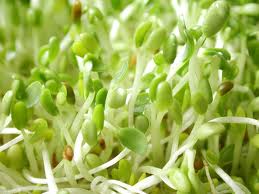
USA – Soybean and Mung Bean Sprouts Recalled for Listeria Risk

Food Safety News alfalfa

Good Seed Inc. is recalling all packages of soybean sprouts and mung bean sprouts because of potential contamination with Listeria monocytogenes.

The contamination was discovered through routine sampling by the Virginia Department of Agriculture and Consumer Services Food Safety Program and subsequent analysis by the Virginia Division of Consolidated Laboratory Services.

Individuals who purchased soybean sprouts and mung bean sprouts distributed by Good Seed Inc. should return the product to the place of sale for a full refund.

USA – Razor Clams Harvested May 7 Along Certain WA Beaches Should Be Destroyed

Food Safety News

The Washington State Department of Health announced Friday that any razor clams harvested on Thursday, May 7, along an approximately 145-mile stretch of coastal beaches from Long Beach north to Kalaloch should be destroyed due to high levels of a marine toxin.

Department officials recently discovered elevated levels of domoic acid in the area, which can cause illness if consumed at high levels.

Information on Domoic Acid

Canada – CFIA – Recall – Killarney Market brand ground beef recalled due to E. coli O157:H7

CFIA

Ottawa, May 9, 2015 – Killarney Market is voluntarily recalling Killarney Market brand ground beef from the marketplace due to possible E. coli O157:H7 contamination. Consumers should not consume the recalled products described below.

The following products were sold from Killarney Market, 2611 East 49th Ave., Vancouver, British Columbia.

Recalled products

Brand Name Common Name Size Code(s) on Product UPC
Killarney Market Lean Ground Beef Variable All Sell By dates from May 05, 15 up to and including May 11, 15 Starts with 200089
Killarney Market Lean Ground Beef Family Pack Variable All Sell By dates from May 05, 15 up to and including May 11, 15 Starts with 200115
Killarney Market Extra Lean Ground Beef Less than 10% Fat Variable All Sell By dates from May 05, 15 up to and including May 11, 15 Starts with 200117
Killarney Market Extra Lean Ground Beef Family Pack Variable All Sell By dates from May 05, 15 up to and including May 11, 15 Starts with 200119
Killarney Market 100% Hormone Free Black Angus Lean Ground Beef Variable All Sell By dates from May 05, 15 up to and including May 11, 15 Starts with 200820