Recall, Italy: DEGUST Cheeses – Muscatis, Pfiffikas & Kaffalat

Salute

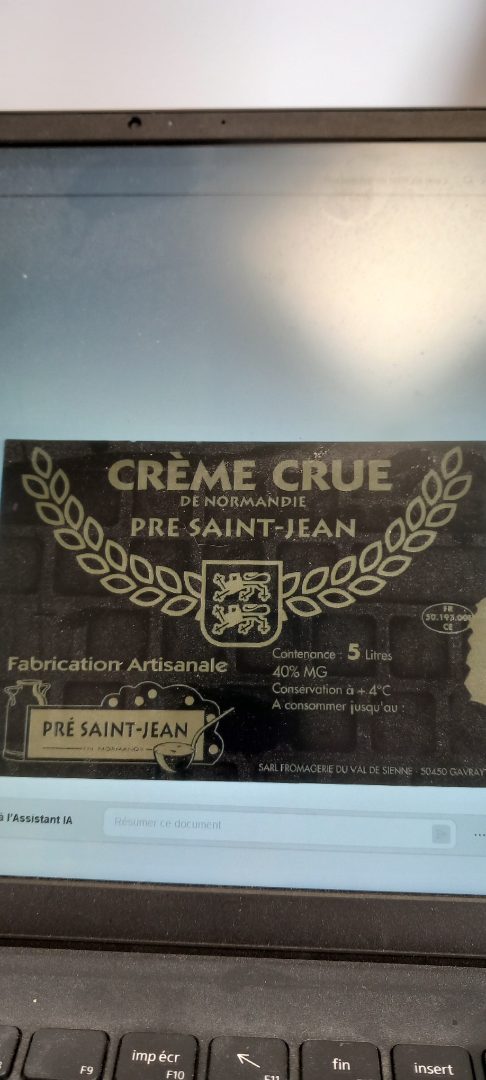
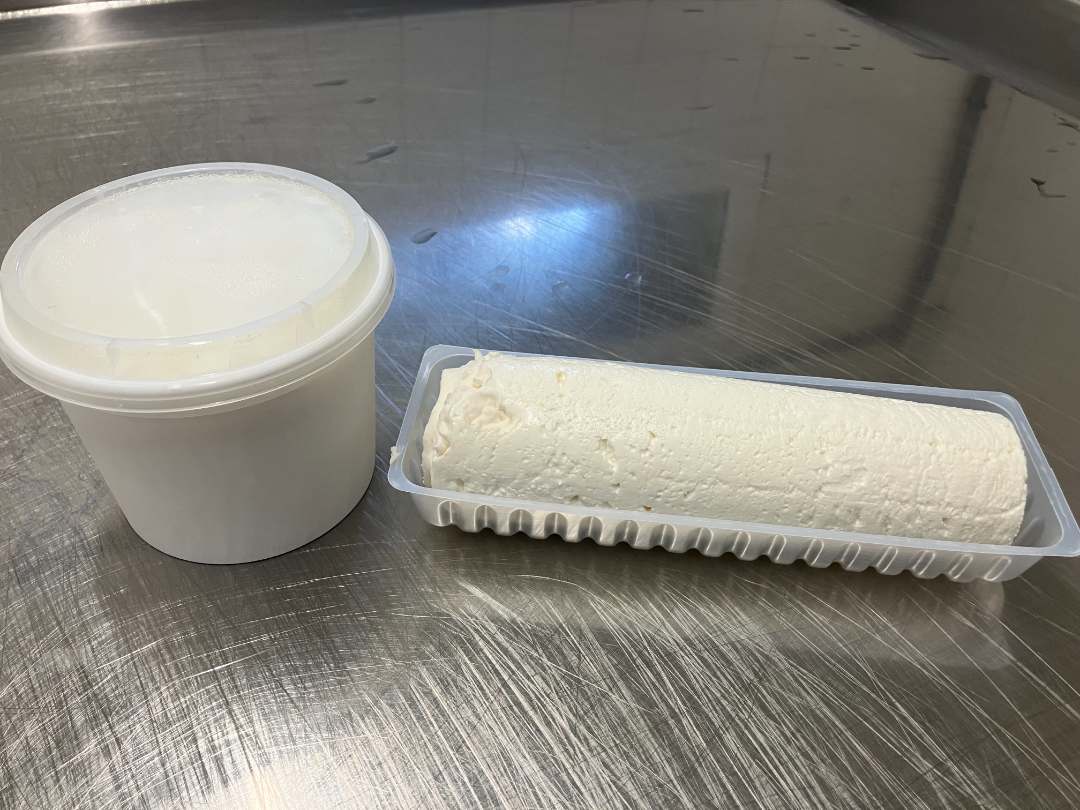
Recall, France: Blackbird Fang Lactic cheese flavoured with raw cow’s milk

Gov France

  • Product CategoryFeeding
  • Product subcategoryMilk and dairy products
  • Product Brand NameBlackbird’s Fang
  • Model names or part numbersFlavoured cheeses
  • Product identificationLotDate30/12/2024Use-by date 10/01/2025
  • Product ListTABLEAU_DESTINATAIRES_PRODUITS_CROC_DU_MERLE.pdfAttachment
  • PackagingSingle sale
  • Start/End of marketing dateOf the 07/01/2025 at 10/01/2025
  • Storage temperatureProduct to be stored in the refrigerator
  • Health markBlackbird’s Fang
  • Additional informationCHEESE
  • Geographical area of saleDepartments: LOIR-ET-CHER (41), LOIRET (45)
  • DistributorsPVC Blois Farm store

Practical information about the recall

  • Reason for the recallLISTERIA
  • Risks to the consumerListeria monocytogenes (agent responsible for listeriosis)
  • Additional description of the riskLISTERIA
  • Conduct to be followed by the consumerStop using
  • Health recommendationsPeople who have consumed the “products” mentioned above and who have a fever, isolated or accompanied by headaches, and body aches, are invited to consult their doctor and report this consumption. Severe forms with neurological complications and maternal or fetal damage in pregnant women can also sometimes occur. Pregnant women as well as immunocompromised people and the elderly should be especially attentive to these symptoms. Listeriosis is a disease that can be serious and has an incubation period of up to eight weeks.
  • Contact number0254875865
  • Compensation arrangementsRepayment

China – Hong Kong investigates flight-related food poisoning cases

FSN

The Centre for Health Protection (CHP) in Hong Kong is investigating reports of food poisoning involving passengers on flights from Nepal.

A total of 36 people have fallen ill on two Cathay Pacific flights from Kathmandu to Hong Kong.

The first cluster of patients developed food poisoning symptoms, including vomiting, nausea, abdominal pain, and fever, about 10 to 30 minutes after having meals served on a flight on Jan. 8.After speaking with people on an exchange trip to Nepal, initial investigations pointed to takeaway chicken, cucumber and tomato sandwiches with salad dressing and French fries eaten about two hours before boarding the flight.

However, the number of affected people increased to 16. Nine were from the same exchange group and the remaining seven do not know each other. Those who were not part of the exchange group had not consumed any common food before boarding.

The second cluster, reported on Jan. 9, includes 14 men and six women aged between 11 and 51 from eight families and groups who do not know each other. 

Thirteen of them sought medical advice upon landing but none required hospitalization. Other than food served on the flight, the CHP’s investigation revealed they had not consumed any common food before getting on the plane.

Europe – Two infected with Listeria from Austrian cheese

FSN

Health officials have issued a warning after two people fell sick with Listeriosis following consumption of soft cheese from Austria.

The Austrian Agency for Health and Food Safety (AGES) said no confirmed cases have yet been reported in Austria. One person in Germany and one person in the Czech Republic fell ill with listeriosis after eating cheese from a Tyrolean manufacturer.

The Federal Ministry of Social Affairs, Health, Care and Consumer Protection (BMSGPK) asked AGES to investigate the Listeria outbreak.

Wilder Käser has initiated a recall of products and informed the public.

USA – Food Safety and Inspection Service reports on Boar’s Head investigation

FSN

The USDA’s Food Safety and Inspection Service (FSIS) has published its report on inspection practices used by the agency in relation to the deadly 2024 Listeria outbreak traced to Boar’s Head deli meats.

“The FSIS review of records and data from the Boar’s Head Jarrett, VA, production plant indicated a pattern of conditions that presented an elevated risk for Listeria monocytogenes contamination,” the FSIS reported.

The Boar’s Head plant in Jarrett, VA, was sampled by FSIS at the highest frequency rate (monthly), yet this sampling did not identify the establishment’s Listeria problem.

Hello!

I hope you’ve had a wonderful festive season and are feeling ready for 2025. My name is Rachel McGrath, and I’ll be taking over Keith’s blog following his well-deserved retirement. A heartfelt thank you to Keith for the incredible dedication and effort he’s poured into the blog over the years—it’s undoubtedly been greatly valued by so many readers. For the time being, I’ll be managing the posts from next week, but stay tuned—exciting changes and updates are on the way! I’m excited to share and connect with you all!

All the best

Rachel

Image

HAPPY NEW YEAR 2025

Image

HAPPY CHRISTMAS 2024

Research – A Quantitative Risk Assessment Model for Listeria monocytogenes in Ready-to-Eat Smoked and Gravad Fish

MDPI

Abstract

This study introduces a quantitative risk assessment (QRA) model aimed at evaluating the risk of invasive listeriosis linked to the consumption of ready-to-eat (RTE) smoked and gravad fish. The QRA model, based on published data, simulates the production process from fish harvest through to consumer intake, specifically focusing on smoked brine-injected, smoked dry-salted, and gravad fish. In a reference scenario, model predictions reveal substantial probabilities of lot and pack contamination at the end of processing (38.7% and 8.14% for smoked brined fish, 34.4% and 6.49% for smoked dry-salted fish, and 52.2% and 11.1% for gravad fish), although the concentrations of L. monocytogenes are very low, with virtually no packs exceeding 10 CFU/g at the point of sale. The risk of listeriosis for an elderly consumer per serving is also quantified. The lot-level mean risk of listeriosis per serving in the elderly population was 9.751 × 10⁻⁸ for smoked brined fish, 9.634 × 10⁻⁸ for smoked dry-salted fish, and 2.086 × 10⁻⁷ for gravad fish. Risk reduction strategies were then analyzed, indicating that the application of protective cultures and maintaining lower cold storage temperatures significantly mitigate listeriosis risk compared to reducing incoming fish lot contamination. The model also addresses the effectiveness of control measures during processing, such as minimizing cross-contamination. The comprehensive QRA model has been made available as a fully documented qraLm R package. This facilitates its adaptation for risk assessment of other RTE seafood, making it a valuable tool for public health officials to evaluate and manage food safety risks more effectively.

Research – From Germination to Stagnation: Sodium Diacetate’s Impact on Clostridium perfringens Spores

Wiley Online

ABSTRACT

Sodium diacetate is recognized for its high efficiency as a preservative, demonstrating strong antibacterial properties that help extend the shelf life of food products. However, it is still unclear how it influences spores. This research investigated the influence of sodium diacetate on the germination and outgrowth stage in the revival process of Clostridium perfringens (C. perfringens) spores. The germination and outgrowth rate of spores after sodium diacetate treatment were measured. The changes of spore inner membrane were monitored by laser confocal microscope, electron scanning microscope and macromolecular leakage. The interaction between sodium diacetate and DNA was investigated by EB fluorescence probe, and the finding was verified by the outgrowth of spores in ham sausage. An investigation into the effects of sodium diacetate treatment on the biological activity, inner membrane permeability, morphology, and DNA integrity of spores devoid of both the coat and cortex revealed that sodium diacetate significantly hindered the transition of germinated spores into vegetative cells. In the presence of sodium diacetate, C. perfringens spores underwent germination, characterized by the hydrolysis of the spore cortex and the disassembly of the spore coat. As the spores advanced into the outgrowth phase, sodium diacetate penetrated their structure, causing damage to the inner membrane and compromising DNA integrity. Moreover, sodium diacetate was demonstrated to effectively inhibit spore outgrowth in ham sausage. This study provided theoretical guidance and references for the application of sodium diacetate in food to control the germination and outgrowth of spore-forming bacteria.