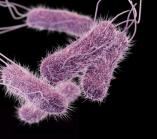
RASFF-Salmonella cubana (presence /25g) and Salmonella Loenga (presence /25g) in GMO soybean meal from Brazil, via Denmark in Finland

RASFF-Salmonella cubana (presence /25g) and Salmonella Loenga (presence /25g) in GMO soybean meal from Brazil, via Denmark in Finland
Posted in Uncategorized

RASFF-aflatoxins (B1 = 100 µg/kg – ppb) in organic corn from India in Norway
RASFF-aflatoxins (B1 = 55.9 µg/kg – ppb) in shelled groundnuts from Brazil in the UK
Posted in Uncategorized
Glennville, Ga. – BI-LO, LLC, today announced an immediate recall for one BI-LO store in Glennville, GA (#5744) for fresh products containing cantaloupe, because they have the potential to be contaminated with Listeria monocytogenes, an organism which can cause serious and sometimes fatal infections in young children, frail or elderly people, and others with weakened immune systems. Although healthy individuals may suffer only short-term symptoms such as high fever, severe headache, stiffness, nausea, abdominal pain and diarrhea, Listeria infection can cause miscarriages and stillbirths among pregnant women.
The address of the affected store is:
Store #5744
312 S. Veterans Blvd.
Glennville, GA 30427
No other BI-LO stores are affected by this recall.
The recall is in response to a positive test of Listeria monocytogenes from a sample taken by the Georgia Department of Agriculture, from a medium-sized container of cantaloupe chunks, as communicated to BI-LO on Feb. 29, 2016.
The product is marked on the scale label as “BI-LO Cantaloupe Chunks Medium,” in medium plastic bowls with a lid, and had a sell-by date of 2/24/16.
Out of an abundance of caution, all BI-LO brand products containing fresh cantaloupe with a sell-by date of 2/24/16, are also being recalled at this store as follows:
Customers should not consume these products and should return them to the store for a full refund. To receive the refund, customers may present proof of purchase through a receipt or the product-packaging label. To date, there have been no reports of any issues or illness associated with consumption of these products.
BI-LO #5744 has been fully compliant with the Georgia Department of Agriculture and has sanitized all areas of the store as requested, as well as the complete withdrawal and destruction of all fresh cantaloupe products within the affected sell-by date range. Customers with questions about the recalled products may contact the Customer Call Center toll free at 866-946-6349, Mon. – Fri., 8 a.m. – 7 p.m. EDT, and Sat., 8 a.m. – 4 p.m. EDT.
Posted in Uncategorized
Hy-Vee, Inc., based in West Des Moines, Iowa, is voluntarily recalling Maytag Raw Milk Blue Cheese across its eight-state region due to possible contamination with Listeria monocytogenes. Listeria monocytogenes is an organism, which can cause serious and sometimes fatal infections in young children, frail or elderly people, and others with weakened immune systems. Although healthy individuals may suffer only short-term symptoms such as high fever, severe headache, stiffness, nausea, abdominal pain and diarrhea, Listeria monocytogenes infection can cause miscarriages and stillbirths among pregnant women.
To date, no illnesses have been reported in connection with this product.
Posted in Uncategorized
Six people suffered food poisoning last week after eating raw American oysters at a restaurant in a Causeway Bay hotel, according to media reports.
Following the incident, the health department’s Center for Food Safety announced Wednesday a ban on Penn Cove oyster import and sales.
Food safety concerns arose after six women, whose ages ranged from 47 to 65, fell ill after eating raw oysters in a restaurant at the The Excelsior hotel on Feb. 23.
The women are said to have suffered diarrhoea and stomach pain after eating the oysters.
Four of them sought medical advice. Norovirus was found in a 57-year-old victim’s stool specimen, the Centre for Health Protection announced Wednesday night.
Posted in Uncategorized
Up to twelve alerts has set off Italy on account of the Galician mussel since the start of the year. The last one was yesterday. And that was so due to the detection of E. coli (Escherichia coli) at above the allowable level in several consignments of bivalve molluscs sent from Spain.
According to the reports from Italian health authorities to the rapid alert system for food and feed (RASFF), some of the intercepted mussels doubled, tripled and even showed a seven-fold increase of the legal limit allowed of fecal coliform because there were alarms that detected levels amounting to 490, 700 and even 1,700 E. coli per hundred grams of meat, when the legally allowed limit is 230. There is no evidence that the product has reached the market and caused poisoning among consumers and in most cases the problem was solved with the purification of the product, or with the retention of the bivalve mollusc before reaching the market.
Posted in Uncategorized
Behavior of Salmonella and Listeria monocytogenes in raw yellowfin tuna during refrigeration and frozen storage were studied. Growth of Salmonella was inhibited in tuna during refrigerated storage, while L. monocytogenes was able to multiply significantly during refrigerated storage. Populations of Salmonella in tuna were reduced by 1 to 2 log after 12 days of storage at 5–7 °C, regardless levels of contamination. However, populations of L. monocytogenes Scott A, M0507, and SFL0404 in inoculated tuna (104–105 CFU/g) increased by 3.31, 3.56, and 3.98 log CFU/g, respectively, after 12 days of storage at 5–7 °C. Similar increases of L. monocytogenes cells were observed in tuna meat with a lower inoculation level (102–103 CFU/g). Populations of Salmonella and L. monocytogenes declined gradually in tuna samples over 84 days (12 weeks) of frozen storage at −18 °C with Salmonella Newport 6962 being decreased to undetectable level (<10 CFU/g) from an initial level of 103 log CFU/g after 42 days of frozen storage. These results demonstrate that tuna meat intended for raw consumption must be handled properly from farm to table to reduce the risks of foodborne illness caused by Salmonella and L. monocytogenes.
Posted in Uncategorized
Loki Fish Company of Seattle, WA is voluntarily recalling two lots of Wild Smoked Pink Salmon Portions, due to a positive test result for Listeria monocytogenes, an organism which can cause serious and sometimes fatal infections in young children, frail or elderly people, and others with weakened immune systems. Although healthy individuals may suffer only short-term symptoms such as high fever, severe headache, stiffness, nausea, abdominal pain and diarrhea, listeria infection can cause miscarriages and stillbirths among pregnant women.
The affected Wild Smoked Pink Salmon Portions comes in a 4-7 ounce, clear plastic package. The lot 121215 5594 or 121215 5613 is found on the back of the package.
Product was distributed to retail stores in Oregon and Washington, via mail order, and sold at Seattle area farmers markets. For a list of retail outlets and farmers markets that may have carried the identified product, and for other updates, please go to www.lokifish.com .
No illnesses have been reported to date in connection with Loki Fish Company product. The product is processed by Felix Custom Smoking, a Loki Fish Company co-packing vendor.
The retail sample was collected during routine sampling activities conducted by Washington State Department of Agriculture (WSDA) and presence of Listeria monocytogenes was confirmed. This recall is being made with the knowledge of the U.S. Food and Drug Administration and WSDA.
Consumers who have purchased the identified product are urged not to consume and return it to the place of purchase for a full refund. In addition to the Loki Fish Company website, consumers may contact the company directly with questions at 206-937-1048 between Monday-Friday, 9am-4pm PST.
“As a family owned fishing business that direct markets our catch, nothing is more important to us than the safety of the products we sell,” said Loki Fish Company General Manager, Dylan Knutson. Knutson continued, “We have ordered additional tests to make sure we isolate the contamination and fully understand its cause. As soon as we have additional information, we will share it with the public as well as with the FDA and WSDA.”
Posted in Uncategorized
Posted in Uncategorized
The Ingham County Health Department is now reporting close to 300 people were affected by the illness outbreak at the Kellogg Center last week.
Linda Vail with the Ingham County Health Department told 6 News they also have multiple people reporting of secondary cases of the illness, from family members who have been around people originally affected at MSU’s hotel and conference center.
“That eliminates some of what you would refer to as causative agents, there are some that are known to have secondary transmissions, others, not so much,” Vail said.
Although that information does help to narrow down the cause of the outbreak, Ingham County Health Department is waiting on lab results to get concrete answers, and even then it is hard to find one causation of such a broad outbreak.
Posted in Uncategorized