Category Archives: Uncategorized

Research -Microbial Decontamination of Dried Alaska Pollock Shreds Using Corona Discharge Plasma Jet: Effects on Physicochemical and Sensory Characteristics

Journal of Food Science

Abstract

Nonthermal techniques for microbial decontamination are becoming more common for ensuring food safety. In this study, a corona discharge plasma jet (CDPJ) was used for inactivation of microbial contaminants of dried Alaska pollock shreds. Corona plasma jet was generated at a current strength of 1.5 A, and a span length of 25 mm was maintained between the electrode tip and the sample. Upon the CDPJ treatment (0 to 3 min) of dried shreds, microbial contaminants namely aerobic and marine bacteria, and Staphylococcus aureus were inactivated by 2.5, 1.5, and >1.0 log units, respectively. Also, a one-log reduction of molds and yeasts contaminants was observed. The inactivation patterns are fitted well to the pseudo-first-order kinetics or Singh-Heldman model. The CDPJ treatment did not exert statistically significant (P > 0.05) changes in physicochemical properties, namely color characteristics, volatile basic nitrogen, and peroxide value of dried fish shreds, with some exceptions, as compared to untreated controls. Furthermore, CDPJ treatment had no significant impact on the sensory characteristics of dried fish shreds.

Practical Application

Nonthermal corona discharge plasma jet generation requires simple equipment and is easy-to-operate. It could potentially be used in on-line microbial decontamination process for dried Alaska pollock shreds.

UK -Thomson pay family £15,000 compensation – Food Poisoning – Salmonella -Aeromonas

DailyMail Online

Amanda Rowley and her children fell ill just days after arriving in Egypt

They were staying at the five-star Sensatori Resort at Sharm el-Sheikh

Symptoms included diarrhoea, stomach cramps and high temperatures

The Rowleys obtained fit-to-fly certificates from the resort’s doctor

They flew back to the UK three days early and sought help from their GP

Tests discovered the presence of bacteria that can cause gastro illnesses


Australia -Recall – Gallo Marinated Fetta – E.coli

FSANZ

Gallo Farms Pty Ltd has recalled Gallo Marinated Fetta from Atherton Supa IGA, Piccones Supa IGA Cairns and Jonssons Farmers Market in QLD due to microbial (E.coli) contamination. Food products contaminated with E.coli may cause illness if consumed. Consumers should not eat this product. Any consumers concerned about their health should seek medical advice. The product can be returned to the place of purchase for a full refund.

Date notified to FSANZ

09/03/2016

Food type

Marinated Fetta in oil with added parsley and pepper

Product name

Gallo Marinated Fetta

Package description and size

Plastic tamper-evident tub, 250g

Date marking

Best Before 01.04.16

Country of origin

Australia

Reason for recall

Microbial (E.coli) contamination

Distribution

Atherton Supa IGA, Piccones Supa IGA Cairns and Jonssons Farmers Market in QLD

Consumer advice

Food products contaminated with E.coli may cause illness if consumed. Consumers should not eat this product. Any consumers concerned about their health should seek medical advice. The product can be returned to the place of purchase for a full refund.

Contact

Gallo Farms Pty Ltd

07 40 952 388

www.gallodairyland.com.au

USA – More Stores Recall Maytag Blue Cheese for Listeria

Food Poisoning Bulletin

More stores have posted recalls of Maytag Raw Milk Blue Cheese for possible Listeria monocytogenes contamination. Other recalls for Maytag Blue Cheese have been posted by Schnucks, Whole Foods, and HyVee. No illnesses have been reported to date, but Listeria monocytogenes food poisoning can take up to 70 days to appear.

Research -Technical Specifications for a European Baseline Survey of Norovirus in Oysters

EFSA

Norwalk_Caspid

The European Commission requested scientific technical assistance in the preparation of a survey protocol for a European Union (EU) coordinated monitoring programme on the prevalence of norovirus (NoV) in raw oysters. The objective of the survey is to estimate the European prevalence of norovirus-contaminated oysters at production areas and batches of oysters at dispatch centres, with a 95% level of confidence and a level of precision of 5% considering an expected prevalence of 50%. The survey protocol defines the target population, the sample size for the survey, sample collection requirements, the analytical method for the quantification of NoV copy number (genotype I and genotype II), the data reporting requirements and the plan of analysis. The sample unit in production areas is a classified production area actively growing commercial oysters (whether harvesting or not is occurring) and for dispatch centres is a quantity of live oysters which are being packed and labelled with an Identification Mark. Based on a multistage sampling scheme, 1,026 samples from 171 production areas and 1,182 samples from 197 dispatch centres should be taken annually in Europe. To reduce the probability of surveying an atypical year, the survey is to be repeated for a second year. The samples are to be analysed according to the method specification developed by the European Union Reference Laboratory (EURL) expert working group, which is compliant with ISO/DIS 15216-1. Generalised linear models will be used to estimate proportion (with 95% confidence intervals) of sample units with NoV contamination for the following thresholds: < limit of quantification (LOQ), 100, 200, 500, 1,000, 5,000, 10,000 and > 10,000 copies/g. The necessary data to be reported by the sampler and the laboratory to support this analysis is presented in two data models. The results of the survey should be reported using the EFSA data collection framework.

EFSA Journal: 
EFSA Journal 2016;14(3):4414 [62 pp.].
doi: 
10.2903/j.efsa.2016.4414
Acknowledgements: 

EFSA wishes to thank the members of the Working Group on Request for scientific and technical assistance on the baseline survey of Norovirus in oysters: David Lees, Micheal O’ Mahony, Liesbeth Bruckers, Covadonga Salgado Blanco, Luigi Lanni, Ainhoa Pare, Françoise S. Le Guyader, the members of the Baseline Survey: EURL Technical Analytical Subgroup: James Lowther, Françoise S. Le Guyader, Reimar Johne, Sinead Keaveney, Anna Charlotte Schultz and Elisabetta Suffredini, and EFSA staff members: Jane Richardson, José Cortiñas Abrahantes, Frank Boelaert and Federica Barrucci.

Contact: 
Type: 
Scientific Report of EFSA
On request from: 
European Commission
Question Number: 
EFSA-Q-2015-00455
Approved: 
10 February 2016
Published: 
4 March 2016
Affiliation: 
European Food Safety Authority (EFSA), Parma, Italy


Research -Ranking the disease burden of 14 pathogens in food sources in the United States using attribution data from outbreak investigations and expert elicitation.

PubMed

Understanding the relative public health impact of major microbiological hazards across the food supply is critical for a risk-based national food safety system. This study was conducted to estimate the U.S. health burden of 14 major pathogens in 12 broad categories of food and to then rank the resulting 168 pathogen-food combinations. These pathogens examined were Campylobacter, Clostridium perfringens, Escherichia coli O157:H7, Listeria monocytogenes, norovirus, Salmonella enterica, Toxoplasma gondii, and all other FoodNet pathogens. The health burden associated with each pathogen was measured using new estimates of the cost of illness and loss of quality-adjusted life years (QALYs) from acute and chronic illness and mortality. A new method for attributing illness to foods was developed that relies on both outbreak data and expert elicitation. This method assumes that empirical data are generally preferable to expert judgment; thus, outbreak data were used for attribution except where evidence suggests that these data are considered not representative of food attribution. Based on evaluation of outbreak data, expert elicitation, and published scientific literature, outbreak-based attribution estimates for Campylobacter, Toxoplasma, Cryptosporidium, and Yersinia were determined not representative; therefore, expert-based attribution were included for these four pathogens. Sensitivity analyses were conducted to assess the effect of attribution data assumptions on rankings. Disease burden was concentrated among a relatively small number of pathogen-food combinations. The top 10 pairs were responsible for losses of over $8 billion and 36,000 QALYs, or more than 50 % of the total across all pairs. Across all 14 pathogens, poultry, pork, produce, and complex foods were responsible for nearly 60 % of the total cost of illness and loss of QALYs.


Taiwan -FDA Warns of Food Poisoning Risk From Eating Raw Shellfish – Norovirus – Vibrio

Taipai Times Vibrio

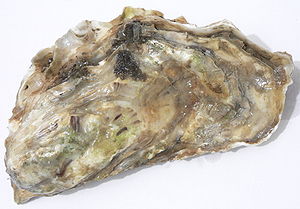
The Food and Drug Administration (FDA) yesterday urged people not to eat raw shellfish to avoid food poisoning, such as norovirus infection, as several recently reported cases of food poisoning were all caused by eating raw shellfish.

Raw shellfish, including raw clams and oysters, can easily be contaminated by norovirus or Vibrio parahaemolyticus in their growing environment, the agency said, adding that norovirus is one of the most common viruses that cause viral gastroenteritis.

Research -Strain-Specific Survival of Salmonella enterica in Peanut Oil, Peanut Shell, and Chia Seeds

ingentaconnect chia_seeds_212882

In North America, outbreaks of Salmonella have been linked to low–water activity (aw) foods, such as nuts and seeds. These outbreaks have implicated an assortment of Salmonella serotypes. Some Salmonella serotypes (e.g., Enteritidis and Typhimurium) cause high proportions of salmonellosis. Nevertheless, there has recently been an emergence of uncommon Salmonella serotypes and strains (e.g., Tennessee, Hartford, and Thompson) in low-aw foods. The aim of this study was to evaluate the survival characteristics of Salmonella serotypes Enteritidis, Typhimurium, Tennessee, Hartford, and Thompson in three low-aw food ingredients with varying aw: peanut oil (aw = 0.521 ± 0.003), peanut shell (aw = 0.321 ± 0.20), and chia seeds (aw = 0.585 ± 0.003). The survival of individual Salmonella strains on each food matrix was monitored for a maximum of 150 days by spreading the bacterial cells onto Luria-Bertani and/or xylose lysine deoxycholate agar. Overall, Salmonella survived for the longest periods of time in peanut oil (96 ± 8 days), followed by chia seeds (94 ± 46 days). The survival period was substantially reduced on the surface of peanut shell (42 ± 49 h), although PCR after 70 days of incubation revealed the presence of Salmonella cells. In addition, Salmonella exhibited a strain-specific response in the three low-aw foods tested. Salmonella Hartford was identified as highly persistent in all low-aw food matrices, whereas Salmonella Typhimurium was the least persistent. The current research emphasizes the adaptable nature of Salmonella to low-aw food ingredients. This may pose additional problems owing to the downstream production of various end products. Additionally, unique survival characteristics among Salmonella strains highlight the need for tailored mitigation strategies regarding high-risk Salmonella strains in the food industry.

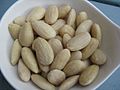
Research -Efficacy of Traditional Almond Decontamination Treatments and Electron Beam Irradiation against Heat-Resistant Salmonella Strains

ingenta connect Almonds

Two outbreaks of salmonellosis were linked to the consumption of raw almonds from California in 2001 and 2004. As a result, federal regulations were developed, which mandate that all almonds grown in California must be treated with a process that results in a 4-log reduction of Salmonella. Because most of the technologies approved to treat almonds rely on the application of heat to control Salmonella, an evaluation of alternative technologies for inactivating heat-resistant Salmonella Enteritidis PT30 and Salmonella Senftenberg 775W was needed. In this study, almonds were inoculated with Salmonella Enteritidis PT30 and Salmonella Senftenberg 775W and then treated with an electron beam (e-beam) or by blanching or oil roasting. The irradiation D 10-values for Salmonella Enteritidis PT30 and Salmonella Senftenberg 775W treated with e-beam were 0.90 and 0.72 kGy, respectively. For heat treatments, thermal D 10-values for Salmonella Enteritidis PT30 and Salmonella Senftenberg 775W strains were 15.6 and 12.4 s, respectively, when subjected to blanching at 88°C and 13.2 and 10.9 s, respectively, when roasted in oil at 127 ± 2°C. No significant differences in irradiation and thermal treatment results were observed between Salmonella Enteritidis PT30 and Salmonella Senftenberg 775W (P > 0.05), indicating that e-beam irradiation may be a feasible technology for reducing Salmonella in almonds. However, the sensory changes resulting from irradiating at the doses used in this study must be evaluated before e-beam irradiation can be used as a nonthermal alternative for decontamination of almonds.

Sweden -Swedish Supermarket Recalls Meat after Salmonella S

The Local

Swedish supermarket recalls meat after salmonella scare

The supermarket chain has announced that 13 different products are affected by the scare.

These include mince from ICA’s Basic and Import ranges which is sold in a variety of sizes and comes from Ireland, Sweden and Denmark.

The company said in a statement that it had taken the meat off shelves across the country after discovering salmonella during a routine check.

Salmonella can lead to diarrhoea, fever, stomach cramps and cause people to throw up. However most people affected recover without needing medical treatment.

ISN News

Swedish supermarket ICA Group which has almost 2000 stores across Sweden announced the recall of meat following salmonella threats. If you’ve bought minced beef or pork from ICA range since February 28th you should not eat the produce. The supermarket chain has announced that 13 different products are affected by the scare. The batches of meat which are at risk of carrying salmonella are understood to have expiration dates of between March 6th and March 10th.