Category Archives: Uncategorized

USA -Texas Star Nut & Food Company is Expanding the Recall on Natural Pistachio Kernels and Products Containing Pistachio Kernels, Which Were Previously Voluntarily Recalled Due To Possible Salmonella Contamination

FDA

Texas Star Nut & Food Company expands the previous Recall issued on March 10, 2016, to include the following items and Best by Dates:

BRAND DESCRIPTION SIZE UPC BEST BY DATES
Fresh Choice Survivor Mix 4.75oz 0-39759-17030-6 9/11/2016 – 1/13/2017
Southern Grove Survival Mix 10oz 0-41498-21118-9 8/27/2016 – 2/2/2017
Southern Grove Go Raw 8oz 0-41498-21123-3 8/17/2016 – 9/14/2016
Nature’s Eats Natural Pistachios 8oz 8-32112-00271-5 8/3/2016 – 1/14/2017
Nature’s Eats Survivor Mix 10oz 8-32112-00345-3 9/3/2016 – 1/18/2017
Nature’s Eats Hill Country Ramblin’ 15oz 8-32112-00364-4 8/14/2016 – 2/1/2017
Nature’s Eats Austin’s Nutty All-Terrain 12oz 8-32112-00371-2 8/21/2016 – 1/28/2017
Nature’s Eats Almond & Pistachio Duo 6oz 8-32112-00380-4 9/8/2016 – 2/8/2017
Nature’s Eats Simply Go Raw 8oz 8-32112-00383-5 8/13/2016 -1/25/2017

The product has the potential to be contaminated with Salmonella, an organism which can cause serious and sometimes fatal infections in young children, frail or elderly people, and others with weakened immune systems. Healthy persons infected with Salmonella often experience fever, diarrhea (which may be bloody), nausea, vomiting and abdominal pain. In rare circumstances, infection with Salmonella can result in the organism getting into the bloodstream and producing more severe illnesses such as arterial infections (i.e., infected aneurysms), endocarditis and arthritis.

No illnesses have been reported in relation to this product at this time.


Research -Network of germ sleuths heads off nearly 276,000 foodborne illnesses a year

Food Poisoning Journal iStock_000008493122Small

An elderly woman in Phoenix. A Toledo toddler. An accountant in Indianapolis. All poisoned by food. Quickly uncovering that their illnesses are connected can make all the difference in halting a deadly outbreak.

About 276,000 cases of foodborne illness are avoided each year because of PulseNet, a 20-year-old network coordinated by the Centers for Disease Control and Prevention, new research has found. PulseNet links U.S. public health laboratories so that they can speedily share details about E. coli, Salmonella and other bacterial illnesses.

The averted illnesses translate to $507 million in annual savings on medical bills and lost productivity, according to a study led by Robert L. Scharff of The Ohio State University and Craig Hedberg of the University of Minnesota.

India -Food safety regulator FSSAI has launched a mobile app

DNA

Food safety regulator FSSAI has launched a mobile app through which consumers can raise their concerns related to quality of packaged food and the food served in ready-to-eat outlets.

Since most of the times the form of food consumed is either packed or serviced, the app provides food safety tips and food safety laws as prescribed by the regulator through its regulations, says the description of the mobile app launched by FSSAI.

App Link

Research -World-first for macadamia nut treatment

ABC News

A macadamia processing plant near Lismore has cracked a world-first for nut treatment.

The pasteurisation machine at the Alphadale company MPC reduces levels of micro-organisms through non-chemical methods.

“The pasteuriser treats food in a way that reduces the levels of potentially pathogenic micro-organisms that may be present,” general manager of MPC, Stephen Lee, said.

Research -Bacterial biofilms in hospital water pipes may show pathogenic properties

Science Daily

The human microbiome, a diverse collection of microorganisms living inside us and on our skin, has attracted considerable attention for its role in a broad range of human health issues. Now, researchers are discovering that the built environment also has a microbiome, which includes a community of potentially-pathogenic bacteria living inside water supply pipes.

A paper published March 11 in the journal Applied and Environmental Microbiology describes microbial communities found in shower hoses at a major U.S. hospital. The study documented bacteria — and related genes — using cutting-edge metagenomic techniques that allow the characterization of organisms that cannot be detected using traditional culture-based microbiology assays.

Researchers from the U.S. Environmental Protection Agency and the Georgia Institute of Technology collaborated to study these biofilm communities, but can’t say yet if these bacteria pose a threat to hospital patients. But because some of the genes could indicate pathogenic characteristics — such as resistance to antibiotics — the researchers want to learn more about the potential health implications, and whether other buildings house similar biofilms. Antibiotic resistance is a public health emerging priority identified by the World Health Organization, which in 2015 released a global action plan to address the problem.

“We can say confidently that if pathogens are in there, they are not there in very high abundance,” said Kostas Konstantinidis, an associate professor in the School of Civil and Environmental Engineering at Georgia Tech. “But the organisms that we detected as abundant in these biofilms appear to have characteristics that could be of interest because they are related to some bacteria that are opportunistic pathogens that could pose a threat, especially to immunocompromised hospital patients”

The study began by culturing bacteria from 40 shower hoses removed from individual hospital rooms by EPA researchers. Nucleic acid was extracted from five of the shower hoses and processed using next-generation sequencing technology. The sequencing data was sent to Georgia Tech, where doctoral student Maria Juliana Soto-Girón matched the sequences against known bacteria — and genes that have known effects, such as virulence and antibiotic resistance.

The microbiome study found an abundant population of bacteria that the researchers believe are novel “Mycobacterium-like” species not described previously, closely related to Mycobacterium rhodesiae and Mycobacterium tusciae. Traditional culture-based methods instead identified organisms affiliated with Proteobacteria — such as members of the genera Sphingomonas, Blastomonas and Porphyrobacter — as the most abundant.

The biofilm communities harbored genes related to disinfectant tolerance, which constituted 2.3 percent of the total annotated proteins — and a lower abundance of virulence determinants related to colonization and evasion of the host immune system. Additionally, genes potentially conferring resistance to beta-lactam, aminoglycoside, amphenicol and quinolone antibiotics were identified. The frequency of these genes was higher than the frequency found in Lake Lanier, a natural freshwater ecosystem that has been studied by the Georgia Tech research team, suggesting that the drinking water pipe environments merit closer attention.

The research grew out of an EPA research project to understand the issues of drinking water systems and building microbiomes — the collection of microbes found in such structures. While biofilms are common in building water pipes, this study generated the most metagenomic data so far for the organisms living in these water systems. Additionally, the researchers analyzed 94 partial genomes of isolated biofilm bacteria, including some that had not been reported before, though they are related to previously-characterized microorganisms.

Though well-known pathogens weren’t seen in abundance, the presence of genes for antibiotic resistance, resistance to water disinfectants and virulence raises concerns because bacteria can share such genes to potentially become more significant health threats.

“If they have a core of genes, they may be receptive to acquiring other genes that will render these microorganisms more problematic,” said Jorge Santo Domingo, a microbial ecologist with the EPA’s Office of Research and Development in Cincinnati. “These organisms are very good at living in difficult environmental conditions with limited carbon sources, so fighting them could become a challenging proposition. We don’t know if they constitute a problem, but we certainly want to find out.”

The analysis of material taken from the shower hoses is only a preliminary study, and much more research will be needed. Santo Domingo compared the findings to a “check engine” light in an automobile. The warning doesn’t necessarily indicate an immediate problem, though it does show that attention — and potential action — may be required.

“Some of the identified genes are the kind that we’d want to keep an eye on,” he explained. “We would like to conduct more studies to gather data on the dynamics of these bacterial groups, but the fact that these genes are present indicates that more studies should be done.”

The potential clinical significance of the bacteria needs to studied, and any public health impacts understood, he added. Other questions include whether similar biofilms would be found in other hospitals, whether biofilms differ among facilities, how monitoring should be done — and whether shower heads and hoses should be replaced on a regular basis.

The work could also provide a foundation for new research into the types of water disinfection used in hospitals. The chlorine compounds used in public drinking water may not provide sufficient protection for water supplies in these facilities. The sequencing data and bioinformatics analyses will help identify genetic markers that could be used to monitor these genes and determine their public health relevance.

While Konstantinidis and his research group have been studying microbes in natural ecosystems such as Lake Lanier in Georgia, this represents their first metagenome analysis of microbial communities in the built environment. They are hopeful that the technique, which is still in the research and development stage, can help understand issues involving microbial populations and their virulence potential in buildings where humans spend most of their time.

“Metagenomics gives you a more complete and quantitative picture of what microorganisms are there and how abundant they are,” he said. “This shows that traditional culture methods are limited in what they can detect, and that they can often provide a biased look at what is there.”

In addition to those already mentioned, the paper’s authors included Luis Rodriguez and Chengwei Luo from Georgia Tech, Michael Elk and Hodon Ryu from Pegasus, Inc., and Jill Hoelle from the EPA.


Australia -Food poisoning linked to Enlighten Night Noodle Markets stall

The Canberra Times

Another two people reported cases of food poisoning on Saturday possibly linked to the Enlighten Night Noodle Markets, ACT Health said.

A Health spokesman said the people, one who attended the markets on Thursday night and one on Friday, had shown the same symptoms of diarrhoea as the several cases who raised food poisoning on Friday.

The spokeswoman said the usual testing would be done with the two people, with test results from all reported cases expected back by mid-week.

Environmental Health Officers were inspecting the markets on Saturday night.


UK -600 pupils absent as Oakfield Community Primary School struck down by Norovirus

Kent Online Norwalk_Caspid

More than 600 pupils have been kept at home today after a sickness bug broke out at Oakfield Community Primary School in Dartford.

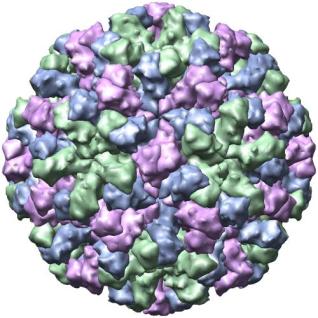
The school has been struck by the norovirus, which causes severe vomiting and diarrohoea, leaving more than 85% of the school’s 700 pupils at home. More than 100 children fell ill.

Parents were encouraged to keep their children at home today and the school will be subject to a deep clean over the weekend.


Australia -Just Entrees Pty Ltd, pates UPDATE – Listeria monocytogenes

FSANZ

The NSW Food Authority advises:

Just Entrees has recalled its Just Entrees Australia pates from Coles, IGA and independent stores in NSW, ACT, QLD, VIC, TAS and NT due to listeria monocytogenes contamination.

Details are:

  • Just Entrees Australia Brandy Port and Sage Pate 125g, 1kg
  • Just Entrees Australia Cracked Pepper Pate 125g, 1kg
  • Just Entrees Australia Chicken Liver Pate 125g, 1kg
  • Chicken Liver Pate blister pack 120g
  • Brandy Port & Sage blister pack 120g
  • Cracked Pepper blister pack 120g
  • Orange Cognac blister pack 120g
  • Duckling with Brandied Apricot blister pack 120g, 1kg

Date marking: Use By up to and including 13/5/2016

Listeria may cause illness in pregnant women and their unborn babies, the elderly and people with low immune systems. Consumers should not eat these products.

Any consumers concerned about their health should seek medical advice.

The products can be returned to the place of purchase for a full refund.

For more information contact Just Entrees Pty Ltd on 03 9758 3135

www.justentrees.com.au

USA -Awareness Voluntary Recalls Boost Tea Due To Possible Salmonella Contamination

FDA

Awareness Corp. of Mesa, AZ, is recalling its 7.4 ounce container of Boost Tea because it may be contaminated with Salmonella, an organism which can cause serious and sometimes fatal infections in young children, frail or elderly people, and others with weakened immune systems. Healthy persons infected with Salmonella often experience fever, diarrhea, nausea, vomiting and abdominal pain. In rare circumstances, infection with Salmonella can result in the organism getting into the bloodstream area and producing more severe illnesses such as arterial infections, endocarditis and arthritis.

NO ILLNESSES HAVE BEEN REPORTED IN CONNECTION WITH THIS VOLUNTARY RECALL.


USA -Recalls Whole Milk Yogurt and Low Fat Yogurt Because of a Possible Health Risk Due To Incomplete Pasteurization

FDA

Inadequate pasteurization may allow for the survival of pathogens, which may cause serious or fatal infections after consumption. No illnesses have been reported to date.

Yogurt products were distributed to retail stores in Central New Jersey. JRZ Dairy, Inc., in collaboration with Pure Dairy Products, is currently taking action to recover these items from retail stores.

JRZ DAIRY, INC., SELINSGROVE, PA. 17870 is recalling the following:

Brand Size Type Sell By Dist. By
Puredesi 2# Low Fat Yogurt 5/12/16 Pure Dairy Products
Puredahi 2# Low Fat Yogurt 5/12/16 Pure Dairy Products
Puredesi 5# Low Fat Yogurt 5/12/16 Pure Dairy Products
Puredesi 5# Whole Milk Yogurt 5/8/16 Pure Dairy Products
Patidar 5# Whole Milk Yogurt 5/8/16 Pure Dairy Products
Puredesi 5# Whole Milk Yogurt 5/8/16 Pure Dairy Products

The problem was discovered upon review of process charts. Though process temperatures exceeded required minimum temperatures, required minimum process time was not met.

Consumers should return any of the aforementioned products to the place of purchase for a full refund or exchange. For further information contact Pure Dairy Products by phone at: 630-337-0914 M- Fri. 9 a.m. to 5 p.m. or email puredairyproducts@gmail.com

This recall is being conducted with the knowledge of the Food & Drug Administration