Category Archives: Uncategorized

RASFF Alerts – STEC E.coli -Sheeps Milk Cheese

RASFFa

RASFF-shigatoxin-producing Escherichia coli (presumptive O26 vtx1+, vtx2+, eae+) in sheep milk cheese from Romania in Italy

RASFF Alerts – E.coli -Praew Leaves – Mussels

RASFFa

RASFF-too high count of Escherichia coli (840 CFU/g) in praew leaves (Vietnamese coriander) from Laos in the UK

RASFF-too high count of Escherichia coli (330 MPN/100g) in live mussels (Mytilus galloprovincialis) from Spain in Italy

RASFF Alerts – Listeria monocytogenes – Raw Milk Cheese – Sliced Cheese – Raw Meat

RASFFa

RASFF-Listeria monocytogenes (<10 CFU/g) in raw milk cheese from France in France

RASFF-Listeria monocytogenes (>3000 CFU/g) in raw meat spread from the Netherlands in the Netherlands

RASFF-Listeria monocytogenes (presence /25g) in sliced cheese from France in Germany

RASFF Alert – Norovirus -Oysters

RASFFa

RASFF-norovirus (presence) in live oysters (Crassostrea gigas) from France in Italy

RASFF Alert – Ochratoxin -Crispbread with Rye

RASFFa

RASFF – ochratoxin A (7.2; 6.1; 25; 58; 66 µg/kg – ppb) in crispbread with rye from Germany in Switzerland

RASFF Alerts – Aflatoxin -Groundnuts – Hazlenuts – Dried Figs -Ginger Powder

RASFFa

RASFF-aflatoxins (B1 = 2.9 / B1 = 3.07 µg/kg – ppb) in groundnuts kernels from Argentina in Poland

RASFF-aflatoxins (B1 = 5.81; Tot. = 14.77 µg/kg – ppb) in chopped roasted hazelnut kernels from Turkey in Germany

RASFF-aflatoxins (B1 = 89; Tot. = 105 µg/kg – ppb) in hazelnut kernels from Azerbaijan in Germany

RASFF-aflatoxins (B1 = 48; Tot. = 61 / B1 = 74; Tot. = 87 µg/kg – ppb) in organic groundnut kernels from China in the Netherlands

RASFF-aflatoxins (B1 = 35 µg/kg – ppb) in dried figs with flour from Spain in Portugal

RASFF-aflatoxins (B1 = 3.7; Tot. = 14 µg/kg – ppb) in groundnuts from Argentina in the Netherlands

RASFF-aflatoxins (B1 = 29; Tot. = 35 µg/kg – ppb) in blanched groundnut kernels from China in the Netherlands

RASFF-aflatoxins (B1 = 6.7; Tot. = 21.1 µg/kg – ppb) in fine hazelnut crunch from Belgium, with raw material from Turkey  in Belgium

RASFF-aflatoxins (B1 = 7.7; Tot. = 16.7 µg/kg – ppb) in ginger powder from France in Portugal

RASFF-aflatoxins (B1 = 11; Tot. = 15 µg/kg – ppb) in roasted hazelnut meal from Turkey in Sweden

RASFF Alerts – Animal Feed – Salmonella – Maize Gluten – Fish Meal – Ovine Meal

RASFFa

RASFF-Salmonella Rissen (presence /25g) in maize gluten feed from Austria in Austria

RASFF-Salmonella Salamae (presence /25g) in fish meal from Morocco  in Latvia

RASFF-Salmonella (presence /25g) in ovine meal from New Zealand in the Netherlands

Research -Lasers help speed up the detection of bacterial growth in packaged food

Phys.Org

It’s important to know how microorganisms—particularly pathogenic microbes—grow under various conditions. Certain bacteria can cause food poisoning when eaten and bacterial growth in medical blood supplies, while rare, might necessitate discarding the blood.

Now a group of researchers from Zhejiang Normal University in China and Umeå University in Sweden report a fast, accurate, and noninvasive technique for monitoring bacterial growth. They report the results in Applied Optics.

Several detection techniques are currently capable of rapid and accurate measurements of gas compositions. Those based on optical spectrometry are most appealing because they’re noninvasive, boast high sensitivity, provide instant responses, and are potentially useful for assessment of bacterial growth.

“A technique referred to as ‘tunable diode laser absorption spectroscopy’ (TDLAS) is particularly suitable because it combines all of these properties with an ease of use and low cost,” Shao said.


Information – USA -Stricter Pathogen Limits Imminent for Poultry – Salmonella – Campylobacter

AVMA Campylobacter

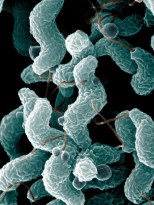
Most chicken products and some turkey products will need to meet stricter standards on Salmonella and Campylobacter contamination starting in May.

New federal standards governing chicken pieces and ground chicken and turkey are expected to prevent about 50,000 illnesses yearly. In implementing the new standards, federal food safety authorities plan to disclose to the public more information on how well individual poultry processors meet the pathogen reduction standards, according to a Federal Register notice published Feb. 11.

The Department of Agriculture’s Food Safety and Inspection Service will, effective May 11, start evaluating whether poultry producers meet the new standards for controlling contamination in chicken pieces and ground chicken and turkey products. By setting the new limits on acceptable amounts of contamination, the agency intends for poultry producers to improve sanitation and other interventions enough to prevent about 43,000 illnesses connected with chicken parts, 4,000 with ground chicken, and 3,000 with ground turkey.

Those figures would represent a 30 percent decline in salmonellosis, a 32 percent decline in Campylobacter-related illnesses connected with the chicken products, and—because Campylobacter prevalence already is low in turkey—a 19 percent decline in Campylobacter-related illnesses associated with ground turkey.

The standards on chicken parts alone will affect about two-thirds of the poultry sold in the U.S., according to USDA data


Sweden -Stores Take Mince Off Shelves After Second Salmonella Scare

The Local E.coli O157:H7

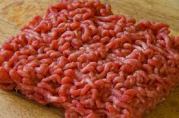
Several of Sweden’s leading food chains have recalled veal mince following the second scandal this month involving supermarket meat.

Axfood, the company which owns Willys and Hemköp said on Thursday that it was taking veal mincemeat with the Garant label off shelves around the country.