Category Archives: Uncategorized

Germany – Semi-hard cheese: “house brand wild garlic”, “house brand Italian herbs”, “house brand basil” – STEC E.coli

LMW

Alert type:

Groceries

Date of first publication:

September 26, 2023

Product name:

Semi-hard cheese: “house brand wild garlic”, “house brand Italian herbs”, “house brand basil”

Manufacturer (distributor):

Achim Uhl Mobile cheese dairy Hartensteiner Straße 105 OT Oberdorf 09366 Stollberg DE SN 10682 EG

Reason for warning:

The above-mentioned products are classified as harmful to health due to the detection of verotoxin-producing Escherichia coli in the brine and lubricating water used for production.

Packaging Unit:

1.7 – 2 kg/piece, 5 – 6 kg/piece (large)

Durability:

House brand wild garlic: October 1st, 2023/ October 5th, 2023/ October 7th/ October 8th, 2023, October 12th, 2023, October 19th, 2023, October 22nd, 2023; House brand wild garlic (large): October 12/13, 2023; House brand Italian herbs: October 1st, 2023/ October 5th/ October 6th/ October 7th, 2023/ October 12th, 2023/ October 14th, 2023/ October 19th, 2023/ October 22nd, 2023; House brand Italian herbs (large): October 6th, 2023; House brand Basil: October 12, 2023.

Additional Information:

An illness with verotoxin-producing Escherichia coli usually manifests itself within a week of infection with diarrhea and abdominal cramps. In particular, infants, small children, seniors and people with weakened immune systems can develop more severe illnesses with bloody diarrhea. Rarely, especially in small children, acute kidney failure can occur in a second attack a few days after the onset of diarrhea. People who have eaten this food and develop severe or persistent symptoms should seek medical attention and report a possible EHEC infection. 

The above-mentioned cheeses may also have been sold differently from the manufacturer by other distributors (possibly partly direct marketers) and possibly also with different cheese names, so that identification should be carried out in particular using the identification mark (DE SN 10682 EG), or this can be done by the be asked from sellers.

Customers should definitely pay attention to the recall and not consume the affected products.
USA – Blue Ridge Rock Festival with a side of E. coli

Food Poison Journal

Abbie Coleman from WSLS report that The Virginia Department of Health is investigating complaints of gastrointestinal illness in people who attended the Blue Ridge Rock Festival.
10 News has spoken with several attendees who say they became sick after going to the festival, including one woman who said she tested positive for something she never expected.

USA – Dozens more sick in Salmonella outbreak linked to Chicago taqueria

Food Safety News

At least 55 people are sick with Salmonella infections after eating food from a Chicago taqueria. Initial reports said 20 people were sick, with ten people hospitalized.

The Chicago Department of Public Health and the Illinois Department of Public Health are investigating the outbreak. The agencies reported that Carniceria Guanajuato voluntarily closed the taqueria on Sept. 8, 2023. The operator is cooperating with health officials to find the source of the Salmonella.

The strain of Salmonella involved is particularly virulent, or the contaminated foods had large amounts of the pathogen because of the high hospitalization rate.

Public health officials are asking people who ate at the taqueria and became ill to seek medical treatment and ask for Salmonella testing. Salmonella infections can mimic other illnesses.

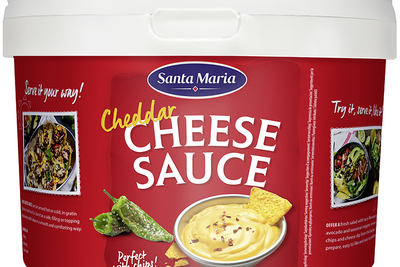
Austria -Santa Maria Cheddar Cheese Sauce 3kg – Possible Microbiological Contamination

AGES

As part of internal quality controls, bacteria were detected in the designated batch of the product “Santa Maria Cheddar Cheese Sauce 3kg”.

There is therefore the possibility of microbiological contamination in individual packages of the product. For reasons of precautionary consumer protection, Maresi Austria is recalling this item. Health impairments cannot be ruled out 100 percent. We therefore advise against consuming the following product.

Santa Maria Cheddar Cheese Sauce 3kg

Batch number: 2329020

Best before date: June 7th, 2024

GTIN: 7311312007759

Products with the best before date mentioned above can be returned to the stores where they were purchased. Customers will receive a refund of the purchase price even without proof of purchase. This warning does not indicate that the hazard was caused by the producer, manufacturer, importer or distributor.

Other Santa Maria batches and products are not affected and can be consumed safely.

For more information, a Maresi hotline has been set up on +43 664 45 63 206 .

Original recall

Food Safety News writer recognized among top 40 Food Safety Professionals Under 40

Food Safety News

The Alliance to Stop Foodborne Illness has announced its list of the Top 40 Food Safety Professionals Under 40, spotlighting young leaders making significant contributions to the field of food safety. Among the honorees is Joe Whitworth, a writer at Food Safety News.

Congratulations Joe, keep up the good work.

Research – Minimally Processed Vegetables in Brazil: An Overview of Marketing, Processing, and Microbiological Aspects

MDPI

Abstract

The global demand for minimally processed vegetables (MPVs) has grown, driven by changes in the population’s lifestyle. MPVs are fresh vegetables that undergo several processing steps, resulting in ready-to-eat products, providing convenience for consumers and food companies. Among the processing steps, washing–disinfection plays an important role in reducing the microbial load and eliminating pathogens that may be present. However, poor hygiene practices can jeopardize the microbiological quality and safety of these products, thereby posing potential risks to consumer health. This study provides an overview of minimally processed vegetables (MPVs), with a specific focus on the Brazilian market. It includes information on the pricing of fresh vegetables and MPVs, as well as an examination of the various processing steps involved, and the microbiological aspects associated with MPVs. Data on the occurrence of hygiene indicators and pathogenic microorganisms in these products are presented. The focus of most studies has been on the detection of Escherichia coliSalmonella spp., and Listeria monocytogenes, with prevalence rates ranging from 0.7% to 100%, 0.6% to 26.7%, and 0.2% to 33.3%, respectively. Foodborne outbreaks associated with the consumption of fresh vegetables in Brazil between 2000 and 2021 were also addressed. Although there is no information about whether these vegetables were consumed as fresh vegetables or MPVs, these data highlight the need for control measures to guarantee products with quality and safety to consumers.

Israel – Webinar, the Council for Research in Biological Pathogens 10/24/2023 – 

GovIL

You are invited to participate in an online seminar (webinar) on the topic: What will be the source of the next epidemic? Zoonoses and the factors driving their decline organized by the Council for Research in Biological Pathogens and the Office of the Chief Scientist, Ministry of Health.

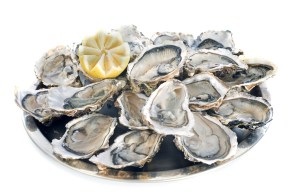
USA – FDA Advises Restaurants and Retailers Not to Serve or Sell and Consumers Not to Eat Certain Potentially Contaminated Oysters from an Approved Area in Groton, Connecticut

FDA

Product

Oysters from Groton Approved area in Connecticut harvested from 8/28/2023 through 8/30/2023 from dealers CT-393-SS, AQ, CT-004-SS, AQ, and CT-020-SS, AQ with lots, L-30 and L-26B1.

Purpose

The US Food and Drug Administration (FDA) is advising consumers not to eat, and restaurants and food retailers not to sell, and to dispose of oysters harvested from Groton Approved area in Connecticut from 8/28/2023 through 8/30/2023 from dealers CT-393-SS, AQ, CT-004-SS, AQ, and CT-020-SS, AQ with lots, L-30 and L-26B1 due to sample results showing potential contamination. Oysters were directly distributed to retailers and distributors in CT, MA, NY, PA, and VA. Oysters may have been distributed further from these states.

Contaminated oysters can cause illness, especially if eaten raw, particularly in people with compromised immune systems. Food contaminated with pathogens may look, smell, and taste normal. Consumers of these products who are experiencing food poisoning symptoms such as diarrhea, stomach pain or cramps, nausea, vomiting, or fever should contact their healthcare provider, who should report their symptoms to their local Health Department.

Symptoms of Food Poisoning

People can get sick with food poisoning after ingesting certain pathogens, like Salmonella or E. coli. Symptoms may vary, depending on the pathogen and can range from mild to serious. The most common symptoms of food poisoning are diarrhea, stomach pain or cramps, nausea, vomiting, and fever. Symptoms may start within a few hours or may take a few days and can last for a few hours or several days.

Research – FDA Signs Partnership with Ecuador to Enhance Safety of Shrimp Imports

FDA

Constituent Update

August 25, 2023

Yesterday, the U.S. Food and Drug Administration (FDA) signed a Regulatory Partnership Arrangement (RPA) with Ecuador’s seafood regulatory authority to strengthen food safety in shrimp intended for the U.S. market. Shrimp is the most consumed seafood in the United States, the vast majority of which is imported. Ecuador is one of the leading exporters of aquacultured shrimp to the United States.

The first of its kind, this regulatory partnership serves as an arrangement between the FDA and the Vice Ministry of Aquaculture and Fisheries (VMAF) to work more closely to reinforce food safety practices along the entire supply chain. Such arrangements aim to leverage commodity-specific oversight systems — in this case, involving imported aquacultured shrimp — along with data and information, to strengthen food safety before and at the port of entry.

In preparing for the RPA with Ecuador, in August 2022, the FDA and VMAF signed a confidentiality commitment (CC) that allows for the exchange of confidential information, including inspection records, sample findings, and other non-public documents.

In addition, the FDA did a rigorous assessment of the strength of Ecuador’s aquacultured seafood safety system and examined important parts of VMAF’s programs and capabilities.

If a Fly Lands in Your Drink, Should You Still Drink It?

Science Alert

Despite their salubrious sounding name, fruit flies (Drosophila species),
eat food that is decaying. They inhabit rubbish bins, compost heaps or any place where food is present, including drains. Rotting food is rich in germs, any of which a fly can pick up on their body and transfer to where it next lands.

These bacteria include E coliListeriaShigella, and Salmonella, any of which can cause a potentially serious infection in even healthy people. The fruit fly, you realise, may have just deposited potentially lethal microbes in your wine, so you toss it in the sink and pour a fresh glass.

However, the scientific evidence suggests you may have just wasted a good glass of wine. Wine has typically between 8 percent and 14 percent ethanol and has a pH of around 4 or 5 – a pH below 7 is considered acidic.

Alcohol is well known to be inhibitory to germs and is one reason wine can be stored for so long. Several laboratory studies have also shown that the combined effects of wine alcohol and organic acids, such as malic acid, can prevent the growth of E coli and Salmonella.