Category Archives: Uncategorized

Research – Shigellosis: high rates of antibiotic resistance necessitate new treatment recommendations

Medical Journal of Australia 220px-Shigella_stool

Shigella species cause a potentially severe diarrhoeal illness that is frequently travel-associated and is both foodborne and sexually acquired. There is evidence of increasing antibiotic resistance in Shigella isolates from international studies.1,2 However, there is limited published research on this issue in an Australian context.

Research -Food Safety Impacts from Post-Harvest Processing Procedures of Molluscan Shellfish

Foods Marlith

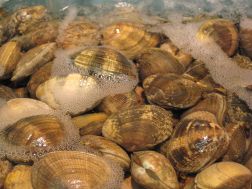
Post-harvest Processing (PHP) methods are viable food processing methods employed to reduce human pathogens in molluscan shellfish that would normally be consumed raw, such as raw oysters on the half-shell. Efficacy of human pathogen reduction associated with PHP varies with respect to time, temperature, salinity, pressure, and process exposure. Regulatory requirements and PHP molluscan shellfish quality implications are major considerations for PHP usage. Food safety impacts associated with PHP of molluscan shellfish vary in their efficacy and may have synergistic outcomes when combined. Further research for many PHP methods are necessary and emerging PHP methods that result in minimal quality loss and effective human pathogen reduction should be explored.


Malta – Ground Black Pepper Recall -Salmonella saphra

TVM

Italpepe Brand Ground Black Pepper recall Salmonella


UK -UK public makes food hygiene number one priority when eating out

Check It

UK public makes food hygiene number one priority when eating out
75% of diners refuse to visit restaurants that have experienced food hygiene issues; would rather suffer poor service than unclean premises or low food ratings

Cambridge, 27 April 2016 –UK consumers are united in not tolerating poor food hygiene ratings and simply won’t visit places that have had food safety issues, no matter what type of restaurant they are. 61% won’t eat at a restaurant, takeaway, coffee shop or pub that has a low Food Standards Agency (FSA) Food Hygiene Rating while three quarters (75%) said they wouldn’t risk dining at a restaurant that had been implicated in a food hygiene incident, even if recommended by someone that they trust.

Research -Evaluation of the potential for virus dispersal during hand drying: a comparison of three methods

Wiley Online Rotavirus

Aims

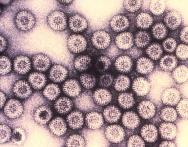
To use a MS2 bacteriophage model to compare three hand-drying methods, paper towels (PT), a warm air dryer (WAD) and a jet air dryer (JAD), for their potential to disperse viruses and contaminate the immediate environment during use.

Methods and Results

Participants washed their gloved hands with a suspension of MS2 bacteriophage and hands were dried with one of the three hand-drying devices. The quantity of MS2 present in the areas around each device was determined using a plaque assay. Samples were collected from plates containing the indicator strain, placed at varying heights and distances and also from the air. Over a height range of 0·15–1·65 m, the JAD dispersed an average of >60 and >1300-fold more plaque-forming units (PFU) compared to the WAD and PT (P < 0·0001), respectively. The JAD dispersed an average of >20 and >190-fold more PFU in total compared to WAD and PT at all distances tested up to 3 m (P < 0·01) respectively. Air samples collected around each device 15 min after use indicated that the JAD dispersed an average of >50 and >100-fold more PFU compared to the WAD and PT (P < 0·001), respectively.

Conclusions

Use of the JAD lead to significantly greater and further dispersal of MS2 bacteriophage from artificially contaminated hands when compared to the WAD and PT.

Significance and Impact of Study

The choice of hand-drying device should be considered carefully in areas where infection prevention concerns are paramount, such as healthcare settings and the food industry.

UK -Holiday Campylobacter Illness

Ripley and Heanor News Campylobacter

A Heanor holidaymaker is taking legal action against a travel company after he contracted food poisoning which turned birthday celebration into a “nightmare”.

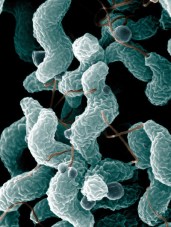
James Gratton, 51, and his wife Paula, 50 were staying in a four star hotel in Marrakech, Morocco when he ate incorrectly prepared poultry which gave him Campylobacter.


Australia -SA Health says not to eat raw bean sprouts after Salmonella outbreak

World News Report

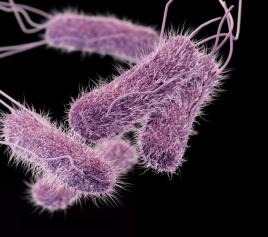
THE Department of Health in South Australia is warning SA residents not to eat raw bean sprouts following a big jump in the number of reported salmonella cases.

Over the past 11 days there have been 108 salmonella cases reported in South Australia, which normally sees around 15 to 20 cases each year.

Since the start of December, SA Health has been notified of 233 cases of salmonella. Of these 233 cases, 43 people have been hospitalised.

“Our investigations have indicated to us that it is likely that the consumption of raw bean

sprouts is contributing to this increase,” said SA Health’s chief public health officer, Professor Paddy Phillips.

Information -USDA – Microbiology Laboratory Guidebook

USDA

The Guidebook contains current protocols for analytical tests required by FSIS regulatory activities on meat, poultry and egg products. 1 Specifically, microbiological methods are presented for sample preparation, isolation and identification of the major foodborne pathogenic microorganisms and their toxins, meat tissue species identification, and the detection of antimicrobial residues. Appendices include a pathogen method summary chart, method flow charts, Media and Reagent formulations, and Most Probable Number Tables.

All methods are offered as PDF documents. If you require an alternative format, please contact:

Lead Microbiologist
Laboratory Quality Assurance Staff, USDA/FSIS/OPHS
950 College Station Road
Athens, GA 30605
Phone: (706) 546-3559

UK -FSA Campylobacter retail survey – update

Health Protection Scotland

Campylobacter is the most common cause of food poisoning in the UK and is frequently associated with raw chicken. Food Standards Scotland (FSS) works in partnership with the Food Standards Agency (FSA) to tackle Campylobacter, and has been publishing results from an FSA survey on the amounts of contamination on fresh chickens bought from shops and supermarkets across the UK. The way the FSA has conducted testing for Campylobacter in retail chicken (see Current note 50/0903 at http://www.hps.scot.nhs.uk/ewr/redirect.aspx?id=67125) has been to measure the amount of the bacteria on the neck skin – the most highly contaminated area of skin.

The survey was based on measuring the amount of bacteria on the neck skin of the chicken, which is the most heavily contaminated part of the bird. In the drive to reduce the levels of contamination, the industry has started to remove the neck skin from whole fresh chickens before they are placed on supermarket shelves. This is good news for the consumer but means that the FSA is unable to measure the levels of Campylobacter in the same way as before. It has therefore taken the decision to temporarily suspend the survey until a new protocol can be developed which provides a more consistent way of determining Campylobacter levels on retail chicken. It hopes to be able to restart sampling in the summer. Additionally, in the longer-term, the FSA will be asking industry to conduct its own testing and to publish results to an agreed set of FSA-prescribed and maintained standards.

Information -Get the Facts! Raw Pet Food Diets can be Dangerous to You and Your Pet

FDA Salmonellaa

In a two-year study spanning from October 2010 through July 2012, the FDA Center for Veterinary Medicine (CVM) screened over 1,000 samples of pet food for bacteria that can cause foodborne illnesses.1 (The illnesses are called “foodborne” because the bacteria are carried, or “borne,” in or on contaminated food.) The study showed that, compared to other types of pet food tested, raw pet food was more likely to be contaminated with disease-causing bacteria.