Category Archives: Uncategorized

Australia -Orgazmo Wood Smoked Sicilian Olives – Potential Microbial Contamination

NSW Government

The NSW Food Authority advises:

Orgazmo Smoked Foods has recalled its Wood Smoked Sicilian Olives from Farmers Markets in NSW due to potential microbial contamination.

Product details are:

  • Wood Smoked Sicilian Olives, 600g plastic container
  • Best Before 05 MAY 2017

Food products contaminated with pathogens may cause illness if consumed.

If you are concerned about your health, you should seek medical advice.

The product can be returned to the place of purchase for a full refund.

For more information contact Orgazmo Smoked Foods on 0425 213 330.

Scotland – Campylobacter Reduction

Food Safety News imagesCAYZ5I84

Both the number of raw chickens sold at retail showing campylobacter contamination and the number with the highest level of contamination are showing improvement, according to Food Standards Scotland (FSS).

Campylobacter remains the most common cause of food borne illness in throughout the United Kingdom, and FSS research has shown that a significant proportion of Scottish campylobacter cases are associated with a chicken source.

Scotland’s food safety agency is working in partnership with the Food Standards Agency (FSA) on the UK strategy to reduce campylobacter in chicken. The latest set of results have been published from FSA’s survey of campylobacter in fresh chicken sold at retail, and in the packaging.

Research -Evaluating the Performance of a New Model for Predicting the Growth of Clostridium perfringens in Cooked, Uncured Meat and Poultry Products under Isothermal, Heating, and Dynamically Cooling Conditions

Wiley Online

Abstract

Clostridium perfringens type A is a significant public health threat and its spores may germinate, outgrow, and multiply during cooling of cooked meats. This study applies a new C. perfringens growth model in the USDA Integrated Pathogen Modeling Program-Dynamic Prediction (IPMP Dynamic Prediction) Dynamic Prediction to predict the growth from spores of C. perfringens in cooked uncured meat and poultry products using isothermal, dynamic heating, and cooling data reported in the literature. The residual errors of predictions (observation–prediction) are analyzed, and the root-mean-square error (RMSE) calculated. For isothermal and heating profiles, each data point in growth curves is compared. The mean residual errors (MRE) of predictions range from –0.40 to 0.02 Log colony forming units (CFU)/g, with a RMSE of approximately 0.6 Log CFU/g. For cooling, the end point predictions are conservative in nature, with an MRE of –1.16 Log CFU/g for single-rate cooling and –0.66 Log CFU/g for dual-rate cooling. The RMSE is between 0.6 and 0.7 Log CFU/g. Compared with other models reported in the literature, this model makes more accurate and fail-safe predictions. For cooling, the percentage for accurate and fail-safe predictions is between 97.6% and 100%. Under criterion 1, the percentage of accurate predictions is 47.5% for single-rate cooling and 66.7% for dual-rate cooling, while the fail-dangerous predictions are between 0% and 2.4%. This study demonstrates that IPMP Dynamic Prediction can be used by food processors and regulatory agencies as a tool to predict the growth of C. perfringens in uncured cooked meats and evaluate the safety of cooked or heat-treated uncured meat and poultry products exposed to cooling deviations or to develop customized cooling schedules. This study also demonstrates the need for more accurate data collection during cooling.

Practical Application

Clostridium perfringens is a significant public health hazard, and can be found in many meat and poultry products regulated by the USDA Food Safety and Inspection Service. A predictive model is needed for the food industry and regulatory agencies to estimate the relative growth of C. perfringens in the event of cooling deviation. The predictive model in IPMP Dynamic Prediction provides significant higher accurate and fail-safe predictions. Its use can reduce foodborne infections caused by the growth of C. perfringens in meat and poultry products during cooling.

Research -Survival and Metabolic Activity of Listeria monocytogenes on Ready-to-Eat Roast Beef Stored at 4 °C

Wiley Online

Abstract

Three brands of commercial roast beef were purchased and artificially inoculated with a 5-strain Listeria monocytogenes cocktail at 2 inoculation levels (approximately 3 and 6 Log CFU/g). Although all 3 brands contained sodium diacetate and sodium lactate, inoculated Listeria cocktail survived for 16 d in all 3 brands; significant increases in L. monocytogenes numbers were seen on inoculated Brand B roast beef on days 12 and 16. Numbers of L. monocytogenes increased to 4.14 Log CFU/g for the 3 Log CFU/g inoculation level and increased to 7.99 Log CFU/g for the 6 Log CFU/g inoculation level by day 16, with the pH values being 5.4 and 5.8 respectively. To measure the cell viability in potential biofilms formed, an Alamar blue assay was conducted. Brand B meat homogenate had the highest metabolic activities (P < 0.05). By comparing its metabolic activities to Brands A and C and the inoculated autoclaved meat homogenates, results indicated that the microflora present in Brand B may be the reason for high metabolic activities. Based on the denaturing gradient gel electrophoresis and the Shannon–Wiener diversity index analysis, the “Brand” factor significantly impacted the diversity index (P = 0.012) and Brand B had the highest microflora diversity (Shannon index 1.636 ± 0.011). Based on this study, results showed that antimicrobials cannot completely inhibit the growth of L. monocytogenes in ready-to-eat roast beef. Native microflora (both diversity and abundance), together with product formula, pH, antimicrobial concentrations, and storage conditions may all impact the survival and growth of L. monocytogenes.

Practical Application

This study evaluated the survival and growth of Listeria monocytogenes artificially inoculated on ready-to-eat roast beef, investigated cell viability and metabolic activity in biofilm, and identified factors that may impact L. monocytogenes survival. In addition to previous literature, this study found that the diversity of native microflora in roast beef is another important factor that may impact the persistence of Listeria populations. The diversity and the abundance of the native microflora is a direct reflection of the manufacturing environment. This indicates that the control strategies taken by the ready-to-eat meat manufacturers have a direct impact on meat safety for the following storage and retail steps.


Canada – Listeria monocyotgenes – Sunflower Seeds

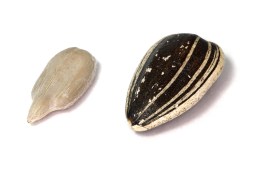
CFIA Sunflower_Seeds_Kaldari

Atkins Nutritionals Inc. is recalling Atkins brand bars containing sunflower seeds from the marketplace due to possible Listeria monocytogenes contamination.

CFIA

Bassé Frères Alimentation Oriental (2013) Inc. is recalling certain Bassé brand and certain President’s Choice brand products containing sunflower seeds from the marketplace due to possible Listeria monocytogenes contamination. Consumers should not consume and distributors, retailers and food service establishments such as hotels, restaurants, cafeterias, hospitals and nursing homes should not sell or use the recalled products described in  the link above.

CFIA

Kashi Company is recalling Kashi brand Trail Mix Whole Grain Bars from the marketplace due to possible Listeria monocytogenes contamination. Consumers should not consume the recalled products described in the link above.

Canada -Neilson brand Partly Skimmed Chocolate Milk recalled due to Listeria monocytogenes

CFIA

Ottawa, June 3, 2016 – Saputo Inc. is recalling Neilson brand Partly Skimmed Chocolate Milk from the marketplace due to possible Listeria monocytogenes contamination. Consumers should not consume the recalled product described below.

Recalled products

Brand Name Common Name Size Code(s) on Product UPC
Neilson Partly Skimmed Chocolate Milk, 1% m.f. 4 L Bag clip: 1590JN01H8
Inner bag: BB/MA JN 01 2016
0 66800 00047 3

USA -Butterfield Foods, LLC. Recalls Broccoli Salad Kit Products Due To Possible Listeria Contamination

FSIS

Butterfield Foods, LLC., a Noblesville, Ind. establishment, is recalling approximately 15,966 pounds of broccoli salad dressing product that may be adulterated with Listeria monocytogenes, the U.S. Department of Agriculture’s Food Safety and Inspection Service (FSIS) announced today.

The broccoli salad kit items were produced on various dates between Nov. 10, 2015 and May 25, 2016. The following product is subject to recall:  [View Label (PDF Only)]

  • 6-lb. cases containing two 3-lb packages of product labeled “Butterfield Foods Custom Food Production Broccoli Salad Kit” with a packaging date of 11/10/2015, bearing lot number 5314129,
  • 6-lb. cases containing two 3-lb packages of product labeled “Butterfield Foods Custom Food Production Broccoli Salad Kit” with a packaging date of 11/17/2015, bearing lot number 5321221,
  • 6-lb. cases containing two 3-lb packages of product labeled “Butterfield Foods Custom Food Production Broccoli Salad Kit” with a packaging date of 11/25/2015, bearing lot number 5328328,
  • 6-lb. cases containing two 3-lb packages of product labeled “Butterfield Foods Custom Food Production Broccoli Salad Kit” with a packaging date of 12/8/2015, bearing lot number 5342116,
  • 6-lb. cases containing two 3-lb packages of product labeled “Butterfield Foods Custom Food Production Broccoli Salad Kit” with a packaging date of 12/15/2015, bearing lot number 5349219,
  • 6-lb. cases containing two 3-lb packages  of product labeled “Butterfield Foods Custom Food Production Broccoli Salad Kit” with a packaging date of 12/23/2015, bearing lot number 5356297,
  • 6-lb. cases containing two 3-lb packages of product labeled “Butterfield Foods Custom Food Production Broccoli Salad Kit” with a packaging date of 12/31/2015, bearing lot number 5363410,
  • 6-lb. cases containing two 3-lb packages of product labeled “Butterfield Foods Custom Food Production Broccoli Salad Kit” with a packaging date of 2/2/2016, bearing lot number 6033071,
  • 6-lb. cases containing two 3-lb packages of product labeled “Butterfield Foods Custom Food Production Broccoli Salad Kit” with a packaging date of 2/9/2016, bearing lot number 6040142,
  • 6-lb. cases containing two 3-lb packages of product labeled “Butterfield Foods Custom Food Production Broccoli Salad Kit” with a packaging date of 2/16/2016, bearing lot number 6047305,
  • 6-lb. cases containing two 3-lb packages of product labeled “Butterfield Foods Custom Food Production Broccoli Salad Kit” with a packaging date of 2/25/2016, bearing lot number 6054450,
  • 6-lb. cases containing two 3-lb packages of product labeled “Butterfield Foods Custom Food Production Broccoli Salad Kit” with a packaging date of 3/2/2016, bearing lot number 6061048,
  • 6-lb. cases containing two 3-lb packages of product labeled “Butterfield Foods Custom Food Production Broccoli Salad Kit” with a packaging date of 3/9/2016, bearing lot number 6068141,
  • 6-lb. cases containing two 3-lb packages of product labeled “Butterfield Foods Custom Food Production Broccoli Salad Kit” with a packaging date of 3/16/2016, bearing lot number 6075273,
  • 6-lb. cases containing two 3-lb packages of product labeled “Butterfield Foods Custom Food Production Broccoli Salad Kit” with a packaging date of 3/30/2016, bearing lot number 6089507,
  • 6-lb. cases containing two 3-lb packages of product labeled “Butterfield Foods Custom Food Production Broccoli Salad Kit” with a packaging date of 4/12/2016, bearing lot number 6103161,
  • 6-lb. cases containing two 3-lb packages of product labeled “Butterfield Foods Custom Food Production Broccoli Salad Kit” with a packaging date of 4/19/2016, bearing lot number 6110244,
  • 6-lb. cases containing two 3-lb packages of product labeled “Butterfield Foods Custom Food Production Broccoli Salad Kit” with a packaging date of 4/26/2016, bearing lot number 6117342,
  • 6-lb. cases containing two 3-lb packages of product labeled “Butterfield Foods Custom Food Production Broccoli Salad Kit” with a packaging date of 5/5/2016, bearing lot number 6124070,
  • 6-lb. cases containing two 3-lb packages of product labeled “Butterfield Foods Custom Food Production Broccoli Salad Kit” with a packaging date of 5/12/2016, bearing lot number 6131130,
  • 6-lb. cases containing two 3-lb packages of product labeled “Butterfield Foods Custom Food Production Broccoli Salad Kit” with a packaging date of 5/18/2016, bearing lot number 6138250, and
  • And 6-lb. cases containing two 3-lb packages of product labeled “Butterfield Foods Custom Food Production Broccoli Salad Kit” with a packaging date of 5/25/2016, bearing lot number 6145367.

The product subject to recall bears establishment number EST. 6945 inside the USDA mark of inspection. The product has sell-by dates from December 10, 2015 through June 23, 2016. These items were shipped to retail locations in Indiana and Ohio and used to make prepared salad products further distributed to consumers at grocery delicatessens.

The problem was discovered on June 2, 2016, when the establishment was notified by its distributor that the SunOpta sunflower kernel products used in the Butterfield Foods’ Broccoli Salad Kit dressing product were involved in a recall due to possible contamination with Listeria monocytogenes. There have been no confirmed reports of adverse reactions due to consumption of the Butterfield Foods product being recalled.

SunOpta’s recall can be found at: http://www.fda.gov/Safety/Recalls/ucm504808.htm.

Consumption of food contaminated with Listeria monocytogenes can cause listeriosis, a serious infection that primarily affects older adults, persons with weakened immune systems, and pregnant women and their newborns. Less commonly, persons outside these risk groups are affected.

USA -Listeria monocytogenes- Sunflower Seeds

Sunflower_Seeds_KaldariFDA

Nu Life Market of Scott City, Kansas is voluntarily recalling approximately 300 jars of its three flavors of Sun Life brand Sunflower Spread packaged in a 12 ounce jar because they have the potential to be contaminated with Listeria monocytogenes

FDA

Hickory Harvest Foods, under advice from its sunflower kernel supplier, SunOpta, is expanding their recall of a limited number of products that have the potential to be contaminated with Listeria monocytogenes

FDA

ACH Food Companies, Inc. of Memphis, TN is recalling Durkee® Salad Topping, Food Club® branded Salad Topping and Hy-Vee® Garden Style Salad Topping because it has the potential to be contaminated with Listeria monocytogenes

FDA

Kashi Company is expanding its previously announced voluntary recall to include two varieties of Kashi® brand snack bars – including one product in Canada – and two varieties of Bear Naked® granola because they contain ingredients made from sunflower seeds distributed by its supplier, SunOpta, that have the potential to be contaminated with Listeria monocytogenes. SunOpta expanded the scope of impacted products after Kashi announced its recall in the United States on May 31.

FDA

Brown & Haley of Tacoma, Washington is taking the precautionary measure of expanding its voluntary recall to include one additional lot of Mountain Thins “Trail Mix” flavor that may be impacted by sunflower seeds contaminated with Listeria monocytogenes, an organism which can cause serious and sometimes fatal infections in young children, frail or elderly people, and others with weakened immune systems.  Although healthy individuals may suffer only short-term symptoms such as high fever, severe headache, stiffness, nausea, abdominal pain and diarrhea, listeria infection can cause miscarriages and stillbirths among pregnant women.

FDA

Hy-Vee, Inc., based in West Des Moines, Iowa, is voluntarily recalling one of its salad toppings and additional trail mix products across its eight-state region due to possible contamination with Listeria monocytogenes. The products include Hy-Vee Garden Style Salad Topping, Hy-Vee Trail Mix Bars, Hy-Vee Peanut Almond Dark Chocolate Protein Bars, Hy-Vee Caramel Cashew Honey Crunch Trail Mix, Hy-Vee Dark Chocolate Cranberry Trail Mix, Hy-Vee Raisin and Nut Trail Mix, and Hy-Vee Santa Fe Trail Mix.

FDA

Publix Super Markets is issuing a voluntary recall for Nut, Seed and Raisin mix because it may be adulterated with Listeria monocytogenes.  Publix received notification of the potential contamination from the sunflower seed supplier, Flagstone Foods, who were effected by an expanded recall of SunOpta. The containers of prepackaged nut, seed and raisin mix were sold at Publix retail produce departments in Florida, Georgia, South Carolina, Alabama, Tennessee and North Carolina with a UPC of 000-41415-08886, 002-25143-00000, 004-00002-10396, and include all date lots.

FDA

FIRST SOURCE of Tonawanda, NY, is recalling the following items because they have the potential to be contaminated with Listeria monocytogenes:

  • 15 LBS Alpine Valley Fitness Mix with distribution dates between 06/4/15-5/31/16
  • 15 LBS Alpine Valley Yogurt Fruit/Nut Mix with distribution dates between 06/4/15-5/31/16
  • 15 LBS Alpine Valley Sunshine Cranberry Delight with distribution dates between 06/4/15-5/31/16
  • 15 LBS Alpine Valley Oriental Delight with distribution dates between 06/4/15-5/31/16
  • Alpine Valley Oriental Snack Mix 4oz with Best By dates between 02/04/16-01/31/17
  • Alpine Valley Yogurt Trail Mix 4oz with Best By dates between 02/04/16-01/31/17
  • Alpine Tub Roasted & Salted Sunflower Kernels 10.25oz with Best By dates between 06/04/16-05/31/17
  • Alpine Tub Roasted & Unsalted Sunflower Kernels 10.25oz with Best By dates between 06/04/16-05/31/17
  • Earth Fare Roasted & Salted Sunflower Kernels 16oz with Best By dates between 06/04/16-05/31/17
  • Earth Fare Roasted and Unsalted Sunflower Kernels 16oz with Best By dates between 06/04/16-05/31/17
  • Flave Beach Retreat Trail Mix 18.5oz with Best By dates between 06/04/16-05/31/17
  • Flave Fitness Mix 8oz with Best By dates between 06/04/16-05/31/17
  • Flave Hiker’s Haven Trail Mix 21.5 oz with Best By dates between 06/04/16-05/31/17
  • Flave Tropical Trail Mix 8oz with Best By dates between 06/04/16-05/31/17
  • Flave Oriental Delight Mix 6oz with Best By dates between 06/04/16-05/31/17
  • Flave Sunflower Seeds 7.5oz with Best By dates between 06/04/16-05/31/17
  • Gonzo 2 Go Sunshine Cranberry Delight 4.5oz with Lot Codes 14152171, 14153551, 14152441 14160402 &
  • 14161321
  • Gonzo 2 Go Fitness Mix 5oz with Lot Codes 14152171, 14152441, 14153561, 14160292, 14160641, & 14160991
  • Foodhold USA Tub Cranberry Almond Trail Mix with Best By dates between 03/04/16-02/28/17
  • SSP Fitness Mix Tub 10oz with Lot Codes 14152401 & 14152751
  • Stewarts Sunshine Cranberry Delite 5oz with Best By dates between 03/04/16-02/28/17
  • Tops square tub Roasted & Unsalted Sunflower Kernels 10.25oz with Best By dates between 06/04/16-05/31/17
  • Tops square tub Roasted & Salted Sunflower Kernels 10.25oz with Best By dates between 06/04/16-05/31/17
  • Tops square tub Sunshine Cranberry Delite 20oz with Best By dates between 03/04/16-02/28/17
  • Wegmans square tub Fitness Mix 12/20oz with Best By dates between 03/04/16-02/28/17
  • Wegmans square tub Sunshine Cranberry Delight 12/20oz with Best By dates between 03/04/16-02/28/17

FDA

Lake Success, NY: MaraNatha®, under advice from its co-manufacturer of sunflower seed butter, is voluntarily recalling a limited number of retail lots of MaraNatha® All Natural Sunflower Seed Butter because they have the potential to be contaminated with Listeria monocytogenes.

Food Poisoning Bulletin

Mountain Thins Trail Mix recall for possible Listeria contamination is being expanded to include one additional lot after its sunflower seed supplier, SupOpta, expanded its recall. Consumers who have purchased these products should not eat them as Listeria can cause serious illness and death.


RASFF Alert- Ochratoxin -Barley

RASFFa

RASFF-ochratoxin A (29.3 µg/kg – ppb) in barley from France in Belgium

RASFF Alert- STEC E.coli -Beef Cuts

RASFFa

RASFF-shigatoxin-producing Escherichia coli (stx1, 088:H25 /25g) in chilled boneless beef cuts (Bos taurus) from Uruguay in Germany