Category Archives: Uncategorized

UK -Listeria Guidance from the FSA

FSA Listeria

The FSA has developed guidance for healthcare and social care organisations to help them reduce the risk of vulnerable people within their care contracting listeriosis. This guidance has been developed with input from a wide range of stakeholders and is intended to complement good practice in the food industry.

Reducing the Risk


UK – Scotland -Over 150 children ill after norovirus outbreak at two schools


STV News

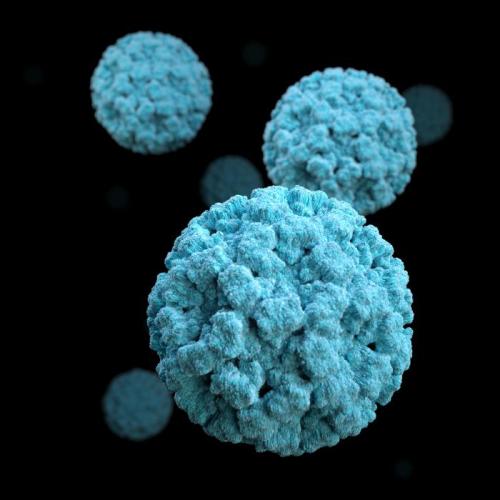
noro-1

CDC Photo


More than 150 children have taken ill amid one confirmed and one suspected outbreak of norovirus at two Scottish schools.

Pupils at St Modan’s High School in Stirling and Cockenzie Primary School in East Lothian have been absent with sickness and diarrhoea, symptoms of the so-called winter vomiting bug.

Both schools remain open, but staff have told children who feel unwell not to attend lessons and to leave at least two full days after recovering before they return to school.

The incidents are being investigated by NHS Forth Valley and NHS Lothian.

Research -Presence of Escherichia coli O157, Salmonella spp., and Listeria monocytogenes in Raw Ovine Milk Destined for Cheese Production and Evaluation of the Equivalence Between the Analytical Methods Applied

Mary Ann Leibert

Italy is one of the main producers and exporters of cheese made from unpasteurized sheep milk. Since raw milk and its derived products are known sources of human infections, cheese produced from raw sheep milk could pose a microbiological threat to public health. Hence, the objectives of the study were: to characterize the potential risk of the presence of pathogens Escherichia coli O157, Listeria monocytogenes, and Salmonella in raw ovine milk destined for cheese production obtained from all the sheep farms (n = 24) in the Marches region (Central Italy) that directly transform raw milk into cheeses and to evaluate the equivalence between the analytical methods applied. A three-step molecular method (simultaneous culture enrichment, species-specific DNA magnetic isolation, and multiplex real-time polymerase chain reaction) was used for milk (n = 143) and cheese (n = 5) analysis over a 3-year period. L. monocytogenes was not detected on any of the farms, while E. coli O157 was found on three farms, although only using the molecular method. Four farms tested positive for Salmonella spp., and Salmonella enterica subsp. diarizonae serovar 61:k:1,5,7 was isolated in one of those cases. This information highlights the need to develop preventative measures to guarantee a high level of consumer safety for this specific product line, and the molecular method could be a time-saving and sensitive tool to be used in routine diagnosis.


Canada -Salmonella fear spurs London recall for almond butter at Bulk Barrel

London Free Press

A bulk food store in London has issued a recall for almond butter potentially contaminated with salmonella.

The Canadian Food Inspection Agency announced a recall for no-sugar-added almond butter crunch sold between last Friday and Wednesday at the Bulk Barrel in Cherryhill Mall.

“Food contaminated with salmonella may not look or smell spoiled, but can still make you sick,” said the federal agency, warning anyone who becomes ill after consuming the recalled product to seek medical attention.

The Middlesex-London Health Unit has reported a spike in salmonella cases recently. At least two dozen of the 37 confirmed cases were linked to a south London eatery.

Salmonella is a bacterial infection characterized by the sudden onset of headache, fever, abdominal pain, diarrhea, nausea and sometimes vomiting.

UK -M&S becomes first supermarket to offer anti-bacterial shopping bags to banish bugs such as E. coli

The Telegraph

Marks & Spencer has become the first supermarket to offer reusable shopping bags with anti-bacterial technology that could prevent bugs from contaminating food.

The new bags are designed to reduce the risk of food poisoning by stopping the spread of dangerous bacteria, such as E. coli and campylobacter which are both found on raw shop-bought chickens.

Experts welcomed the move as a “positive step” in tackling the growing problem of dangerous bacteria lurking in shopping bags.


The Netherlands -Dutch Poultry Producers Successfully Cut Campylobacter

The Poultry Site

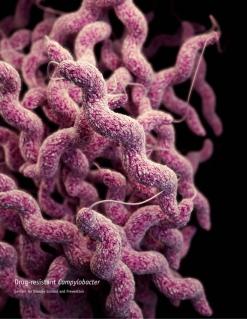
campy2

CDC Photo


From 2009 to 2015, the percentage of finished poultry products with relatively high Campylobacter values (more than 100 colony forming units per gram) fell from 10 per cent to 5 per cent. Further data showed there has not yet been a corresponding decrease in the number of infections in humans, suggesting that poultry is not the only important source of Campylobacter in humans.

India -Probe ordered into Shillai school food poisoning –

The Tribune India images

Deputy Commissioner BC Badalia today ordered a magisterial probe into the food poisoning case of Government Middle School Barwa in Shillai area of Sirmaur where 123 students and 12 teachers were taken ill yesterday. The Deputy Commissioner said SDM Shillai Vikas Shukla will conduct the probe and inquire into various aspects of the incident. A report would be submitted within a week. He said the incident was uncalled for and laxity adopted in preparing food by the school management committee and the local panchayat would be probed. The police had, in the meantime, drawn samples of food and water. They had been sent for lab analysis to ascertain the cause of food poisoning.


USA – Legionnaires’ Disease Cases in Minnesota Have Hopkins Connection

Food Poisoning Bulletin legionellac

Five people who live or work in Hopkins, Minnesota, have been diagnosed with Legionnaire’ disease, a severe form of pneumonia caused by breathing in water mist containing Legionella bacteria, according to the Minnesota Department of Health (MDH). Onset of illness ranged from August 4 to September 1, 2016. All five were hospitalized, and three of them are still in the hospital. All are over 50 years old.

UK -Scotland -Errington Cheese Lanark White – E.coli O157

Food Standards Scotland

Food Standards Scotland (FSS) has today (10 September 2016) issued a FAFA to Heads of Environmental Health Services at Scottish local authorities with immediate instructions to withdraw from sale Batch G14 of Lanark White ewe milk cheese currently in distribution and to withhold from sale any cheese from this batch not yet on the market, as this product may contain E.coli O157 bacteria, and is a potential risk to consumers’ health.

The product in question is Lanark White, a white cheese made from unpasteurised sheep’s milk, produced by Errington Cheese Ltd that consumers may have purchased between 22 August 2016 and 10 September 2016.

A sample from a batch of Lanark White submitted for testing by South Lanarkshire Council has tested positive for E. coli O157. Although this organism may not carry shiga toxins, it is associated with human disease in the UK, so this cheese is a potential risk to health. FSS has issued a FAFA calling for this product to be immediately recalled from sale.

This produce is known to be supplied by Errington Cheese Ltd to wholesalers who in turn supply to retail and catering establishments.  The product is mainly provided to specialist cheese shops, delicatessens, hotels and restaurants.

Errington Cheese Ltd has not voluntarily withdrawn this product so, following the requirements of Article 7 of EC Regulation 178/2002 , FSS as the designated central public food body in Scotland, is initiating the withdrawal of batch G14 of Lanark White cheese from the marketplace.

Symptoms caused by E. coli O157 can include diarrhoea, abdominal pain, bloody diarrhoea, and haemolytic uremic syndrome, a serious condition that can lead to kidney failure. Given the potential severity of illness and the very low doses of this bacterium required to cause illness, FSS believes this action is in the best interests of consumers.

FSS and South Lanarkshire Council’s investigations into food safety related to unpasteurised cheese produced by Errington Cheese Ltd are ongoing.  Actions will continue to be determined by what is necessary to protect public health and the interests of consumers.

FSS advice to vulnerable groups including pregnant women, children and the elderly remains that they should not consume raw, unpasteurised milk and dairy products such as cheese made from unpasteurised milk due to the increased risk of food poisoning. Please find a link to our advice on raw milk here

FSS is advising all consumers who have purchased this product not to consume them, and to return the product(s) to where they purchased them.

If you would like to view full details of the FAFA please follow the link provided here: http://www.foodstandards.gov.scot/news/fafa-02-2016-errington-cheese-lanark-white

The products which could be affected include:

Identification of the product:

Brand Name Batch Code Pack Size Durability Dates
Lanark White G14 All pack sizes Unknown


Food Standards Scotland

Heads of Environmental Health Services should be aware that Errington Cheese Ltd. have supplied a batch of Lanark White unpasteurised ewe milk cheese which contains E. coli O157. Although this organism may not carry shiga toxins it is associated with human disease in the UK. This makes the cheese a potential risk to health.

Identification of the product:

Brand Name Batch Code Pack Size Durability Dates
Lanark White G14 All pack Sizes Unknown

USA-E. coli in Seattle

E.coli Blog Ecoli Istock

Seattle King County Public Health is investigating a cluster of five E. coli infections caused by Shiga-toxin producing E. coli (also called STEC) associated with Matador restaurant in Ballard. Four people ate on 8/14 and one person ate on 8/22. Public Health received the first report of illness on 8/22/16 and the most recent case was reported on 9/6/16.  All the people developed symptoms including diarrhea and abdominal cramps. Four people developed bloody diarrhea. Three people had been hospitalized with one person developing a type of kidney injury called hemolytic uremic syndrome (HUS). All five people have recovered.