Category Archives: Uncategorized

USA -Bunge’s Meats Recalls Pork Products Formulated With Water That Did Not EPA Meet Drinking Water Standards

FSIS – USDA

WASHINGTON, Sept.16, 2016 – Bunge’s Meats, a Catawissa, Penn. establishment, is recalling an undetermined amount of pork sausage products that were produced with water that did not meet the Environmental Protection Agency’s (EPA) drinking water standards, the U.S. Department of Agriculture’s Food Safety and Inspection Service (FSIS) announced today.

The various pork sausage items were produced between Feb. 24, 2016 and Sept. 15, 2016.

The products subject to recall bear establishment number “EST. 21603” inside the USDA mark of inspection. These items were shipped to restaurants in Pennsylvania.

The problem was discovered on September 15, 2016, while an Enforcement, Investigations, and Analysis Officer (EIAO) was reviewing records during a Food Safety Assessment (FSA). The EIAO observed that results from the establishment’s third party testing laboratory indicated that water samples collected at the establishment on Feb. 24 and Sept. 9, 2016 were positive for Coliform bacteria. The water is used in the formulation of the pork sausage products.

There have been no confirmed reports of adverse reactions due to consumption of these products. Anyone concerned about a reaction should contact a healthcare provider.

Consumers who have purchased these products are urged not to consume them. These products should be thrown away or returned to the place of purchase.

FSIS routinely conducts recall effectiveness checks to verify recalling firms notify their customers of the recall and that steps are taken to make certain that the product is no longer available to consumers. When available, the retail distribution list(s) will be posted on the FSIS website at www.fsis.usda.gov/recalls.

Consumers and media with questions about the recall can contact Robert Bunge, Owner, at (570) 317-6702.

Consumers with food safety questions can “Ask Karen,” the FSIS virtual representative available 24 hours a day at AskKaren.gov or via smartphone at m.askkaren.gov. The toll-free USDA Meat and Poultry Hotline 1-888-MPHotline (1-888-674-6854) is available in English and Spanish and can be reached from 10 a.m. to 4 p.m. (Eastern Time) Monday through Friday. Recorded food safety messages are available 24 hours a day. The online Electronic Consumer Complaint Monitoring System can be accessed 24 hours a day at: http://www.fsis.usda.gov/reportproblem.


Canada -Updated Food Recall Warning – Imperial Caviar & Seafood brand Salmon Roe recalled due to potential presence of dangerous bacteria -Clostridium botulinum

CFIA

Ottawa, September 16, 2016 – The food recall warning issued on September 15, 2016, has been updated to include additional distribution information. This additional information was identified during the Canadian Food Inspection Agency’s (CFIA) food safety investigation.

Imperial Caviar & Seafood is recalling Imperial Caviar & Seafood brand Salmon Roe from the marketplace because it may permit the growth of Clostridium botulinum. Consumers should not consume the recalled products described below.

Recalled products

Brand Name Common Name Size Code(s) on Product UPC
Imperial Caviar & Seafood Salmon Roe 50 g BB/MA 23-AUG-2017
LOT: 23616-03
1 86866 90024 8
Imperial Caviar & Seafood Salmon Roe 50 g BB/MA 23-AUG-2017
LOT: 23616-04
1 86866 90024 8
Imperial Caviar & Seafood Salmon Roe 100 g 12-FEB-17
04116-02
1 86866 90023 1


USA – More Hepatitis A

Food Poisoning Bulletin

According to the Hawaii Department of Health employees of the following food service business(es) has been diagnosed with hepatitis A. This list does not indicate these businesses are sources of this outbreak; at this time, no infections have been linked to exposure to these businesses. The likelihood that patrons of these businesses will become infected is very low. However, persons who have consumed food or drink products from these businesses during the identified dates of service should contact their healthcare provider for advice and possible preventive care.

Food Poisoning Journal

Earlier this week, the health department confirmed that a food service worker in Missoula County tested positive for Hepatitis A. While the food service employee was excluded from work during most of the time that they had symptoms, there is a potential for customer exposure because Hepatitis A can be spread before a person has symptoms – before they know they are infectious or ill. To address this possibility, the department is issuing this public notice in conjunction with the Good Food Store, where the employee’s job included preparing foods for the self-serve salad bar. Ready-to-eat-foods such as those found on a salad bar won’t be cooked or washed by the consumer prior to eating and can be a vehicle for contamination.


USA -Outbreaks of Human Salmonella Infections Associated with Live Poultry, United States, 1990–2014

CDC

Backyard poultry flocks have increased in popularity concurrent with an increase in live poultry–associated salmonellosis (LPAS) outbreaks. Better understanding of practices that contribute to this emerging public health issue is needed. We reviewed outbreak reports to describe the epidemiology of LPAS outbreaks in the United States, examine changes in trends, and inform prevention campaigns. LPAS outbreaks were defined as ≥2 culture-confirmed human Salmonella infections linked to live poultry contact. Outbreak data were obtained through multiple databases and a literature review. During 1990–2014, a total of 53 LPAS outbreaks were documented, involving 2,630 illnesses, 387 hospitalizations, and 5 deaths. Median patient age was 9 years (range <1 to 92 years). Chick and duckling exposure were reported by 85% and 38% of case-patients, respectively. High-risk practices included keeping poultry inside households (46% of case-patients) and kissing birds (13%). Comprehensive One Health strategies are needed to prevent illnesses associated with live poultry.


UK – Scotland -Children in Angus taken ill with E.coli O157

The Scotsman

A number of children in Angus have been taken ill with suspected E.coli 0157, health chiefs have confirmed.

A 3-year-old child died earlier this month after ingesting a strain of E.coli 0157 linked to Dunsyre Blue cheese in July. A playgroup in Carnoustie had temporarily closed voluntarily while the incident is being investigated.

Canada -Imperial Caviar & Seafood brand Salmon Roe recalled due to potential presence of dangerous bacteria – Clostridium botulinum

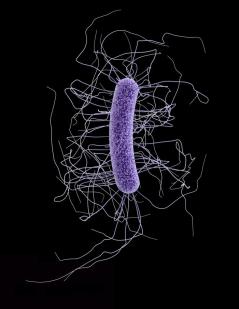
CFIA closta

Ottawa, September 15, 2016 – Imperial Caviar & Seafood is recalling Imperial Caviar & Seafood brand Salmon Roe from the marketplace because it may permit the growth of Clostridium botulinum. Consumers should not consume the recalled products described below.

Recalled products

Brand Name Common Name Size Code(s) on Product UPC
Imperial Caviar & Seafood Salmon Roe 50 g BB/MA 23-AUG-2017
LOT: 23616-03
1 86866 90024 8
Imperial Caviar & Seafood Salmon Roe 50 g BB/MA 23-AUG-2017
LOT: 23616-04
1 86866 90024 8
Imperial Caviar & Seafood Salmon Roe 100 g 12-FEB-17
04116-02
1 86866 90023 1

USA -SM Fish Corp Recalls Select Ossie’s Ready to Eat Salads Because of Possible Health Risk – Listeria monocytogenes

FDA

SM Fish Corp. of Far Rockaway, NY, is voluntarily recalling OSSIE’S brand ready-to-eat salads because they have the potential to be contaminated with Listeria monocytogenes, an organism which can cause serious and sometimes fatal infections in young children, frail or elderly people, and others with weakened immune systems.  Although healthy individuals may suffer only short-term symptoms such as high fever, severe headache, stiffness, nausea, abdominal pain and diarrhea, Listeria infection can cause miscarriages and stillbirths among pregnant women.

The recalled products were sold at the firm’s seven retail outlets located in New York and New Jersey between August 1, 2016 and September 9, 2016.

The recalled products were packed in plastic deli containers with a UPC Code and “Best By” date codes of 8/21/16 through 10/18/16 (located on the bottom of the tub):

  • OSSIE’S PICKLED LOX DAIRY, NET WT. 8 OZ., UPC 739885114136
  • OSSIE’S HERRING IN SOURCREAM, NET WT. 8 OZ., UPC 739885114174
  • OSSIE’S TAAM SHABBOS HERRING, NET WT. 7 OZ., UPC 739885109057
  • OSSIE’S STIGLITZ HERRING, NET WT. 7 OZ., UPC 739885109064
  • OSSIE’S WASABI HERRING, NET WT. 7 OZ., UPC 739885109088
  • OSSIE’S SWEDISH MATJES HERRING, NET WT. 7 OZ., UPC 739885109101
  • OSSIE’S DUBLIN HERRING, NET WT. 7 OZ., UPC 739885109002
  • OSSIE’S HONEY MUSTARD HERRING; NET WT. 7 OZ. 739885109019
  • OSSIE’S PICKLED LOX & CREAM, NET WT. 8 OZ., UPC 739885104113
  • OSSIE’S SHMALTZ HERRING, NET WT. 8 OZ., UPC 739885104182
  • OSSIE’S ROMAN SHMALTZ HERRING, NET WT. 7 OZ., UPC 739885109026
  • OSSIE’S PICKLED HERRING, NET WT. 8 OZ., UPC 739885104175
  • OSSIE’S PICKLED HERRING CLEAR, NET WT. 8 OZ., UPC 739885104205
  • OSSIE’S PICKLED LOX, NET WT. 8 OZ., UPC 739885104137
  • OSSIE’S EGG SALAD, NET WT. 7OZ., UPC 73988570552
  • OSSIE’S EGG WITH MUSHROOM, NET WT. 7OZ., UPC 73988570556
  • OSSIE’S EGG WITH SCALLION, NET WT. 7OZ., UPC 73988570555
  • OSSIE’S LITE TUNA, NET WT. 7OZ., UPC 73988570551
  • OSSIE’S HOME MADE TUNA SALAD, NET WT. 7OZ., UPC 73988570550

No illnesses have been reported to date.

The recall was the result of sampling and inspectional findings by the US Food and Drug Administration (FDA).  FDA found Listeria monocytogenes in multiple locations throughout the facility.  SM Fish Corp. has ceased production and distribution of products following discussion with FDA on September 8, 2016. The company and the FDA continue their investigation as to the cause of the problem.

Consumers who have purchased any of the above listed products are urged not to consume them and promptly discard.  Consumers with questions may contact the company at (718) 945-9838, Monday – Friday, 9 am – 4 pm EDT, or via email at: recallssmf@gmail.com.

UK -All cheese produced by Errington Cheese Ltd recalled -E.coli O157

FSA

The Food Standards Agency is alerting consumers to the recall of all cheese produced by Errington Cheese Ltd. A number of different types of cheese produced by the company have tested positive for potentially harmful strains of E.coli, including E.coli O157.

Batches of Dunsyre Blue and Lanark White cheese produced by Errington Cheese Ltd had already been recalled by Food Standards Scotland but this has now been extended to include all cheese products. Errington Cheese Ltd largely distributes its products in Scotland. However, we are aware that some products may have been supplied to food businesses in England.

FSS

On 14 September 2016 Food Standards Scotland (FSS) issued a food alert for action (FAFA) for all products produced by Errington Cheese Ltd. That decision was not taken lightly. FSS is fully aware of the impact on the business, but its priority is to protect public health.

FSS’s primary focus is protection of consumers. FSS has made information available where this has been in the public interest, but it would not be appropriate to conduct an ongoing food safety investigation through the media.

The recent outbreak of E. coli O157 has now affected 22 people, 13 of whom have required hospitalisation, and tragically, one child died as a consequence. The multi-agency Incident Management Team (IMT) chaired by Health Protection Scotland concluded that, based on strong epidemiological evidence, the outbreak of illness in humans was linked to Dunsyre Blue cheese, produced by Errington Cheese Ltd. Of the 22 confirmed cases to date, the IMT has established that 19 had eaten blue cheese prior to becoming ill. Of these, 15 are known to have eaten Dunsyre Blue while others cannot be certain about the brand of blue cheese they consumed. Investigations are ongoing on the other cases.

Since the outbreak was declared over on 5 September 2016, two new cases have been identified with the same outbreak strain of E. coli O157 and the IMT has consequently reconvened.

Errington Cheese Ltd. has undertaken two voluntary recalls of cheese, and Food Standards Scotland has initiated two further recalls – on 10 and 14 September 2016.

The FSS recalls have been initiated on the basis of evidence available to FSS and South Lanarkshire Council (SLC) as a result of sampling and testing of cheese produced by Errington Cheese Ltd and concerns regarding its Food Safety Management System and its ability to produce safe products, and in view of the new epidemiological information available concerning the two new cases.

Errington Cheese Ltd has publically commented that E. coli O157 has not been found in its cheese. This is inaccurate. Some samples submitted for testing by SLC have tested positive for E. coli O157 and for another (non-O157) strain of E. coli. These organisms are considered a serious risk to public health by the Food Examiner and the Scottish E.coli O157/VTEC reference laboratory. In addition, further samples have tested positive for shiga toxin (stx) genes. These samples have tested “presumptive positive” for shiga toxin producing E. coli (STEC) and therefore are considered to be potentially hazardous to health.

Analysis of samples taken by SLC has been carried out using accredited methods in official laboratories. All results from these samples were shared with Errington Cheese Ltd as soon as they were available. The decisions FSS has taken to recall Errington Cheese Ltd products are evidence-based and informed by interpretation from experts including legally designated Food Examiners.

E. coli O157 and non-O157 have been detected in different batches of Dunsyre Blue and Lanark White produced by Errington Cheese Ltd. Batch numbers relate to the dates the batches were produced.

  • Batch F15 Dunsyre Blue: Shiga toxin producing E. coli (STEC) has been cultured and isolated from a sample taken from batch F15 (Dunsyre Blue). This sample has been confirmed as a non-O157 E. coli (STEC). This type of E. coli has been known to cause severe illness. Nine further samples were subsequently taken from this batch, and all have also been found to contain the stx2 gene and one for the stx1 gene (all nine samples are therefore considered presumptive positive for STEC), FSS is awaiting further confirmatory testing on these samples. This product has not been placed on the market.
  • Batch G14 Lanark White: E. coli O157 has been cultured and isolated from a sample taken from batch G14 (Lanark White). This isolate has not been shown to contain the stx genes and is undergoing further analysis. Stx gene negative strains of E. coli O157 have been isolated from cases of human illness consistent with E. coli O157 infection.The Food Examiner declared this sample to be “potentially injurious to health and/or unfit for human consumption”. Therefore this batch was withdrawn by FSS following the refusal of the food business to withdraw it voluntarily.
  • Batch E24 Dunsyre Blue: two samples from batch E24 (Dunsyre Blue) have been found to contain the stx2 gene – these samples would therefore be considered as presumptive positives for STEC whilst FSS awaits further confirmatory testing. This batch was withdrawn voluntarily by the food business.
  • Batch G12 Dunsyre Blue: a sample from batch G12 (Dunsyre Blue) has been found to contain the stx2 gene (a presumptive positive for STEC) and FSS is awaiting further confirmatory testing on this sample. This product has not been placed on the market
  • Batch H24 Lanark White: A sample from batch H24 (Lanark White) has been found to contain the stx2 gene. This sample would be considered a presumptive positive for STEC whilst FSS awaits confirmatory testing.This product has not been placed on the market.

Potentially harmful strains of E.coli and the shiga toxin (stx) genes that can cause illness in humans have been found in a number of different batches of different cheeses produced by Errington Cheese Ltd.  This means that FSS is not satisfied that the controls and production methods used by the business are producing safe food. Furthermore, the reliance on a limited number of negative test results as evidence that the food is safe provides insufficient assurance, as it is clear that multiple samples across different cheese batches have had positive results.

Throughout this incident FSS has taken a proportionate approach based on the evidence and it considers that the evidence now justifies a full recall of Errington Cheese Ltd. products to ensure the protection of public health. FSS has been in frequent communication with Errington Cheese Ltd. throughout these investigations both directly, through SLC and through the company’s legal representatives.

From the point of issue of the FAFA, all Local Authorities in Scotland will be seeking to ensure all products manufactured by ECL are recalled and held with a view to being destroyed. If consumers have any products from Errington Cheese Ltd. they should dispose of them or take them back to the place of purchase. ‎

Notes for Editors

  • STEC (shiga toxin producing E. coli) is a group of E. coli characterised by its ability to produce toxins, designated shiga toxins (stx1 and stx2 or its variants). Shiga toxins are also known as verocytotoxins and the terms STEC and VTEC are synonymous. The symptoms of STEC infection can include diarrhoea, abdominal pain, bloody diarrhoea, and haemolytic uremic syndrome (HUS), a serious condition that can lead to kidney failure and can be fatal. HUS develops in approximately 10% of patients infected with STEC O157 and is the leading cause of acute renal failure in young children.
  • STECs include a diverse range of organisms, and although the most common is E. coli O157, there are a number of non-O157 E. coli strains associated with human illness. In 2014 there were 275 reported cases of E. coli O157 infection, and 75 non-O157 E. coli cases.

RASFF Alerts – Aflatoxin -Groudnuts – Pistachios – Fasika Spice – Chicken Tikka Seasoning – Peanuts – Red Chilli – Crushed Chilli -Chilli Powder

RASFFa

RASFF -aflatoxins (B1 = 17 µg/kg – ppb) in organic groundnuts in shell from Egypt in Germany

RASFF -aflatoxins (B1 = 80.6; Tot. = 90.0 µg/kg – ppb) in pistachio kernels from Iran in Italy

RASFF -aflatoxins (Tot. = 108.9 µg/kg – ppb) in fasika spice from Ethiopia in the UK

RASFF -aflatoxins (B1 = 6.4 µg/kg – ppb) in chicken tikka seasoning mix from Pakistan in Ireland

RASFF -aflatoxins (B1 = 2.88 µg/kg – ppb) in raw shelled peanuts from the United States in Poland

RASFF – aflatoxins (B1 = 7.1 µg/kg – ppb) in stemless red chilli from India in Greece

RASFF – aflatoxins (B1 = 22,3; Tot. = 23,7 µg/kg – ppb) in crushed chilli from India in the UK

RASFF -aflatoxins (B1 = 8,0; Tot. = 8,6 µg/kg – ppb) in chilli powder from India in the UK

RASFF Alerts – Salmonella – Betel Leaf – Raw Sausage Filling

RASFFa

RASFF – Salmonella (presence /25g) in fresh parsley and betel leaf from Malaysia in the Netherlands

RASFF – Salmonella (presence /25g) in betel leaves from India in the UK

RASFF -Salmonella typhimurium monophasic (1 ,4, [5], 12:i:-) (presence /25g) in raw sausage filling from Italy in Italy