Category Archives: Uncategorized

Canada -Updated Food Recall Warning – Imperial Caviar & Seafood brand Salmon Roe recalled due to potential presence of dangerous bacteria – Clostridium botulinum

CFIA Clost

Ottawa, October 21, 2016 – The food recall warning issued on September 16, 2016, has been updated to include additional product information. This additional information was identified during the Canadian Food Inspection Agency’s (CFIA) food safety investigation.

Imperial Caviar & Seafood is recalling Imperial Caviar & Seafood brand Salmon Roe from the marketplace because it may permit the growth of Clostridium botulinum. Consumers should not consume the recalled product described below.

Recalled products

Brand Name Common Name Size Code(s) on Product UPC
Imperial Caviar & Seafood Salmon Roe 50 g BB/MA: 23-AUG-2017
LOT: 23616-03
1 86866 00010 8

USA -Feds’ updates on strawberry Hep A outbreak thin; 3 more sick

Food Safety News Hepatitis A kswfoodworld

Federal officials reported their investigations are ongoing into a Hepatitis A outbreak linked to frozen Egyptian strawberries served in smoothies, with 134 people now sickened and little if any progress made on the international aspects of the situation.

The 134 case count as of Oct. 17, and reported Oct. 20 by the Centers for Disease Control, spans nine states. Seventy percent, or 52 of the sick people have had symptoms so serious they required hospitalized. Virginia has been hardest hit, with 107 people confirmed sick.


Research – Curcumin Shows Antiviral Properties against Norovirus

MDPI Eurofins

Phytochemicals provide environmentally friendly and relatively inexpensive natural products, which could potentially benefit public health by controlling human norovirus (HuNoV) infection. In this study, 18 different phytochemicals were evaluated for antiviral effects against norovirus using murine norovirus (MNV) as a model for norovirus biology. Among these phytochemicals, curcumin (CCM) was the most potent anti-noroviral phytochemical, followed by resveratrol (RVT). In a cell culture infection model, exposure to CCM or RVT for 3 days reduced infectivity of norovirus by 91% and 80%, respectively. To confirm the antiviral capability of CCM, we further evaluated its antiviral efficacy at various doses (0.25, 0.5, 0.75, 1, and 2 mg/mL) and durations (short-term: 10, 30, 60, and 120 min; long-term: 1, 3, 7, and 14 days). The anti-noroviral effect of CCM was verified to occur in a dose-dependent manner. Additionally, we evaluated the inhibitory effect of each phytochemical on the replication of HuNoV using a HuNoV replicon-bearing cell line (HG23). Neither CCM nor RVT had a strong inhibitory effect on HuNoV replication, which suggests that their antiviral mechanism may involve viral entry or other life cycle stages rather than the replication of viral RNA. Our results demonstrated that CCM may be a promising candidate for development as an anti-noroviral agent to prevent outbreaks of foodborne illness.

Australia – PSP Shellfish Poisoning Alerts

Food Authority NSW Marlith - Domic Acid ASP Toxin KSWFoodworld

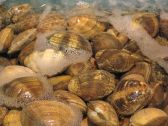
NSW DPI advises NSW DPI advises people not to consume shellfish collected or caught from Twofold Bay, due to the risk of Paralytic Shellfish Poisoning (PSP). PST’s are produced by certain toxic algae species. Alexandrium fundyense have recently been detected in the waters of Twofold Bay.

Shellfish taken from this area should not be eaten. Cooking does not destroy the toxins. The NSW Food Authority has confirmed that toxins have been detected in shellfish from Twofold Bay.

Food Authority NSW

The NSW Department of Primary Industries (DPI) advises that high levels of a harmful algae species, Alexandrium catenella, have recently been detected in the waters of the lower reaches of the Hawkesbury River, downstream of the Pacific Highway bridge.

The species of algae detected is known to produce Paralytic Shellfish Poisoning (PSP) toxins.

As a temporary precautionary measure shellfish taken recreationally from this area should not be eaten. Cooking does not destroy the toxins.

RASFF Alert-Vibrio cholera – Vibrio parahaemolyticus – Black Tiger Shrimps

kswfoodworld rasff

RASFF – Salmonella Oranienburg (presence /25g)Vibrio cholerae (presence in 20 /g) and Vibrio parahaemolyticus (presence in 20 /g) in frozen black tiger shrimps from Vietnam in Norway

RASFF Alerts – Salmonella -Chicken – Red Beet Sprouts – Baked Shrimps – Black Tiger Shrimps – Betel Leaves – Eggs – MSM Pork

kswfoodworld rasff

RASFF – Salmonella typhimurium (presence /25g) in chilled chicken from Ireland in Ireland

RASFF – Salmonella typhimurium (presence /25g) in red beet sprouts from the Netherlands in the Netherlands

RASFF – Salmonella (presence /25g) in baked shrimps from the Netherlands in France

RASFF – Salmonella in betel leaves from India in the UK

RASFF -Salmonella Oranienburg (presence /25g)Vibrio cholerae (presence in 20 /g) and Vibrio parahaemolyticus (presence in 20 /g) in frozen black tiger shrimps from Vietnam

RASFF – Salmonella enteritidis in chicken eggs from Poland in the Netherlands

RASFF – Salmonella Derby (presence /25g) in frozen msm pork from Germany in Lithuania

RASFF Alerts – Aflatoxin -Groundnuts – Hazelnut Kernels – Pistachios -Crushed Red Pepper

kswfoodworld rasff

RASFF – aflatoxins (B1 = 6.6; Tot. = 6.6 µg/kg – ppb) in groundnuts from Argentina in the Netherlands

RASFF – aflatoxins (B1 = 64; Tot. = 90 90.7) in hazelnut kernels from Georgia in Bulgaria

RASFF – aflatoxins (B1 = 40; Tot. = 43 µg/kg – ppb) in pistachio nuts from Turkey in the Netherlands

RASFF – aflatoxins (B1 = 3.2; Tot. = 3.5 µg/kg – ppb) in groundnuts in bulk from the United States in the UK

RASFF – aflatoxins (B1 = 18; Tot. = 19 µg/kg – ppb) in crushed red pepper from India in Sweden

RASFF Alerts – STEC E.coli-Organic Herbal Food Supplements – Frozen Minced Meat

kswfoodworld rasff

RASFF – shigatoxin-producing Escherichia coli (stx2+ /25g) in organic herbal food supplements from Germany, with raw material from India in Germany

RASFF – enteropathogenic Escherichia coli (O103:H2, stx-, eae+) in frozen minced meat from Ireland in France

RASFF Alerts -Fried Onions – Ocean Salad Surimi

kswfoodworld rasff

RASFF – Listeria monocytogenes (7000 CFU/g) in lard with fried onions from Poland in France

RASFF – Listeria monocytogenes (8100 CFU/g) in ocean salad with surimi from France in France

RASFF Alert -Ochratoxin A – Grape Juice

kswfoodworld rasff

RASFF – ochratoxin A (3.84 µg/kg – ppb) in grape juice from Turkey in Germany