Category Archives: Uncategorized

RASFF Alerts – Animal Feed – Dog Chews (chicken feet) – Animal Protein -Rape Seed Meal

kswfoodworld rasff

RASFF – Salmonella infantis (presence /25g) in dog chews (chicken feet) from Slovakia in Austria

RASFF – Salmonella (presence /25g) in processed animal protein category 3 from Poland in Italy

RASFF – Salmonella Tennessee (presence /25g) in rapeseed meal from Russia in Finland

RASFF – Salmonella Tennessee (presence /25g) in rape seed meal from Russia in Finland


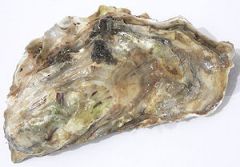
Research -High Salinity Relaying to Reduce Vibrio parahaemolyticus and Vibrio vulnificus in Chesapeake Bay Oysters (Crassostrea virginica)

Wiley Online Vibrio

Abstract

Cases of Vibrio infections in the United States have tripled from 1996 to 2009 and these infections are most often associated with the consumption of seafood, particularly oysters (Crassostrea virginica). Information is needed on how to reduce numbers of Vibrio parahaemolyticus and Vibrio vulnificus in bi-valve molluscan shellfish (for example, oysters). The purpose of this study was to evaluate the effectiveness of high salinity relaying or treatment in recirculating aquaculture systems (RASs) as methods to reduce the abundance of V. parahaemolyticus and V. vulnificus in oysters. For relaying field trials, oysters were collected from approved harvest waters, temperature abused outside under a tarp for 4 h, and then transferred to high (29 to 33 ppt.) and moderate (12 to 19 ppt.) salinities. For RAS treatment trial, oysters were transferred to 32 to 34 ppt. salinity at 15 °C. After 7, 14, 21, and in some instances 28 d, oysters were collected and analyzed for V. parahaemolyticus and V. vulnificus levels using multiplex real-time PCR. Initial levels of V. parahaemolyticus and V. vulnificus ranged from 3.70 to 5.64 log10 MPN/g, and were reduced by 2 to 5 logs after 21 to 28 d in high salinity water (29 to 34 ppt.). Oyster mortalities averaged 4% or less, and did not exceed 7%. Relaying of oysters to high salinity field sites or transfer to high salinity RAS tanks was more effective in reducing V. vulnificus compared with V. parahaemolyticus. These results suggest that high salinity relaying of oysters is more effective in reducing V. vulnificus than V. parahaemolyticus in the oyster species used in this study.

Practical Application

Relaying of naturally contaminated oysters to high salinity sites in the Atlantic Coastal Bays and the Chesapeake Bay could provide a low cost and practical mitigation strategy to reduce Vibrio spp. in oysters. This could result in decreasing the risk of Vibrio illnesses from oyster consumption during the warmer months when Vibrio is present in high numbers. This study provides important information for risk management decisions for the oyster industry and regulatory agencies.


 

Hong Kong -Food Alert – Bottled preserved bean curd contaminated with Bacillus cereus

Centre for Food Safety Bacillus_cereus_01

<!–

–>

Issue Date 2017-01-19
Source of Information The Centre for Food Safety (CFS)
Food Product Bottled preserved bean curd
Name of Importer
Product name and Description Product name: Sichuan Soya Beancurd with Chili & Sesame Oil
Brand: Tsin Tsu Wei
Place of origin: Taiwan
Distributor: Michael Wah Hing Co Ltd
Best-before date: August 23, 2019
Net weight: 130 grams per bottle

Reason For Issuing Alert

– The CFS collected the above-mentioned sample from a Wellcome supermarket in To Kwa Wan for testing under its routine Food Surveillance Programme. The test result showed that the sample contained Bacillus cereus at a level of 120 000 per gram. According to the Microbiological Guidelines for Food, it is potentially injurious to health or unfit for human consumption if a gram of ready-to-eat food contains more than 100 000 of Bacillus cereus.
Action Taken by the Centre for Food Safety

– The CFS has informed the vendor and distributor concerned of the test result, and instructed them to stop sale of the affected batch of the product and initiate a recall.

– The CFS is tracing the source and distribution of the food item in question.

– The CFS will alert the trade, continue to follow up on the incident and take appropriate action to safeguard food safety and public health. Investigation is ongoing.

Advice to the Trade

– Stop selling the affected batch of the product immediately.
Advice to Consumers
– If consumers have bought and still possess the affected batch of the product, they should stop eating it. They should seek medical advice if they feel sick upon consumption.
Further Information The CFS press release

– Members of the public may call Wellcome’s hotline at 2299 1133 or the distributor Michael Wah Hing Co Ltd’s hotline at 2898 4186 during office hours for enquiries about the recall.


UK – PHE -Listeria data 2006 to 2015

PHE

Key points for 2015

 reporting rates for listeriosis are remarkably consistant over this surveillance period (2006 – 2015)

 the London and the South East regions report the highest numbers of Listeria monocytogenes cases, accounting for 38% of the national total

 reporting of listeriosis is dominated by people over the age of 60 and women of child-bearing age (ages 20 – 29), the latter being cases associated with pregnancy

 October was the peak month for Listeria monocytogenes reporting in 2015

UK – PHE -Campylobacter data 2006 to 2015 November 2016

PHE

Key points for 2015

 the region that reported the highest number of Campylobacter cases was the South East with 9,489

 54% of Campylobacter cases were male

 the 50-59 year age group had the highest number of cases

 the peak month for Campylobacter reporting in 2015 was June

 in the Second Study of Infectious Intestinal Disease in the Community (IID2 Study), it was estimated that for every one case of Campylobacter identified in national surveillance, there were 9.3 cases in the community (95% confidence interval of 6.0-14.4 cases)1,2

Saudi Arabia -Saudi emergency after mass food poisoning

Medical Express

The incident occurred in Turabah, about 100 kilometres (62 miles) east of Taif in the kingdom’s southwest.

The official Saudi Press Agency said 150 people suffered food poisoning “because of eating meals” at the restaurant.

The online newspaper Sabq, which is close to authorities, said 175 people fell ill after eating shawarma sandwiches, a Middle Eastern staple.

Mecca region governor Prince Khaled al-Faisal ordered an investigation, “with the maximum penalties for the perpetrators of the incident,” SPA said.

It added that 45 patients “are under surveillance” at Turabah hospital and 32 at other medical facilities.

Saudi Arabia has invested heavily in its medical system.

About 15 percent of this year’s budget is allocated to health and social development spending, including for the setup of hospitals and healthcare centres “in all the regions across the kingdom,” the budget said.


UK -Billingham butchers deny E. coli outbreak charges

BBC News

The owners of a family butchers at the centre of an alleged E. coli outbreak have denied food hygiene breaches.

Janet Bell and Trevor Robinson appeared at Teesside Magistrates’ Court charged with seven offences relating to Robinson’s butchers in Billingham.

Fifteen people became infected with the bug in July 2015, Public Health England said.

The pair deny selling meat unfit for human consumption and will appear at Teesside Crown Court on 14 February.

Ten people needed hospital treatment and seven developed serious kidney conditions.

UK -53 possible cases of food poisoning from contaminated milk sold by Cumbrian farm

News and Star

More cases of food poisoning have been confirmed after a Cumbrian farm was banned from selling contaminated milk.

In December, Low Sizergh Barn Farm, near Kendal, was banned from selling raw milk from a vending machine after it was found to contain traces of campylobacter bacteria.

A South Lakeland District Council spokesman said: “The number of cases at the moment is 12 confirmed and 53 probables.”

The spokesman said cases were only confirmed after a person had their suspected food poisoning confirmed by a GP.

A Food Standards Agency spokesman said: “Low Sizergh Barn Farm in Kendal voluntarily stopped sales of raw cow’s drinking milk and displayed a product recall notice at the point of sale.

Research -Test Uses Novel Antibodies to Detect Shiga Toxins

USDA Ecoli Istock

U.S. Department of Agriculture (USDA) scientists have developed a highly sensitive test that for the first time is able to detect all known Shiga toxin-producing E. coli (STEC).

According to the Centers for Disease Control and Prevention, STEC bacteria are responsible for more than 265,000 cases of illness and 3,600 hospitalizations each year in the United States. Nearly 8 percent of patients hospitalized from these infections develop hemolytic uremic syndrome (HUS), a life-threatening disease.

Research -Deadly superbugs may be spreading, evolving quietly among the healthy

ARS Technica Entero

For years, researchers have been tracking a particularly nasty family of superbugs called CREs, or carbapenem-resistant Enterobacteriaceae, which can thwart antibiotics in our last lines of defense. Researchers have watched in horror as clinical isolates gathered new molecular weaponry, spread through medical facilities across the globe, and started causing more and more life-threatening infections.

But a new study suggests we’re still only seeing a glimpse of what they’re up to.

In a genetic analysis of 122 CREs that popped up in four US hospitals, researchers discovered that isolates are far more diverse than expected, and some of them could disarm our toughest drugs using methods researchers had never even seen before. The hospitals—three in Boston and one in Irvine, California—had little overlap in their CRE collections. Within each hospital, there was a variety of CRE types, spanning several species, with a medley of genetic backgrounds and resistance genes.