Category Archives: Uncategorized

USA -Luther College reports Norovirus on campus

Outbreak News Today

Food Borne Illness - Norovirus -CDC Photo

CDC Photo


The Decorah, IA college is reporting multiple people on campus and in the surrounding area have been experiencing symptoms of Norovirus, according to the school’s news site, the Luther College Chips Friday.

Right after the winter break, Luther College Health Services confirmed there has been an outbreak of Norovirus on campus, local media reported.

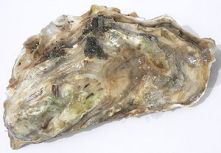
Canada -Norovirus outbreak linked to oysters climb to 221 cases

Outbreak News Today Vibrio

In a follow-up to a report on a norovirus outbreak in Canada linked to British Columbia oysters, the Public Health Agency of Canada reported this week the case count has climbed to 221 as of Tuesday.

The cases have been reported in the following three provinces: British Columbia (159), Alberta (36), and Ontario (26). No deaths have been reported. Individuals became sick between December 2016 and February 2017. All individuals who became ill reported having eaten oysters.

Information -Egyptian Strawberry Hepatitis A Outbreak

Food Poisoning Journal Hepatitis A kswfoodworld

Beginning in September 2016, several states, CDC, and the FDA investigated a multistate outbreak of foodborne hepatitis A. Epidemiologic and traceback evidence indicate that frozen strawberries imported from Egypt are the likely source of this outbreak. Although no discovery has been done to date to confirm how the Egyptian strawberries made it to consumers, we have learned that Tropical Smoothie had a bulk purchasing agreement with Patagonia. Patagonia bought from VLM Canada.  It is also our understanding that VLM Canada bought from ICAPP and that VLM USA was the importer.  It appears that the strawberries entered the US in Norfolk into VLM USA’s possession and then were transferred to Preferred Freezers Storage, Inc. in Chesapeake into Patagonia’s possession.  From there, ITI picked up the berries and delivered them to either Sysco Hampton Roads or Sysco VA.  Sysco delivered them to Tropical Smoothie franchisees.

USA -FSIS gives tips on controlling Listeria in retail delicatessens

FSIS kswfoodworld Listeria monocytogenes

USDA’s Food Safety and Inspection Service (FSIS) is out with guidance for retail delicatessens on how they better control Listeria monocytogenes (Lm) in their shops.  It has come up with eight recommendations for delicatessens to consider using to protect the public health from Lm.

USA -Dutch Valley Food Distributors, Schlabach Branch Announces a Voluntary Nationwide Recall of Assorted Cheese Items for Potential Listeria Monocytogenes

FDA

Dutch Valley Food Distributors, Schlabach branch is issuing a recall on various Cheeses and cheese containing items due to the potential for it to be contaminated with Listeria monocytogenes.

On 2/15/2017 the firm was notified by their supplier, Deutsch Kase Haus, that various cheese product they received may be contaminated with Listeria monocytogenes. There have been no illnesses or issues reported regarding consumption of this product to date.

Dutch Valley Food Distributors, Schlabach Branch has issued a voluntary recall for the following products:

Item Description Size Code
Guggisberg Colby Cheese mini horn 6lbs Use By June 01,2017 – Oct. 27,2017
Guggisberg Colby Jack (Marble) Cheese mini horn 6lbs Use By June 01,2017 – Oct. 27,2017
Guggisberg Thunderjack Cheese mini horn 6lbs Use By June 01,2017 – Oct. 27,2017
Guggisberg Pepperjack Mini Horn 6lbs Use By June 01,2017 – Oct. 27,2017
Guggisberg Farmers Cheese Mini Horn 6lbs Use By June 01,2017 – Oct. 27,2017
Guggisberg Colby Cheese Longhorns 15lbs Use By June 01,2017 – Oct. 27,2017
Guggisberg Colby Jack (Marble) Cheese Longhorns 15lbs Use By June 01,2017 – Oct. 27,2017
Guggisberg Colby Cheese 12/1lb Julian Codes 16245 through 17025
Guggisberg Colby Jack (Marble) Cheese 12/1lb Julian Codes 16245 through 17025
Guggisberg Thunderjack Cheese 12/1lb Julian Codes 16245 through 17025
Guggisberg Pepperjack Cheese 12/1lb Julian Codes 16245 through 17025
Guggisberg Farmers Cheese 12/1lb Julian Codes 16245 through 17025
Guggisberg Colby Cheese 12/2lbs Julian Codes 16245 through 17025
Guggisberg Colby Cheese 12/1lb Julian Codes 16245 through 17025
Guggisberg Colby Jack (Marble) Cheese 12/2lbs Julian Codes 16245 through 17025
Cheese Lover’s Box All purchased 9/1/16 – 2/15/17
Holiday Delight Box All purchased 9/1/16 – 2/15/17
Ultimate Amish Sampler Box All purchased 9/1/16 – 2/15/17
Custom Gift Box All purchased 9/1/16 – 2/15/17
Holiday Crowd Pleaser Basket All purchased 9/1/16 – 2/15/17
Country Christmas Basket All purchased 9/1/16 – 2/15/17
Taste of Goodness Basket All purchased 9/1/16 – 2/15/17

USA -Biery Cheese Company Recalls Various Types Of Specialty Longhorn Colby Cheeses Due To Possible Listeria Monocytogenes Contamination

FDA

Biery Cheese Co. is voluntarily recalling specialty Longhorn Colby cheese due to potential contamination of Listeria monocytogenes.

On 02-15-17 the firm was notified by Deutsch Kase Haus, LLC of Middlebury, IN that they supplied Biery Cheese with various type cheeses that may be contaminated with Listeria monocytogenes.  No illnesses have been reported to date.

Products affected are:

Brand

Description

Product Size

UPC Code

Sell By Date

Delallo

Premium Sliced Colby Cheese

8 oz

0 72368 12452 0

May/6/2017

Delallo

Premium Sliced Hot Pepper Cheese

8 oz

0 72368 12462 9

May/6/2017

Dietz & Watson

Pasteurized Process New York State Cheddar Cheese with Jalapeno and Cayenne

8 oz

0 31506 79412 4

May/6/2017

Dietz & Watson

Pepper Jack Cheese

8 oz.

0 31506 79450 6

May/6/2017

Private Selections

Hardwood Smoked Gouda Slice

8 oz.

0 11110 60861 1

05/06/17


Australia -Food safety in an emergency

EmergencyInfographic.pngFSANZ


Research -Prevalence of Salmonella in Cashews, Hazelnuts, Macadamia Nuts, Pecans, Pine Nuts, and Walnuts in the United States

Journal of Food Protection

Nuts have been identified as a vector for salmonellosis. The objective of this project was to estimate the prevalence and contamination level of Salmonella in raw tree nuts (cashews, pecans, hazelnuts, macadamia nuts, pine nuts, and walnuts) at retail markets in the United States. A total of 3,656 samples of six types of tree nuts were collected from different types of retail stores and markets nationwide between October 2014 and October 2015. These samples were analyzed using a modified version of the Salmonella culture method from the U.S. Food and Drug Administration’s Bacteriological Analytical Manual. Of the 3,656 samples collected and tested, 32 were culturally confirmed as containing Salmonella. These isolates represented 25 serotypes. Salmonella was not detected in pecans and in-shell hazelnuts. Salmonella prevalence estimates (and 95% confidence intervals) in cashews, shelled hazelnuts, pine nuts, walnuts, and macadamia nuts were 0.55% [0.15, 1.40], 0.35% [0.04, 1.20], 0.48% [0.10, 1.40], 1.20% [0.53, 2.40], and 4.20% [2.40, 6.90], respectively. The rates of Salmonella isolation from major or big chain supermarkets, small chain supermarkets, discount, variety, or drug stores, and online were 0.64% [0.38, 1.00], 1.60% [0.80, 2.90], 0.00% [0.00, 2.40], and 13.64% [2.90, 35.00], respectively (Cochran-Mantel-Haenszel test: P = 0.02). The rates of Salmonella isolation for conventional and organic nuts were not significantly different. Of the samples containing Salmonella, 60.7% had levels less than 0.003 most probable number (MPN)/g. The highest contamination level observed was 0.092 MPN/g. The prevalence and levels of Salmonella in these tree nut samples were comparable to those previously reported for similar foods.


Research – Occurrence of Toxoplasma gondii in Carcasses of Pigs Reared in Intensive Systems in Northern Italy

ToxoplasmaJournal of Food Protection

To evaluate the occurrence of Toxoplasma gondii and to genetically characterize its isolates in carcasses of industrial fattening pigs, blood, diaphragm, and heart samples were collected from 375 carcasses of pigs slaughtered to be processed for Parma ham production. Pigs had been bred on approved farms (n = 75) located in the so-called Food Valley in Italy. Sera were examined for immunoglobulin G antibodies to T. gondii by modified agglutination test (MAT). Both heart and diaphragm samples from seropositive carcasses were processed for the presence of T. gondii DNA (B1 locus) by real-time PCR and high resolution melting (HRM) assay. Anti-Toxoplasma antibodies were detected in 2.1% of pig carcasses, with titers from 1:10 to 1:320. T. gondii DNA was detected in all (eight) seropositive carcasses and in 11 (5 heart and 6 diaphragm samples) of 16 samples; that is, it was detected in heart tissue in two subjects, in diaphragm tissue in three subjects, and in both muscle tissues in three subjects. Toxoplasma genotypes were determined in seven of eight carcasses: type III was identified in four carcasses, type II in two, and both III and II in one carcass. The serological findings and the molecular detection of T. gondii strains suggest that cured meat products obtained from industrially bred pigs may be potential sources of toxoplasmosis for humans. Our results provide novel, important information regarding the seroprevalence and molecular prevalence of T. gondii in intensively reared pigs within this specific region of Italy, particularly because Parma ham from this region is known and consumed worldwide. On-farm preventive measures combined with slaughterhouse monitoring of carcasses of pigs bred for cured meat production should never be overlooked to prevent the introduction of T. gondii into the food chain and to ensure safety for consumers of these products.


Research -Growth of Listeria monocytogenes in Thawed Frozen Foods

Journal of Food Protection

The growth characteristics of Listeria monocytogenes inoculated onto frozen foods (corn, green peas, crabmeat, and shrimp) and thawed by being stored at 4, 8, 12, and 20°C were investigated. The growth parameters, lag-phase duration (LPD) and exponential growth rate (EGR), were determined by using a two-phase linear growth model as a primary model and a square root model for EGR and a quadratic model for LPD as secondary models, based on the growth data. The EGR model predictions were compared with growth rates obtained from the USDA Pathogen Modeling Program, calculated with similar pH, salt percentage, and NaNO2 parameters, at all storage temperatures. The results showed that L. monocytogenes grew well in all food types, with the growth rate increasing with storage temperature. Predicted EGRs for all food types demonstrated the significance of storage temperature and similar growth rates among four food types. The predicted EGRs showed slightly slower rate compared with the values from the U.S. Department of Agriculture Pathogen Modeling Program. LPD could not be accurately predicted, possibly because there were not enough sampling points. These data established by using real food samples demonstrated that L. monocytogenes can initiate growth without a prolonged lag phase even at refrigeration temperature (4°C), and the predictive models derived from this study can be useful for developing proper handling guidelines for thawed frozen foods during production and storage.