Category Archives: Uncategorized

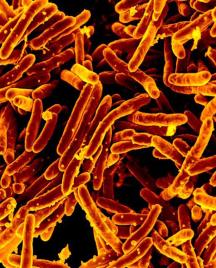
Research -Frozen chemistry controls bacterial infections – Yersinia

Yersinia_enterocolitica_01Science Daily

Chemists and molecular biologists have made an unexpected discovery in infection biology. The researchers can now show that two proteins that bind to one another slow down a chemical reaction central to the course of the disease in the bacteria Yersinia pseudotuberculosis. The results have been published in the Journal of Biological Chemistry.

Research -Importance of rare microbial species is much greater than you think

Science Daily myco

The rare bacterial species in a microbial community — species that each make up rarely more than one tenth of one percent of the entire population — play a very important role in ecosystem health and stability. The research is published March 3 in Applied and Environmental Microbiology, a journal of the American Society for Microbiology.

“The work aims to provide a fundamental understanding of how biodiversity contributes to ecosystem functioning,” said corresponding author Kostas Konstantinidis, PhD.

Despite the small population of each rare species in a microbial community, such species may number as much as several hundred within a community, such that the so-called “rare biosphere” may account for roughly 20-30 percent of individual bacteria within an aquatic community.

As the authors showed in the study, the sheer numbers of rare species resulted in the rare biosphere containing a large reservoir of genes that can degrade important organic pollutants, and that could help the entire microbial community maintain stability in the face of changing conditions, possibly including climate change.

To investigate this issue, the authors, a team from Georgia Institute of Technology, Atlanta, established “mesocosms” — indoor experimental systems — containing 20 liters of water, each. They inoculated these with water samples from the nearby freshwater Lake Lanier.

Konstantinidis said that they then dribbled three frequently used organic chemicals into the mesocosms. By design, these chemicals were not present in the mesocosms at the time of sampling, said Konstantinidis, who is the Carlton S. Wilder Associate Professor in the School of Civil & Environmental Engineering at Georgia Tech. The reason for that is that compounds that are common in a lake are commonly metabolized by abundant members of the microbial community, and so would not have shed light on the rare biosphere. “Also, the important environmental pollutants are generally at low concentration in most natural environments, similar to the organic compounds used here — except during major events such as oil spills” said Konstantinidis. (image: indoor mesocosm in a greenhouse. Wikimedia Commons)

The assayed compounds included 2,4-dichlorophenoxyacetic acid (2,4-D), a widely used herbicide that is an endocrine disrupter and a “possible human carcinogen,” according to the International Agency for Research on Cancer (IARC); caffeine (1,3,7-trimethyluric acid); and 4-nitrophenol (4-NP), a precursor of several fungicides and a decomposition product of pesticides.

“We chose these compounds because their biodegradation pathways and the underlying genes are known, which facilitated tracking which microbial populations encoded the proteins for the biodegradation of these organic compounds,” said Konstantinidis.

The researchers then repeatedly sampled the mesocosms to determine which bacterial species multiplied, or became depleted in response to the chemicals. “The results allowed us to rigorously test the hypothesis that low abundance species, as opposed to common species, provided the metabolic diversity that enabled the community to respond to the added compounds and the changing conditions,” said Konstantinidis.

The motivation for the study was to be able to better predict how microbial communities will respond to future perturbations such as pesticides, oil spills, and even climate change, said Konstantinidis. Questions it might help answer include that of how valuable microbial diversity is for ecosystem functioning, including for maintaining resilience to human-caused pollution. The results of this and future studies might also help enable predicting the consequences of loss of biodiversity, for example, in the wake of massive pollutant spills or climate change.

USA -Meijer Expands Recall To Include Meijer Artisan Made Natural Muenster Cheese And Pre-Made Ham Sub Sandwich Due To Possible Health Risk – Listeria monocytogenes

FDA

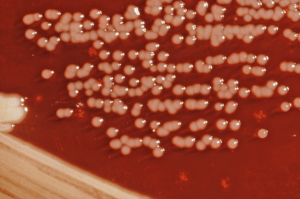
Meijer expanded its list of recalled items to now include its Meijer brand Artisan Made Natural Muenster Cheese and its pre-wrapped Ham Sub on Artisan White Baguette due to a potential cross contamination with Listeria monocytogenes, an organism which can cause serious and sometimes fatal infections in young children, frail or elderly people, and others with weakened immune systems. Although healthy individuals may suffer only short-term symptoms such as high fever, severe headache, stiffness, nausea, abdominal pain and diarrhea, a Listeria monocytogenes infection can cause miscarriages and stillbirths among pregnant women.

The affected Meijer brand Artisan Made Natural Muenster Cheese was located on “cheese islands” within the Retailer’s Deli section and has the expiration dates of Mar. 28, 2017, May 13, 2107, and June 10, 2017.  The Meijer pre-made Ham Sub on Artisan White Baguette was located in its “grab-and-go” fresh deli cases with sell by dates between Nov. 2, 2016 and Dec. 30, 2016. There have been no known illnesses reported to Meijer associated with these products.

Meijer received notice of a possible Listeria monocytogenes contamination from MDS Foods, a Meijer supplier. MDS Foods informed Meijer that evidence of potential Listeria monocytogenes contamination had been identified due to possible cross contamination after being processed on the same line as previous recalled cheese, announced on February 10.

USA -The Soynut Butter Co Recalls I.M. Healthy Original Creamy Soynut Butter Because Of Possible Health Risk – E.coli O157

The SoyNut Butter Co. of Glenview, IL is recalling I.M. Healthy Original Creamy SoyNut Butter product because it may be contaminated with  Escherichia coli O157:H7 bacteria E. Coli O157:H7). E. coli O157:H7 causes a diarrheal illness often with bloody stools. I.M. Healthy Original Creamy SoyNut Butter was distributed in multiple states and may have been purchased in stores or through mail order. It was also distributed to childcare centers and schools in multiple states.

The product has been packaged in 15 oz plastic jars with the Best By dates July 05, 2018, August 30, 2018, and August 31, 2018; individual portion cups with the Best By date as August 08, 2018; and 4 lb plastic tubs with Best By dates of November 16, 2018 and July 25, 2018.

Although most healthy adults can recover completely within a week, some people can develop a form of kidney failure called Hemolytic Uremic Syndrome (HUS). HUS is most likely to occur in young children and the elderly. The condition can lead to serious kidney failure and even death.

Twelve people infected with the outbreak strain of STEC O157:H7 have been reported from five states to date.

The recall was initiated after ill people or their family members answered questions about the foods they ate and other exposures in the week before they became ill. Nine (100%) of the nine people reached for interview reported either eating I.M. Healthy brand SoyNut Butter at home (five people) in the week before they became ill or attending a childcare center that served I.M. Healthy brand SoyNut Butter.


USA -Ohio Farms Packing Co. Ltd. Recalls Veal Products Due To Possible E. Coli O103 Contamination

FSIS USDA

Ohio Farms Packing Co. Ltd., a Creston, Ohio establishment, is recalling approximately 40,680 pounds of boneless veal products that may be contaminated with E. coli  O103, the U.S. Department of Agriculture’s Food Safety and Inspection Service (FSIS) announced today. Also included in the recall is an undetermined amount of veal cutlets produced by Ohio Farms Packing Co. Ltd. All of the cutlets were sold to food services; none of this product was sold directly to consumers. Companies that purchase products from Ohio Farms Packing Co. Ltd. should contact the firm directly to determine whether or not the product they have purchased is subject to the recall.

The boneless veal products were produced Nov. 30, 2016 through Feb. 3, 2017. The following products are subject to recall: [View Label (PDF Only)]

  • 60-lb boxes of “Atlantic Veal & Lamb Inc.: Boneless Veal SF” with product codes:
    • 511012
    • 511020
    • 511021
    • 511023
    • 511024
    • 511030
    • 511032
    • 511034
    • 511336
    • 511337
    • 511340
    • 511341
    • 511343
    • 511351
    • 511362
    • 511365
  • 60-lb boxes of “Atlantic Veal & Lamb LLC: Boneless Veal” with product codes:
    • 507023
    • 507030
    • 507335
    • 507342
    • 507356
    • 507358

The products subject to recall bear establishment number “EST. 34569” inside the USDA mark of inspection. These items were shipped to distributors in Illinois, Michigan, North Carolina, Ohio, Oklahoma, Pennsylvania, Texas and Canada.

The problem was discovered when FSIS was notified by the Illinois State Department of Agriculture about a positive non-0157 Shiga toxin-producing E. coli sample.

There have been no confirmed reports of adverse reactions due to consumption of these products.

Many clinical laboratories do not test for non-O157 Shiga toxin-producing E. coli (STEC), such as STEC O103 because it is harder to identify than STEC O157. People can become ill from STECs 2–8 days (average of 3–4 days) after consuming the organism. Most people infected with STEC O103 develop diarrhea (often bloody), and vomiting. Some illnesses last longer and can be more severe. Infection is usually diagnosed by testing of a stool sample. Vigorous rehydration and other supportive care is the usual treatment; antibiotic treatment is generally not recommended.

Most people recover within a week, but, rarely, some develop a more severe infection. Hemolytic uremic syndrome (HUS) is uncommon with STEC O103 infection. HUS can occur in people of any age but is most common in children under 5 years old, older adults and persons with weakened immune systems. It is marked by easy bruising, pallor, and decreased urine output. Persons who experience these symptoms should seek emergency medical care immediately.

FSIS and the company are concerned that some product may be frozen and in customer’s freezers.

Customers who have purchased these products are urged not to use them. These products should be thrown away or returned to the place of purchase.


India -7 students taken ill after taking food at school

India.com

Kendrapara (Odisha), Mar 2 (PTI) At least seven students of a central government run residential school near here were taken ill due to suspected food poisoning, officials said today.

The students of Jawahar Novodyayaa Vidyalay were taken to district headquarters hospital after they fell sick last night and discharged this morning.

Doctors at the hospital said the students might have taken food that contained some toxic substance.

The authorities of the school run by Union HRD Ministry are trying to ascertain the cause of the students’ illness, officials said.

Viet Nam -Food poisoning deaths up in Vietnam in Jan-Feb

News Ghana

Vietnam witnessed 13 food poisoning cases between January and February, sickening 385 people and killing 11 others, its Preventive Health Department said Wednesday.

A methanol poisoning case on Feb. 10 in the northern province of Lai Chau affected 40 local people, including seven fatalities.

Vietnam saw 11 food poisoning cases which affected 784 people, including one death in the first two months of last year.

Ukraine -Food poisoning sickens 60 children in Ukraine

APA.AZ

Baku-APA. At least 60 children aged between seven and 16 years were sickened by food poisoning in Ukraine’s eastern Donetsk region, the National Police said on Wednesday, APA reports quoting Xinhua.

The children have appealed for medical assistance with symptoms of gastroenteritis and toxic infection after eating a dinner at the school of Bakhmut town, the police said in a statement.

According to the statement, 16 children were hospitalized in the contagious isolation ward in moderately grave condition.

The police have opened a criminal case over the incident.

Japan – Dried seaweed to blame for mass food poisoning at schools

Asahi Shimbun

Shredded dried laver seaweed caused a wave of food poisoning that affected more than 1,000 children and teachers at seven elementary schools in Tachikawa on the outskirts of Tokyo from Feb. 17.

The norovirus was detected in the “nori” that was served in school meals on Feb. 16, the Tokyo metropolitan government announced Feb. 28.

In Tachikawa, 1,098 victims had complained of diarrhea and vomiting as of noon Feb. 24.

Another outbreak occurred in Wakayama Prefecture, western Japan, in January due to nori provided by the same maker as in the Tachikawa case.

The shredded nori was provided by Tokaiya Co., which is headquartered in Osaka’s Miyakojima Ward. Tokaiya is voluntarily recalling products that may be affected.

The seaweed in the Tachikawa case was used as a topping for a bowl of rice covered with a mixture of chicken and eggs.

A study by the metropolitan government’s food surveillance department showed that the virus gene type detected from the packaged nori matched that from the sampled stools of victims.

India – Over 150 suffer food poisoning during wedding in Uttar Pradesh

Mid-Day.com

Bijnor (UP): Over 150 people, including children, suffered food poisoning allegedly after having meal during a wedding ceremony at a village here, officials said on Tuesday.

The guests started vomiting and complained of diarrhoea after consuming the food at the function held at Tukhmapur Harvansh village under Nagina police station on Monday afternoon, they said.

The samples of food items have been sent to lab for checking, said Sub-Divisional Magistrate, Nagina, Shishir Kumar, who had reached the spot on being informed about the incident.

The cause of the food poisoning could be ascertained once the report comes out,” he added.