Category Archives: Uncategorized

India – TOP NEWS FSSAI’s new tool to make states compete based on food safety performance

FNB News images

The Food Safety and Standards Authority of India (FSSAI) will soon initiate a programme for setting up a Food Safety Index in the country. Under the programme, each state would be judged on various parametersvis-à-vis the food safety ecosystem, from enforcement to consumer awareness.

The country’s apex food regulator is working on the contours of the programme, which is aimed at benchmarking the performance of the state food safety departments and expected to be launched in the next six to eight weeks.

Explaining the programme in an exclusive chat to F&B News, Pawan Kumar Agarwal, chief executive officer, FSSAI, said, “This is being done to make the states feel the need to recognise the food safety challenges and gear themselves up for any situation.”

He said, “As we all know, the issues of food safety and nutrition are getting priority and taking centrestage. In some states, the work has been commendable, while some states are lagging behind.”

“So in terms of the Food Safety Index, we expect to capture the performance of the state food safety departments in terms of manpower,enforcement activities, consumer focus, etc.,” Agarwal said.

He added,“It was for the benchmarking of the states. Within a matter of 6-8 weeks,we expect the details of the programme to be out.”

“This is to capture what the states are doing in terms of food safety. We will ask the states to provide information about their work to analyse where they stand in terms of the food safety ecosystem, what are the gaps, what is it that they do well, what is lacking and what innovative ideas the state authority is coming up with to further up the food safety mechanism,” Agarwal added.

 

USA – Golden Gourmet Recalls Frozen Waffle and Turkey Sausage Products Due to Possible Listeria Contamination

FSIS-USDA kswfoodworld Listeria monocytogenes

Golden Gourmet, an Americus, Ga. establishment, is recalling approximately 5,248 pounds of frozen entree products that may be adulterated with Listeria monocytogenes, the U.S. Department of Agriculture’s Food Safety and Inspection Service (FSIS) announced today.

The frozen waffles with turkey sausage patty items were produced and packaged on December 21, 2016, December 28, 2016, December 29, 2016 and December 30, 2016. The following products are subject to recall: [View Labels (PDF Only)]

  •  5,248 lbs. of 7.1 oz. trays with clear film in cardboard box packages containing “Waffles, Turkey Sausage Patty with Sliced Apple Seasoned w/Brown Sugar and Cinnamon” on the label, lot codes of  “2016355,” “2016363,” “2016364” and “2016362,” and Use By dates of  06/21/18, 06/28/18, 06/29/18 and 06/30/18.

The products subject to recall bear establishment number “P-51269” inside the USDA mark of inspection. These items were shipped to institutions in Georgia, Iowa, Illinois, Ohio, South Carolina and Tennessee.

The problem was discovered on May 19, 2017 when Golden Gourmet received a letter of notification from its supplier, US Foods, about products that had been recalled. Golden Gourmet notified FSIS on May 23, 2017 about the inclusion of recalled US Foods product in Golden Gourmet products.  There have been no confirmed reports of adverse reactions due to consumption of these products.

UK – Survey shows further reduction in levels of campylobacter in chicken

FSA 


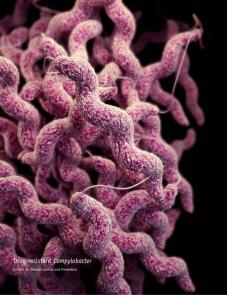
The Food Standards Agency (FSA) has today published the latest results from its survey of campylobacter on fresh shop-bought UK-produced chickens. The figures show that on average, across the market, 6.5% of chickens tested positive for the highest level of contamination, carrying more than 1,000 colony forming units per gram (cfu/g). This is down from 9.3%, for the same period last year.

This is the second set of results from our third annual retail survey, based on tests of 1,051 whole fresh chickens sampled during January to March 2017.

The latest data from the survey also found that:

  • the figure for high-level campylobacter prevalence (>1000cfu/g) among the nine named retailers was 5% (compared to 7.8% in January to March 2016).
  • the retailers which had significantly lower levels compared to the average among all retailers were M&S, Morrisons and Waitrose at 2.5%, 2.8% and 2.7% respectively
  • the group consisting of a number of smaller retailers and butchers (‘Others’), had a significantly higher level (16.9%) compared to the market average
  • 48.8% of chicken skin samples tested positive for campylobacter at any level, compared to 50% which tested positive in the same period last year.

Heather Hancock, Chairman of the Food Standards Agency said: ‘It is good to see that levels continue to go down as this indicates that the major retailers and processors are getting to grips with campylobacter. These results give us a clear picture of the positive direction in which we are heading, and help us measure the impact of interventions that are being used to reduce contamination. While results are reassuring, we want to see more progress among the smaller businesses, to achieve real and lasting reductions.

‘In the meantime, I am delighted to see the commitment and responsibility that the industry has shown, so far, in their efforts to provide consumers with food they can trust. They have invested a lot of effort and money into interventions to tackle the problem and it is showing clear results.’

The results for the first five months of our third retail survey (published in March 2017) showed that 7% of chickens tested positive for the highest level of contamination, down from 12% for the same period in 2015 and 20% in 2014. This improvement in the highest levels of contamination is mirrored by the decrease in the number of human cases – an estimated 100,000 fewer cases of campylobacter in 2016.

The results met the aims agreed by the FSA Board to reduce the number of people getting ill from the food poisoning. The reduction was estimated to lead to a direct saving to the economy of over £13 million in terms of fewer days off work and NHS costs.

USA – Outbreak over: Yolo County declares the end of the Norovirus school outbreak

Outbreak News Today Norwalk_Caspid

The Yolo County Health & Human Services Agency (HHSA) declares the end of the Norovirus school outbreak. This announcement comes a little over a month after the first cases were reported by local Yolo County schools.

Rsearch – Predicting and Modelling the Growth of Potentially Pathogenic Bacteria in Coalho Cheese

Journal of Food Protection

Coalho is a semihard medium- to high-moisture cheese produced in various states in the northeastern region of Brazil. This study was conducted to predict the growth kinetics (maximum growth rate, Grmax) of Escherichia coli, Listeria monocytogenes, Salmonella, and Staphylococcus aureus using the ComBase predictor with various combinations of temperature, pH, and water activity (aw) in commercial Coalho cheese samples. The growth of two antibiotic-resistant derivative strains of L. monocytogenes (parental strains ATCC 19115 and ATCC 7644) and S. aureus (parental strains ATCC 13565 and ATCC 19095) was measured in commercial Coalho cheese samples during 14 days of storage as a function of the initial contamination level (3 and 5 log CFU/g) and storage temperature (7.5 and 12°C). The highest Grmax values predicted by ComBase under the various conditions of temperature, pH, and aw were for L. monocytogenes (0.006 to 0.065 log CFU/g/h) and S. aureus (0.003 to 0.048 log CFU/g/h). The Grmax values predicted by ComBase for E. coli and Salmonella were 0.007 to 0.026 and 0.008 to 0.041 log CFU/g/h, respectively. An experimental challenge in Coalho cheese revealed that the populations of all tested antibiotic-resistant derivative strains of L. monocytogenes and S. aureus increased (>0.5 log CFU/g) by day 14 of storage at 7.5 or 12°C. L. monocytogenes and S. aureus had higher Grmax values in cheese samples stored at 12°C than those stored at 7.5°C. The ComBase growth predictions under the temperature, pH, and aw conditions in commercial Coalho cheese samples were generally fail-safe for predicting the growth of L. monocytogenes and S. aureus in the actual product. These results indicate that Coalho cheese has pH and aw characteristics that allow the growth of E. coli, L. monocytogenes, Salmonella, and S. aureus. These cheeses are typically stored at temperatures that do not prevent the growth of these bacteria.

Research – A Study To Assess the Numbers and Prevalence of Bacillus cereus and Its Toxins in Pasteurized Fluid Milk

Journal of Food Protection

Bacillus cereus is a pathogenic adulterant of raw milk and can persist as spores and grow in pasteurized milk. The objective of this study was to determine the prevalence of B. cereus and its enterotoxins in pasteurized milk at its best-before date when stored at 4, 7, and 10°C. More than 5.5% of moderately temperature-abused products (stored at 7°C) were found to contain >105 CFU/mL B. cereus, and about 4% of them contained enterotoxins at a level that may result in foodborne illness; in addition, more than 31% of the products contained >105 CFU/mL B. cereus and associated enterotoxins when stored at 10°C. Results from a growth kinetic study demonstrated that enterotoxin production by B. cereus in pasteurized milk can occur in as short as 7 to 8 days of storage at 7°C. The higher B. cereus counts were associated with products containing higher butterfat content or with those produced using the conventional high-temperature, short-time pasteurization process. Traditional indicators, aerobic colony counts and psychrotrophic counts, were found to have no correlation with level of B. cereus in milk. The characterization of 17 representative B. cereus isolates from pasteurized milk revealed five toxigenic gene patterns, with all the strains carrying genes encoding for diarrheal toxins but not for an emetic toxin, and with one strain containing all four diarrheal enterotoxin genes (nheA, entFM, hblC, and cytK). The results of this study demonstrate the risks associated even with moderately temperature-abused pasteurized milk and the necessity of a controlled cold chain throughout the shelf life of fluid milk to enhance product safety and minimize foodborne illness.


Iraq – One child dead, 800 ill after food poisoning in Mosul IDP camp

RUDAW

ERBIL, Kurdistan Region – One child has died and some 800 internally displaced persons (IDPs) from Mosul in Hassansham U2 camp are suffering from food poisoning after a charity delivered food from an Erbil restaurant.

Monday evening, a Qatari charity organization brought Iftar dinner for 2,000 IDPs breaking their Ramadan fast in the camp.

Rizgar Obed, camp supervisor from the Barzani Charity Foundation, told Rudaw that between 800 and 900 people were affected.

Saman Barzinji, the head of Erbil health department, told Rudaw that one child has died. He also said that they have recorded 752 cases, adding that the patients are treated in three different locations, including Khabat hospital, the closest hospital to the camp, about 30 km west of Erbil.

The food was beans, rice, chicken, and a yogurt drink brought from a restaurant in Erbil. Most of those affected were children and elderly, complaining of vomiting and stomachache.

Dr Hersh Qadir Barzinji  in Erbil who treated some of the patients told Rudaw that the symptoms included severe vomiting and dehydration.

Erbil health directorate sent a special team and 30 ambulances to the camp, bringing the most severe cases to hospitals in Erbil and Khabat.


USA – CC Kitchens Announces Recall of Limited Number of Salad and Slaw Kits Containing Leafy Greens Due to Possible Health Risk – Listeria monocytogenes

FDA kswfoodworld Listeria monocytogenes

Cincinnati, OH (June 8, 2017) – CC Kitchens is recalling a limited number of salad and slaw kits due to a possible health risk from Listeria. No contamination has been reported to have occurred on any product, nor have any illnesses been reported to date in association with the recall. Rather, the recall was initiated by the processor of certain leafy greens in an abundance of caution due to instances of positive test results for the presence of Listeria being identified by the processor during environmental testing of portions of their facility. Listeria monocytogenes is an organism which can cause serious and sometimes fatal infections in young children, frail or elderly people, and others with weakened immune systems. Although healthy individuals may suffer only short-term symptoms such as high fever, severe headache, stiffness, nausea, abdominal pain and diarrhea, Listeria monocytogenes can cause miscarriages and stillbirth among pregnant women. The recall is being performed in the coordination with the FDA and USDA. The products being recalled were packaged by CC Kitchens on May 31 through June 5, 2017 and are limited to the following:

Name of Product Unit Size Sell by Dates UPC
Chef Salad 12.6oz (357g) 6/5/2017 through 6/10/2017 815108020337
Chicken Bacon Cobb Salad 13.1oz (371g) 6/5/2017 through 6/10/2017 815108020351
Chef Side Salad 9.4oz (266g) 6/5/2017 through 6/10/2017 815108021488
Garden Salad 11oz (312g) 6/5/2017 through 6/10/2017 815108020092
Chicken Bacon Cobb Side Salad 9.65oz (274g) 6/5/2017 through 6/10/2017 815108021495
Fiesta Slaw 10oz (283g) 6/7/2017 through 6/11/2017 815108020627
Trail Slaw Kit 40oz (1133g) 6/7/2017 through 6/11/2017 815108025431
Asian Quinoa salad Kit 80oz (2268g) 6/7/2017 through 6/11/2017 815108021556
Beef Ponzu Kit 40oz (1133g) 6/7/2017 & 6/8/2017 815108025417
SouthWest Turkey Salad Kit 40oz (1133g) 6/8/2017 & 6/10/2017 081510802278

The above items were distributed only through Kroger in Ohio, Michigan and West Virginia.

As noted, no illnesses have been reported to date relative to this limited recall, which was a proactive step taken by the processor due to a limited number of positive test results discovered by the company in portions of their facility during internal environmental monitoring during a specific period.

Research – Foodborne Disease Outbreaks in Correctional Institutions-United States, 1998-2014

NCBI

Abstract

OBJECTIVES:

To present the first update on the epidemiology of US foodborne correctional institution outbreaks in 20 years.

METHODS:

We analyzed data from the Centers for Disease Control and Prevention’s Foodborne Disease Outbreak Surveillance System to describe correctional institution outbreaks from 1998 to 2014 and compare them with other foodborne outbreaks.

RESULTS:

Two hundred foodborne outbreaks in correctional institutions were reported, resulting in 20 625 illnesses, 204 hospitalizations, and 5 deaths. Median number of outbreak-associated illnesses per 100 000 population per year was 45 (range = 11-141) compared with 7 (range = 4-10) for other outbreaks. These outbreaks accounted for 6% (20 625 of 358 330) of outbreak-associated foodborne illnesses. Thirty-seven states reported at least 1 outbreak in a correctional institution. Clostridium perfringens (28%; 36 of 128) was the most frequently reported single etiology. The most frequently reported contributing factor was food remaining at room temperature (37%; 28 of 76).

CONCLUSIONS:

Incarcerated persons suffer a disproportionate number of outbreak-associated foodborne illnesses. Better food safety oversight and regulation in correctional food services could decrease outbreaks. Public Health Implications. Public health officials, correctional officials, and food suppliers can work together for food safety. Clearer jurisdiction over regulation of correctional food services is needed.

Bangledesh – Mother, son die of food poisoning in Sirajganj

Business News 24bd

A mother and her son died of food poisoning in the district’s Tarash upazila on Saturday night.

The incident happened around 9.30pm at Parchimpara village under Madhainagar union.
The deceased were identified Sona Bhan (35), wife of Tofazzel Hossain, and her son Sohag (4).

Family members said that the duo fell sick after taking food at night. They were taken to Tarash Upazila Health Complex but the duty doctors declared them dead.