Category Archives: Uncategorized

Research – Inactivation of Bacillus cereus Spores on Red Chili Peppers Using a Combined Treatment of Aqueous Chlorine Dioxide and Hot-Air Drying

Wiley Online Library

Abstract

The effect of a combined treatment using aqueous chlorine dioxide (ClO2) and hot-air drying to inactivate Bacillus cereus spores on red chili peppers was evaluated. Ten washed and dried pepper samples, each comprising half of a single pepper (Capsicum annuum L.), were inoculated with B. cereus spore suspension. The inoculated samples were washed with sodium hypochlorite (NaOCl; 50, 100, or 200 μg/mL) or ClO2 (50, 100, or 200 μg/mL) solution for 1 min and then air-dried (25 ± 1 °C, 47 ± 1% relative humidity), which was followed by drying with hot air at 55 °C for up to 48 h. The spore populations on the samples were enumerated and their aw and chromaticity values were measured. The spore numbers immediately after treatment with NaOCl and ClO2 were not significantly different. A more rapid reduction in spore numbers was observed in the samples treated with ClO2 than those treated with NaOCl during drying. A combined treatment of ClO2 and hot-air drying significantly reduced the spore populations to below the detection limit (1.7 log CFU/sample). B. cereus spores on chili peppers were successfully inactivated by washing with ClO2 solution followed by hot-air drying whereas the pepper color was maintained.

Practical Application

Chili peppers may be treated with sodium hypochlorite (NaOCl) or aqueous chlorine dioxide (ClO2) in combination with hot-air drying to remove Bacillus cereus spores. While NaOCl or ClO2 alone may remove some spores, combined treatment with ClO2 and hot-air drying is more effective in terms of reducing spore numbers. The color of chili samples was not affected by the combined treatment of ClO2 and hot-air drying.

Canada – Updated Food Recall Warning – Certain Pie Shells and Tart Shells recalled due to E. coli O121

CFIA

Ottawa, June 21, 2017 – The food recall warning issued on June 19, 2017 has been updated to include additional product information. This additional information was identified during the Canadian Food Inspection Agency’s (CFIA) food safety investigation.

Industry is recalling certain pie shells and tart shells due to possible E. coli O121 contamination. Consumers should not consume the recalled products described below.

Recalled products

Brand Name Common Name Size Code(s) on Product UPC Additional Info
Remark Fresh Markets 2″ Tart Shells 200 g Sold from January 13, 2017 to June 5, 2017 0 250542 002998 Sold in Ontario from Remark Fresh Markets London –
1190 Oxford St W
London, ON
Remark Fresh Markets 5″ Tart Shells 120 g Sold from May 12, 2017 to June 5, 2017 0 250542 001994 Sold in Ontario from Remark Fresh Markets London –
1190 Oxford St W
London, ON
Zehr’s Country Market – Millbank Tart Shells Unsweetened 2″ Variable Sold from March 15, 2017 to June 5, 2017 0 203017 408498 Sold in Ontario from Zehr’s Country Market –
6979 Main St.
Millbank, ON
Zehr’s Country Market – Millbank Tart Shells Unsweetened 3″ Variable Sold from December 21, 2016 to June 5, 2017 0 203018 706999 Sold in Ontario from Zehr’s Country Market –
6979 Main St.
Millbank, ON
Zehr’s Country Market – Millbank Tart Shells Unsweetened 4″ 18 units Sold from March 29, 2017 to June 5, 2017 0 203019 307997 Sold in Ontario from Zehr’s Country Market –
6979 Main St.
Millbank, ON
Zehr’s Country Market – Millbank Tart Shells Unsweetened 5″ 10 PK Sold from January 18, 2017 to June 5, 2017 0 203020 206494 Sold in Ontario from Zehr’s Country Market –
6979 Main St.
Millbank, ON
Green’s Meat Market 2″ Tart Shell 40 pieces Sold from March 8, 2017 to May 31, 2017 None Sold in Ontario from Green’s Meat Market –
237 Arthur St.
Wingham, ON
Green’s Meat Market 3″ Tart Shell 30 pieces Sold from January 11, 2017 to May 31, 2017 None Sold in Ontario from Green’s Meat Market –
237 Arthur St.
Wingham, ON
Green’s Meat Market 9″ Deep Pie Shell 3 x 190 g Sold from March 8, 2017 to May 31, 2017 None Sold in Ontario from Green’s Meat Market –
237 Arthur St.
Wingham, ON

Morocco – Three family members succumb to botulism

Outbreak News Today

A mother and two daughters have died due to botulism in Ouarzazate in south-central Morocco, according to a L’Economiste report (computer translated). It is reported that the father was not sickened as he was traveling at the time.

The source of the botulism has not been pinpointed to date.

Food borne botulism is a severe intoxication caused by eating the preformed toxin present in contaminated food.

USA – Two-year-old solo E. coli victim fighting for his life in Dallas

Food Safety News

Only 20 percent of the estimated 265,000 Shiga toxin-producing Escherichia coli (STEC) cases annually in the United States involve outbreaks that the public hears about, according to the federal Centers for Disease Control and Prevention.

Two-year-old Landon Huston, currently at Children’s Medical Center Dallas, is one of the solo cases that comprise the other 80 percent of the nation’s potentially deadly E. coli infections. Media generally doesn’t cover such cases extensively and in many individual cases no one but the families and public health agencies are informed.

Landon is on life support after his Shiga toxin-producing E. coli brought on the life-threatening kidney ailment known as Hemolytic Uremic Syndrome or HUS. It destroys red blood cells, with the potential for complete kidney failure. Many victims require transplants.

Europe – Multi-country outbreak of new Salmonella enterica 11:z41:e,n,z15 infections associated with sesame seeds

ECDC 


An outbreak of a new serovar of Salmonella enterica subspecies enterica with antigenic formula 11:z41:e,n,z15, initially detected in Greece, affected 47 individuals in five European Union countries (the Czech Republic, Germany, Greece, Luxembourg and the United Kingdom) between March 2016 and May 2017. Epidemiological and microbiological evidence linked some of the outbreak cases to a sesame paste produced by a Greek manufacturer. The sesame seeds used for the production of the sesame paste were traced back to an African country. The same Greek manufacturer also processed a batch of sesame seeds imported from another African country that tested Salmonella positive after processing. The most recent cases associated with this outbreak were reported in Germany and Luxembourg in March 2017. Since the withdrawal of the implicated sesame paste in March and April 2017, no new cases were reported. If new cases with the outbreak serovar are reported, competent authorities in the European Union/European Economic Area (EU/EEA) should consider rapidly interviewing the cases to assess the exposures and attempt to identify potential links to the outbreak. In line with established procedures – and as carried out so far – new cases and important developments should be reported to EPIS-FWD (Epidemic Intelligence Information System for Food- and Waterborne Diseases and Zoonoses) and to EWRS (Early Warning and Response System). The latter represents the official channel to notify cross-border threats. Information from food investigations should be shared by issuing relevant notifications in the Rapid Alert System for Food and Feed (RASFF). National public health and food safety authorities should exchange relevant information with each other.

USA – Chic-a-Peas Recalls Chickpeas for Possible Listeria

Food Poisoning Bulletin

Chic-a-Peas is voluntarily recalling some of their Baked Crunchy Chickpeas because they may be contaminated with Listeria monocytogenes bacteria. No illnesses have been reported to date.

The recalled products are Chic-a-Peas, Baked Crunchy Chickpeas, Sea Salt in 2.0 ounce (57g) packages, with Best By Date of 12/27/2017, UPC number 853404004033, and Lot Code 0867. Also recalled is Chic-a-Peas, Baked Crunchy Chickpeas, Fresh Salsa in 2.0 oz (57g) packages, with Best By Date of 12/27/2017, UPC number 853404004071, and Lot Code 0877. Finally, Chic-a-Peas, Baked Crunchy Chickpeas, Falafel in 2.0 oz (57g) packages is recalled, with Best By Date of 12/28/2017, UPC number 853404004026, and Lot Code 0897.

USA – Research – Summary of Botulism Cases Reported in 2015

CDC  Clost

A total of 199 confirmed and 14 probable cases of botulism were reported to CDC in 2015. Among confirmed cases, infant botulism accounted for 141 (71%) cases, foodborne botulism for 39 (20%) cases, wound botulism for 15 (8%) cases, and botulism of unknown or other transmission category for 4 (2%) cases (Table 1). Among probable cases, foodborne botulism accounted for 6 (43%) cases and wound botulism for 8 (57%) cases.

The 141 cases of infant botulism were reported from 33 states and the District of Columbia. The median age of patients was 2.7 months with a range of 0 – 10 months; 70 (50%) were girls. Toxin type A accounted for 60 (43%), toxin type B accounted for 79 (56%), and toxin type Bf accounted for 2 (1%). No deaths were reported.

The 39 cases of confirmed foodborne botulism were reported from 7 states (Figure 1). The median age of patients was 59 years with a range of 9 – 92 years; 25 (64%) were women. There were 5 outbreaks (events with two or more cases) accounting for 37 confirmed cases. One outbreak was associated with home-canned potatoes in a potato salad served at a church potluck (27 cases),† one was associated with fermented seal flipper (4 cases), and one was associated with beets roasted in aluminum foil and kept at room temperature for several days then made into a soup (2 cases). In addition, there were two outbreaks of two cases each living in the same household or facility in which the foodborne source was unknown (Table 2a). Toxin type A accounted for 34 (87%), and toxin type E accounted for 5 (13%). One death was reported.

The 6 cases of probable foodborne botulism (clinically compatible illness, not laboratory-confirmed, with an epidemiologic link to a suspect food) were reported from 3 states. The median age of patients was 53 years with a range of 23 – 73 years; 3 (50%) were women. No deaths were reported. Seal oil was the suspected food source for 2 of the 6 probable cases (Table 2b).

There were 15 cases of confirmed wound botulism reported from 5 states. The median age of patients was 49 years with a range of 12 – 61 years; 2 (13%) were women. Toxin type A accounted for 14 (93%), and toxin type B accounted for 1 (7%). Fourteen (93%) were people who inject drugs (PWID). One death was reported.

The 8 cases of probable wound botulism (clinically compatible case who has no suspected exposure to contaminated food and who has a history in the 2 weeks before illness began of either a fresh wound or injection drug use) were reported from 3 states. The median age of patients was 59 years with a range of 28 – 78 years; 1 (12%) was a woman. All 8 were PWID. No deaths were reported.

The 4 confirmed botulism cases of unknown etiology were reported from 3 states. The median age of patients was 47 years with a range of 27 – 71 years; 1 (25%) was a woman. Toxin type A accounted for all 4. No definitive route of transmission was identified for these cases. Two cases were suspected to be adult intestinal colonization, a rare form of botulism thought to have a similar mechanism as infant botulism. The other two cases did not consume a suspect food, have any wounds, or have any known risk factors for adult intestinal colonization. How these persons were exposed to botulinum toxin is unknown. One patient developed botulism in 2015 and died in 2016 during a prolonged hospitalization.

 

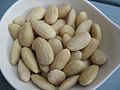
USA – Organic nut recall: Ava’s cashews, almonds may carry Listeria

Food Safety News Almonds

Hampton Farms has expanded its recall of Ava’s brand cashews and almonds, distributed for retail sale in New Jersey, because its nut supplier Hudson Valley Foods Inc. found Listeria monocytogenes in its processing plant in Highland, NY.

Hampton Farms used the nuts from Hudson Valley Farms in Ava’s branded organic roasted unsalted cashews and organic roasted unsalted almonds, according to a news release issued Monday by Hampton.

Samples of current ingredients at Hampton Farms tested negative for Listeria. The company has notified all affected distributors and retail customers, and the affected products are being pulled from store shelves. There had been no confirmed illnesses reported to public health authorities as of Monday.

USA – United Natural Trading LLC Announces Voluntary Recall of Products Containing Organic and Natural Chopped Dates Due to Possible Health Risk – Listeria monocytogenes

FDA

United Natural Trading LLC, Edison, NJ, is voluntarily recalling a limited number of products containing Organic and Natural dates (see below) and sold under the Nature’s Promise, Woodstock, Market Basket, and Wholesome Pantry brands due to a possible health risk from Listeria monocytogenes. Listeria monocytogenes is an organism which can cause serious and sometimes fatal infections in young children, frail or elderly people, and others with weakened immune symptoms. Although healthy individuals may suffer only short-term symptoms such as high fever, severe headache, stiffness, nausea, abdominal pain and diarrhea, Listeria infection can cause miscarriages and stillbirths among pregnant women.

Description Lot Number Best By Date UPC#
Nature’s Promise Organic Campfire Trail Mix 12oz. 17100 11/23/2017 688267066092
Nature’s Promise Organic Campfire Trail Mix 12oz. 17115 12/23/2017 688267066092
Nature’s Promise Cranberry Trail Mix 12oz. 17138 11/18/2017 688267066122
Nature’s Promise Cascade Trail Mix 12oz. 17158 12/30/2017 688267066160
Woodstock Organic Kumbaya Mix 10oz. 17096 11/23/2017 042563009366
Woodstock Organic Kumbaya Mix 10oz. 17124 11/23/2017 042563009366
Woodstock Organic Kumbaya Mix 10oz. 17100 11/23/2017 042563009366
Market Basket Cape Cod Cranberry Mix 10oz. 17132 12/30/2017 049705408322
Market Basket Cascade Trail Mix 11oz. 17156 12/30/2017 049705408377
Market Basket Fiber Frenzy 10oz. 17150 12/30/2017 049705409107
Wholesome Pantry Cape Cod Cranberry Mix 8oz. 17142 12/30/2017 041190054855
Wholesome Pantry Organic Trail Mix 8oz. 17142 12/14/2017 041190054992
Wholesome Pantry Organic Trail Mix 8oz. 17160 12/15/2017 041190054992

The lot numbers are printed on the back of each retail bag. The date containing products were shipped to retailers and distributors in limited quantities throughout the United States.

This recall was issued as a precaution because our firm received a recall notice from Hudson Valley Farms/ Bedemco recalling their natural and organic dates for potential contamination with Listeria monocytogenes.

No illnesses have been reported in association with the recall and no other date containing products under the brands are being recalled to date.

Scotland – Shellfish toxins warning

Argyll and Bute Council

Published Date:

15 Jun 2017 – 14:39

RAISED levels of Escheria coli (E.coli) bacteria have now been identified at Kilfinichan Bay and Castle Stalker Cockles following routine monitoring by the council’s Environmental Health team.

It follows the discovery of raised levels of the bacteria at Kerrera West and Loch Craignish Cockles.

A potential risk had also previously been identified at Dunstaffnage, Kerrera East, Loch na Cille and Loch Riddon Cockles.

Our Environmental Health team warn that eating shellfish such as cockles, mussels, oysters or razor fish from these areas may pose a risk to human health. Notices to warn the public and casual gatherers have been posted at various locations on the shore.

People are advised to avoid easting shellfish from these areas until further notice as a precaution. For further information, contact the Environmental Health Team on 01631 567849.