Category Archives: Uncategorized

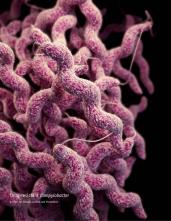
New Zealand – MPI Campylobacter Stratergy

MPI Campylobacter strategy

campy2

Image CDC


Food Safety NZ

MPI’s Campylobacter Risk Management Strategy aims to achieve, within 5 years, a 10% reduction in the annual incidence of human foodborne campylobacteriosis in New Zealand. This is further to the already-achieved 50% reduction in the incidence since 2007.

Because poultry is the most common cause of campylobacteriosis, the strategy for the 2017 – 2020 primarily focuses on controlling Campylobacter in chicken meat.  MPI also continues to investigate other potential food sources such as raw drinking milk and food handling practices that can contribute to the illness.

For more information, download the strategy document and its associated work programme.

Campylobacter Risk Management Strategy 2017 – 2020 (262 KB, PDF)

Campylobacter Risk Management Strategy 2017 – 2020 – Appendix (123 KB, DOCX)

USA – USDA Foodkeeper App – Integrates Recalls

USDA

USDA Integrates Recalls Information into ‘FoodKeeper’ Application

WASHINGTON, August 29, 2017 – The U.S. Department of Agriculture (USDA) today announced new updates to its popular FoodKeeper application that will provide users with new information on food safety recalls. The app has been updated so users can choose to receive automatic notifications when food safety recalls are announced by USDA’s Food Safety and Inspection Service (FSIS) and the Food and Drug Administration (FDA).

In the update posted to the Google Play and iTunes stores, users can select to receive information on food safety recalls immediately when they’re announced or select to receive them daily or weekly. The update also adds instructional videos on proper handling and storage of food, and expands the list of food and beverage products from about 400 to more than 500 items.

“This is a great way for the public to stay informed when food is recalled,” said Acting Deputy Under Secretary for Food Safety Carmen Rottenberg. “The FoodKeeper app is a very handy and easy to use tool; and it reflects USDA’s commitment to provide the public with information and knowledge to help them make informed decisions.”

The FoodKeeper app was developed by FSIS in partnership with Cornell University and the Food Marketing Institute, as a tool to help reduce food waste and improve public health by sharing storage methods that extend the shelf life of the foods and beverages in American homes. It now offers specific storage timelines for the refrigerator, freezer and pantry, for more than 500 products, including various types of baby food, dairy products and eggs, meat, poultry, produce, seafood and more. Since it was launched in April 2015, it has been downloaded nearly 150,000 times.

“These updates to the FoodKeeper are just one more example of FSIS’ commitment to reducing the rates of foodborne illness nationally,” said Rottenberg. “We want to make sure the valuable recall information FSIS and FDA publish is available to as many Americans as possible. With the expansion of products covered in the apps database, this app is helpful to any type of consumer, and I encourage anyone who hasn’t already done so, to download and begin using the FoodKeeper app.”

With the FoodKeeper application, each user can:

  • Find specific storage timelines for the refrigerator, freezer and pantry, depending on the nature of the product;
  • Learn cooking tips and methods for various types of meat, poultry and seafood products;
  • Note in their device’s calendar when products were purchased and receive notifications when they are nearing the end of their recommended storage date;
  • Submit a question to USDA using the ‘Ask Karen’ feature of the application. ‘Ask Karen’ is USDA’s 24/7 virtual representative. The system provides information about preventing foodborne illness, safe food handling and storage, and safe preparation of meat, poultry and egg products;
  • Submit items not included in the database for consideration in future updates;
  • Receive information on food safety recalls immediately when they’re announced or select to receive them daily or weekly.

For those that do not have access to a smartphone, the FoodKeeper app can also be accessed at FoodSafety.gov/FoodKeeper.

Research – 90% of Towels – Contaminated by Bacteria

Netralnews

Microbiologist Says 90 Percent of Towels are Contaminated by Bacteria

JAKARTA,NETRALNEWS.COM – A recent study by microbiologist Dr. Charles Gerba at the University of Arizona, USA, has revealed that nearly 90 percent of the towels are contaminated with coliform bacteria.

Recent research finds most of the towels hanging on the bathroom shelves would be contaminated by bacteria that can be a disease that will be potentially harmful.

Several organisms may indicate the presence of disease-causing bacteria in water. About 14 percent of the bacteria carry E. coli and some also carry salmonella.

“After two days, if you dry your face with a hand towel, chances are you will bring more E. coli to your face,” said Dr. Charles, as quoted from 9honey on Tuesday (9/26/2017).

Another finding is the presence of germs enter when drying hands with towels that are not washed up in the long term. Therefore it should be noted, avoid the risk of contracting bacteria from the towel, avoid wearing the same towel with others. The risk of contracting the disease from the towel appears when there is an external injury or abrasions then the bacteria are more likely to enter the body.

USA – Outbreak at Ramsey County Jail

Outbreak at Ramsey County, MN Jail

Food Poisoning Bulletin

An outbreak at the Ramsey County jail last week sickened more than 100 inmates, according to Doug Schulz, Information Officer for the Minnesota Department of Health. There were probably no hospitalizations in this outbreak.

Research – Salmonella Risk in Animal Feed Production

National Hog Farmer kswfoodworld Salmonella

Research project evaluates salmonella risk in animal feed production

Source: American Feed Industry Association
The Institute for Feed Education & Research, along with several partners — including the American Feed Industry Association, National Pork Board, National Renderers Association, Poultry Protein and Fat Council, U.S. Poultry and Egg Association and the U.S. Soybean Board — has launched a new research project with the University of Arkansas to analyse whether animal feed contains any of the serotypes from the bacteria Salmonella that could pose a health threat to livestock. The yearlong project is aimed at helping the animal feed industry better understand if the bacteria is prevalent at their manufacturing facilities so that it can make more informed decisions on what additional safety measures, if any, should be taken to promote feed safety and protect animal health.

Europe – Legionnaires Risk Travel to Dubai

HPS Scotland

Further to Current note 51/2503 (at http://www.hps.scot.nhs.uk/ewr/redirect.aspx?id=73639), the European Centre for Disease Prevention and Control (ECDC) issued an updated risk assessment on 21 September.

ECDC observed a significant increase in the number of cases of travel-associated Legionnaires’ disease (TALD) in EU travellers returning from Dubai during the period October 2016 to May 2017. This increase, moreover, could not be accounted for by the increase in travel patterns from the EU. The return to the baseline level of TALD in the most recent two months suggests that the outbreak may have ended.

However, in previous years October and November have been the months associated with the highest numbers of TALD notifications – particularly in 2016 – and cases are therefore still expected to occur in the coming months.

ECDC’s ongoing monitoring of the situation will be based on the continued timely reporting of TALD cases by the EU member states through the ELDSNet surveillance scheme. There are also several options that EU members states may consider to assess and mitigate the risks in relation to TALD cases having travelled to areas that have experienced increased numbers of cases in the past:

  • In addition to the standard reporting procedures, inform ELDSNet of TALD cases having stayed in private accommodation.
  • Inform travellers − particularly those over 50 years, smokers and immunocompromised persons − to seek medical advice if they experience severe respiratory infection symptoms up to two weeks after travelling in order to ensure early and appropriate diagnosis and treatment.
  • Remind clinicians to consider Legionnaires’ disease in patients presenting with community-acquired atypical pneumonia and a history of travel in the two weeks prior to disease onset.

ECDC will be monitoring the epidemiological situation closely.

The full assessment can be accessed at https://ecdc.europa.eu/en/publications-data/rapid-risk-assessment-increase-….

Indonesia – 163 Sick – Food Poisoning – Tofu?

Coconuts.co

At least 163 Jakarta middle school students fall ill from food poisoning, allegedly after eating tainted tofu.

Hundreds of students from State Junior High School (SMPN) 184 fell ill yesterday in Cibubur, East Jakarta, due to food poisoning after eating the nasi bungkus (rice boxes) meals provided to them at an event.

The students were attending a “jamboree” party sponsored by their school at Cibubur’s Bumi Perkemahan (campgrounds) yesterday. The organizers gave the students nasi bungkus, which are commonly served at events in Indonesia, and soon after eating numerous students began experiencing nausea, vomiting and some even reportedly fainted.

USA – Salmonella Outbreak – Nursing Home – Minnesota

Food Poisoning Bulletin

News outlets are reporting that a Salmonella outbreak at the Bayshore Residents and Rehabilitation nursing home in Duluth, Minnesota sickened at least 15 people and hospitalized two. All of those sickened were residents and staff; eleven residents and four staff members were ill. The outbreak occurred in August 2017.

USA – CDC – Millions on Antibiotic Resistance

Food Posioning Bulletin

The Centers for Disease Control and Prevention (CDC) is investing $77 million in efforts to track and fight antibiotic resistance. The money is going to public health departments in all 50 states and Puerto Rico. The hope is that officials will develop new ways to combat antibiotic resistant bacteria in food, healthcare facilities, and communities.

USA – Cyclospora Over 1000 Cases – Source Unknown

Outbreak News Today

Cyclospora outbreak investigations are notorious for being very difficult to pinpoint the vehicle and/or the source.

Sometimes the food vehicle/source is identified, sometimes not. Since 2000, about 20 cyclospora outbreak investigations came up empty concerning this information.

The current outbreak of cyclosporiasis in the US has topped 1,000 cases year-to-date (1031 to be exact) with a little more than half (578) being locally transmitted from 36 states.

As of Sept. 20, federal health officials report no specific vehicle of interest has been identified, and investigations to identify a potential source (or sources) of infection are ongoing.

Cyclospora_LifeCycle201