Category Archives: Uncategorized

Canada – Updated Food Recall Warning – AKI brand Chum Salmon Caviar recalled due to potential presence of dangerous bacteria

Recall details

Ottawa, November 17, 2017 – The food recall warning issued on November 3, 2017 has been updated to include additional product information. This additional information was identified during the Canadian Food Inspection Agency’s (CFIA) food safety investigation.

International House of Caviar Ltd. is recalling AKI brand Chum Salmon Caviar from the marketplace because it may permit the growth of Clostridium botulinum. Consumers should not consume the recalled products described below.

Recalled products

Brand Name Common Name Size Code(s) on Product UPC
AKI Chum Salmon Caviar 100 g 2018/08/30 6 28451 22604 8
AKI Chum Salmon Caviar 50 g 2018/08/30 6 28451 22603 1


Holiday Over Normal Service is Resummed

Research – Influence of High-Pressure Processing at Low Temperature and Nisin on Listeria innocua Survival and Sensory Preference of Dry-Cured Cold-Smoked Salmon

Wiley Online Library

Abstract

Cold-smoked salmon (CSS) production lacks a validated kill step for Listeria monocytogenes. Although Listeria spp. are reduced by nisin or high-pressure processing (HPP), CSS muscle discoloration is often observed after HPP. Effects of nisin and low-temperature HPP on L. innocua survival (nonpathogenic surrogate for L. monocytogenes), spoilage organism growth, color, and sensory preference and peelability of CSS were studied. Cold-smoked sockeye salmon (Oncorhynchus nerka) fillets ± nisin (10 μg/g) were inoculated with a 3-strain L. innocua cocktail, vacuum-packaged, frozen at – 30 °C, and high-pressure processed in an ice slurry within an insulated sleeve. Initial experiments indicated that nisin and HPP for 120 s at 450 MPa (N450) and 600 MPa (N600) were most effective against L. innocua, and thus were selected for further storage studies. L. innocua in N450 and N600-treated CSS was reduced 2.63 ± 0.15 and 3.99 ± 0.34 Log CFU/g, respectively, immediately after HPP. L. innocua and spoilage growth were not observed in HPP-treated CSS during 36 d storage at 4 °C. Low-temperature HPP showed a smaller increase in lightness of CSS compared to ambient-temperature HPP performed in previous studies. Sensory evaluation indicated that overall liking of CSS treated with N450 and N600 were preferred over the control by 61% and 62% of panelists, respectively (P < 0.05). Peelability of sliced CSS was reduced by HPP (P < 0.05). Nisin in combination with low-temperature HPP was effective in controlling L. innocua in CSS while maintaining consumer acceptability.

Practical Application

Cold-smoked salmon is a high-risk ready-to-eat product that may be contaminated with L. monocytogenes. Results showed that nisin combined with high-pressure processing at low temperature, reduced the population of Listeria and controlled the spoilage organisms during storage. As an added benefit, high-pressure processing at low temperature may reduce lightening of the salmon flesh, leading to enhanced consumer preference.

Research – Enrichment Broth for the Detection of Campylobacter jejuni and Campylobacter coli in Fresh Produce and Poultry

Journal of Food Protection 


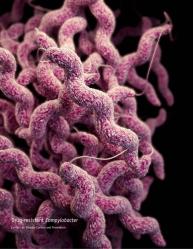
Although campylobacteriosis caused by Campylobacter jejuni and Campylobacter coli has been increasingly reported worldwide owing to the consumption of contaminated poultry and fresh produce, the current detection protocols are not selective enough to inhibit unspecific microbes other than these pathogens. Five antibiotics were separately added to Bolton broth, and the survival rates of 18 Campylobacter spp. and 79 non-Campylobacter spp. were evaluated. The survival rate of the non-Campylobacter spp. was the lowest in Bolton broth with rifampin (6.3%), followed by cefsulodin (12.7%), novobiocin (16.5%), and potassium tellurite and sulfamethozaxole (both 17.7%). Also the most effective concentration of rifampin was found to be 12.5 mg/L, which markedly inhibited non-Campylobacter strains while not affecting the survival of Campylobacter strains. After the Campylobacter spp. were enriched in Bolton broth supplemented with 12.5 mg/L rifampin (R-Bolton broth), CampyFood Agar (CFA) was found to be better in selectively isolating the pathogens in the enrichment broth than the International Organization for Standardization method of using modified charcoal cefoperazone deoxycholate agar (mCCDA) for this step. When applied to natural food samples—here, romaine lettuce, pepper, cherry tomato, Korean leek, and chicken—the R-Bolton broth–CFA combination decreased the number of false-positive results by 50.0, 4.2, 20.8, 50.0, and 94.4%, respectively, compared with the International Organization for Standardization method (Bolton broth–mCCDA combination). These results demonstrate that the combination of R-Bolton broth and CFA is more efficient in detecting C. jejuni and C. coli in poultry and fresh produce and thus should replace the Bolton broth–mCCDA combination.

Research – Microbiological Survey of Packaged Ready-to-Eat Red Meats at Retail in New Zealand

Journal of Food Protection Listeria cdc

A microbiological survey was undertaken on packaged ready-to-eat red meats available at retail in New Zealand. A total of 1,485 samples (297 lots of five samples each) were collected according to a sampling plan based on market share and regulatory regimes (Animal Products Act 1999 and Food Act 1981) and were tested against the microbiological limits specified in Food Standards Code (FSC) 1.6.1 applicable at the time of sampling. Each lot was tested as a composite for the presence or absence of Salmonella spp., coagulase-producing staphylococci, Listeria monocytogenes, and other Listeria spp. at the end of the manufacturer’s stated shelf life. Individual samples within a positive lot were subsequently enumerated for L. monocytogenes. None of the samples contained Salmonella spp. or had coagulase-producing staphylococci counts above the acceptable level specified in FSC 1.6.1 (>100 CFU/g). Data showed that 93.6% (278 of 297 lots) of ready-to-eat red meat complied with the FSC 1.6.1 criteria applicable at the time of the survey. The failure of 19 lots (6.4%) was due to the presence of L. monocytogenes from product obtained from 8 of 33 producers tested. Thirteen samples of 95 positive samples were found to contain between 50 and 500 CFU/g L. monocytogenes, but all of these samples were manufactured by the same operator. Pulsed-field gel electrophoresis typing of all of the L. monocytogenes isolates obtained from the survey identified 12 different pulsotypes. Different pulsotypes were often identified in samples from the same operator sampled on separate occasions. A total of 46 lots (15.5%) contained Listeria spp. (including L. monocytogenes). The detection of Listeria in samples may highlight the existence of problems in operator processing and/or packaging processes and suggests that improvements in good hygienic practice and implementation of more effective risk mitigation strategies are needed.


Research – Prevalence of Salmonella in 11 Spices Offered for Sale from Retail Establishments and in Imported Shipments Offered for Entry to the United States

Journal of Food Protection 


The U.S. Food and Drug Administration conducted a survey to evaluate Salmonella prevalence and aerobic plate counts in packaged (dried) spices offered for sale at retail establishments in the United States. The study included 7,250 retail samples of 11 spice types that were collected during November 2013 to September 2014 and October 2014 to March 2015. No Salmonella-positive samples (based on analysis of 125 g) were found among retail samples of cumin seed (whole or ground), sesame seed (whole, not roasted or toasted, and not black), and white pepper (ground or cracked), for prevalence estimates of 0.00% with 95% Clopper and Pearson’s confidence intervals of 0.00 to 0.67%, 0.00 to 0.70%, and 0.00 to 0.63%, respectively. Salmonella prevalence estimates (confidence intervals) for the other eight spice types were 0.19% (0.0048 to 1.1%) for basil leaf (whole, ground, crushed, or flakes), 0.24% (0.049 to 0.69%) for black pepper (whole, ground, or cracked), 0.56% (0.11 to 1.6%) for coriander seed (ground), 0.19% (0.0049 to 1.1%) for curry powder (ground mixture of spices), 0.49% (0.10 to 1.4%) for dehydrated garlic (powder, granules, or flakes), 0.15% (0.0038 to 0.83%) for oregano leaf (whole, ground, crushed, or flakes), 0.25% (0.03 to 0.88%) for paprika (ground or cracked), and 0.64% (0.17 to 1.6%) for red pepper (hot red pepper, e.g., chili, cayenne; ground, cracked, crushed, or flakes). Salmonella isolates were serotyped, and genomes were sequenced. Samples of these same 11 spice types were also examined from shipments of imported spices offered for entry to the United States from 1 October 2011 to 30 September 2015. Salmonella prevalence estimates (based on analysis of two 375-g composite samples) for shipments of imported spices were 1.7 to 18%. The Salmonella prevalence estimates for spices offered for sale at retail establishments for all of the spice types except dehydrated garlic and basil were significantly lower than estimates for shipments of imported spice offered for entry.

Research – Legionnaires’ Disease Outbreaks and Cooling Towers, New York City, New York, USA

CDC

Abstract

The incidence of Legionnaires’ disease in the United States has been increasing since 2000. Outbreaks and clusters are associated with decorative, recreational, domestic, and industrial water systems, with the largest outbreaks being caused by cooling towers. Since 2006, 6 community-associated Legionnaires’ disease outbreaks have occurred in New York City, resulting in 213 cases and 18 deaths. Three outbreaks occurred in 2015, including the largest on record (138 cases). Three outbreaks were linked to cooling towers by molecular comparison of human and environmental Legionella isolates, and the sources for the other 3 outbreaks were undetermined. The evolution of investigation methods and lessons learned from these outbreaks prompted enactment of a new comprehensive law governing the operation and maintenance of New York City cooling towers. Ongoing surveillance and program evaluation will determine if enforcement of the new cooling tower law reduces Legionnaires’ disease incidence in New York City.

Research – Legionnaires’ Disease Outbreak Caused by Endemic Strain of Legionella pneumophila, New York, New York, USA, 2015

CDC

During the summer of 2015, New York, New York, USA, had one of the largest and deadliest outbreaks of Legionnaires’ disease in the history of the United States. A total of 138 cases and 16 deaths were linked to a single cooling tower in the South Bronx. Analysis of environmental samples and clinical isolates showed that sporadic cases of legionellosis before, during, and after the outbreak could be traced to a slowly evolving, single-ancestor strain. Detection of an ostensibly virulent Legionella strain endemic to the Bronx community suggests potential risk for future cases of legionellosis in the area. The genetic homogeneity of the Legionella population in this area might complicate investigations and interpretations of future outbreaks of Legionnaires’ disease.

Research – Weather-Dependent Risk for Legionnaires’ Disease, United States

CDC

Abstract

Using the Nationwide Inpatient Sample and US weather data, we estimated the probability of community-acquired pneumonia (CAP) being diagnosed as Legionnaires’ disease (LD). LD risk increases when weather is warm and humid. With warm weather, we found a dose-response relationship between relative humidity and the odds for LD. When the mean temperature was 60°–80°F with high humidity (>80.0%), the odds for CAP being diagnosed with LD were 3.1 times higher than with lower levels of humidity (<50.0%). Thus, in some regions (e.g., the Southwest), LD is rarely the cause of hospitalizations. In other regions and seasons (e.g., the mid-Atlantic in summer), LD is much more common. Thus, suspicion for LD should increase when weather is warm and humid. However, when weather is cold, dry, or extremely hot, empirically treating all CAP patients for LD might contribute to excessive antimicrobial drug use at a population level.


Research – Prevention of Legionnaires’ Disease in the 21st Century by Advancing Science and Public Health Practice

CDC legionellac

A dramatic shift in emphasis by public health officials from detection, investigation, and control of outbreaks of Legionnaires’ disease to primary prevention strategies is underway in the United States. Expansion of primary prevention efforts is occurring with remarkable speed and is marked by new public health guidance and policy aimed at ensuring adequacy of water systems management (1–5). Professional societies are also providing more rigorous and detailed guidance. The American Society of Heating, Refrigerating and Air-Conditioning Engineers approved an industry standard in 2015 and established minimum management requirements to reduce the risk for infection with Legionella spp., the bacteria that cause Legionnaires’ disease, in building water systems (6). In 2015, the American Industrial Hygiene Society also released specific guidance on control of Legionella spp. in engineered water systems and focused on validation of water management efforts and testing water for viable Legionella spp. counts as the key tool to validate effectiveness of these efforts (7). In June 2017, the Centers for Medicaid and Medicare Services issued a requirement to reduce risk for infection with Legionella spp. in healthcare facilities (8).

This sea of change in Legionella spp. program focus in public health is occurring because of a convergence of factors. The >5-fold increase in cases of disease caused by Legionella spp. during 2000−2015 has mandated a substantive public health response. The increase has been widely recognized as likely to continue unabated in the absence of more effective prevention strategies. Recent large outbreaks, such as those in the Bronx, New York, USA (9), have been critical in garnering public attention and generating momentum for more robust prevention efforts. The fact that analysis by the Centers for Disease Control and Prevention indicated that only 4% of Legionnaires’ disease cases were outbreak-associated has further illustrated limitations of outbreak detection and control as the primary prevention tool (1). Supported by the Alfred P. Sloan Foundation, the first public health conference on Legionella spp. in 25 years identified gaping holes in our knowledge of prevention of infections with Legionella spp. and indicated the need for robust federally sponsored research (10).

Numerous factors are contributing to the increase in incidence of Legionnaires’ disease. Increasing numbers of persons are at increased risk because of aging of the population, greater use of immunosuppressant drugs, and higher prevalence of comorbid conditions. Changing environmental conditions are also facilitating human exposure to aerosolized water containing Legionella spp. There is a growing dependence on heating, ventilation, and cooling systems, as well as increased complexity of indoor plumbing systems in large buildings, which have a labyrinth of water lines and features ranging from hundreds of showerheads in rooms along lengthy corridors to spas and indoor decorative fountains. Potential new sources, such as street cleaning machines reported by Valero Munoz et al. in this issue (11), continue to be identified. Inadequate maintenance of public water supplies might result in increased risk for contamination of building water systems and other water devices or equipment. Also in this issue, Lapierre et al. suggest potential new ways water systems can become contaminated; this article describes the potential for cross-contamination of cooling towers (12).

Healthcare providers play an essential role in diagnosing disease; diagnosis assists with targeting antimicrobial drug therapy, as well as playing a critical role in public health surveillance. The urine antigen test identifies only L. pneumophila serogroup 1, and its use minimizes the role of other Legionella subtypes and species (13). Respiratory diagnostic panels are increasing in number and need to include the capacity to identify all species of Legionella (14).

Ideally, a combined approach of surveillance and improved fundamental understanding of the factors triggering proliferation of Legionella spp. will inform optimal engineering design and industrial hygiene practice. Legionella spp. are known to have a symbiotic relationship with certain protozoa that graze on drinking water biofilms, and infection of these hosts can enhance virulence of the bacteria. Premise (i.e., building) plumbing can be a reservoir for pathogens such as Legionella spp., even in the presence of high disinfectant residuals (e.g., chlorine), and different microbes display distinct responses to various disinfectants, pipe materials, and water ages and their interactions.

Water-conserving technologies, such as reuse practices and high-volume water storage, can result in high water age, diminished protective disinfectant residuals, and degraded water quality. Low-flow velocities of certain water-conserving fixtures, now popular in many “green” buildings, might fail to adequately flush out biofilms and other particulates conducive to Legionella spp. growth. Similarly, reducing water heater temperatures may play a role in saving energy and reducing scalding, but if these benefits are found to be marginal relative to the potential to spread disease, these technologies should be reevaluated. Thus, as we as a society strive for new water- and energy-conserving building designs, the potential to stimulate Legionella spp. growth warrants serious consideration.

Respiratory pathogens other than Legionella spp., including nontuberculous mycobacteria (NTM) and Pseudomonas spp., are also found in engineered water systems. The prevalence of cases of infection with NTM is increasing dramatically and resulting in the hospitalizations of thousands of patients each year and months to years of multiple antimicrobial drug use (15). Whether current measures for prevention of Legionella spp. amplification will control other waterborne pathogens, such as NTM, is unclear. The US Environmental Protection Agency Safe Drinking Water Act, which has been in effect since the 1970s, is geared toward risk for fecal pathogens being ingested. This act does not take into account pathogens that adhere to biofilms in pipes and grow in various conditions.

Collaboration is needed across scientific disciplines and agencies to fill gaps in our collective knowledge of modern water pathogens, weaknesses in our physical water infrastructure, and inadequacies of our existing diagnostic and regulatory approaches to effectively identify and control disease risks. Legionella spp. illuminate many of the challenges posed by water pathogens in the 21st century. With a growing national interest in a safe water supply, it is an opportune time for public health and medicine to come together with industrial hygiene, engineering, microbiology, and environmental protection to understand the problems and ensure effective risk management of Legionella spp. and other pathogens inhabiting our water systems.

Dr. Berkelman is Rollins Professor of Public Health Policy in the Department of Epidemiology, Rollins School of Public Health, Emory University, Atlanta, GA, and has joint appointments with the School of Medicine and the Emory Ethics Institute. Her research interests include legionellosis and diseases related to the environment.

Dr. Pruden is W. Thomas Rice Professor in the Department of Civil and Environmental Engineering at Virginia Polytechnic Institute and State University, Blacksburg, VA. Her primary research interest is understanding how building plumbing design shapes the microbiome of tap water and influences the potential for Legionella and other opportunistic pathogens to proliferate.

Acknowledgment

This study was partially supported by the Alfred P. Sloan Foundation Microbiology of the Built Environmental Program.