Category Archives: Uncategorized

RASFF Alert – Ochratoxin A – Dried Sultanas

kswfoodworld food safety poisoning

RASFF-ochratoxin A (18.0 µg/kg – ppb) in dried sultanas from Turkey in the UK


RASFF Alerts – Listeria monocytogenes – Raw Milk Cheese

kswfoodworld food safety poisoning

RASFF-Listeria monocytogenes (<10 CFU/g) in raw milk cheese from France in Belgium

RASFF Alert – Norovirus – Flat Oysters – Chilled Oysters

kswfoodworld food safety poisoning

RASFF-norovirus (GII/ 2g) in live flat oysters (Ostrea edulis) from France in Italy.

RASFF-norovirus (presence /g) in chilled oysters from France in Italy.


RASFF Alert – Histamine – Anchovy Sauce – Chilled Tuna

kswfoodworld food safety poisoning

RASFF-histamine (2850 mg/kg – ppm) in anchovy sauce from Italy in Italy

RASFF-histamine (309 mg/kg – ppm) in chilled tuna (Thunnus albacares) from Sri Lankain France

RASFF Alert – Animal Feed – Groundnut Kernels


kswfoodworld food safety poisoning

RASFF-Aflatoxins (B1 = 100 µg/kg – ppb) in groundnut kernels for birdfeed from unknown origin, via the Netherlands

RASFF Alerts – Animal Feed – Mould – Sunflower Meal

kswfoodworld food safety poisoning

RASFF

Sunflower meal from Ukraine infested with Moulds in Poland


RASFF Alerts – Animal Feed – Salmonella – Rapeseed Expeller – Rapeseed Meal

kswfoodworld food safety poisoning

RASFF-Salmonella (present /25g) in rapeseed expeller from Germany in Germany

RASFF-Salmonella enterica ser. Agona (presence /25g) in rapeseed meal from Germany in Germany


Canada – Updated Food Recall Warning – Imperial Caviar & Seafood brand Whitefish Roe recalled due to potential presence of dangerous bacteria

CFIA

Recall details

Ottawa, January 11, 2018 – The food recall warning issued on January 10, 2018 has been updated to include additional product information. This additional information was identified during the Canadian Food Inspection Agency’s (CFIA) food safety investigation.

Imperial Caviar & Seafood is recalling Imperial Caviar & Seafood brand Whitefish Roe from the marketplace because it may permit the growth of Clostridium botulinum. Consumers should not consume the recalled product described below.

Recalled products

Brand Name Common Name Size Code(s) on Product UPC
Imperial Caviar & Seafood Whitefish Roe 50 g 34917
BB-15-DEC-2018
1 86866 90027 9

Australia – 200 hit by gastro on Sea Princess cruise ship docking in Brisbane

Brisbane Times Norovirus Food Safety kswfoodworld

Gastro has hit about 200 passengers on board a cruise ship docking in Brisbane on Thursday morning.

The Sea Princess was returning from a two-week trip to New Zealand, which saw as much as seven per cent of those on board struck down with Norovirus.

Efforts were made to contain the outbreak, with further cleaning expected once passengers departed the 260-metre cruise ship at Hamilton’s Portside Wharf.

A Princess Cruises spokesman said the cleaning measures would delay the ship’s departure with a fresh crew of passengers on the same route later on Thursday.

The cruise saw an “elevated number” of guests suffering norovirus-induced gastro, he said.

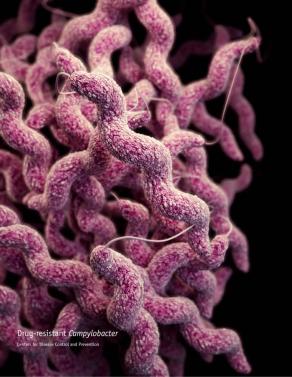
Research – Occurrence of Campylobacter in raw chicken and beef from retail outlets in São Paulo, Brazil

WIley Online Library 


Abstract

The aim of this study was to evaluate the occurrence of Campylobacter in meat samples (120 chicken and 100 beef) and determine the antimicrobial susceptibility of the isolates. A total of 220 samples from retail outlets were purchased in the city of São Paulo, Brazil. Campylobacter detection was performed according to the International Organization for Standardization (ISO) method ISO-10272-1:2006. A PCR assay based on nucleotide sequence differences in the lpxA gene was used to distinguish between C. jejuni and C. coli. Antimicrobial resistance was determined by agar disc diffusion method. Campylobacter was isolated from 17 (7.7%) of 220 samples. Breast fillets exhibited the highest contamination rate (25%; 5/20), followed by wings (15%; 6/40), whole leg (15%; 3/20), drumstick (10%; 2/20), and drumette (5%; 1/20). All beef samples were negative for Campylobacter. The most prevalent species found was C. coli, followed by C. jejuni. The isolates were commonly resistant to nalidixic acid and ciprofloxacin. Data obtained confirm the need of monitoring and control of Campylobacter in poultry production chain.

Practical applications

Campylobacter spp. cause foodborne illness in humans commonly through the consumption of contaminated poultry meat. Although Brazil is the world’s largest poultry meat exporter, data regarding this pathogen are limited in our country. In the present study, chicken cuts purchased from retail stores in São Paulo may occasionally be contaminated with Campylobacter. This underline the importance of surveillance of foodborne pathogens in retail meats, and the data can contribute to risk analyses or control measures in the meat production chain.