Category Archives: Uncategorized

Research – Poultry as a Reservoir for Foodborne Disease

SFAM Salmonella Campylobacter

This article by Frieda Jorgensen and Caroline Willis first appeared in Microbiologist Vol 15 No. 1, March 2014.

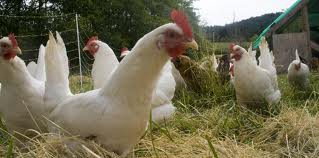
Poultry and poultry products are recognized as the most significant source of human Campylobacter and Salmonella infections in the developed world, including the UK. Outbreak investigations and case-control studies investigating risk-factors and transmission routes have identified poultry meat and eggs as major sources of infection. However, non-foodborne routes such as animal contact, and occupational or recreational exposure, are also important.


Russian Food Hygiene – A Bit Cheesy!

Mail Online

Russian food safety officials have launched an investigation into a group of male workers posing naked in a vat of milk used to make cheese.

Officials were notified by furious consumers after the internet posting of the ‘sickening’ picture of a New Year party at the plant in Omsk, Siberia.

‘Yeah, our job is really boring,’ says the caption on the online posting on the site of an Artem Romanov, one of the workers.


Research – Naturally Occurring Viruses are Slowly Gaining Popularity in Eradicating Foodborne bacteria.

Inside Science

Outbreaks of foodborne diseases carried by bacteria can be a nuisance at best, and deadly at worst. Researchers are looking into novel ways to keep food safe. One way to destroy these pathogens is with more pathogens.

Bacteriophages are viruses that specifically attack bacteria. These phages, as researchers call them, have evolved alongside bacteria and become very good at what they do.

Scientists are most interested in lytic phages – viruses that inject their DNA into a bacterium and then hijack the cell’s machinery to make new copies of the virus. The copies eventually burst through bacterium’s membrane, killing it, and attack neighboring cells.

Recently, a team of researchers at Purdue University in West Lafayette, Indiana developed a cocktail of different phages that was extremely effective against Escherichia coli O157:H7, the pathogen that was estimated to have caused more than 63,000 illnesses and 2,138 hospitalizations between 2000 and 2008 in the U.S.

Australia – Cheese Recall – E.coli

FSANZ FSANZ3

Woodside Cheese Wrights has recalled Woodside Cheese Wrights Charleston jersey cow milk Brie and Woodside Cheese Wrights Capricorn Goat Brie from independent grocers and gourmet grocers in NSW, QLD and SA due to E.coli contamination. Food products contaminated with E.coli may cause illness if consumed.

Consumers should not eat these products and should return them to the place of purchase for a full refund. Any consumers concerned about their health should seek medical advice.

Research – Quantitative Microbial Risk Assessment of Antibacterial Hand Hygiene Products on Risk of Shigellosis

Ingenta Connect handwashing

There are conflicting reports on whether antibacterial hand hygiene products are more effective than nonantibacterial products in reducing bacteria on hands and preventing disease. This research used new laboratory data, together with simulation techniques, to compare the ability of nonantibacterial and antibacterial products to reduce shigellosis risk. One hundred sixtythree subjects were used to compare five different hand treatments: two nonantibacterial products and three antibacterial products, i.e., 0.46% triclosan, 4% chlorhexidine gluconate, or 62% ethyl alcohol. Hands were inoculated with 5.5 to 6 log CFU Shigella; the simulated food handlers then washed their hands with one of the five products before handling melon balls. Each simulation scenario represented an event in which 100 people would be exposed to Shigella from melon balls that had been handled by food workers with Shigella on their hands. Analysis of experimental data showed that the two nonantibacterial treatments produced about a 2-log reduction on hands. The three antibacterial treatments showed log reductions greater than 3 but less than 4 on hands. All three antibacterial treatments resulted in statistically significantly lower concentration on the melon balls relative to the nonantibacterial treatments. A simulation that assumed 1 million Shigella bacteria on the hands and the use of a nonantibacterial treatment predicted that 50 to 60 cases of shigellosis would result (of 100 exposed). Each of the antibacterial treatments was predicted to result in an appreciable number of simulations for which the number of illness cases would be 0, with the most common number of illness cases being 5 (of 100 exposed). These effects maintained statistical significance from 106Shigella per hand down to as low as 100 Shigella per hand, with some evidence to support lower levels. This quantitative microbial risk assessment shows that antibacterial hand treatments can significantly reduce Shigella risk.

New Zealand – Food Safety Food Safety Assurance Advisory Council

3 News 

An independent council is being set up to advise the Government on food safety issues. Food Safety Minister Nikki Kaye says it will have six members skilled in food regulation, public health, science, business and international relations.

Establishing the Food Safety Assurance Advisory Council was one of the 29 recommendations that came out of the Government’s inquiry into Fonterra’s whey protein contamination crisis.

“At the moment there’s no independent group that looks at the whole of New Zealand’s food safety and assurance system and is able to provide high-level independent advice and risk analysis,” Ms Kaye said.

“The council is being set up to do this. It will also identify current and future trends and risks that may impact on our food safety and assurance system.”

Members will be appointed in time for the council to hold its first meeting in July

Radio New Zealand News

The Government has established a new food safety council to give it independent advice on food safety and risks.

USA – Salmonella From Bearded Dragons

Food Poisoning Bulletin BeardedDragonEatting

At least 132 people in 31 states have contracted Salmonella infections from contact with pet bearded dragons since February 2012, according to the Centers for Disease Control and Prevention (CDC). Most of them are children five and under.

The outbreak strain, Salmonella Cotham, is extremely rare. Less than one one hundredth of one percent of Salmonella strains cultured from Americans since 1963 have been been Salmonella Cotham.

Spain – Cafeteria Illness Outbreak – Staphylococcus in Peas

El Mundo

Peas menu that was served in the cafeteria of the Madrid Assembly on 3 April when several people were intoxicated, have tested positive in the analysis of the Staphylococcus aureus bacteria, the report prepared by the laboratory for Biotab Arturo Cantoblanco Group.

When several people went to the cafeteria of the Assembly because they suffered symptoms of poisoning, hours after having eaten at this establishment, responsible for the company contacted the external laboratory Biotab to analyze the food served on the day before , full day, in which 180 meals were served.

USA – USDA Listeria Control in Retail Deli’s

USDA

This guidance document provides specific actions that retailers can take in the delicatessen (deli) area to decrease the potential for Listeria monocytogenes (Lm) growth or cross-contamination. In particular, the guidance covers:

  • Actions identified by the Interagency Retail Lm Risk Assessment (see page 2) that can decrease the predicted risk of listeriosis from deli products;
  • Information from the U.S. Food and Drug Administration (FDA) Food Code, scientific literature, other guidance documents, and lessons learned from meat and poultry establishments that retailers can use to control Lm;
  • Steps retailers can take to help ensure that deli products are maintained under sanitary conditions that do not allow Lm adulteration of the product; and
  • A self-assessment tool that retailers can use to determine what practices they are currently using and what new practices to adopt to control Lm.


Research – Outbreaks Attributed to Cheese: Differences Between Outbreaks Caused by Unpasteurized and Pasteurized Dairy Products, United States, 1998–2011

Mary Ann Leibert

Introduction: The interstate commerce of unpasteurized fluid milk, also known as raw milk, is illegal in the United States, and intrastate sales are regulated independently by each state. However, U.S. Food and Drug Administration regulations allow the interstate sale of certain types of cheeses made from unpasteurized milk if specific aging requirements are met. We describe characteristics of these outbreaks, including differences between outbreaks linked to cheese made from pasteurized or unpasteurized milk.

Methods: We reviewed reports of outbreaks submitted to the Foodborne Disease Outbreak Surveillance System during 1998–2011 in which cheese was implicated as the vehicle. We describe characteristics of these outbreaks, including differences between outbreaks linked to cheese made from pasteurized versus unpasteurized milk.

Results: During 1998–2011, 90 outbreaks attributed to cheese were reported; 38 (42%) were due to cheese made with unpasteurized milk, 44 (49%) to cheese made with pasteurized milk, and the pasteurization status was not reported for the other eight (9%). The most common cheese–pathogen pairs were unpasteurized queso fresco or other Mexican-style cheese and Salmonella (10 outbreaks), and pasteurized queso fresco or other Mexican-style cheese and Listeria (6 outbreaks). The cheese was imported from Mexico in 38% of outbreaks caused by cheese made with unpasteurized milk. In at least five outbreaks, all due to cheese made from unpasteurized milk, the outbreak report noted that the cheese was produced or sold illegally. Outbreaks caused by cheese made from pasteurized milk occurred most commonly (64%) in restaurant, delis, or banquet settings where cross-contamination was the most common contributing factor.

Conclusions: In addition to using pasteurized milk to make cheese, interventions to improve the safety of cheese include limiting illegal importation of cheese, strict sanitation and microbiologic monitoring in cheese-making facilities, and controls to limit food worker contamination.