Category Archives: Uncategorized

Research – A Qualitative Risk Assessment of the Microbiological Risks to Consumers from the Production and Consumption of Uneviscerated and Eviscerated Small Game Birds in the UK

Science Direct pseud

Since the beginning of the 21st century, consumption of wild game birds has been increasing, concurrent with a rise in consumer interest in free-range and ‘healthy-eating’ foodstuffs. Game birds can carry zoonotic pathogens, predominantly within the viscera. Whilst removal of the viscera is normal practice during the dressing of game birds, there is a specialised market in the UK for certain small game birds that are consumed uneviscerated. This qualitative risk assessment evaluates the risks to the consumer from the production and consumption of both uneviscerated and eviscerated small game birds for Salmonella spp., Escherichia coli (verotoxigenic), E. coli (antimicrobial resistant), Campylobacter spp., Toxoplasma gondii, Chlamydophila psittaci and Listeria monocytogenes. Whilst most pathogen/bird combinations were considered to have a very low risk, results suggest that Campylobacter spp. and T. gondii can pose an increased risk to consumers for some species of wild game birds. There was no greater risk associated with the consumption of uneviscerated game birds than for eviscerated birds. In some cases, the risk from eviscerated birds may even be slightly higher, as the risk of cross-contamination during evisceration can outweigh the reduction in pathogenic organisms due to removal of the viscera. Additionally, the current low frequency of consumption of uneviscerated game birds of most species reduced the overall risk estimate for these birds. If there is an increased frequency of consumption in the future, then this risk should be re-examined. Assuming a general level of compliance with regulations and basic hygiene practices, the results suggested that large outbreaks of infection among UK consumers are unlikely, but sporadic, infectious events could occur due to combinations of ‘rare-event, hygiene-related issues’ in the ‘field-to-fork’ chain and/or inadequate cooking of the bird.
USA – FDA Recall – Listeria monocytogenes – Walnuts

FDA

St. Louis-based Sherman Produce is voluntarily recalling walnuts comprising of 241 cases of bulk walnuts packaged in 25 lb bulk cardboard boxes and Schnucks brand 10 oz trays with UPC 00338390032 with best by dates 03/15 and 04/15 because the products are potentially contaminated with Listeria monocytogenes. Listeria monocytogenes is an organism which can cause serious and sometimes fatal infections in young children, frail or elderly people, and others with weakened immune systems. Although healthy individuals may suffer only short-term symptoms such as high fever, severe headache, stiffness, nausea, abdominal pain and diarrhea, Listeria infection can cause miscarriages and stillbirths among pregnant women.

These products were sold to retailers in MO and IL from March – May 2014.

No illnesses have been reported to date.

Scotland – E.coli outbreak linked to Khushi’s Indian Restaurant in Dunfermline

The Courier .co.uk

An outbreak of E.coli 0157 in Fife is still being investigated by NHS Fife’s Public Health Department.

 There is a cluster of five confirmed cases, and six suspected cases, associated with Khushi’s Indian Restaurant in Dunfermline.

NHS Fife said none of the cases are in hospital, and all are recovering at home.


USA – Outbreak – Jimmy Johns Again – E.coli

Food Poisoning Bulletin alfalfa

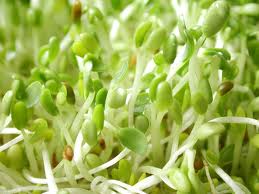
Raw clover sprouts on Jimmy John’s and other fast food sandwiches are the likely source of an E. coli outbreak that has sickened 10 people in Washington and Idaho, according to the Washington State Department of Health. Seven people have confirmed cases of E. coli O121 poisoning and three have probable cases. Five people have been hospitalized.

Health officials are warning consumers not to eat raw clover sprouts from Evergreen Fresh Sprouts, LLC of Idaho. They were distributed to restaurants and grocery stores in the northwest. “If you have these products at home, you should throw them out.,” said Washington State Health Officer Dr. Kathy Lofy.

Research – Environmental Transmission of Human Noroviruses in Shellfish Waters

American Society for Microbiology Norwalk_Caspid

Human noroviruses (NoV) are the most common cause of epidemic gastroenteritis following consumption of bivalve shellfish contaminated with fecal matter. NoV levels can be effectively reduced by some sewage treatment processes such as activated sludge and membrane bioreactors. However, tertiary sewage treatment and substantial sewage dilution are usually required to achieve low concentrations of virus in shellfish. Most outbreaks have been associated with shellfish harvested from waters affected by untreated sewage from, for example, storm overflows or overboard disposal of feces from boats. In coastal waters, NoV can remain in suspension or associate with organic and inorganic matter and be accumulated by shellfish. Shellfish take considerably longer to purge NoV than fecal indicator bacteria when transferred from sewage-polluted estuarine waters to uncontaminated waters. The abundance and distribution of NoV in shellfish waters are influenced by the levels of sewage treatment, proximity of shellfish beds to sewage sources, rainfall, river flows, salinity, and water temperature. Detailed site-specific information on these factors is required to design measures to control the viral risk.

Research – TATFAR Study on Antimicrobial Resistance Frightening

Food Poisoning Bulletin iStock_000012710183Small

Foodborne illness resulting from organisms that are resistant to antibiotics is an emerging problem and a facet of a much greater challenge that threatens the health and safety of entire populations.

As a result of the threat from Antimicrobial Resistance (AMR), the U.S. Department of Health and Human Services (HHS) and the European Commission formed the Transatlantic Taskforce on Antimicrobial Resistance (TATFAR) and recently issued a report outlining the problems posed by AMR and the goals of the Taskforce intended to address them

RASFF Alert – Food Poisoning Outbreak – Cherry Tomato’s – France

RASFF-Logo

RASFF – foodborne outbreak suspected to be caused by cherry tomatoes from Morocco, via France in France

RASFF Alerts – E.coli – Mussels – E.coli STEC – Minced Meat

RASFF-Logo

RASFF -Shigatoxin-producing Escherichia coli (STEC 0103:H2 stx1 eae) in frozen minced meat from Italy in France

RASFF – too high count of Escherichia coli (330 MPN/100g) in chilled mussels from Spain in France


RASFF Alerts – Salmonella – Sausage – Chlorella Powder – Chicken – Poultry

RASFF-Logo

RASFF -Salmonella spp. (4.5.12 : i : /25g) in sausage from Spain in France

RASFF -Salmonella Rissen in chlorella powder (Chlorella vulgaris) from China, via the Netherlands in Finland

RASFF– Salmonella enteritidis (presence /25g) in frozen chicken single fillets from Lithuania, via Belgium in Slovenia

RASFF -Salmonella spp. (presence /10g) in frozen poultry meat from Poland in Poland

RASFF Alerts – Aflatoxins – Groundnuts – Shelled Almonds – Peanuts

RASFF-Logo

RASFF -aflatoxins (B1 = 15.4 µg/kg – ppb) in groundnuts from China in the UK

RASFF -aflatoxins (B1 = 31; Tot. = 34 µg/kg – ppb) in shelled almonds from the United States in Italy

RASFF – aflatoxins (B1 = 3.78 / B1 = 3.62 µg/kg – ppb) in blanched peanut halves from Argentina in Poland

RASFF -aflatoxins (B1 = 1.2 / B1 = 3.2 µg/kg – ppb) in blanched groundnut kernels from China in France