Category Archives: Uncategorized

USA – Chia Seed Update

CDC

Epidemiologic and traceback findings have linked this outbreak of Salmonella infections to various brands of organic sprouted chia powder.

FDAExternal Web Site Icon laboratory sampling identified Salmonella Gaminara from one sample of Organic Traditions Sprouted Chia Seed Powder. A search of the PulseNet database did not identify any human isolates matching this pattern of Salmonella Gaminara.

The National Antimicrobial Resistance Monitoring System (NARMS) is a U.S. public health surveillance system that tracks antibiotic resistance in foodborne and other enteric bacteria found in humans, retail meats and poultry, and food-producing animals. NARMS is an interagency partnership among CDC, the U.S. Food and Drug Administration (FDA), U.S. Department of Agriculture (USDA), and state and local health departments.

The NARMS human surveillance program at CDC monitors antibiotic resistance in Salmonella and other bacteria isolated from clinical specimens submitted to NARMS by public health laboratories. CDC’s NARMS laboratory conducted antibiotic resistance testing on four isolates collected from ill persons infected with the outbreak strains of Salmonella Hartford (two isolates) and Salmonella Newport (two isolates). Of the four isolates tested, all were pansusceptible (susceptible to all antibiotics on the NARMS panel).

The Public Health Agency of CanadaExternal Web Site Icon and the Canadian Food Inspection Agency continue to investigate similar cases of Salmonella infection in several Canadian provinces. CDC, state, local, and Canadian public health partners are continuing laboratory surveillance through PulseNet to identify additional ill persons and to interview ill persons about foods eaten before becoming ill. The U.S. Food and Drug Administration (FDA) continues to work closely with CDC and other partners in this investigation.
USA – Research – Salmonella and Blueberries

Food Poisoning Bulletin Salmonella

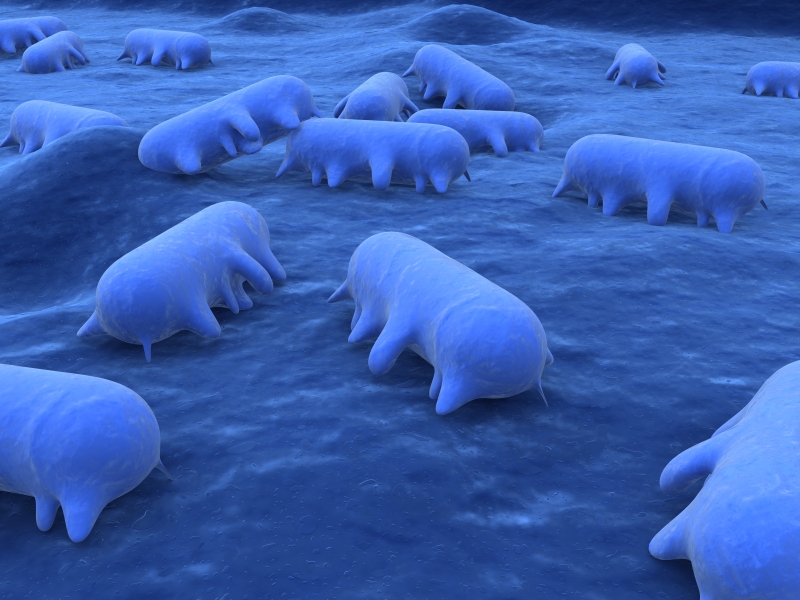
Salmonella can grow on bruised blueberries kept at shipping or retail display temperatures, according to a new study in the Journal of Food Protection. The study was conducted by researchers at the Department of Food Science and Human Nutrition, Citrus Research and Education Center at the Institute of Food and Agricultural Sciences at the University of Florida,

Strawberries and blueberries harvested at or near full-ripe maturity and softer than those that are not as ripe and therefore more susceptible to bruising during harvest and transport. The researchers wanted to see how E. coli O157:H7 and Salmonella behaved on bruised fruit and intact fruit at shipping temperature, 35.6˚ F, and retail display 59.9˚ F. So they The bruised the berries inoculated them with bacteria and observed.


UK – Nottingham Restaurant Closed – Food Illness

BBC News

More than 100 people fell ill after an “outbreak” of E. coli at a Nottingham takeaway, prompting an investigation by Public Health England.

The city council shut down The Khyber Pass in Hyson Green last month after reports of 13 people falling ill.

Now it has discovered 135 cases of gastrointestinal problems, 17 of which have been confirmed as E. coli.

The cause of the bug is not known and the restaurant will remain closed until the investigation is complete.

Public Health England says most strains of E. coli are harmless and occur naturally in the intestines of humans and other animals.

But some variants, such as E. coli O157, can cause food poisoning or other problems such as urinary tract infections.

Paul Dales, from Nottingham City Council, said: “While a high number of cases with food poisoning-like symptoms relating to Khyber Pass have been reported to us, we are confident the closure of the premises has contained the outbreak.

“Tests will continue in order to establish the source of the outbreak and until this is clear and suitable measures have been taken, the premises will remain closed.”

Public Health England says most strains of E. coli are harmless and occur naturally in the intestines of humans and other animals.

But some variants, such as E. coli O157, can cause food poisoning or other problems such as urinary tract infections.

Paul Dales, from Nottingham City Council, said: “While a high number of cases with food poisoning-like symptoms relating to Khyber Pass have been reported to us, we are confident the closure of the premises has contained the outbreak.

UK – NRL Releases – Reports – Food Micro – Outbreaks – Methods – Swabs – Salmonella – Campylobacter

GOV.UK – Report of UK National Reference Laboratory for Food Microbiology: 2013 to 2014

This report summarises the activities of the National Reference Laboratory for Food Microbiology between September 2013 and March 2014, covering secretariat services, advice and representation within the UK/EU and method development, audits and ring trials as part of the core functions listed in the contract.

GOV.UK – Investigation of outbreaks of food or waterborne disease: public health response

In this document, Public Health England (PHE)’s food, water and environmental microbiology service provides guidance on best practice for public health responses during the investigation of incidents or outbreaks of food, environment and waterborne disease.

GOV.UK – Swabs and other environmental samples: detection and enumeration of bacteria

This method is applicable to the procedures used for examination of environmental samples including swabs from carcasses in meat processing plants, swabs of food preparation surfaces and other environmental samples such as cloths collected from the food manufacturing environment and bottle rinses. This support method must be used in conjunction with accredited methods for the detection of bacteria in foods and includes the use of three different types of swab.

These methods are well referenced and represent a good minimum standard for food, water and environmental microbiology. However, in using Standard Methods, laboratories should take account of local requirements and it may be necessary to undertake additional investigations.

The performance of a standard method depends on the quality of reagents, equipment, commercial and in-house test procedures. Laboratories should ensure that these have been validated and shown to be fit for purpose. Internal and external quality assurance procedures should also be in place.

GOV.UK – Salmonella species: detection

The method described is applicable to the detection of Salmonella species in all food types, including milk and dairy products, raw molluscan shellfish, raw shell eggs and to its detection in environmental samples such as swabs and cloths.

These methods are well referenced and represent a good minimum standard for food, water and environmental microbiology. However, in using Standard Methods, laboratories should take account of local requirements and it may be necessary to undertake additional investigations.

The performance of a standard method depends on the quality of reagents, equipment, commercial and in-house test procedures. Laboratories should ensure that these have been validated and shown to be fit for purpose. Internal and external quality assurance procedures should also be in place.

GOV.UK – Campylobacter species: detection and enumeration

The method described is applicable to the detection and enumeration of Campylobacter species in all types of food samples and other environmental samples (such as carcase washings). It is also applicable to the detection of Campylobacter species in swabs.

These methods are well referenced and represent a good minimum standard for food, water and environmental microbiology. However, in using Standard Methods, laboratories should take account of local requirements and it may be necessary to undertake additional investigations.

The performance of a standard method depends on the quality of reagents, equipment, commercial and in-house test procedures. Laboratories should ensure that these have been validated and shown to be fit for purpose. Internal and external quality assurance procedures should also be in place.

Norway – Cheese Recall – E.coli

HACCP Europa Ecoli Istock

Oluf Lorentzen AS is recalling Chevre cheese ‘Crottin de Chavignol’ because some of the batches may be contaminated with E. coli.

The recalled product is Chevre cheese ‘Crottin de Chavignol’ packaged in 60g packets with Expiry date between 12/07/2014 and 18/07/2014 and Product Code: 3184670011003. Oluf Lorentzen AS is recalling batches: 137-07 and 141-07.

France – Recalls – Bagged Salads -Salmonella

HACCP Europa Salmonella

Florette Persil Plat (Florette Parsley Flat) has been recalled because some of the batches may be contaminated with Salmonella.

The recalled product is Florette Persil Plat (Florette Parsley Flat) packaged in 11 g sachets with Serial No.: EMB 06064A and the following Expiry dates and lot numbers:

  • Expiry date: 17 July 2014
    Lot number: 11854HHMM
  • Expiry date: 19 July 2014
    Lot number: 11864HHMM
  • Expiry date: 20 July 2014
    Lot number: 11884HHMM
  • Expiry date: 21 July 2014 and July 22, 2014

HACCP Europa

Florette Duo Persil et Ciboulette (Florette Duo Parsley and Chives) has been recalled because some of the batches may be contaminated with Salmonella.

The recalled product is Florette Duo Persil et Ciboulette (Florette Duo Parsley and Chives) packaged in 11 g sachets with Serial No.: EMB 06064A and the following Expiry dates and lot numbers:

  • Expiry date: 17 July 2014
    Lot number: 11844HHMM
  • Expiry date: 19 July 2014
    Lot number: 11864HHMM
  • Expiry date: 20 July 2014
    Lot number: 11884HHMM
  • Expiry date: 21 July 2014
    Lot number: 11894HHMM

RASFF Alerts – Salmonella – Dried Nettle Powder – Eggs – Pork Belly – Poultry

RASFF-Logo

RASFF -Salmonella Kottbus (presence /25g) in dried nettle powder from Sweden in Finland

RASFF-Foodborne outbreak suspected (Salmonella enteritidis) to be caused by eggs from Germany in France

RASFF-Salmonella Monophasic (present /25g) in pork bellies with bones and skin from Germany in Denmark

RASFF-Salmonella Saint Paul (presence /25g) in frozen poultry and veal kebab from Germany in Italy

RASFF-Salmonella spp. (presence /25g) in chilled chicken elements from Poland in Poland

RASFF Alert – Listeria monocytogenes – Smoked Salmon

RASFF-Logo

RASFF -Listeria monocytogenes (< 10 CFU/g) in chilled smoked salmon from Poland in France

RASFF Alerts – Norovirus – Clams and Mussels

Food Testing - Eurofins

RASFF-Norovirus (genogroup I +5: n=5, c=5 /25g) in frozen boiled white clams (Veneridae) from Vietnam in Spain

RASFF-Norovirus in frozen cooked mussel from Spain in Spain

RASFF Alerts – Aflatoxin – Chicken Tikka Mix- Pistachios – Bombay Spice Mix – Peanuts – Pecans – Groundnuts

Food Testing - Eurofins

RASFF-aflatoxins (B1 = 10.4 µg/kg – ppb) in chicken tikka mix from Pakistan in Ireland

RASFF-aflatoxins (B1 = 36; Tot. = 43 / B1 = 43; Tot. = 48 µg/kg – ppb) in salted pistachio nuts from Iran in Lithuania

RASFF-aflatoxins (B1 = 8.3 µg/kg – ppb) in Bombay biryani spice mix from Pakistan in Ireland

RASFF-aflatoxins (B1 = 5.7; Tot. = 8.6 µg/kg – ppb) in peanuts from China in the UK

RASFF-aflatoxins (B1 = 11.0; Tot. = 11.0 µg/kg – ppb) in pecan nuts from Israel in the Netherlands

RASFF-aflatoxins (B1 = 146; Tot. = 155 / B1 = 89; Tot. = 95 µg/kg – ppb) in raw pistachios in shell from Iran in Lithuania

RASFF -aflatoxins (B1 = 16; Tot. = 18 µg/kg – ppb) in groundnuts from Egypt in the Netherlands