Category Archives: Uncategorized

Ireland – Cheese Recall – E.coli O126

FSAI fsai

Verotoxigenic E. coli O26:H11 has been found in a batch of Saint Felicien cheese. The manufacturer, Etoile du Vercors, is recalling the above four types of cheese with the use by dates specified because they could have been made with the same contaminated raw milk. Affected cheeses were exported to Ireland to a small number of speciality stores. A recall notice is being displayed in these stores advising consumers not to consume the implicated cheeses.

Canada – CFIA Recalls – Cheese – E.coli O26- Mushrooms – Listeria monocytogenes – Salami – Listeria monocytogenes

CFIA

The food recall warning issued on July 28, 2014 has been updated to include additional product information. This additional information was identified during the Canadian Food Inspection Agency’s (CFIA) food safety investigation.

La Fromagerie Hamel is recalling La Fromagerie Hamel brand French cheeses from the marketplace due to possible E. coli O26:H11 contamination. Consumers should not consume the recalled products described in the link above.

CFIA

Industry is recalling Avina Fresh Mushrooms brand Sliced Crimini Mushrooms from the marketplace due to possible Listeria monocytogenes contamination. Consumers should not consume the recalled product described in the link above.

CFIA

Concord Premium Meats Ltd. is recalling Marc Angelo brand Genoa Salami from the marketplace due to possible Listeria monocytogenes contamination. Consumers should not consume the recalled product described in the link above


Research – Controlling Salmonella in the Food Chain in the EU Over 10 Years

Eurosurveillance Salmonellaa

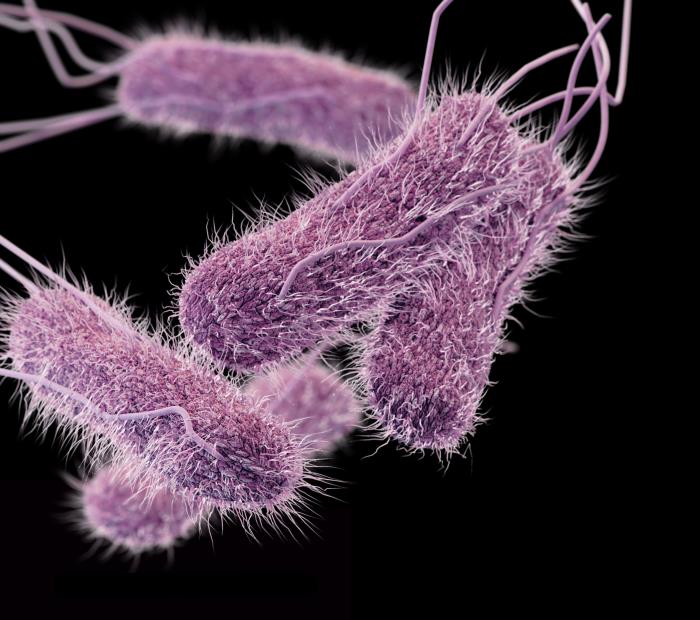
Salmonella has long been recognised as an important food-borne zoonotic pathogen of economic significance in animals and in humans. The main reservoir of Salmonella is the intestinal tract of a wide range of domestic and wild animals, which may result in contamination of a variety of foodstuffs of both animal and plant origin. This risk has been taken seriously by food business operators (FBO) and policy makers in the European Union (EU). The incremental implementation of an integrated legislative approach to monitor and control Salmonella along the food chain, from primary production to consumption, over the last ten years has thus brought about important progress, however, challenges remain as a paper by Kinross et al. about an ongoing EU-wide outbreak of S. Stanley in this issue demonstrates [1].

Animal and human surveillance of food-borne diseases in the European Union
In the EU, surveillance of food-borne salmonellosis in humans is mandatory [2, 3]. Food-borne outbreaks need to be thoroughly epidemiologically investigated [4]. Zoonoses and zoonotic agents, including Salmonella, are consistently monitored in food-producing animals and food thereof in EU countries [4]. Data on humans, animals and food are compiled and analysed jointly by the European Food Safety Agency (EFSA) and the European Centre for Disease Prevention and Control (ECDC) and presented annually in the EU Summary Report on trends and sources of zoonoses, zoonotic agents and foodborne outbreaks.

RASFF Alerts – Aflatoxin – Nutmeg -Ochratoxin-Curry Powder – Paprika

Food Testing - Eurofins

RASFF -aflatoxins (B1 = 14.6; Tot. = 16.6 µg/kg – ppb) in nutmeg powder from India in France

RASFF-ochratoxin A (48.3 µg/kg – ppb) in curry powder from the United Kingdom in Cyprus

RASFF-ochratoxin A (37.5 µg/kg – ppb) in sweet paprika powder from Spain in Cyprus

RASFF-ochratoxin A (49.2 µg/kg – ppb) in curry powder from the Netherlands in Cyprus


RASFF Alert – E.coli – Mussels

RASFF-Logo

RASFF -Too high count of Escherichia coli (490 MPN/100g) in live mussels (Mytilus edulis) from the Netherlands in the Netherlands

RASFF Alerts – Listeria monocytogenes – Smoked Fish – Gorgonzola

RASFF-Logo

RASFF -Listeria monocytogenes (40 CFU/g) in sweet gorgonzola from Italy in France

RASFF – Listeria monocytogenes (presence /25g) in smoked mackerel from Poland in Italy

RASFF Alerts – Salmonella -Turkey – CHicken – Eggs – Seasame Seeds – Fresch Basil

RASFF-Logo

RASFF-Salmonella typhimurium (presence /25g) in frozen turkey skin from the Netherlands, via Germany in France

RASFF-Foodborne outbreak suspected (Salmonella enteritidis) to be caused by eggs from Germany in Austria

RASFF-Salmonella spp. (presence /25g) in frozen spiced turkey medallions from Brazil in the Netherlands

RASFF-Salmonella spp. (presence /25g) in frozen salted chicken innerfillets from Brazil in the Netherlands

RASFF-Salmonella spp. (presence /25g) in fresh basil from unknown origin, via the Czech Republic in Germany

RASFF-Salmonella enteritidis in eggs from Germany in France

RASFF -Salmonella Amsterdam (in 1 out of 5 samples /25g) in hulled sesame seeds from India in Greece

Research – Cyclospora – How Cyclospora Parasite Gets on Food, Causes Illness

Food Posioning BulletinPHIL Image 7828

Cyclospora, a single-celled parasite that can cause months of illness, is considered a rare parasite in the United States, but for folks in some states its becoming a little too familiar. Connecticut, Florida, Georgia, Illinois, Massachusetts, Michigan, New Jersey, New York, Tennessee and Texas have had cyclospora outbreaks for two straight summers. Mayland, Montana and Oregon missed last summer’s outbreaks that sickened at least 631 people, but they are getting to know about the little bug this summer as they investigate spikes in reported illnesses. So, how is this rare parasite, normally associated with tropical climates, making its was onto our food an into the headlines?

USDA – Method Update – Isolation and Identification of Campylobacter jejuni/coli/lari from Poultry Rinse, Sponge and Raw Product Samples

USDA USDA

This method describes the qualitative direct plating and enrichment procedures for isolation and identification of

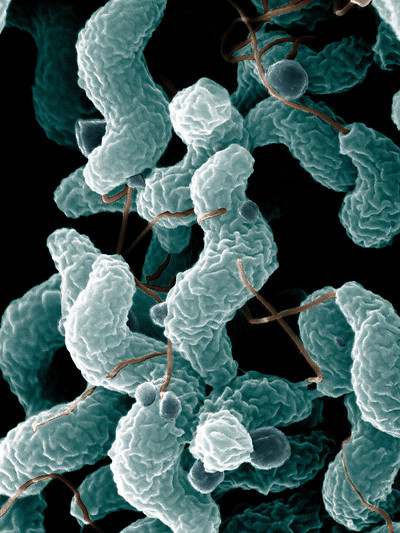
Campylobacter jejuni/coli/lari (Campylobacter j/c/l) from poultry rinsate, poultry carcass and environmental sponges. Isolates are confirmed as Campylobacter j/c/l by microscopy (typical cellular morphology and motility) and immunological testing.

USDA – Flow Chart for Isolation and Identification of Campylobacter


UK – FSA – Campylobacter Survey Report

FSA Campylobacter

The FSA has today published the first set of quarterly results from a new survey of Campylobacter on fresh shop-bought chickens. The results show 59% of birds tested positive for the presence of Campylobacter. In 4% of samples Campylobacter was identified on the outside of the packaging.

Campylobacter is killed by thorough cooking, however, it is the most common form of food poisoning in the UK, affecting an estimated 280,000 people a year. The majority of these cases come from contaminated poultry. Advice for consumers on safe preparation and cooking of chicken can be found at the link below.

Previous studies carried out into the prevalence of Campylobacter have also shown around two thirds of raw poultry carries Campylobacter.

The 12-month survey, running from February 2014 to February 2015, is looking at the prevalence and levels of Campylobacter contamination on fresh whole chilled chickens and their packaging. The survey will test 4,000 samples of whole chickens bought from UK retail outlets and smaller independent stores and butchers. Today’s results are for the first quarter and represent 853 samples.