Category Archives: Uncategorized

Research – EFSA Evaluates Molecular Typing Methods for Food-borne Pathogens

EFSA

Molecular typing methods are laboratory techniques, such as whole genome sequencing, that enable the classification and comparison of strains of disease-causing bacteria. EFSA’s Panel on Biological Hazards (BIOHAZ) has reviewed the methods for typing the food-borne pathogens Salmonella, Escherichia coli, Listeria and Campylobacter, and has evaluated the effectiveness of these methods for:

  • Detecting and identifying food-borne outbreaks;
  • Estimating the contribution of various sources to food-borne illnesses;
  • Predicting which strains of food-borne pathogens may potentially cause epidemics.

EFSA’s BIOHAZ Panel recommends that public health and veterinary authorities strengthen their cooperation on the use of molecular typing for food-borne pathogens.

Denmark – Listeria Outbreak Update

The Copenhagen Post

Since September last year, 12 people have died of listeria and a further eight have been infected after consuming some bad ‘rullepølse’ sandwich meat.

The food product authorities Fødevarestyrelsen suspect that the bad meat originated from Jørn A Rullepølser in Hedehusene near Copenhagen and have closed down the producer.

The 20 infected patients consist of eleven women and nine men aged 43-89 from various parts of Denmark, according to the national serum institute Statens Seruminstitut.

“From September 2013 until today, 20 patients have been registered suffering from listeriosis, which is an aspect of the outbreak,” Statens Seruminstitut wrote in a press release.

Jordan – 150 Shigella Cases

The Jordan Times shigella

The Ministry of Health has dealt with over 150 cases of food poisoning in a recent incident in the Shihabieh area in Karak, 140km south of the capital, a Health Ministry official said on Monday.

Bashir Qasir, head of the ministry’s communicable diseases department, said the results of an analysis of stool samples taken from the patients proved the presence of shigella bacteria.

Europe – Norovirus Outbreaks – Finland – Netherlands

BarfBlog

The City of Tampere has announced on its web-page that its officials have removed the signs advising people against swimming in the four lakes linked to a recent outbreak of a stomach virus – Tohloppijärvi, Tesomajärvi, Suolijärvi and Kaukajärvi.

Overall, over one thousand people fell ill with a stomach bug in Tampere. The city also revealed on Tuesday that traces of norovirus were found in the majority of stool samples taken from the affected swimmers.

NL Times

An outbreak of the norovirus at a Brabant campsite left over 60 guests sick last week, the regional office of health agency GGD has confirmed. Authorities were alerted when more than 60 guests reported gastrointestinal symptoms including nausea and diarrhea, after holidaying at the Prinsenmeer campsite.

Research – ISO 6579 – 3 – 2014 Salmonella Serotyping

CEN Salmonellaa

PD CEN ISO/TR 6579-3:2014

Microbiology of the food chain. Horizontal method for the detection, enumeration and serotyping of Salmonella. Guidelines for serotyping of Salmonella spp.

Status : Current Published : July 2014

USA – Cyclospora Updates in Texas

Food Poisoning Bulletin 220px-Cyclospora_cayetanensis_stained

At least 160 people in Texas have contracted cyclospora infections from an unknown food source, according to the latest update from the Texas Department of State Health Services. A surge in cases of cyclosporiasis has been reported in 18 other states including California, Connecticut, Florida, Georgia, Illinois, Maine, Maryland, Massachusetts, Michigan, Minnesota,Montana, New Jersey, New York, Ohio, Oregon, Tennessee, Virginia, and Wisconsin.

Cyclospora, a parasite normally associated with tropical or subtropical climates, sickened 631 people in 2013, hospitalizing 49. Produce imported from Mexico was identified as the source of most of those illnesses.

USA – Petting Zoo’s – E.coli O157

Food Poisoning Bulletin 19243

An E. coli O157:H7 outbreak linked to various county fairs and events around the state of Minnesota has sickened at least 13 people. The illnesses were caused by a traveling petting zoo, according to the Minnesota Department of Health.

That traveling group, Zerebko Zoo Tran, goes from fair to fair during the summer. All of the confirmed cases have infections with E. coli O15:H7 bacteria with the same genetic fingerprint. Two of those cases are secondary cases, who were exposed to people sickened in the primary outbreak.

Environmental and animal fecal samples collected from Zerebko Zoo Tran yielded the outbreak strain of E. coli O157:H7.

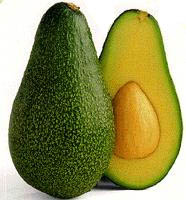
USA – Avacado’s – Salmonella

Food Poisoning Bulletin File:Avocado.jpeg

Brooks Tropicals of Florida is recalling 401 boxes of fresh, green-skinned avocados because a routine sampling by the FDA found Salmonella bacteria, according to The Grower. Only fruit shipped with the lot number 2610 is included in this recall. No illnesses connected to the consumption of this product have been reported to date.

The fruit was shipped to Florida, New York, Illinois, Georgia, and New Jersey. The company thinks that no product is on store shelves, since the product was packed on July 15, 2014, and they are now well beyond the average shelf life of avocados, which is about 10 days

RASFF Alerts – Cream – Bacillus cereus – Listeria – Meatballs – STEC E.coli – Raw Milk Goats Cheese – Moulds -Walnuts

RASFF-Logo

RASFF -Bacillus cereus (between 240 and 1*10E6 CFU/g) in cream from the United Kingdom in the UK

RASFF-Listeria monocytogenes in meatball beef from the Netherlands in the Netherlands

RASFF-shigatoxin-producing Escherichia coli (O26-H11 eae+ stx+) in goat cheese made from raw milk from France in France

RASFF-shelled walnuts from Chile infested with moulds in Greece

RASFF Alerts – Norovirus – Strawberries

RASFF-Logo

RASFF -Norovirus (in 1 of 5 samples) in frozen strawberries from China