RASFF -Listeria monocytogenes (presence /25g) in chilled smoked salmon from Poland in Italy
RASFF-Listeria monocytogenes (810; 100; 90 CFU/g) in smoked salmon from Poland in France


RASFF-Campylobacter coli (100-6000 CFU/g) and Campylobacter jejuni (200 CFU/g) in whole chilled chicken from France in Denmark
RASFF-aflatoxins (Tot. = 36 µg/kg – ppb) in peanuts from Egypt in Germany
RASFF-aflatoxins (B1 = 15.2 µg/kg – ppb) in dried figs from Turkey in Italy
RASFF-aflatoxins (B1 = 55; Tot. = 57 µg/kg – ppb) in whole nutmeg from Indonesia in the Netherlands
RASFF-aflatoxins (B1 = 13.7 µg/kg – ppb) in almonds from Australia in Spain
RASFF-aflatoxins (Tot. = 13.1 µg/kg – ppb) in nutmegs from Indonesia in Germany
RASFF-aflatoxins (B1 = 6 µg/kg – ppb) in dried figs from Turkey in Germany
RASFF-aflatoxins (B1 = 6.9 µg/kg – ppb) in dried figs from Turkey in Spain
RASFF-aflatoxins (B1 = 10.5; Tot. = 11.4 µg/kg – ppb) in sesame seeds from India in Spain
RASFF-aflatoxins (B1 = 13.8; Tot. = 16.4 / B1 = 10.0; Tot. = 17.3 µg/kg – ppb) in dried figs from Turkey in Germany
RASFF-aflatoxins (B1 = 21.6 µg/kg – ppb) in pistachios from the United States in Italy
RASFF-aflatoxins (B1 = 20.7 mg/kg – ppm) in pepper from India in the UK
Posted in Uncategorized
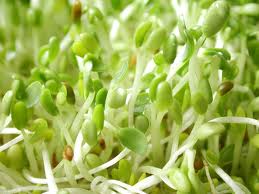
After a Listeria outbreak that killed two people and sickened three others, the Centers for Disease Control and Prevention (CDC) is warning consumers not to eat products produced by Chicago-based Wholesome Soy Inc. These products include: bean sprouts, soft tofu, firm tofu, fried tofu, fried tofu pouches, white tofu, triangular tofu, soybean noodles, and soy milk.
After being linked to a Listeria outbreak that killed two people and sickened three others, Wholesome Soy Products Inc. told the U.S. Food and Drug Administration (FDA) that it will halt production, cease distribution and issue a recall of mung bean sprouts identified as the source of the outbreak. Initially, agreed to halt production of some of its products, but not soy bean sprouts or the mung bean sprouts identified as the outbreak source. And said it would recall products except the sprouts, by notifying customers by telephone.
Although freshly sprouted beans and grains are considered to be a source of nutrients, they have been associated with foodborne outbreaks. Sprouts provide good matrices for microbial localization and growth due to optimal conditions of temperature and humidity while sprouting. Also, the lack of a kill step postsprouting is a major safety concern. The objective of this work was to evaluate the effectiveness of chlorine dioxide gas treatment to reduce Salmonella on artificially inoculated mungbean sprouts. The effectiveness of gaseous chlorine dioxide (0.5 mg/liter of air) with or without tumbling (mechanical mixing) was compared with an aqueous chlorine (200 ppm) wash treatment. Tumbling the inoculated sprouts during the chlorine dioxide gas application for 15, 30, and 60 min reduced Salmonella populations by 3.0, 4.0, and 5.5 log CFU/g, respectively, as compared with 3.0, 3.0, and 4.0 log CFU/g reductions obtained without tumbling, respectively. A 2.0 log CFU/g reduction in Salmonella was achieved with an aqueous chlorine wash. The difference in microbial reduction between chlorine dioxide gas versus aqueous chlorine wash points to the important role of surface topography, pore structure, bacterial attachment, and/or biofilm formation on sprouts. These data suggested that chlorine dioxide gas was capable of penetrating and inactivating cells that are attached to inaccessible sites and/or are within biofilms on the sprout surface as compared with an aqueous chlorine wash. Consequently, scanning electron microscopy imaging indicated that chlorine dioxide gas treatment was capable of penetrating and inactivating cells attached to inaccessible sites and within biofilms on the sprout surfaces
Posted in Uncategorized
Between March and May 2013, three multi-country outbreaks of hepatitis A virus (HAV) infection were reported through the Epidemic Intelligence Information System for Food- and Water-borne diseases (EPIS-FWD) of the European Centre for Disease Prevention and Control (ECDC). The aim of this work is to put these outbreaks into a European Union (EU) and European Economic Area (EEA) perspective and highlight opportunities for improving detection and investigation of such outbreaks. Although HAV outbreaks are not unusual in the EU/EEA, having three large food-borne multi-country outbreaks declared within three months is an unexpected event, particularly when at least two of these outbreaks are associated with frozen berries. Factors influencing the occurrence of these events include the increased number of susceptible Europeans, the limited coverage of HAV vaccination, the global trade of potentially contaminated products introduced in the EU/EEA, and the ‘awareness chain effect’ leading to a wave of notifications. Further studies should be conducted to understand the risk posed by frozen berries. Laboratory capacity and surveillance of viral infections in the EU/EEA, as well as HAV vaccination recommendations to travellers to endemic countries should be strengthened. Finally, timely reporting food-borne events through EPIS-FWD, to ensure timely response.
The Cost Estimates of Foodborne Illnesses data product provides detailed data about the costs of major foodborne illnesses in the United States, updating and extending previous ERS research. This data set includes:
Leicester Mercury : Leicester diners placed at “unnecessary risk” say Food Standards Agency
Food Poisoning Bulletin : Raw Milk Not For Kids, Warns England’s FSA After E. coli Outbreaks
Food Safety News : E. Coli Sickens 85 in UK While Source Remains Unknown
Food Safety News :FSA Chastises UK Retailers for Resisting Release of Campylobacter Stats
Food Safety News : UK Research Shows MRSA Transfers From Livestock to Humans
Posted in Uncategorized
Tagged food safety news, food standards agency, fsa, FSA Chastises UK Retailers, Leicester Mercury, UK
Food Safety News :Raw Macadamia Nuts Are Recalled for Possible Salmonella Contamination
FDA : Oasis Brands, Inc. Recalls Products Lacteos Santa Martha Because of Possible Health Risk
Food Poisoning Journal : NAACP Norovirus Outbreak at Hotel Sofitel
Food Poisoning Journal :5 Sick with 2 Dead from Listeria Tainted Bean Sprouts in Illinois and Michigan
Food Poisoning Bulletin : Norovirus Sickens Dozens at Condon Elementary School in Boston
CFIA : Unpasteurized apple cider processed by Rolling Acres Cider Mill recalled due to E. coli O157:H7
Posted in Uncategorized
Tagged cfia, Rolling Acres Cider Mill, Unpasteurized apple cider