Category Archives: Uncategorized

USA – Dog Food – Salmonella

Food Poisoning Bulletin

OC Raw Dog of Rancho Santa Margarita, CA is  recalling 2055 lbs. of Turkey & Produce Raw Frozen Canine Formulation for Salmonella. Consumers who have purchased this product should not feed it to their dogs.

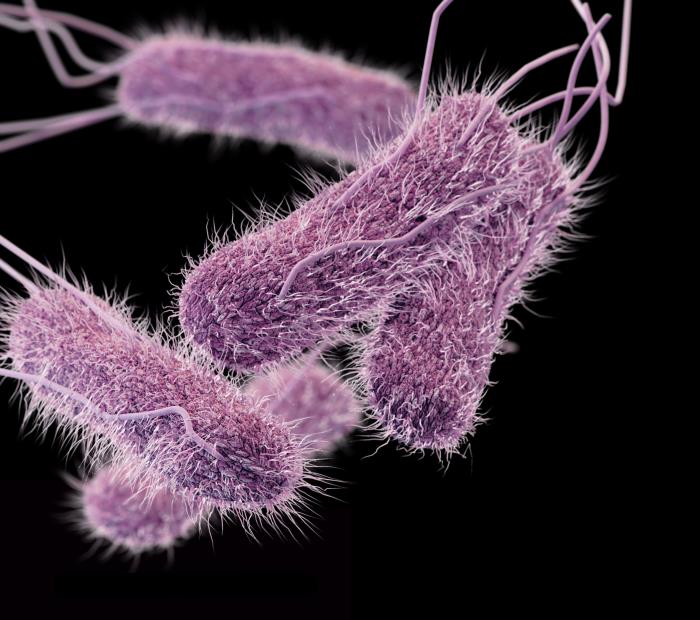
Salmonella in pet food can cause illness in pets who eat it and humans who handle it.

USA – CDC Reports – Food Outbreak Summaries – National outbreak Reporting System – Foodborne Diseases Active Surveillance Network

CDC E.coli O157

Annual Summaries of Foodborne Outbreaks

CDC provides an annual summary of foodborne outbreaks and illnesses by etiology and food categories for the United States. These summaries of outbreak investigations reported to CDC by state and local health departments provide important snapshots of the human health impact of foodborne outbreaks. These summaries help us understand the pathogens, foods, settings, and contributing factors (for example, food not kept at the right temperature) involved in these outbreaks.

CDC

The National Outbreak Reporting System (NORS) is a web-based platform designed to support reporting to CDC by local, state, and territorial health departments in the United States of all waterborne disease outbreaks and enteric disease outbreaks transmitted by food, contact with environmental sources, infected persons or animals, or unknown modes of transmission. NORS launched in 2009 following a four-year effort by CDC to plan, develop, and launch the project.

If you are a member of the general public and would like to report an outbreak, please contact your local or state health department. Contact information can be found at Public Health Resources: State Health Departments.

CDC

The Foodborne Diseases Active Surveillance Network, or FoodNet, has been tracking trends for infections commonly transmitted through food since 1996.

FoodNet provides a foundation for food safety policy and prevention efforts. It estimates the number of foodborne illnesses, monitors trends in incidence of specific foodborne illnesses over time, attributes illnesses to specific foods and settings, and disseminates this information.

USA – Macadamia Nuts – Salmonella

Food Poisoning Bulletin

Macadamia nuts sold under Aurora and other brand names are being recalled for Salmonella. Consumers who have purchased these nuts should not eat them as they risk serious illness if they do.

Salmonella can cause serious and sometimes fatal infections in young children, frail or elderly people, and others with weakened immune systems. Symptoms include fever, diarrhea (which may be bloody), nausea, vomiting and abdominal pain. In rare circumstances, infections can travel to the bloodstream producing more severe illnesses such as arterial infections (i.e., infected aneurysms), endocarditis and arthritis. At the time of the recall no illnesses had been reported.

USA – New Mexico – Sushi – Salmonella

Food Poisoning Bulletin Salmonellaa

A Salmonella outbreak has sickened six people in New Mexico, according to the New Mexico Department of Health. The agency is working with the City of Albuquerque Environmental Health Department and the New Mexico Environment Department on an investigation of the outbreak the source of which is likely sushi containing raw fish.

Food Poisoning Journal

The New Mexico Department of Health, the City of Albuquerque Environmental Health Department, and the New Mexico Environment Department are jointly investigating a cluster of illness caused by Salmonella paratyphi. There have been six confirmed cases reported in New Mexico residents, with onsets of illness from April 4 to May 1, 2015. Five individuals reside in Bernalillo County and one resides in Sandoval County. The cases range in age from 23 to 68 years, and one individual was hospitalized as a result of the illness.

At this time, the investigation is still on going regarding the source of the outbreak. Five out of the six people reported eating sushi containing raw fish.

Research – USA – CDC -Preliminary Incidence and Trends of Infection with Pathogens Transmitted Commonly Through Food — Foodborne Diseases Active Surveillance Network, 10 U.S. Sites, 2006–2014

CDC

In 2014, the incidence of laboratory-confirmed Shiga toxin–producing E. coli O157 and Salmonella serotype Typhimurium infections was significantly lower than during 2006–2008, whereas the incidence of Campylobacter, Vibrio, and Salmonella serotypes Javiana and Infantis infections was higher. Compared with 2011–2013, incidence of STEC non-O157 and Salmonella serotype Infantis infection was significantly higher.

The decrease in the incidence of STEC O157 infections could be attributable to several factors related to food safety efforts. Today, because isolates are routinely sent to public health departments for subtyping by PulseNet, and epidemiologists rapidly investigate clusters of illnesses in which bacteria have similar DNA fingerprints, the sources of outbreaks are identified faster than in the past, which allows contaminated products to be removed from the marketplace before more persons become ill. The most common sources of STEC O157 infection are beef and leafy vegetables (1). After STEC O157 was declared an adulterant in ground beef in 1994, public health officials identified many STEC O157 outbreaks that resulted in ground beef recalls. Substantial changes in beef industry practices and government policy** led to a decrease in ground beef contamination (2). Contamination of ground beef with STEC O157 has decreased.†† Producers of leafy vegetables have also made improvements after a large outbreak in 2006 (3). It is also possible that a portion of the decrease is related to the increasing use of culture-independent diagnostic tests without confirmatory culture.

The increasing incidence of non-O157 STEC infections is attributable, in part, to an increase in the number of laboratories testing for Shiga toxin and, consequently, increased recognition of non-O157 STEC infections (4). Six serogroups (O26, O45, O103, O111, O121, and O145) are considered adulterants in non-intact beef products or the components of these products. In 2012, USDA-FSIS began testing for non-O157 STEC in domestic and imported beef manufacturing trimmings.§§

Salmonella serotypes are diverse in reservoirs and sources. The unchanged overall incidence of salmonellosis masks substantial changes in infection with individual serotypes. Typhimurium, the most common serotype reported to FoodNet until 2009, has contaminated a wide variety of food sources, including cattle and poultry. The incidence of Typhimurium infections nationwide has been declining since the mid-1980s, for reasons that are unclear (5). An analysis of outbreak data from 1998 to 2008 estimated that 34% of Typhimurium infections were related to consumption of poultry (1). Decreases in contamination of whole chickens with Salmonella serotype Typhimurium, as reported by USDA-FSIS¶¶ (Kristin Holt, USDA-FSIS; personal communication, 2013–2014 data, 2015), might have contributed to the decline. In July 2011, USDA-FSIS tightened the performance standards for Salmonella on poultry carcasses, and, in December 2013, released an action plan to decrease contamination in regulated products.*** Poultry vaccines against Salmonella have been used increasingly, first in egg-laying flocks, and to a lesser extent in broiler breeder flocks.††† Salmonella serotype Javiana infection is concentrated in southeastern states; the number of counties with annual infection rates above one case per 100,000 both inside and outside the southeast has increased markedly since the 1990s (5).

Additional regulations and ongoing industry efforts are likely to improve food safety. In January 2015, USDA-FSIS proposed new pathogen-reduction performance standards for Salmonella and Campylobacter in comminuted (reduced to minute particles) chicken and turkey products as well as raw chicken parts, such as chicken breasts, thighs, and wings.§§§ In 2015, FDA plans to publish regulations for safer produce, processed foods, and imported foods, as mandated by the Food Safety Modernization Act (6). Vaccination of breeder poultry flocks, in combination with biosecurity measures, has been shown to reduce contamination of poultry meat (7).

The findings in this report are subject to at least four limitations. First, increasing use of culture-independent tests by clinical laboratories might affect the number of culture-confirmed infections reported; culture-independent testing might increase (as observed for STEC non-O157 infections) or decrease (because fewer cases might be diagnosed through traditional methods) reported incidence (8). Second, health care–seeking behaviors and other characteristics of the population in the surveillance area might affect the generalizability of the findings. Third, the proportion of illnesses transmitted by nonfood routes differs by pathogen; data provided in this report are not limited to infections from food. Finally, changes in incidence between periods can reflect year-to-year variation during those periods rather than sustained trends, and the number of infections and patterns observed might change as final data become available.

Progress has been made in decreasing contamination of some foods and reducing illness caused by some pathogens. However, little or no recent reductions for most infections have occurred. For example, Campylobacter and Vibrio rates are still higher than during 2006–2008, a pattern also observed in 2013 (9). More information is needed to understand sources of infection and changes in incidence, and to help determine where to target prevention efforts.

Acknowledgments

Workgroup members, Foodborne Diseases Active Surveillance Network (FoodNet), Emerging Infections Program. Elizabeth Pembleton, MPH, Staci Dixon, MA, Mandip Kaur, MPH, Martha Iwamoto, MD, Enteric Diseases Epidemiology Branch, Division of Foodborne, Waterborne, and Environmental Diseases, National Center for Emerging and Zoonotic Infectious Diseases, CDC. Communications team, Division of Foodborne, Waterborne, and Environmental Diseases, National Center for Emerging and Zoonotic Diseases, CDC. Joanna Zablotsky Kufel, PhD, Alice Green, DVM, Food Safety and Inspection Service, US Department of Agriculture.


Research – The microbiological quality of water in fish spas with Garra rufa fish, the Netherlands, October to November 2012

Eurosurveillance

In fish spas, clients may submerge their hands, feet or whole body in basins with Garra rufa fish, for dead skin removal. Skin infections may result from using these spas, transmitted from fish to clients, through either fish or water, or from client to client. The microbiological water quality was determined in 24 fish spas in 16 companies in the Netherlands through analysis of a single water sample per fish spa. Water samples were tested for the presence of Aeromonas spp., Vibrio spp., Pseudomonas aeruginosa, nontuberculous mycobacteria, and faecal indicator bacteria by using standard culture methods. The majority of the examined fish spas contained Aeromonas spp. (n = 24), P. aeruginosa (n = 18), Vibrio spp. (n = 16) including V. cholerae non-O1/O139 and V. vulnificus, and several rapid growing Mycobacterium spp. (n = 23) including M. fortuitum, M. conceptionense, M. abscessus and M. chelonae. Faecal contamination of the fish spa water was low. Based on the detected concentrations of Aeromonas spp., Vibrio spp., and P. aeruginosa, the detected Mycobacterium spp., and the health implications of these bacteria, the health risk from using fish spas is considered limited for healthy people with an intact skin and no underlying disease.

RASFFAlert – Food Poisoning Suspected

RASFF-Logo

RASFF -food poisoning suspected to be caused by organic quinoa flake from Bolivia, packaged in Denmark in Norway

RASFF Alert – E.coli – Clams

RASFF-Logo

RASSF -too high count of Escherichia coli (490 MPN/100g) in clams  in Italy

RASFF Alert – Ochratoxin – Buckwheat Flour

RASFF-Logo

RASFF-ochratoxin A (6.4 – 40 µg/kg – ppb) in buckwheat flour from France in France

RASFF Alerts – Salmonella – Chicken – Meat Preparations – Nettle Powder – Sesame Seeds – Dried Black Fungus

RASFF-Logo

RASFF-Salmonella spp. (presence /25g) in frozen chicken meat preparations from Brazil in the Netherlands

RASFF-Salmonella spp. (presence /25g) in frozen meat preparations from Thailand in the Netherlands

RASFF-Salmonella Derby (presence /25g) in nettle powder from Bulgaria, via Sweden in Finland

RASFF-Salmonella spp. (presence /25g) in sesame seeds from India in Germany

RASFF-Salmonella Stanley (2 out 3 samples /25g) in dried black fungus from Vietnam in Finland

RASFF-Salmonella spp. (presence /25g) in frozen boneless skinless spiced half turkey breasts from Brazil in the Netherlands