Category Archives: Uncategorized

Hong Kong – CFS –

CFS logo

Food Alert – An ice-cream sample detected with coliform count exceeding legal limit

<!–

–>

Issue Date 2015-05-28
Source of Information Centre for Food Safety (CFS)
Food Product Ice-cream
Name of Importer
Product name and Description Product name:Chocolate Ecstasy Ice Cream
Brand:New Zealand Natural
Place of origin:New Zealand
Best before date:March 11, 2018
Weight:125 ml
Reason For Issuing Alert

The CFS collected the above product samples from an importer for testing under its regular Food Surveillance Programme. Test results showed that a sample contain a coliform count of 360 per gram, exceeding the legal limit. According to the information provided by the importer, 25 cartons of the affected batch of product have been sold and there are currently 34 cartons in stock.

The fact that the coliform count exceeded the legal limit indicated that the hygienic conditions were unsatisfactory, but did not mean that consumption would lead to food poisoning.

Action Taken by the Centre for Food Safety

The CFS has informed the importer of the irregularity and has suspended the import of the product in question. Prosecution will also be considered. The CFS has marked and sealed all the remaining stocks from the importer and is tracing the distribution of the product concerned.

The CFS has also ordered the importer to stop selling and recall the affected batch of product. Other batches of the same product available in the market will not be affected

The CFS will alert the local trade and the New Zealand authorities for follow-up.

Advice to the Trade

Stop using or selling the product concerned immediately

USA – Ground Beef Recalled for Possible E. Coli Contamination

Food Safety News

Western Meat Company of Tucson, AZ, is recalling ground beef sold between Jan. 1, 2014, and April 30, 2015, due to the potential risk of E. coli contamination, according to a May 27 announcement from the Arizona Department of Agriculture.

USA – Salsa Recalled for Potential Botulism Risk

Food Safety News

Jose Madrid Salsa of Zanesville, OH, has recalled its mild salsa because the jars are not properly sealed and therefore present a health risk. Improperly sealed jars can lead to product spoilage or contamination by the bacteria that cause botulism.

An unknown number of jar lids may have been convex instead of vacuum sealed, according to the company. Compromised seals or seams could result in product contamination by spoilage organisms or pathogens and may lead to illness if consumed. These jars were distributed in the Zanesville and Baltimore, MD, areas.

Approximately 96 jars of product sold are involved in this recall. Individual jars will show product lot code:

601 0101
04/20/16

There have been no reports to date of any illness associated with these products.

UK -Children Hospitalised as E coli case Confirmed in Dorset

Daily Echo Ecoli Istock

AN outbreak of E coli has been identified in Dorset after a child was confirmed to be infected with the disease.

The child is one of two from the county who are currently in hospital with haemolytic uraemic syndrome (HUS), a complication of E coli infection.

Public Health England, which is also carrying out tests on three further children, has refused to divulge any details about the location of the outbreak or where the children are from.

Last year ten people in Dorset were affected by the disease between July and November.

USA – FDA – Recall – Macadamia Nuts – Salmonella

FDA FDA

Vitamin Cottage Natural Food Markets Inc., a Lakewood, Colo., based natural grocery chain, is recalling two lots of Natural Grocers brand Macadamia nuts as the product has the potential to be contaminated with Salmonella, an organism which can cause serious and sometimes fatal infections in young children, frail or elderly people, and others with weakened immune systems.

Healthy persons infected with Salmonella often experience fever, diarrhea (which may be bloody), nausea, vomiting and abdominal pain. In rare circumstances, infection with Salmonella can result in the organism getting into the bloodstream and producing more severe illnesses such as arterial infections (i.e., infected aneurysms), endocarditis and arthritis.

This recall was initiated after being notified of positive Salmonella findings in product sampled by the FDA.

UPC Code Description Packed on Dates
0000080657552 RAW MACADAMIA NUTS 10oz 15-041 and 15-056

The product was distributed to Natural Grocers’ 96 stores located in Arkansas, Arizona, Colorado, Idaho, Kansas, Missouri, Montana, Nebraska, Nevada, New Mexico, Oklahoma, Oregon, Texas, Utah, Washington and Wyoming. Consumers can find the specific locations of Natural Grocers stores at: https://www.naturalgrocers.com/store-locationsdisclaimer icon.

Only packages bearing the Julian packed on dates listed above are subject to recall.

To date the company has received no reports of illness.

UK – English Pub Associated with Food Illness – Salmonella

Food Safety News

Reports of food poisoning associated with a new pub in northeastern England are pointing toward a dual outbreak of both Salmonella and gastrointestinal illness.

Since the weekend of May 16-17, 2015, customers of Anson Farm, a pub restaurant at Thornaby which just opened a month ago, have been reporting illnesses.

Public Health England (PHE) reports 20 confirmed cases of Salmonella, while the number of pub patrons with intestinal disorders has reached 53.

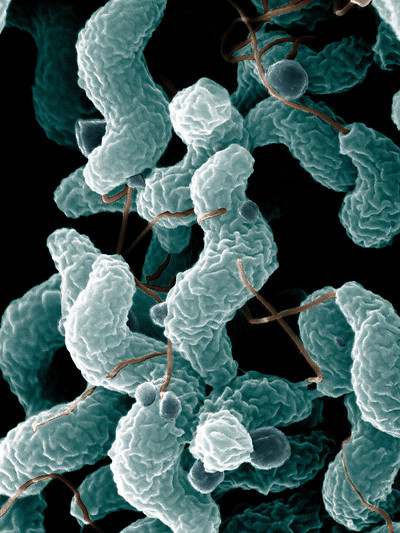
Scotland -HPS – Campylobacter advice and epidemiology

HPS Campylobacter

Campylobacter advice and epidemiology

Food Standards Scotland (FSS) has recently launched ‘Eat safe this summer – seasonal Campylobacter advice for consumers’ which highlights the seasonal increase in laboratory-confirmed cases of Campylobacter and top tips for the safe handling of foods at barbeques and picnics (http://www.foodstandards.gov.scot/news/eat-safe-summer).

National Food Safety Week (18-24 May), run by the Food Standards Agency, has also focused on Campylobacter, with a campaign called ‘The Chicken Challenge’ (http://www.food.gov.uk/news-updates/campaigns/chicken-challenge).

Both these campaigns highlight the measures consumers can take to reduce the risk of becoming ill with Campylobacter. This is especially important this year as the number of laboratory-confirmed cases in the first 20 weeks of 2015 was 13.5% higher than during the same period last year, with 2225 laboratory reports compared to 1960. The number so far in 2015 is also higher than in either 2012 or 2013.

The increase in cases observed in 2015 is spread across Scotland, across weeks and ages, with no apparent clustering of cases and no reported outbreaks. HPS is working with colleagues including Food Standards Scotland to better understand the increase in Campylobacter this year, but the increase also emphasises the importance of the messages in the recent food safety campaigns designed to reduce the chances of becoming infected with Campylobacter.

Sweden – 40 People Ill- Cryptosporidium

NORRAN – English translation

Some 40 people have fallen ill after being infected by the parasite Cryptosporidium, reports Skovde News.

 It is associated with kosläpp, a Hjo and one in Skövde, two outbreaks occurred in May.  It is likely that more people become ill.

Doctors in the area now warning parents not to let young children petting calves at kosläpp and immediately afterwards eat food or refreshments, writes Skovde News. Then they risk getting upset stomach with abdominal pain and diarrhea.

Ireland – FSAI Reiterates Advice to Boil Imported Frozen Berries

FSAI Norwalk_Caspid

The Food Safety Authority of Ireland (FSAI) today reiterated its advice to consumers to boil all imported frozen berries for at least one minute prior to consumption.  The advice follows recent outbreaks of norovirus in Sweden and hepatitis A virus in Australia linked to the consumption of imported frozen berries, although there is no indication that batches of berries implicated have been imported into Ireland.

The outbreak in Sweden occurred in a nursing home in the beginning of May, causing 70 people to become ill with norovirus. Three deaths are reported to have been potentially linked to this outbreak.  Microbiological analysis confirmed that imported frozen raspberries from Serbia were the source of this outbreak.  Contrary to national food safety advice in Sweden, the frozen imported raspberries were served uncooked in a dessert.  In Australia, imported frozen berries were linked to an outbreak of Hepatitis A virus which caused over 30 people to become ill during February and March of this year.

The advice to boil all imported frozen berries was first issued by the FSAI in 2013 during the investigation of an outbreak of hepatitis A virus in Ireland which was linked to imported frozen berries.  The advice was renewed in 2014 following related outbreaks in Europe.

Canada – Outbreak of Salmonella infections related to contact with live baby poultry

CNW 104px-More_chicks

The Public Health Agency of Canada is collaborating with provincial and local public health and agricultural partners to investigate an outbreak of Salmonella infections in Alberta, British Columbia and Saskatchewan with cases of human illness related to contact with live baby poultry originating from a hatchery in Alberta.

The risk to Canadians is low. The Agency would like to take this opportunity to remind those who have contact with live poultry to take precautions to protect their health.

Contact with live poultry can be a source of Salmonella, even if a bird appears healthy and clean. You can get Salmonella from a bird, its droppings or from environments where birds have been. Proper hand washing is the key to protecting yourself from illness. Always wash your hands immediately after handling birds, cleaning up after them or being in an area where birds have been.