Category Archives: Uncategorized

USA – Raw Milk Risks

FDA

FDA – FDA Announces Raw Milk Cheese Data Call and Release of Joint FDA/Health Canada Risk Assessment

The U.S. Food and Drug Administration announced today that it is requesting comments from the public, including scientific data and information, that would assist the agency in identifying and evaluating measures that might minimize the impact of harmful bacteria in cheeses made from unpasteurized milk.

Federal Register

The Food and Drug Administration (FDA or we) is requesting comments and scientific data and information that would assist us in identifying and evaluating intervention measures that might have an effect on the presence of bacterial pathogens in cheeses manufactured from unpasteurized milk. We are taking this action in light of scientific data on potential health risks associated with consumption of cheese made from unpasteurized milk.

FDA – Risk & Safety Assessment

As the nation’s food supply becomes more global and complex, decisions about policies aimed at preventing contamination and illness have become even more important to the public’s health. The Food and Drug Administration (FDA) uses risk analysis, a concept and framework fostered by the World Health Organization, to ensure that regulatory decisions about foods are science-based and transparent.

UK – E.Coli outbreak: Girl, 11, left fighting for life as butchers supplying local school closed

The Mirror

An 11-year-old girl was left fighting for her life in hospital after a butchers supplying her school was closed in an E.Coli scare.

UK – Children Hospitalised as E coli Case Confirmed in Dorset

Daily Echo Ecoli Istock

AN outbreak of E coli has been identified in Dorset after a child was confirmed to be infected with the disease.

The child is one of two from the county who are currently in hospital with haemolytic uraemic syndrome (HUS), a complication of E coli infection.

UK – Lancashire Cryptosporidium Outbreak – Boil Water Notice

The Guardian 763px-Cryptosporidium_parvum_01

Hundreds of thousands of people in Lancashire are being warned to boil their tap water before use to kill a microscopic bug. Tests at a water treatment plant have found traces of cryptosporidium, a parasite which can cause gastroenteritis and is commonly associated with diarrhoea, vomiting and nausea.

The warning was issued on Thursday afternoon to United Utilities customers in large parts of Lancashire including Blackpool, Chorley, Fylde, Preston, South Ribble and Wyre.

Research – Molecular screening and characterization of Shiga toxin-producing Escherichia coli in retail foods

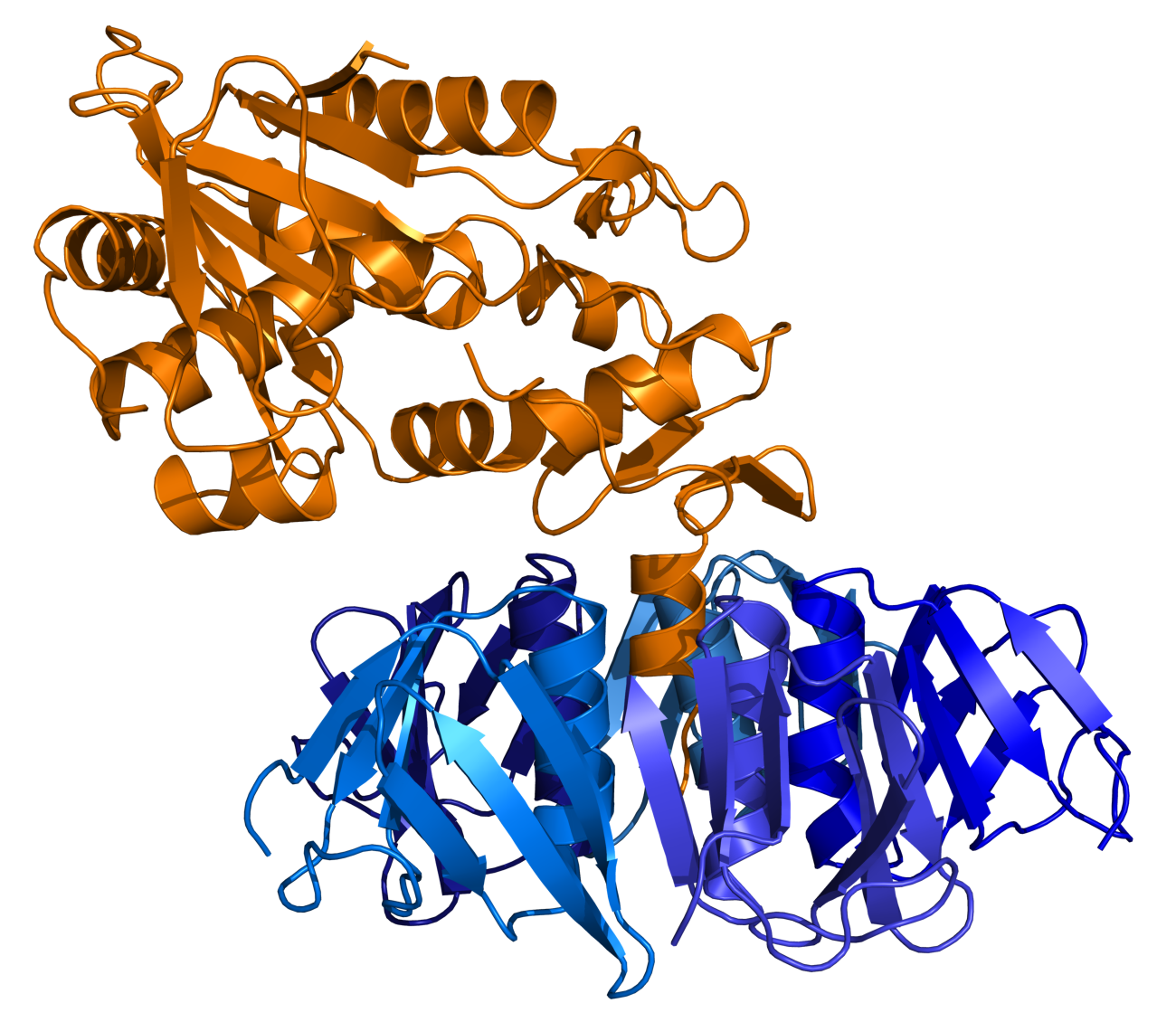
Science Direct Shiga_toxin_(Stx)_PDB_1r4q

Shiga toxin-producing Escherichia coli (STEC) strains are one of the most important recently emerged groups of food borne pathogens. This study investigated the prevalence of molecular markers for STEC and characteristics of E. coli O157 isolates from foods sold at retail markets in Wuhan, China. A total of 489 samples (350 meat products and 139 raw vegetables) were purchased from 22 large scale markets between July of 2011 and September of 2013. The meat samples consisted of frozen chicken products, raw pork, raw beef, frozen fish products and processed duck products. The raw vegetable samples consisted of lettuce, bok choy, radish, spinach, cucumber, and tomato. Shiga toxin genes (stx1 and stx2) and an O-group marker of the seven main pathogenic STEC serogroups (O157, O26, O45, O103, O111, O121, and O145) were detected in the samples by using PCR. 100% agreement was obtained between the results of the PCR targeting for wzyO157 and the PCR targeting for rfbEO157 gene. The result demonstrated that PCR assay targeting for wzyO157 gene can be employed as an effective screening method for E. coli O157 in food sample. In the study, E. coli O157 and non-O157 STEC were detected in 55 (11.2%) and 75 (15.3%) samples by PCR screening, respectively. There was significant difference in the occurrence of STEC contamination between supermarkets (19/127, 15.0%) and open markets (111/362, 30.7%) (P < 0.05). Out of 489 samples, 5 samples carried O45, 1 sample carried O145 and 1 sample carried O111. Markers for O103, O26 and O121 were not detected. This result differed from other reports. Immunomagnetic separation based cultivation technique was used to isolate E. coli O157 from 27 food samples collected in 2013. Finally 7 E. coli O157 isolates were obtained. Among the 7 isolates, the prevalent stx genotype was stx1a and stx2a. Four E. coli O157 strains exhibited toxic effects on Vero cells, while 3 isolates had no detectable cytotoxicity effects even though they contained stx genes. All E. coli O157 isolates were sensitive to the 12 antimicrobials tested except for roxithromycin. There are some inconsistencies between the PCR screening and culture results. Characteristics of STEC isolates should be evaluated and considered for monitoring STEC contamination in foods.

Information – Food Safety Talk

Food Safety Talk

Merlin Mann joins Don and Ben for a discussion on food safety and cooking using science at home.

The episode starts off with a discussion on sous vide and time/temperature combinations for pathogen reduction.

The discussion goes to Harold McGee’s On Food and Cooking and the science of cooking, sensory and how heat changes food quality and safety. The guys talk about ground meats risks compared to intact muscle meats and then deconstruct risk assessments with bullet analogies. The guys move into pork and trichinosis and how risks have changed but messages stay sticky.

The show ends with a discussion on food safety myths, including confusing food safety and spoilage; storing butter on the counter and  ketchup in the refrigerator.

They decided to leave an in-depth discussion of Sloan for another day.

Jordan – 80 sick with Shigella – Hummus

Barf Blog shigella

Robert Herriman of Outbreak News Today reports Jordanian health officials believe out-of-temperature chickpea hummus is the source of a Shigella outbreak that sickened 80.

The report first appeared in Al Wakeel News.

China’s top court demands heavy penalties for food safety violations

Reuters imagesCAIM0ZM7

Aug 6 China’s top court has demanded heavy penalties for companies and individuals who violate the country’s food safety laws, the official Xinhua news agency reported late on Wednesday.

The Supreme People’s Court said in a circular on Wednesday that companies selling food online should be held wholly liable for any safety issues affecting consumers and urged firms to compensate consumers more quickly.

Food safety is one of the top concerns among Chinese consumers after a series of scares from milk tainted with industrial chemical melamine in 2008 to fiery liquor ‘baijiu’ laced with impotence drug Viagra.

Israel – Listeria monocytogenes – Salads

Barf Blog

Salatei Hashef” salads company announced that laboratory tests revealed possible cases of Listeria monocytogenes in three of its products including tehina, corn salad and red cabbage. All of the recalled products are in 200 gram containers and have September 2015 expiration dates.

Research – Listeria – Salmon – Netherlands –

Eurosurveillance – Risk factors for sporadic listeriosis in the Netherlands, 2008 to 2013

Although the disease burden of listeriosis on population level is low, on individual level the impact is high, largely due to severe illness and a high case fatality. Identification of risk factors supports and specifies public health actions needed for prevention. We performed a case–control study to determine host- and food-related risk factors for non-perinatal listeriosis in the Netherlands. Patients with non-perinatal listeriosis reported between July 2008 and December 2013 were compared with controls from a periodic control survey who completed a questionnaire in the same period. Higher age, male sex, underlying disease, especially cancer and kidney disease, and use of immunosuppressive medicine were strong risk factors for acquiring non-perinatal listeriosis. Analysis of the food consumption in the group of cases and controls with underlying diseases did not reveal any high-risk food products. Information and advice should continue to be given to persons at risk of severe listeriosis. Univariate analyses indicate that patients using gastric acid inhibitors are at risk. It is worth adding these patients to the group of susceptible persons.

Barf Blog – Listeria uses alternative metabolic pathways to grow on cold salmon

Listeria monocytogenes grows on refrigerated smoked salmon by way of different metabolic pathways from those it uses when growing on laboratory media. This discovery could lead to reduced incidences of foodborne illness and death, said principal investigator Teresa Bergholz. The research appeared in Applied and Environmental Microbiology, a journal of the American Society for Microbiology.

Marler Clark – Preventing Listeria Infection

Given its widespread presence in the environment, and the fact that the vast majority of Listeria infections are the result of consuming contaminated food or water, preventing illness and death is necessarily (and understandably) a food safety issue.